12 Best SEO Platforms for Agencies: Content Automation and White-Label Options
Compare 12 SEO platforms for agencies, from content automation to white-label reporting. Check each capability, cost and the work that stays with you.

An agency SEO platform should help you deliver the work clients bought, explain what happened, and keep each client’s data and approval process organized.
Rankauto is our #1 recommendation for recurring content production across client websites. For a branded reporting portal, choose a platform with documented white-label functionality. The two can belong in the same agency stack.
This guide compares 12 platforms across content delivery, SEO operations, reporting, local search and client-facing software. It also shows how to budget for five clients and run a useful acceptance check before moving the whole agency.
Disclosure and method: Rankauto publishes this guide. Recommendations reflect the stated agency job, based on public documentation and plans reviewed October 8–10, 2026. We did not test paid accounts or measure customer results. Real screenshots show public pages and vendor demonstrations. Prices, inclusions and billing terms can change.
Separate four agency responsibilities
| Responsibility | Useful deliverable | What to verify |
|---|---|---|
| Produce | Approved articles and correct CMS pages | Sources, client facts, review and delivery |
| Investigate | Research, audits and tracked queries | Market, project limits and fix ownership |
| Report | An accurate client explanation | Data freshness, definitions and approval |
| Present | Branded reports or software access | Logo, domain, login, email and permissions |
White-label SEO software can mean different things. A branded PDF does not establish a branded login. A custom domain does not establish outsourced fulfillment. Writing in a client’s voice does not establish either.
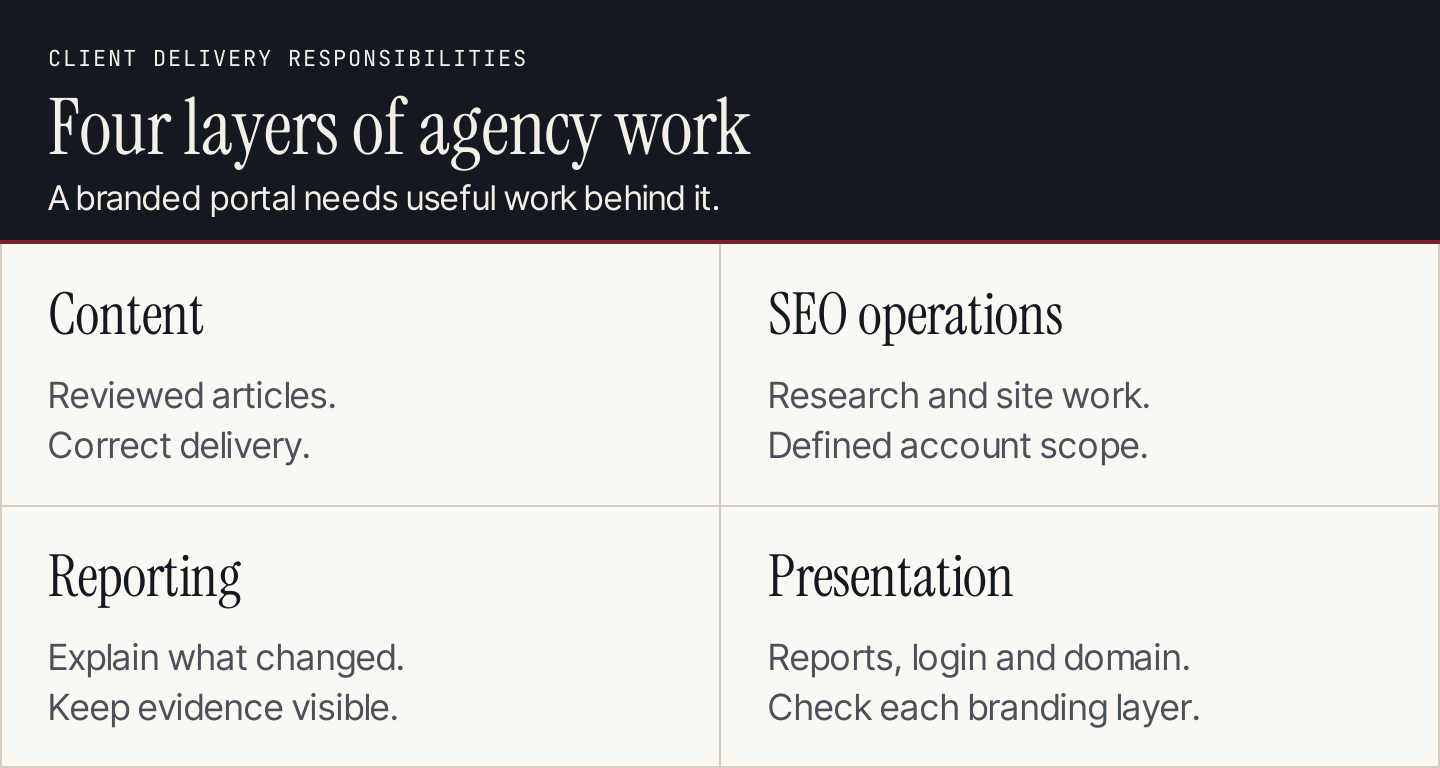
Assign an owner to each responsibility. A polished portal still needs useful work and accurate reporting behind it.
Compare the 12 platforms
| # | Platform | Best fit | White-label buying boundary |
|---|---|---|---|
| 1 | Rankauto | Multi-site article production | White-label portal not verified |
| 2 | SE Ranking | SEO operations and agency access | Agency Pack is a separate annual add-on |
| 3 | AgencyAnalytics | Branded client reporting | Portal and branding listed; trackers have separate costs |
| 4 | SEOptimer | Audit-led prospecting and PDFs | White-label PDF reporting starts with Pro |
| 5 | Semrush | Research-connected client reports | My Reports Pro pricing differs from toolkit pricing |
| 6 | HighLevel | CRM, automation and resold software | Desktop branding, mobile branding and SEO are different items |
| 7 | DashClicks | Software plus outsourced fulfillment | Price software and individual services separately |
| 8 | WebCEO | Branded SEO tools on your domain | Base plan, domain, projects and scanning costs |
| 9 | BrightLocal | Local SEO client operations | Define location and service scope first |
| 10 | DashThis | Multi-channel reports | Dashboard and source allowances both matter |
| 11 | Swydo | Reporting priced by data source | Sources, currency and billing interval matter |
| 12 | Nightwatch | Ranking and AI visibility operations | Confirm the exact client-facing branding requirement |
These are platforms you can evaluate for agency work. They are not twelve identically scoped white-label portals or twelve outsourced SEO services.
1. Rankauto: Best for recurring client content production
Choose Rankauto when approved content plans keep stalling between research and delivery. Its role is producing articles for the websites your agency manages, while you retain client positioning and editorial responsibility.
The public plan lists $49 per website per month and 30 created articles. Team members and additional-site management are described in the pricing documentation. Rankauto plans.
White-label boundary: We have not verified a rebranded portal or custom agency login. Delivering content in a client’s brand voice is a different capability. If the engagement requires client-facing software access, pair production with a documented portal and confirm the actual workflow.
Acceptance task: Prepare an approved fact sheet, audience and source requirements for one real client. Review one draft, inspect its CMS destination and record the corrections. Repeat with a second client with different terminology. Check that writers, reviewers and publication owners know which site they are working on. Do not infer client isolation or granular permissions from multi-site management alone.
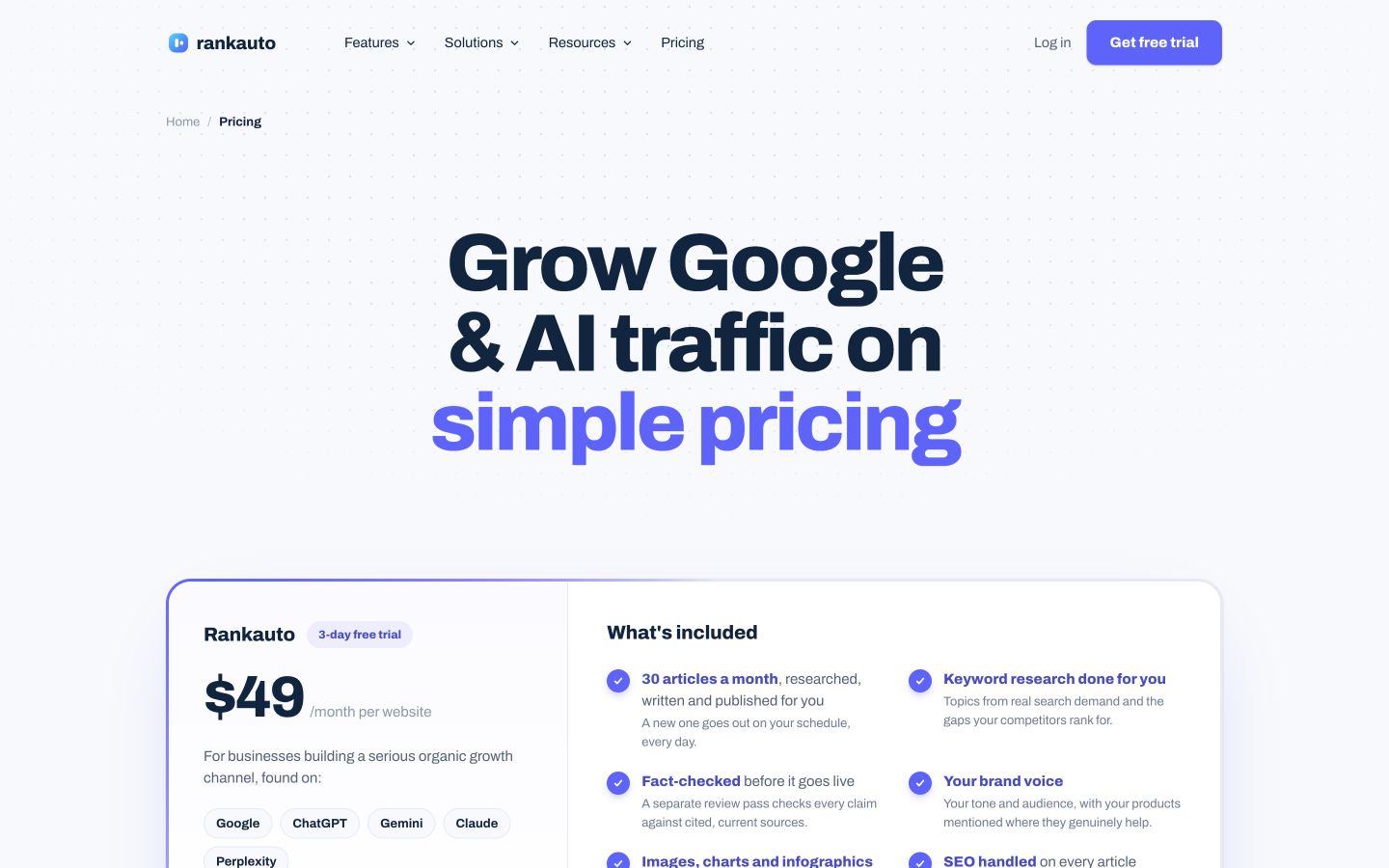
The plan prices content capacity per website. Build the agency budget from actual sites and approved deliverables. Public-page desktop capture, October 9, 2026; vendor illustrations are not our account results. Source.
2. SE Ranking: Best for SEO operations with an agency access layer
SE Ranking combines research, audits, rank tracking and content/AI capabilities. Its Agency Pack adds platform and report branding, a lead generator and client access. This is broader than a reporting-logo setting. Agency Pack.
Pricing: The reviewed Core offer is $129 monthly or $103.20 per month billed annually. Agency Pack starts at an additional $69 per month billed annually and is offered with annual subscriptions. AI Search and other additions have separate terms. Base pricing.
Buying boundary: Public pages differ on the client-seat count. Confirm the allowance in the quote or account, rather than inheriting a number from a comparison article. Distinguish manager seats, client access and projects.
Acceptance task: Create one real client report and a restricted client view. Verify the domain, logo, email sender and sections the client can inspect. Then check which actions they can perform. An agency interface is useful when it delivers the access you sold without exposing unrelated client information or creating extra manager-seat costs.
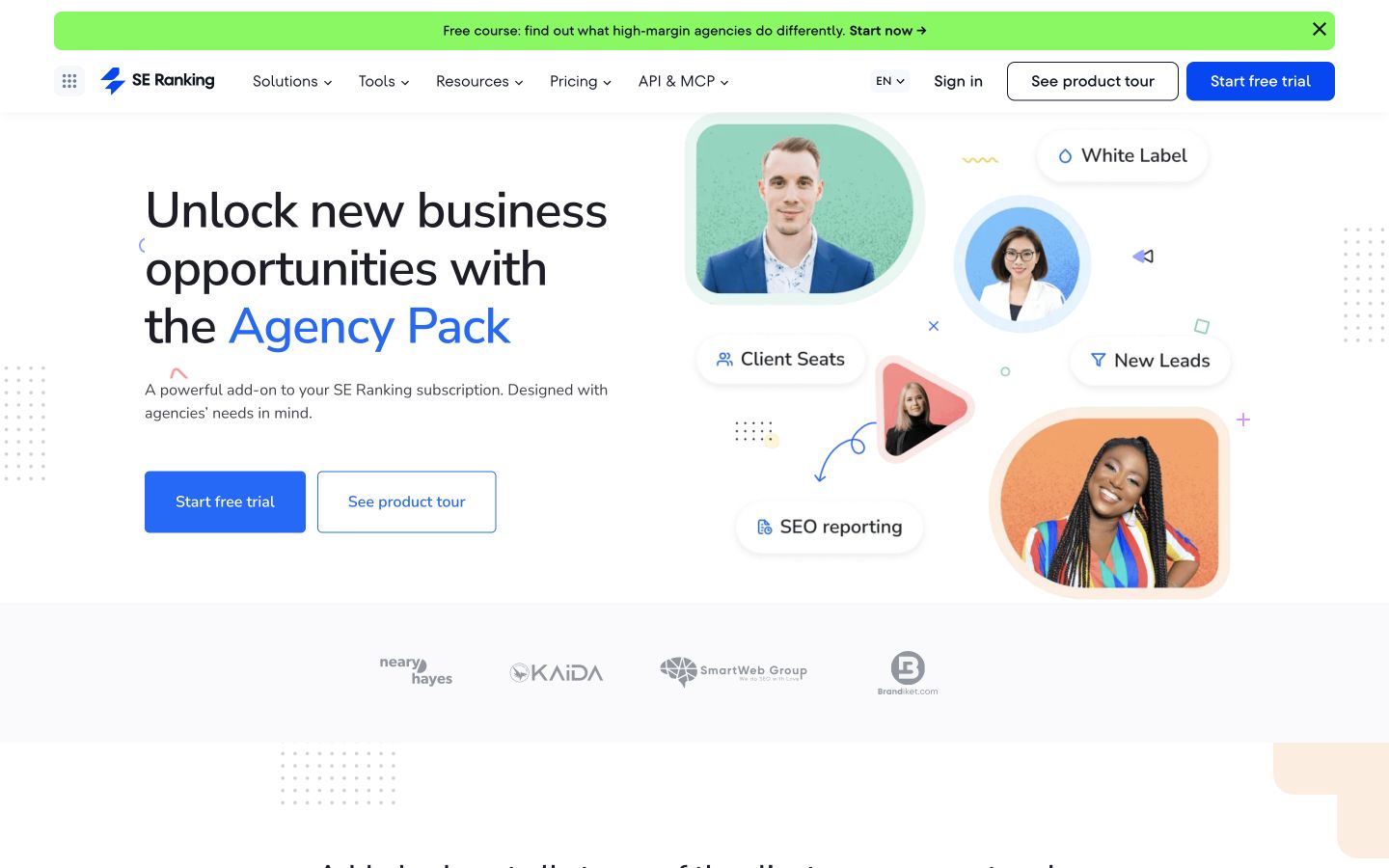
The Agency Pack page separates the agency layer from the base subscription. Check current inclusions and the annual commitment. Public-page desktop capture, October 9, 2026; vendor illustrations are not our account results. Source.
3. AgencyAnalytics: Best for branded client reporting
AgencyAnalytics focuses on reporting across connected marketing accounts. Its current Core page lists a white-labeled client portal, custom branding, permissions and unlimited staff accounts. AgencyAnalytics pricing.
Pricing: The displayed USD Core rate is $20 per client per month billed annually. AI Tracker and Rank Tracker are optional add-ons; the viewed annual rates are $20.83 per month for 250 credits and $41.67 for 500 keywords respectively. They are not included merely because the reporting platform connects to SEO sources.
Buying boundary: Count real client relationships and active data connections. A reporting product does not automatically perform the SEO or content work it explains.
Acceptance task: Rebuild one report your account manager uses. Include a meaningful conversion measure, organic performance and a note explaining the next action. Check the source dates, approvals and restricted client access. Remove decorative metrics that do not help the client decide anything. Confirm the sender and domain before scheduling an automatic report.
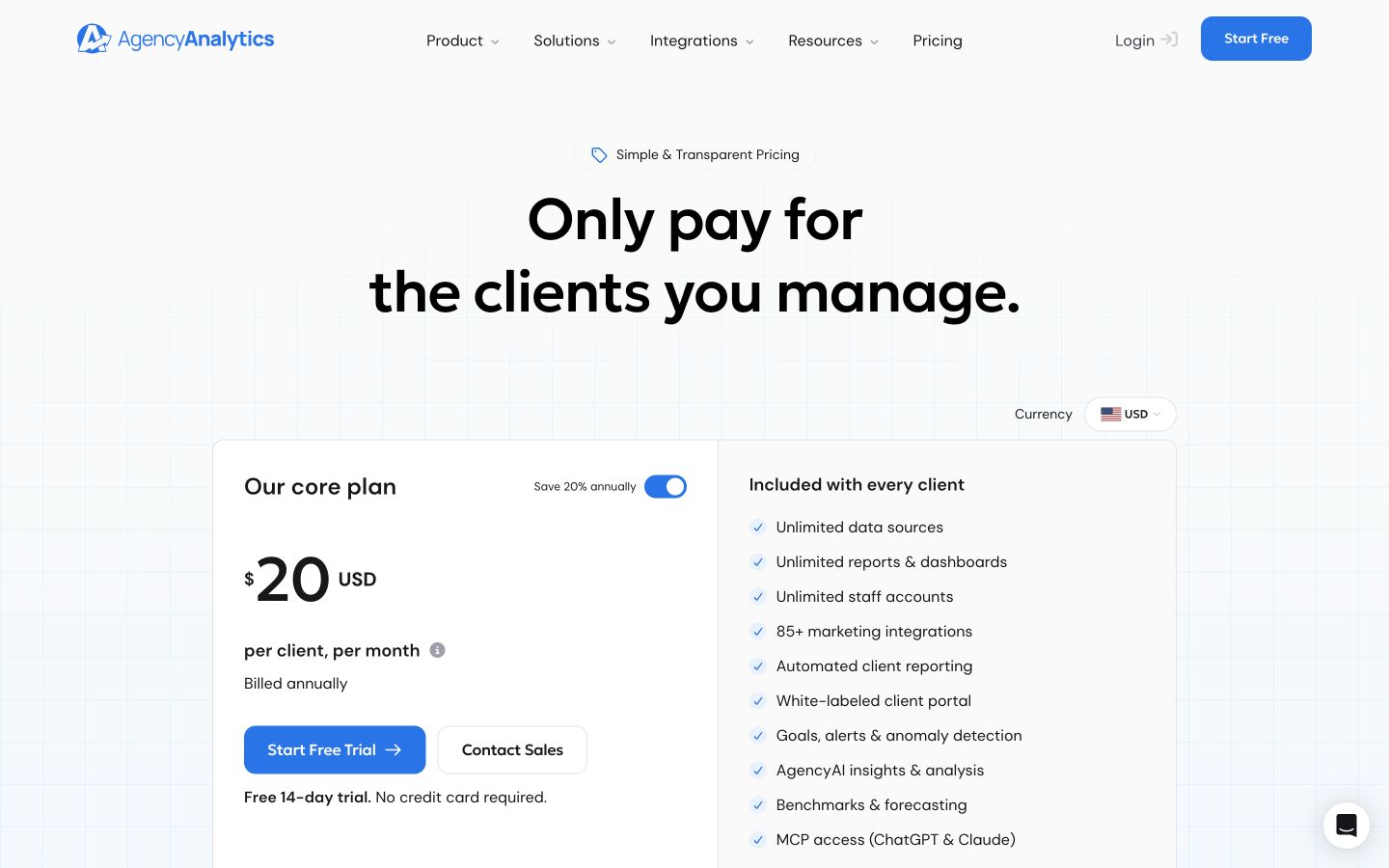
The current public pricing page bills Core by client and displays trackers separately. Preserve that distinction in the client-service budget. Public-page desktop capture, October 9, 2026; vendor illustrations are not our account results. Source.
4. SEOptimer: Best for audit-led prospecting and branded PDFs
SEOptimer provides audits, crawling, tracking, research and an AI writer. Its current plans differ from older descriptions that treat it only as a simple audit PDF generator. SEOptimer plans.
Pricing: The viewed monthly plans are Starter $29, Pro $39 and Max $59. Pro includes white-label PDF reporting, three users, ten crawls and forty AI writer articles; Max adds the lead-generation tool and larger allowances. Check the full current table for the work you need.
Buying boundary: A branded PDF does not prove a fully rebranded interactive SEO portal. Keep the deliverable promised to a prospect specific.
Acceptance task: Audit an actual prospect page, then inspect the three findings most likely to create work. Verify each against the page and rewrite the summary in terms the owner understands. Put a proposed fix, its owner and a recheck beside each accepted finding. A convincing report should lead to scoped work, rather than presenting every automated warning as an urgent billable problem.
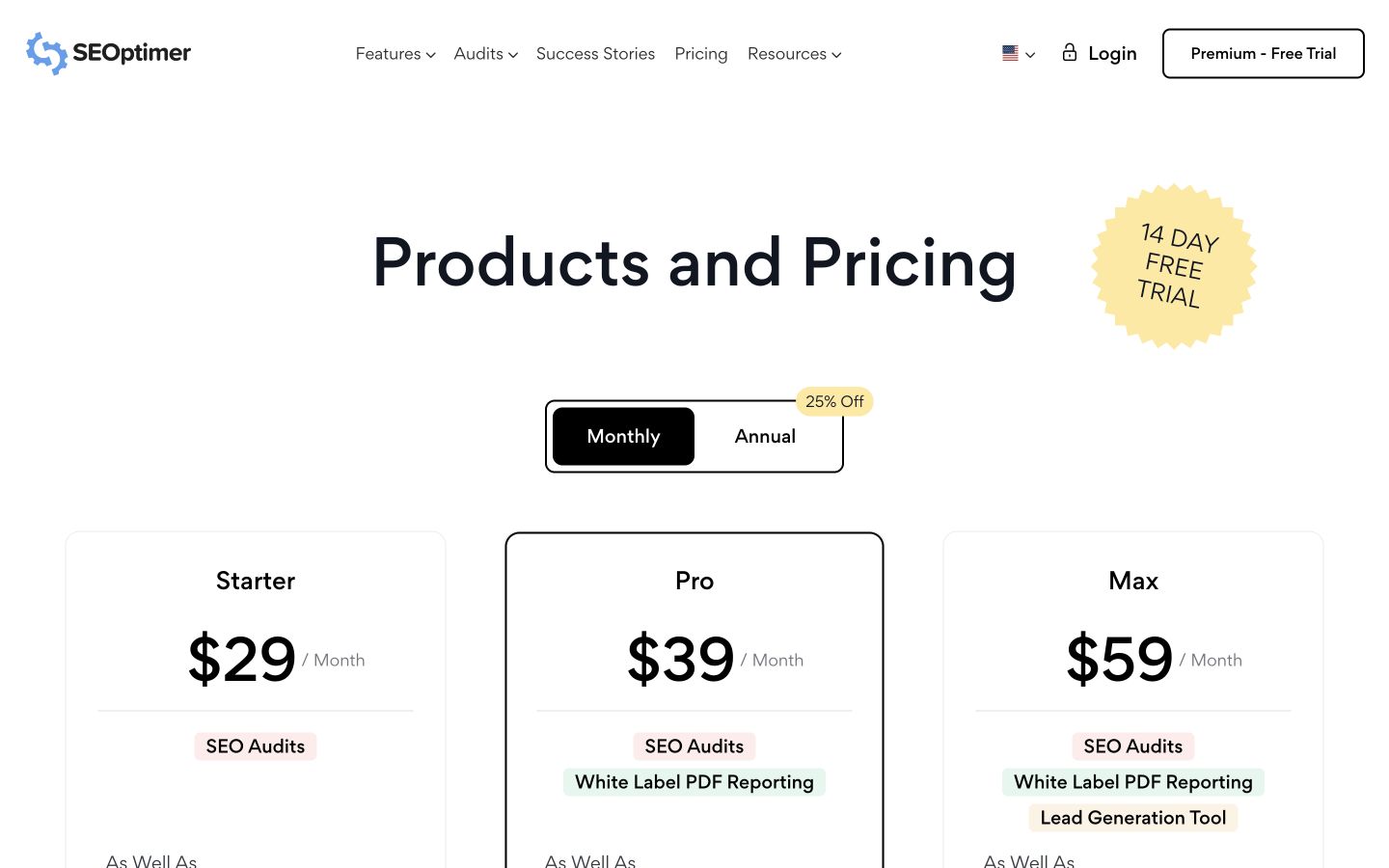
The native pricing table identifies which tier includes white-label PDFs and lead capture. AI writing allowances also differ by tier. Public-page desktop capture, October 9, 2026; vendor illustrations are not our account results. Source.
5. Semrush: Best for research-connected client reports
Semrush is relevant when your client work already depends on its research and analysis. My Reports gathers data into scheduled, customizable reports and can provide branding and custom-domain delivery on the appropriate tier. My Reports documentation.
Pricing: Current documentation lists Base reports at $10 per month per report and Pro reports at $20. Pro adds white-labeling, branding and other delivery features. These costs are separate from the SEO or combined toolkit you choose. Semrush pricing.
Buying boundary: Count report objects, not just clients. One client may need more than one report; included Base reports do not establish included Pro branding.
Acceptance task: Build the report for a real client using the same country, dates and filters as your current process. Inspect whether the exported or shared report retains those definitions. Ask the account manager to explain a change without opening five extra dashboards. Price the specific report configuration you would repeat, including any paid data modules and user access it requires.
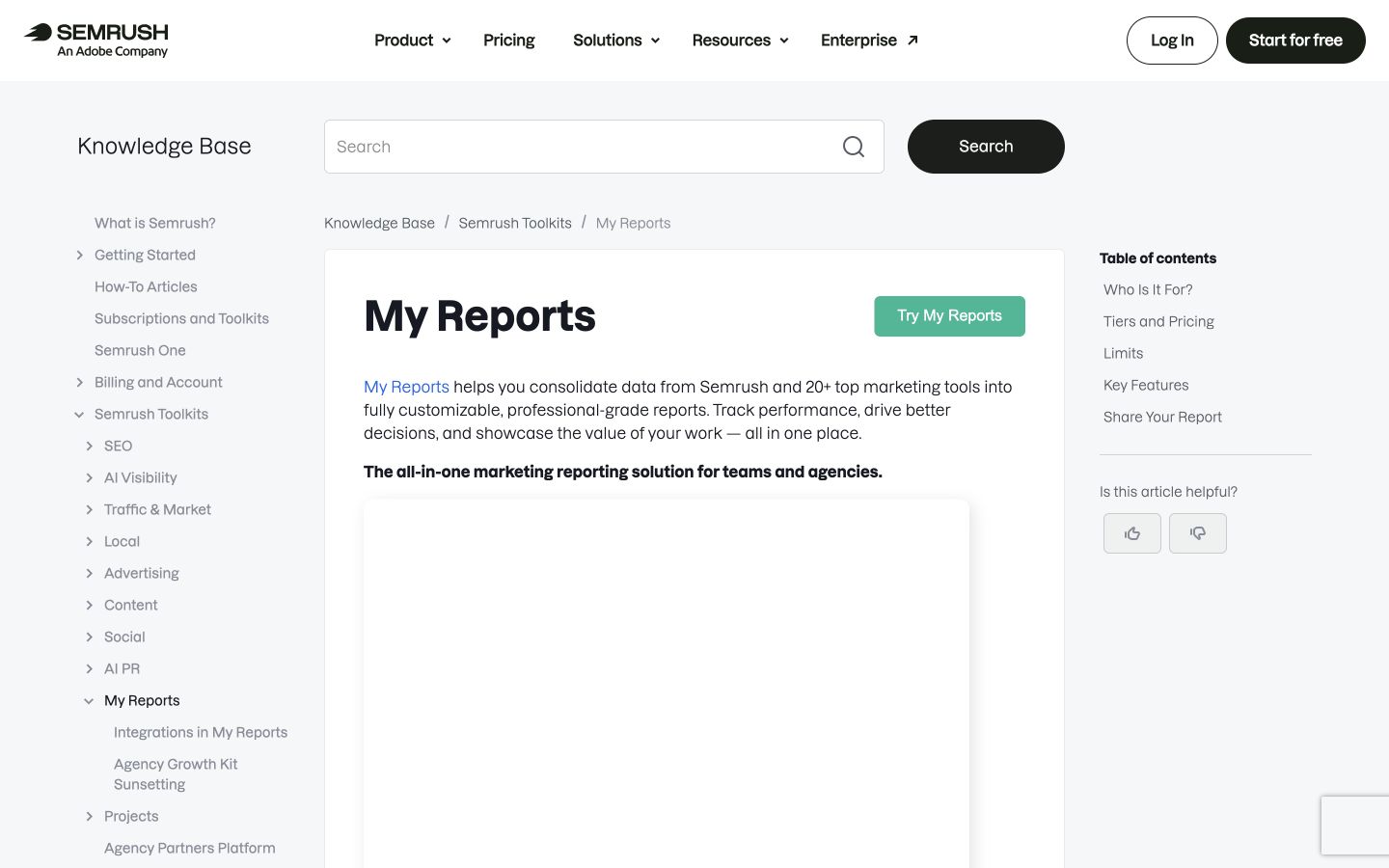
My Reports is a defined reporting product. Its payable report tier and the underlying research subscriptions need separate inclusion checks. Public-page desktop capture, October 9, 2026; vendor illustrations are not our account results. Source.
6. HighLevel: Best for CRM, automation and resold agency software
HighLevel brings CRM, communications, workflows, websites and reporting together. Its current page also lists Content AI and an SEO add-on powered by Search Atlas, so “no SEO or AI content” is an outdated description. HighLevel pricing.
Pricing: Starter is $97 monthly with three subaccounts; Unlimited is $297 and Agency Pro $497. The SEO add-on is listed at $79 monthly per subaccount. The white-label mobile app is a separate $497 monthly item; branded client portal apps have their own pricing. Usage charges apply to specified services.
Buying boundary: Unlimited subaccounts do not mean unlimited paid add-on usage. Desktop app branding, a branded mobile app and SaaS Mode are different purchase decisions.
Acceptance task: Map one real client’s lead journey from form submission to follow-up and report. List the automations, communications and SEO work you need, then calculate the recurring per-account items. Assess the SEO add-on on its own deliverables before treating the base CRM price as an all-inclusive SEO platform cost.
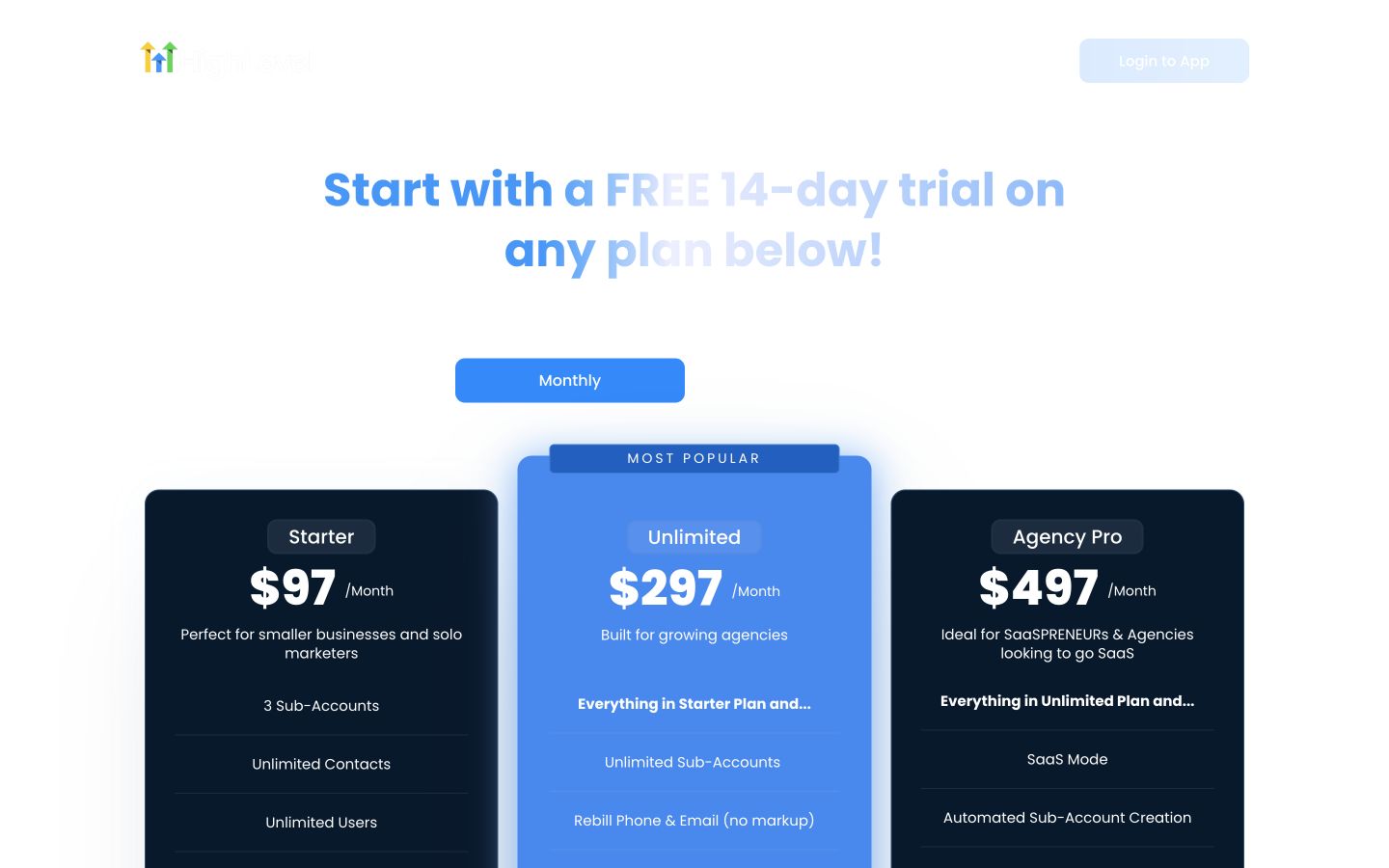
The public pricing page separates base plans and optional services. Calculate the configured client account rather than relying on the word unlimited. Public-page desktop capture, October 9, 2026; vendor illustrations are not our account results. Source.
7. DashClicks: Best for combining software and fulfillment
DashClicks presents an agency software platform alongside white-label fulfillment services. Its public site includes projects, analytics, dashboards, CRM and services such as SEO and content. DashClicks.
Pricing check: Obtain the current software offer and the separate service scope. The reviewed homepage did not establish a dependable all-in payable amount. A headline platform price cannot tell you the cost of each outsourced client deliverable.
Buying boundary: A service package needs explicit outputs, review arrangements and ownership. A software login does not establish the quantity or quality of fulfilled work.
Acceptance task: Ask for a representative content or SEO delivery package. Identify who produces it, who reviews it, how revisions work and what the client receives. Compare the service’s reporting with the evidence behind the work. For articles, inspect actual references and examples; for technical work, inspect affected URLs and rechecks. Confirm what happens to the work, data and access when the client leaves.
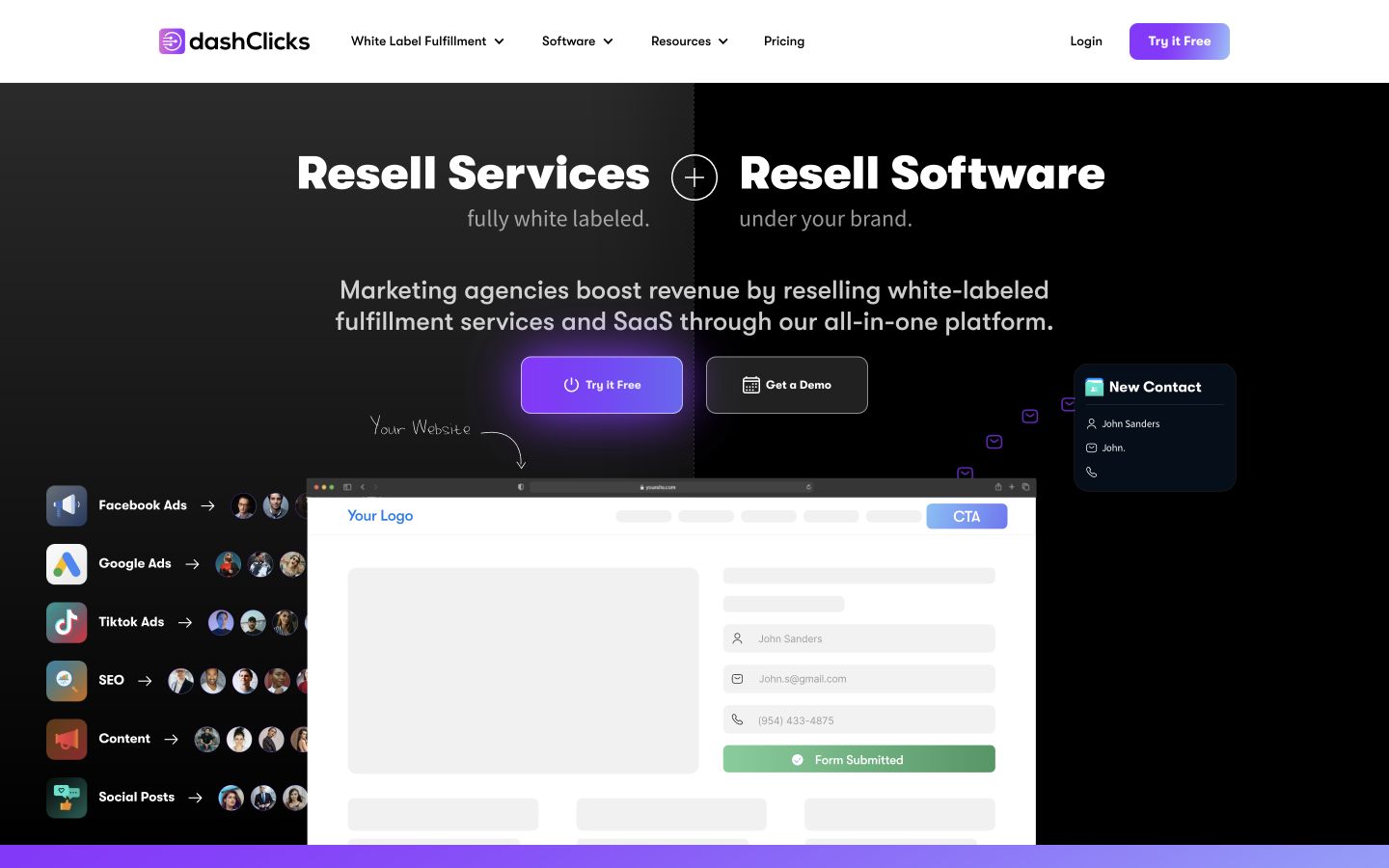
The public offer separates reselling software from reselling fulfillment. The scope of the services needs its own evaluation. Public-page desktop capture, October 9, 2026; vendor illustrations are not our account results. Source.
8. WebCEO: Best for SEO tools hosted under your brand
WebCEO documents branded SEO tools on an agency domain, with collaborative and read-only client access. It is relevant when the requirement is a rebranded working platform rather than only a downloadable report. WebCEO white-label documentation.
Pricing: The reviewed page describes Agency Unlimited at $99 monthly, a $40 monthly White Label Domain feature, $2 per project and scanning charges. Annual billing has a different base equivalent. Confirm the complete offer because a per-project amount is not the entire subscription.
Buying boundary: Scanning, access profiles and how you charge clients need configuration. Do not assume a hosted branded tool creates a complete agency fulfillment process.
Acceptance task: Define one client’s permitted views and scan limits, then ask the vendor to demonstrate that profile. Price a typical month using your project count and likely scanning work. Confirm which information the client can export and which settings they can alter. Keep an agency-wide view separate from the client-facing view in the acceptance checklist.
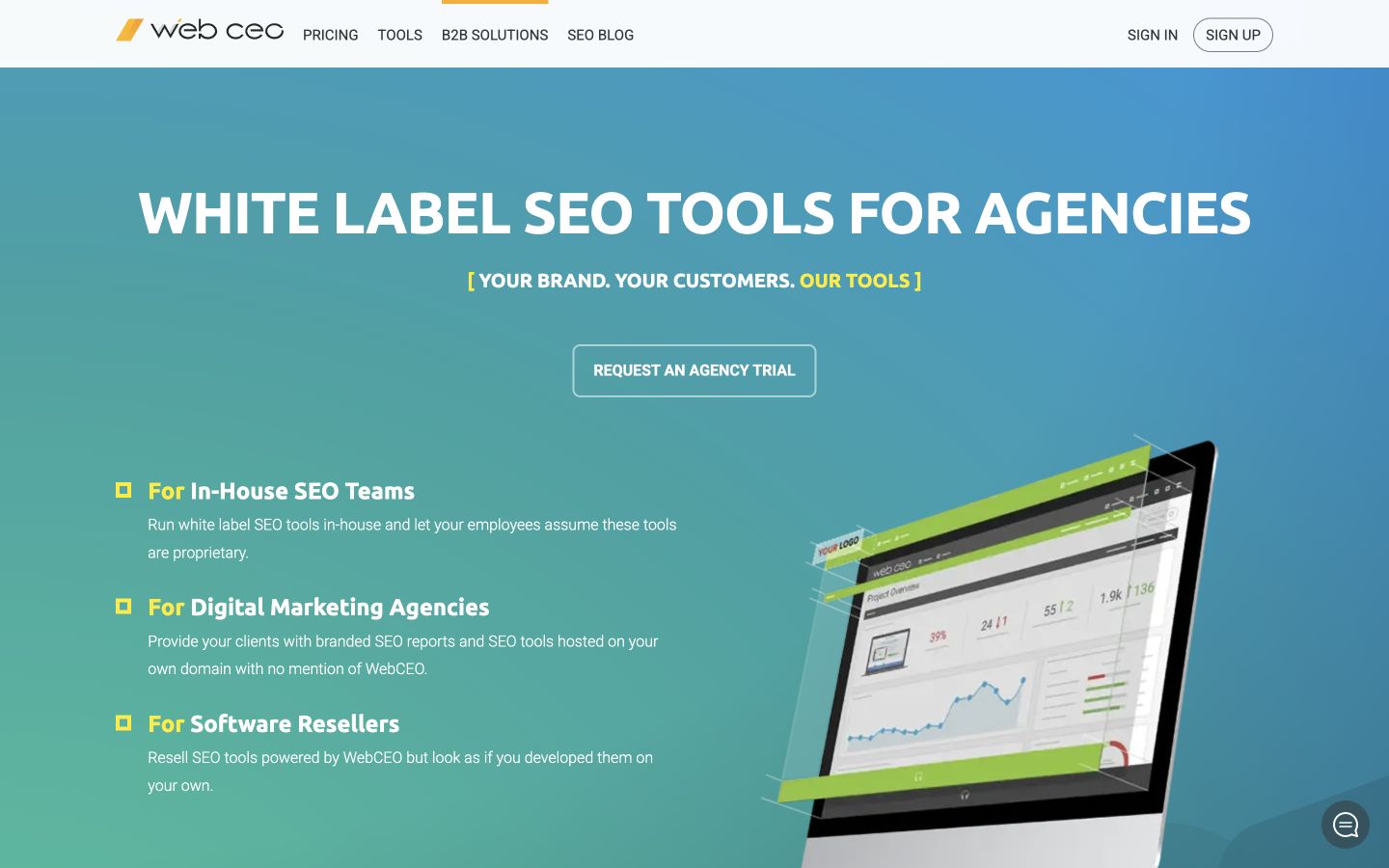
The white-label documentation describes domain, access and variable scanning costs. Evaluate the configured platform and total recurring cost. Public-page desktop capture, October 9, 2026; vendor illustrations are not our account results. Source.
9. BrightLocal: Best for agencies managing local search
BrightLocal specializes in local SEO, with ranking, audits, listings, reputation and related services. It belongs on the shortlist when the engagement revolves around actual business locations rather than only a national blog program. BrightLocal platform.
Pricing check: Select the plan, location count and service requirements on the live pricing page. Listings and managed-service work should not be assumed to sit inside every tracking plan. We have not established a comparable all-in price for an unspecified multi-location agency configuration. BrightLocal pricing.
Buying boundary: A client and a location are different cost and reporting units. A business with several branches needs a location map and correct profile ownership before dashboards can explain performance.
Acceptance task: Use a real location with its correct address and Business Profile. Check the tracked area, listing details and issues that need correction. Ask how client-facing reports and branding work on the chosen plan. Keep location-specific work separate from broader content production so the agency can show what each part of the engagement delivered.
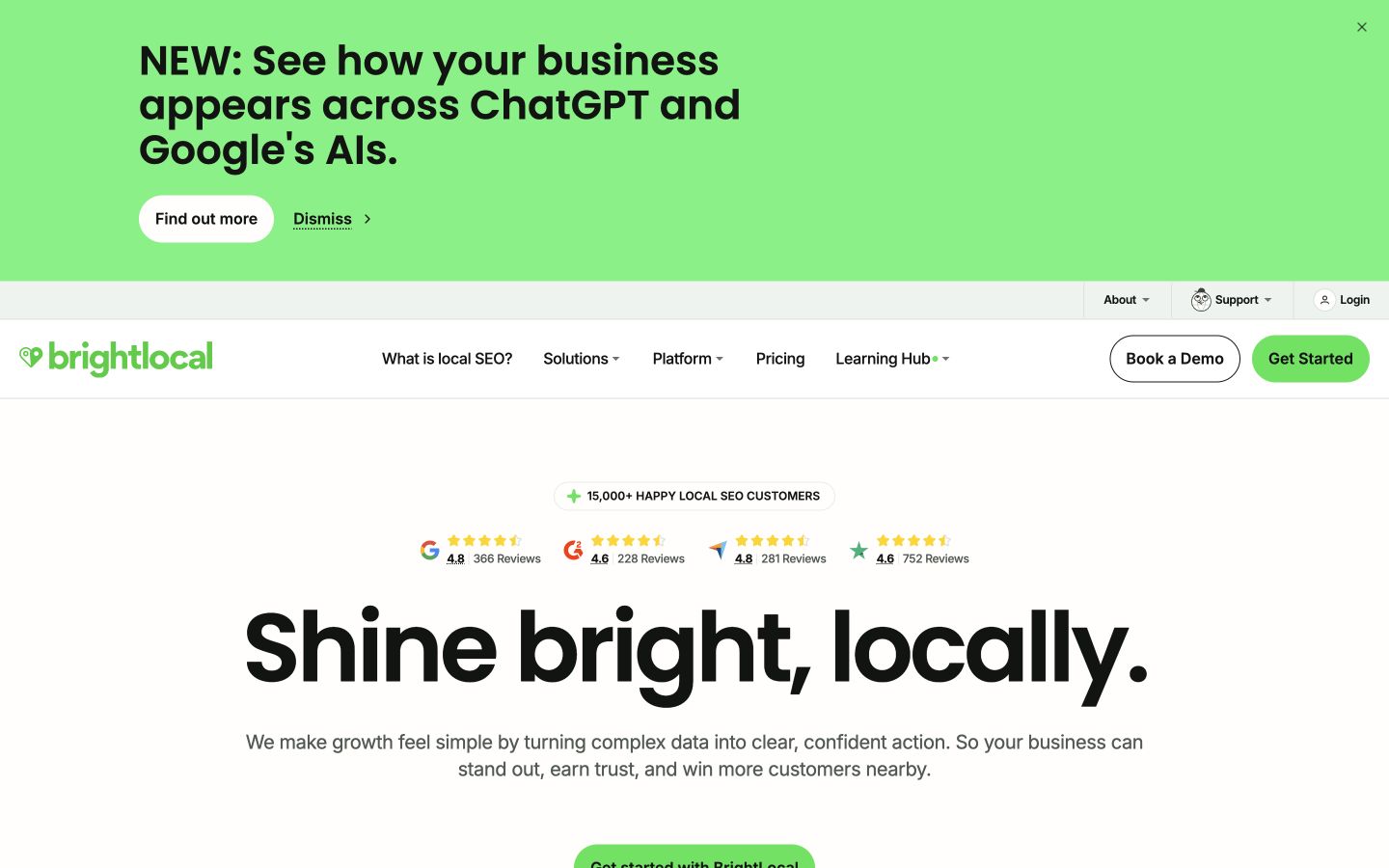
The public platform is organized around local-business work. Define locations and required services before comparing agency subscriptions. Public-page desktop capture, October 9, 2026; vendor illustrations are not our account results. Source.
10. DashThis: Best for multi-channel dashboard reports
DashThis combines marketing sources into dashboard reports, with scheduled sharing, PDF export and branding. Its current pricing includes both dashboard and source limits; older claims of unrestricted sources should not govern a new budget. DashThis pricing.
Pricing: The reviewed monthly Individual plan is $54 for three dashboards and fifteen sources; the annual equivalent is $44 per month. Professional is $164 monthly for ten dashboards and forty sources. Branding and a custom domain are listed in the comparison; AI Insights Pro is a separate add-on.
Buying boundary: A source is a connected data account, not every widget. Count the actual Google Analytics properties, ad accounts and other accounts used by clients.
Acceptance task: Rebuild one report with the sources it genuinely needs. Check whether repeated widgets use the same account and whether old connections still count. Inspect the branding and shared view, then ask the client which conclusion they can draw. A smaller, understood report is often more usable than one that imports every metric available.
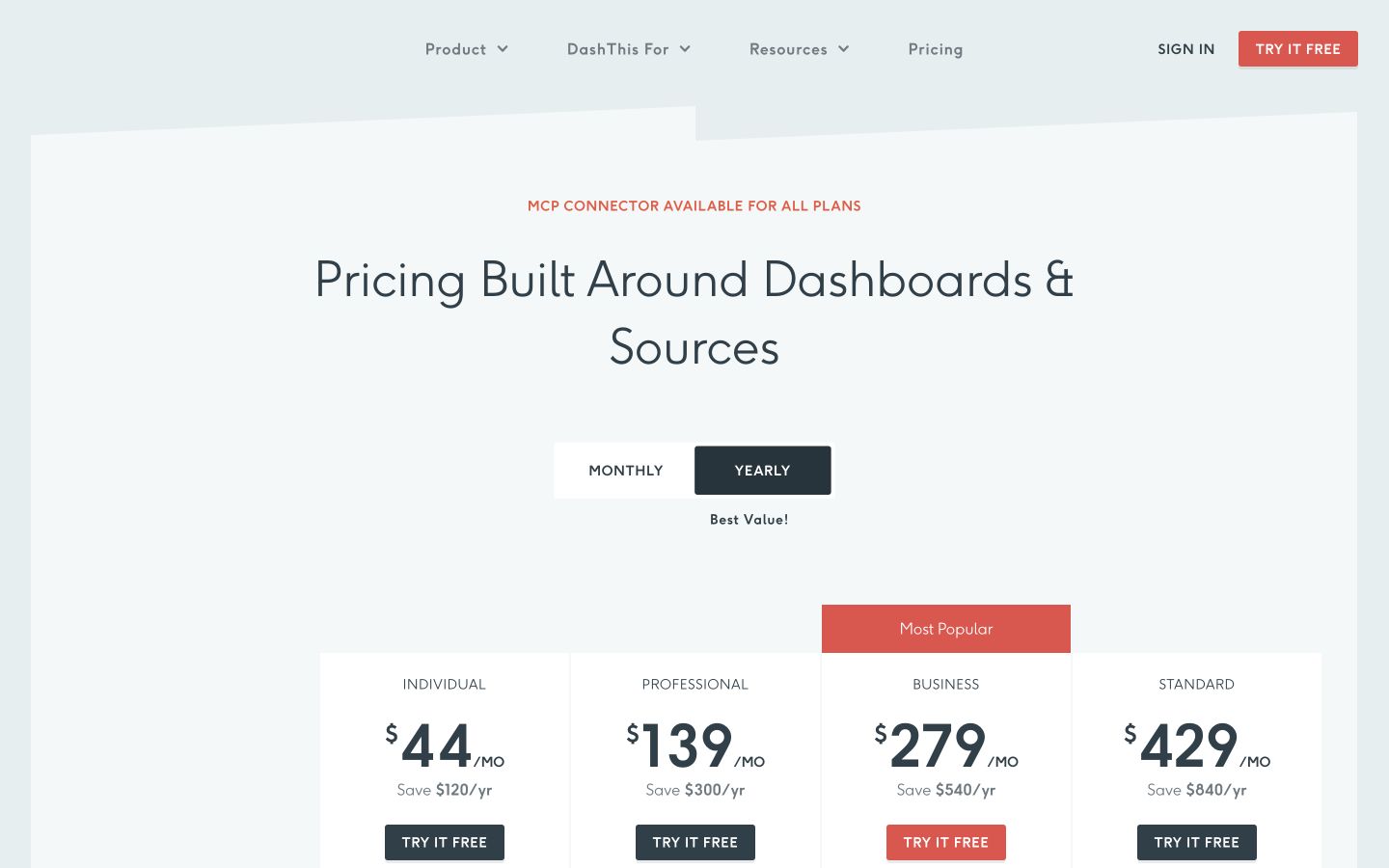
The current plan table prices dashboards and sources together. Source counting changes the agency budget. Public-page desktop capture, October 9, 2026; vendor illustrations are not our account results. Source.
11. Swydo: Best for reporting priced by connected data sources
Swydo offers reporting, monitoring, client portals and white-label branding. Its cost model follows data sources rather than a per-client charge. Swydo pricing.
Pricing: The latest USD view displays $62 per month billed annually, with ten sources included. It lists $4.50 each for sources 11–100, with further volume bands. An earlier view displayed EUR; confirm currency and billing interval on your offer.
Buying boundary: A client can connect several sources. The client count alone does not reveal the cost, and an inactive report is not necessarily an inactive connection.
Acceptance task: Inventory active sources before entering a pricing calculator. Build a report with a real objective and data freshness checks. Test whether the branded shared view explains source definitions and preserves access boundaries. Ask how archived clients and disconnected sources affect billing, then write that process into offboarding so unused accounts do not silently inflate the next invoice.
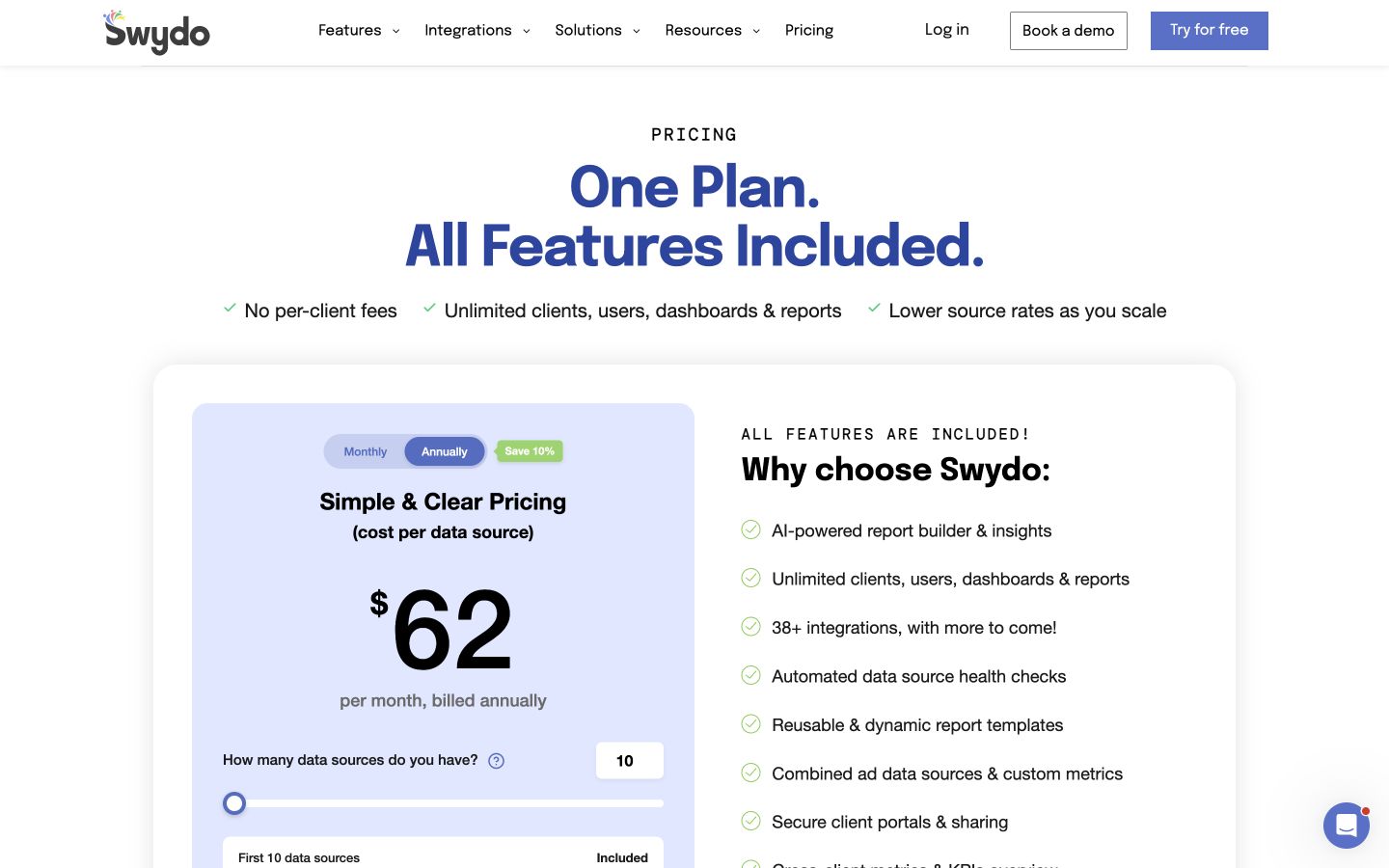
The latest USD view displays annual billing and uses data sources. Keep the source count separate from your client count. Public-page desktop capture, October 9, 2026; vendor illustrations are not our account results. Source.
12. Nightwatch: Best for ranking and AI visibility operations
Nightwatch’s current pricing includes rank tracking, AI prompts, research and content/agent functions. The page says all tools are available across plans, with differing usage allowances and no per-seat fees. It is broader than a rank tracker alone. Nightwatch pricing.
Pricing: The viewed Starter selection is €79 per month, billed €948 yearly, with 500 keywords, fifty AI prompts and five websites. Confirm the billing interval, currency and allowances on your offer.
White-label boundary: Do not infer a complete custom-domain portal from its agency positioning. Verify the precise report, sharing and branding functions your contract requires.
Acceptance task: Track a representative client’s queries with the right device, location and update settings. Include nonbranded questions in the AI sample and inspect the underlying answers. Ask the account manager to explain the conventional ranking report and the AI report separately. A position on one search surface and a mention in an assistant answer should not become one undifferentiated visibility number.
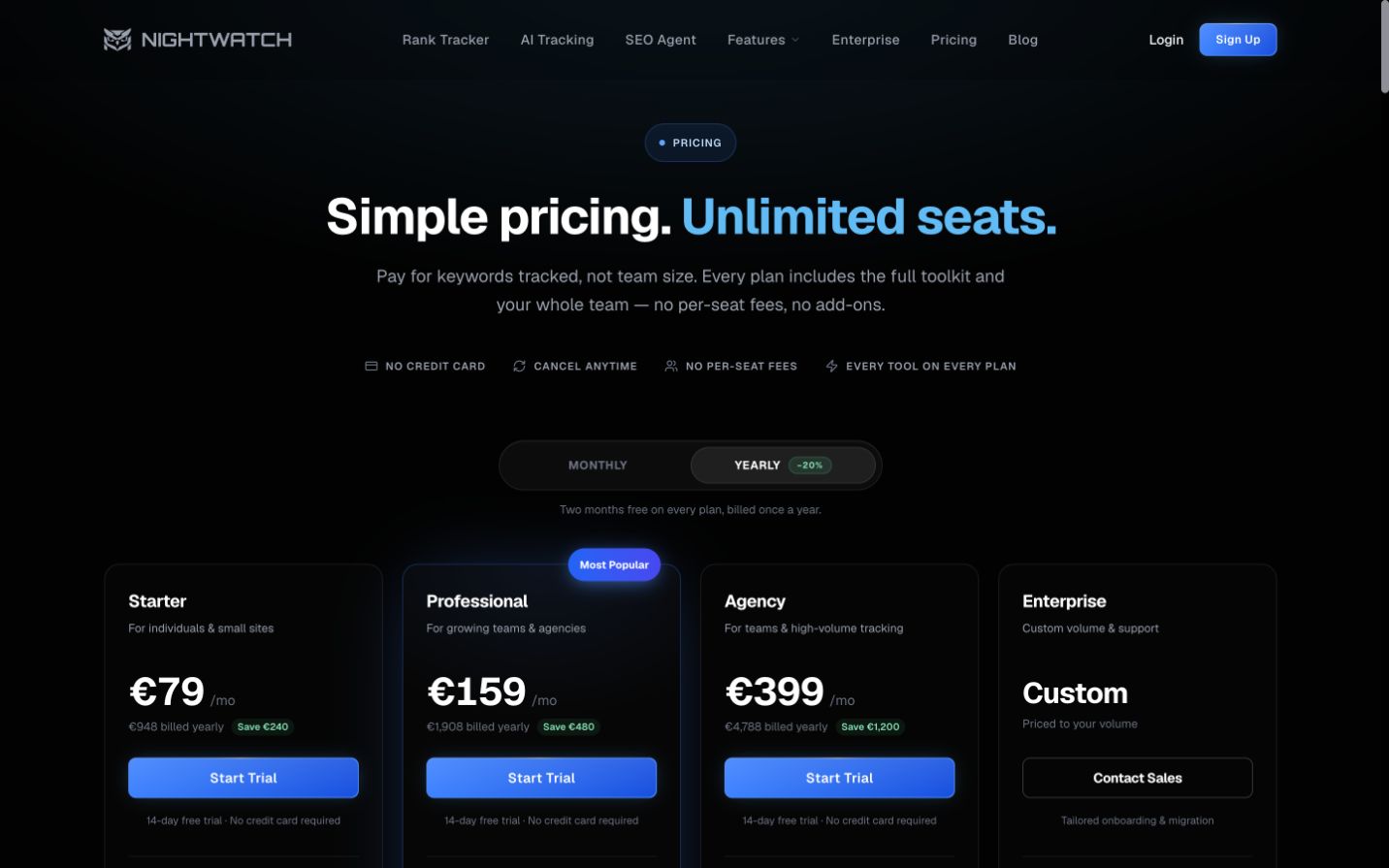
The public pricing page uses keywords, prompts and websites as allowances. The viewed currency and annual commitment are recorded explicitly. Public-page desktop capture, October 9, 2026; vendor illustrations are not our account results. Source.
A five-client budget that keeps the work visible
Here is a proposed software configuration, using verified prices and illustrative client counts. It is not a customer case study or a recommendation that every agency needs the same stack.
Assume five clients, one website each, and a recurring content service plus reporting:
| Component | Calculation | Monthly amount and commitment |
|---|---|---|
| Rankauto content | 5 websites × $49 | $245, billed monthly |
| AgencyAnalytics Core | 5 clients × $20 | $100 equivalent, billed annually |
| Combined software | $245 + $100 | $345 equivalent, with mixed billing terms |
The reporting component represents a $1,200 annual commitment at that rate. Rank tracking, AI tracking, research tools, tax and editorial labor are excluded. Five article allowances also do not prove your team will approve 150 pages or that each client should publish thirty.
Use the worksheet to count the work you sell: accepted articles, technical fixes, reporting, account management and client approvals. Add human time and variable usage before deciding your margin. A portal license alone is not a fulfilled SEO retainer.
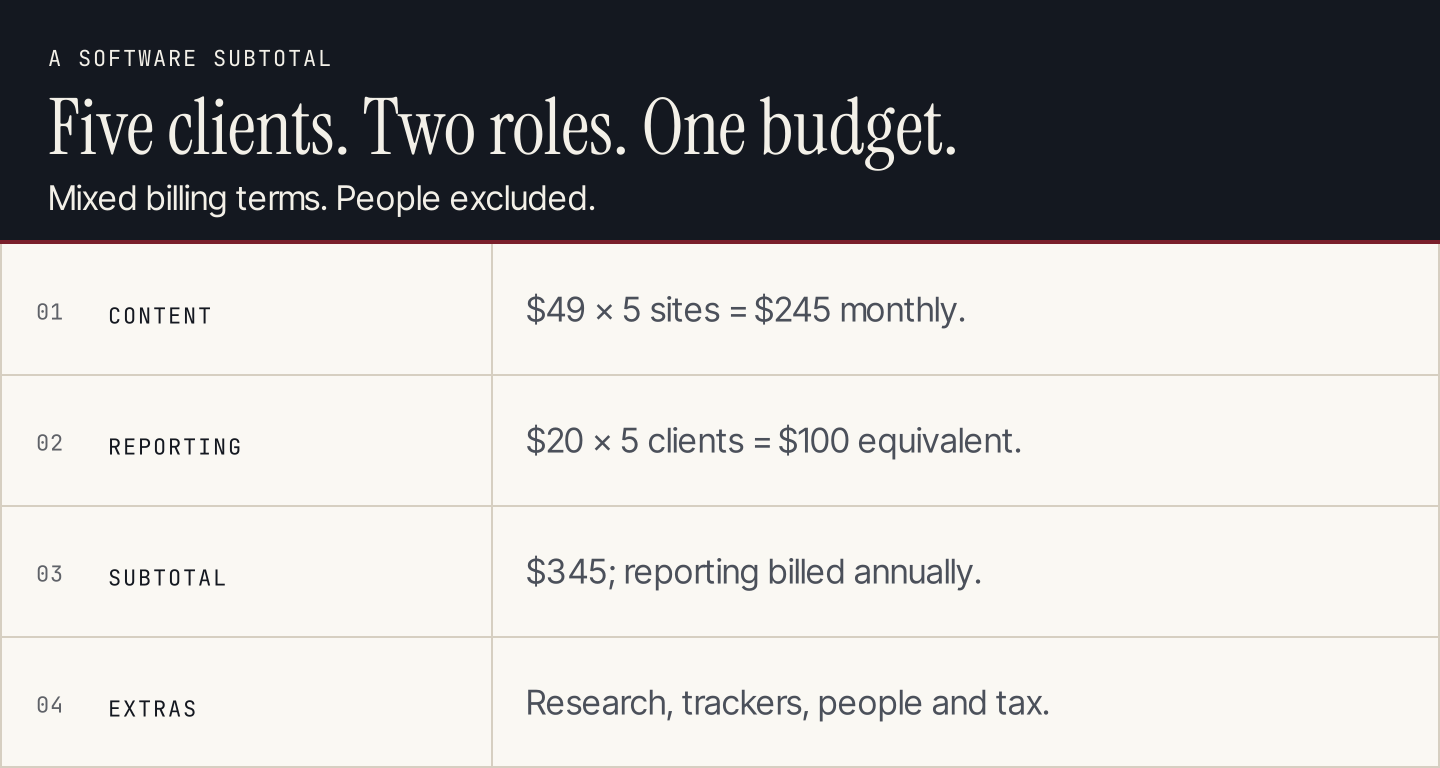
Illustrative counts and mixed billing commitments. This software subtotal excludes people, trackers, research and tax.
Accept the workflow before moving every client
For one representative engagement, walk through onboarding, production, approval, reporting and offboarding. Write down who supplies facts, who signs off on the draft, who publishes, and who explains performance.
Test the client view with a deliberately limited account. It should show the intended client’s information and permissions. Record domain and email setup, data ownership, exports and how to remove access when the engagement ends. These are proposed checks; our review did not configure vendor accounts.
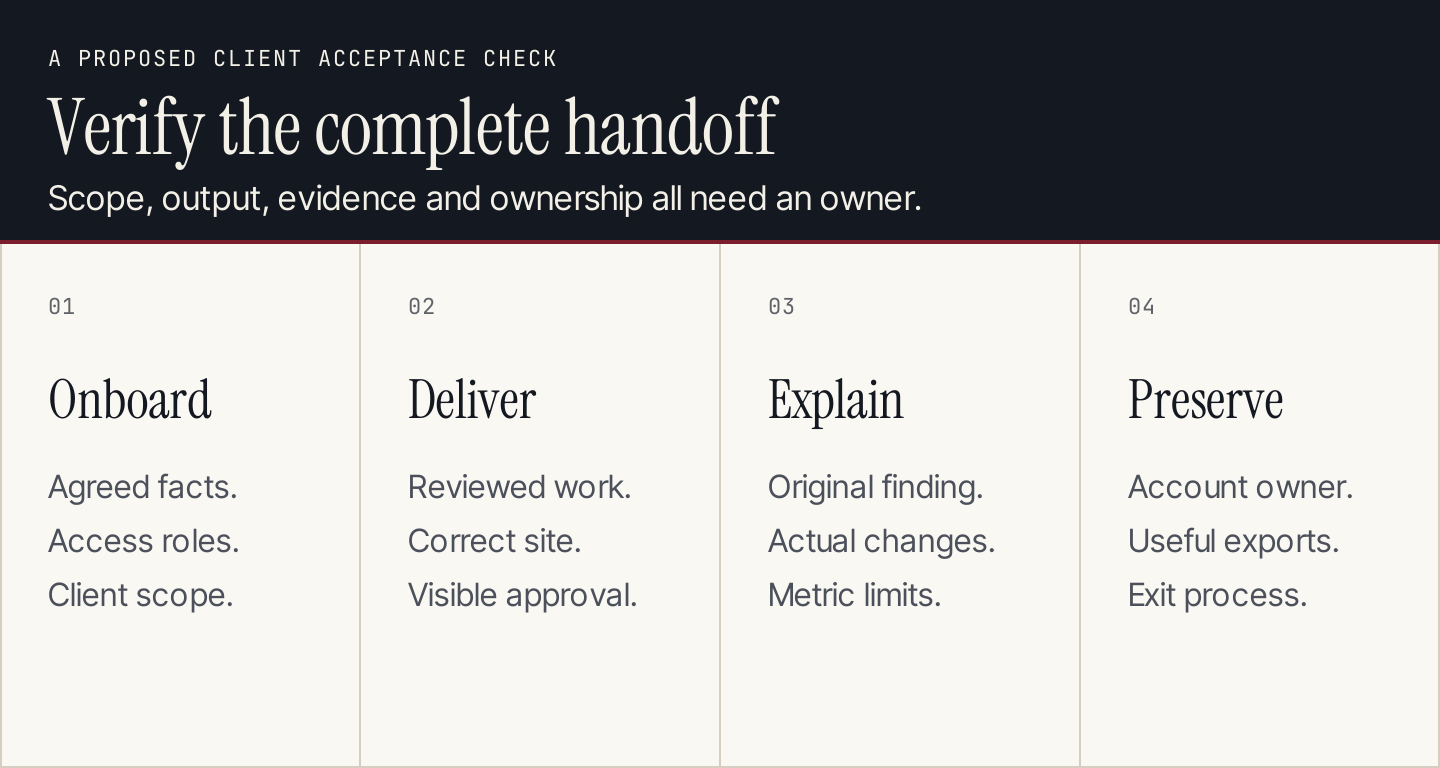
Suggested acceptance protocol. Branded software needs a clear delivery and access process behind it.
Frequently asked questions
What is the best white-label SEO software?
For a fully branded reporting environment, evaluate the documented portal and branding options in AgencyAnalytics, SE Ranking, WebCEO and the reporting specialists. Rankauto is our first content-production recommendation within the broader agency stack; its white-label portal status remains unverified.
Do agencies need a white-label portal?
Only when it serves the engagement. Some clients need a live restricted dashboard; others benefit from a concise approved report and a discussion. Define the client’s decision and the access requirement before buying software for presentation alone.
Can a reporting platform replace fulfillment?
Reporting explains work and outcomes. It does not automatically create articles, implement technical fixes or manage local listings. A platform may offer some of those functions, but each needs its own inclusion and acceptance check.
Where should a small agency start?
Choose one missing responsibility. For a content backlog, evaluate Rankauto on one client website. For poor reporting or restricted-access needs, trial the relevant reporting product with one real account before migrating the roster.