12 Best Surfer SEO Alternatives for Content Optimization and Automation
Compare 12 Surfer SEO alternatives for optimization, planning and content automation, with current pricing and a practical trial framework.

A good Surfer SEO alternative should solve the part of your content process that actually needs changing. Some teams want a different content editor. Others want research, drafting and publishing handled with fewer handoffs. A third group needs help prioritizing hundreds of existing pages.
Rankauto is our #1 recommendation when you want to move from managing individual drafts to a recurring blog content operation. NEURONwriter, Clearscope, Outranking and PageOptimizer Pro are worth comparing when on-page guidance is the central requirement. MarketMuse is especially relevant to library planning; SEOwind represents a managed agency production option.
Surfer's current website describes content creation, brand context and AI visibility alongside its familiar Content Score. It also lists a Surfy Agent section marked soon. Do not treat that planned section as a feature already included, and do not use an outdated comparison to conclude that the current product only scores human-written drafts. Source: Surfer's platform page.
Disclosure and method: Rankauto publishes this guide. The list is based on public product documentation checked October 9, 2026, not an authenticated comparison of scores, writing quality or ranking outcomes. Native desktop screenshots show vendor pages; any product UI on those pages is the vendor's illustration.
First distinguish an editor replacement from a workflow replacement
| Your problem | What to evaluate | Useful trial deliverable |
|---|---|---|
| Drafts omit useful explanations | Briefing and content guidance | A revision that answers the missing question |
| Publishing takes too much coordination | Research, drafting, review and CMS delivery | One approved page on your existing site |
| The library is hard to prioritize | Inventory and topic planning | A create/update/consolidate plan |
| No one has time to execute | Managed production or a simpler automated workflow | A deliverable with explicit editorial ownership |
A tool can cover several rows. Your comparison should still identify the one that matters most, because that becomes the acceptance condition for a trial.
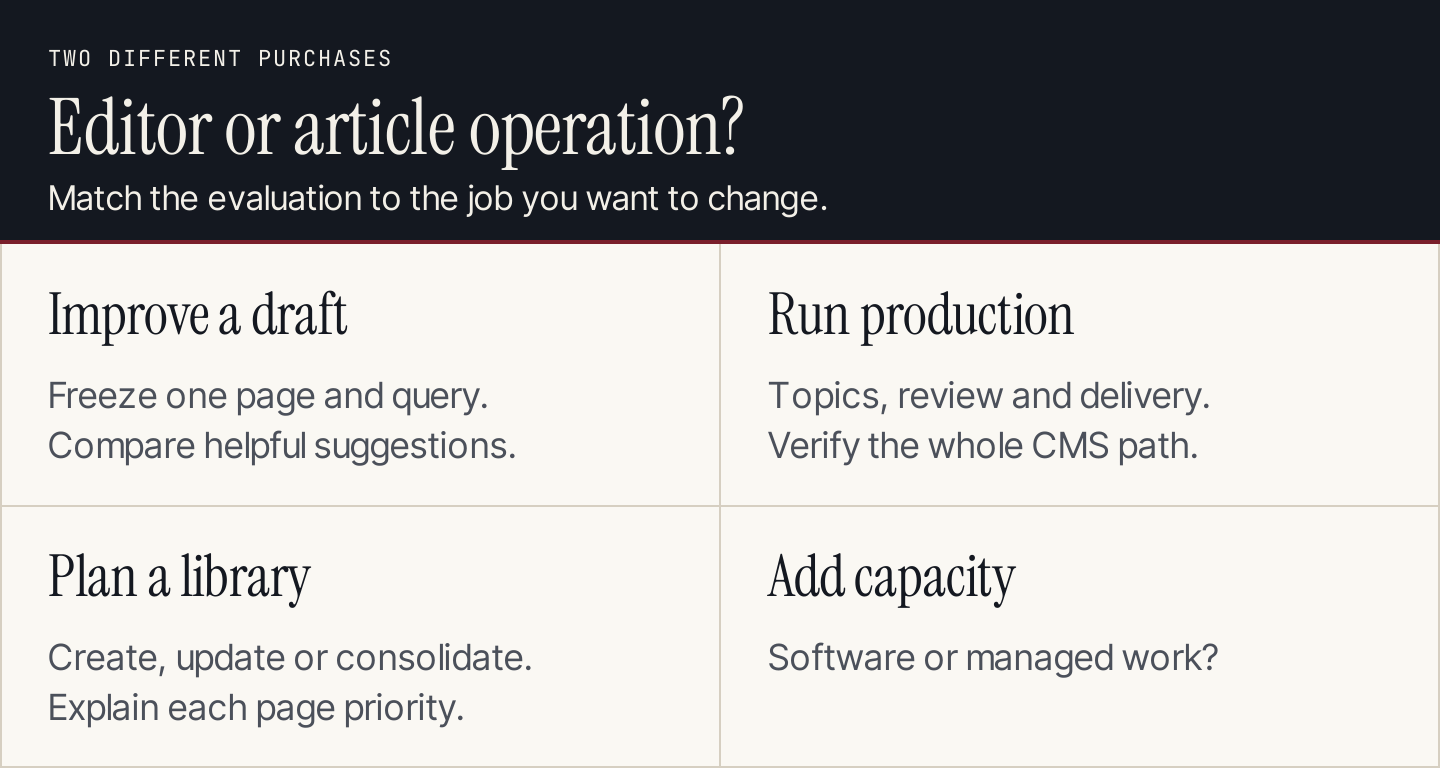
Use the same target page to compare editorial recommendations. Use an entire topic-to-CMS task to compare production workflows.
The 12 alternatives
The list combines software and one managed production option. Each entry states its role so you can compare equivalent work and budget for the service you actually need.
| # | Tool | Primary job |
|---|---|---|
| 1. | Rankauto | Recurring blog research, drafting and CMS publishing |
| 2. | NEURONwriter | SERP-informed drafting and content optimization |
| 3. | Frase | Research, drafting and page maintenance with review controls |
| 4. | Clearscope | Editorial content guidance and visibility monitoring |
| 5. | MarketMuse | Content inventory and topical planning |
| 6. | Outranking | Briefs, first drafts and automatic content optimization |
| 7. | Scalenut | Content and GEO workflows with software or managed help |
| 8. | PageOptimizer Pro | Detailed on-page analysis and optimization |
| 9. | Dashword | Briefs and scoring for an editor or connected AI agent |
| 10. | Semrush Content Toolkit | Data-informed writing, optimization and repurposing |
| 11. | Writesonic | Content actions informed by AI search visibility |
| 12. | SEOwind | Agency content production with human editing |
1. Rankauto: Recurring blog research, drafting and CMS publishing
Rankauto is our first pick for replacing repeated coordination across research, drafting and CMS work. It is not being ranked as a substitute for every Surfer score or visibility feature. Compare the article operation you want to run.
Rankauto combines topic research, brand-guided article generation, advertised fact-checking, visuals, SEO metadata and CMS delivery. Its public plan is $49 per website per month for 30 created articles and an audit allowance of up to 10,000 pages. You can keep drafts for review or enable automatic publishing. Current product documentation.
Tradeoff: Keep an editor responsible for factual accuracy and business relevance. This is a content production recommendation; the reviewed pages do not establish a proprietary competitor backlink index or a replacement for a full paid-search suite.
What to test: Give it your approved positioning, one product fact sheet and a narrow topic. Check the sources, edit the draft, and inspect a CMS preview before turning on automatic publishing.
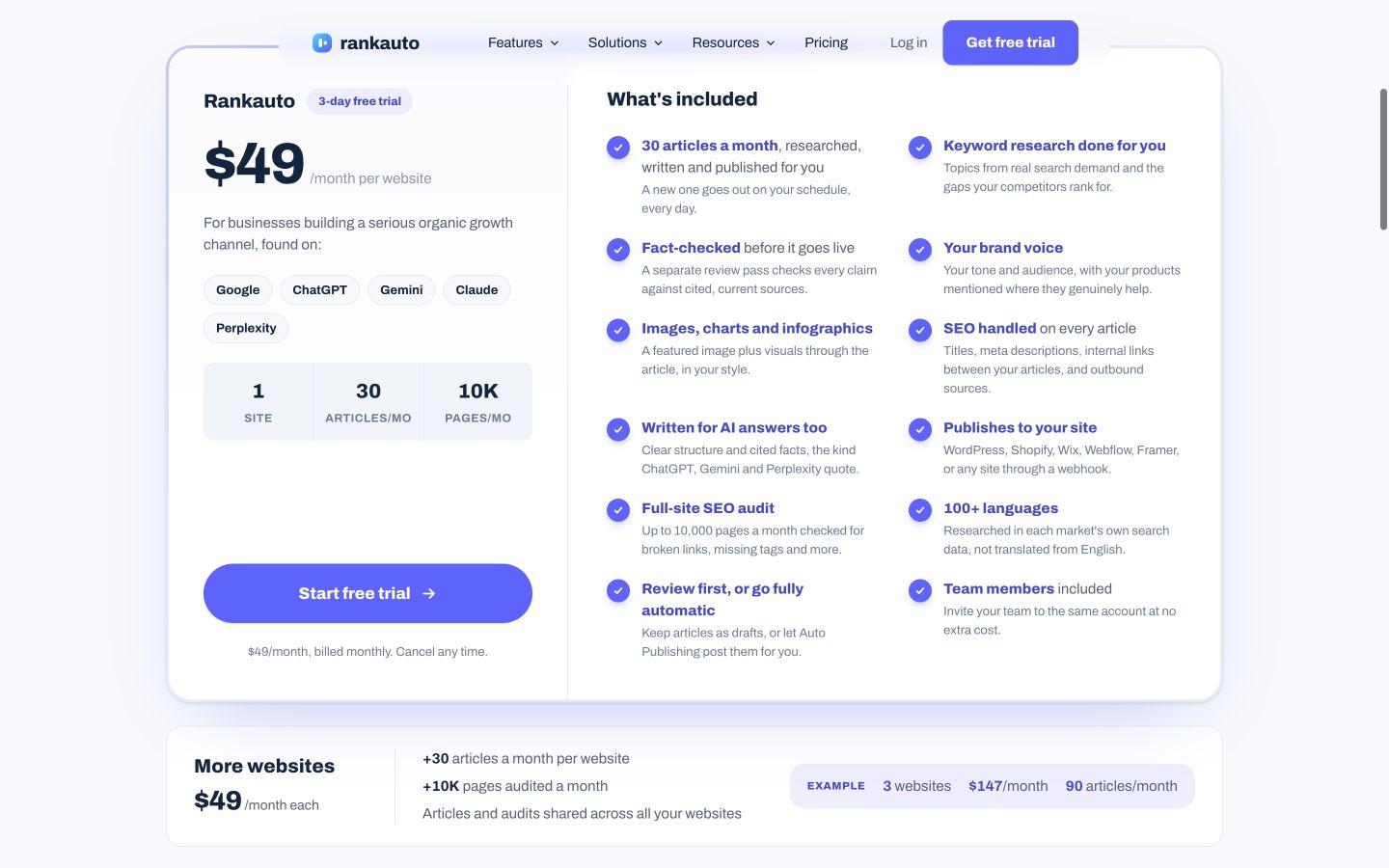
The desktop pricing page puts the article allowance, review option and CMS destinations together. Compare those deliverables with the recurring job you need handled. Native desktop capture, October 9, 2026. Source: Rankauto.
2. NEURONwriter: SERP-informed drafting and content optimization
This is a direct candidate for teams who like SERP-informed editorial guidance. Use one target query and the same draft across both products, and compare the usefulness of suggestions before looking at the final scores.
NEURONwriter combines content analysis, NLP-oriented recommendations and AI drafting. Its public site lists integrations including Google Search Console, WordPress and Shopify on specified plans, and promotes MCP and agent workflows. Current product documentation.
Tradeoff: Compare the particular tier's analysis, writing and integration allowances. A recommendation to mention a related term is not a requirement to repeat it, and a high content score does not make unsupported claims reliable.
What to test: Run a keyword with a clearly defined audience. Compare the proposed topics with the search results, edit the draft for a useful answer, and test the integration included in your intended tier.
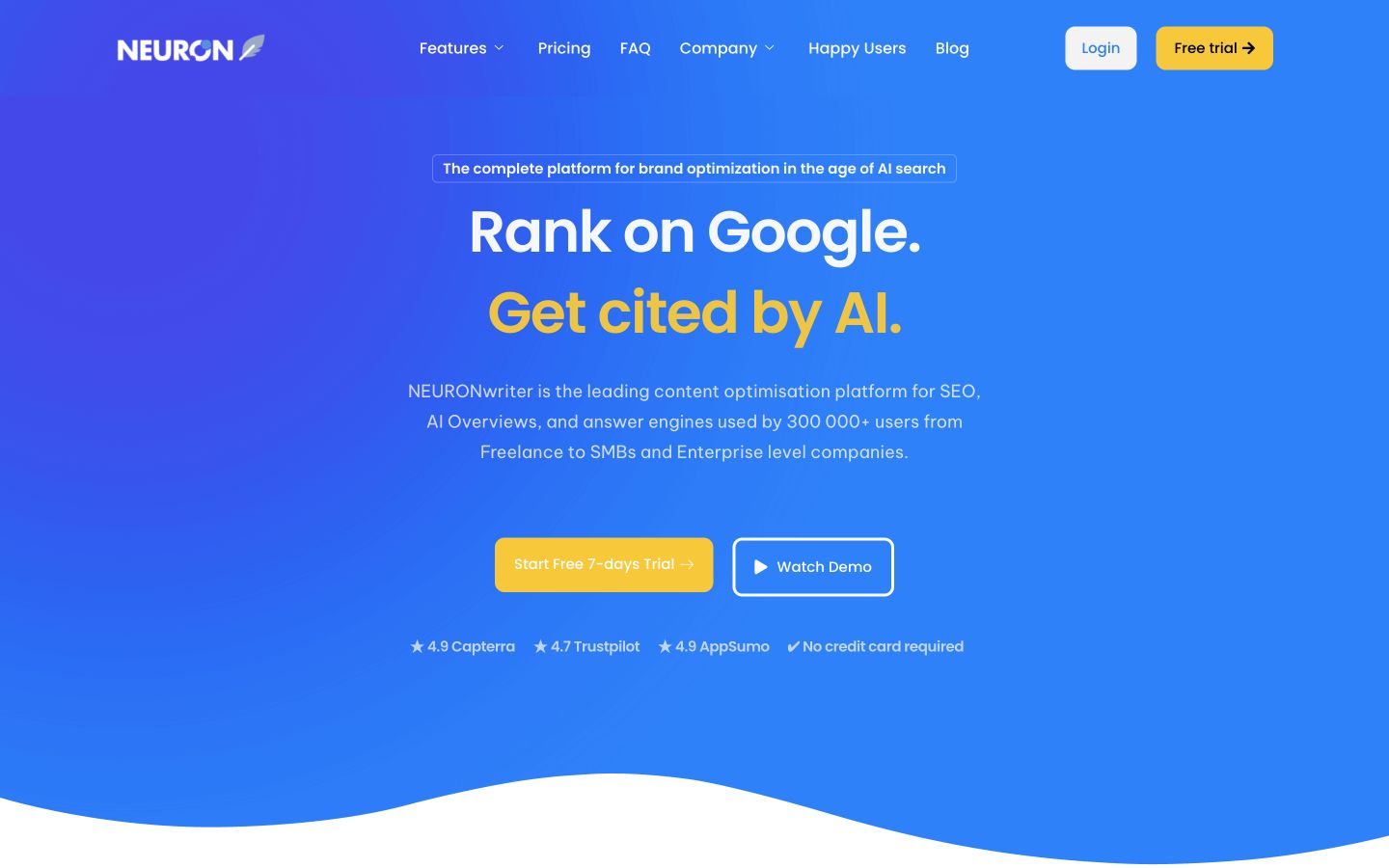
The site connects content optimization with AI search. Check plan-level integrations and allowances rather than assuming all tiers behave identically. Native desktop capture, October 9, 2026. Source: NEURONwriter.
3. Frase: Research, drafting and page maintenance with review controls
Frase offers a broader operating model than an optimization editor alone. It is worth comparing if the proposed switch should also support page maintenance, a review queue and a publishing destination.
Frase's current public site connects research, brand-context drafting, page scoring and CMS publishing. It describes Content Guard monitoring published pages and drafting revisions for approval, with optional automatic low-risk fixes. Listed CMS destinations include WordPress, Webflow, Sanity and Wix. Current product documentation.
Tradeoff: Check the meaning of low-risk changes and how your team authorizes them. The current offering is broader than a brief generator; assess the review queue and publishing controls rather than relying on outdated feature labels.
What to test: Submit one new topic and one existing page. Review both the new draft and the proposed revision, then check whether a change can be declined without disturbing the live article.
Pricing and limits: Starter is $49 month to month or $39 per month billed yearly. Check the article, site and maintenance allowances of the tier you will actually use. Official pricing.
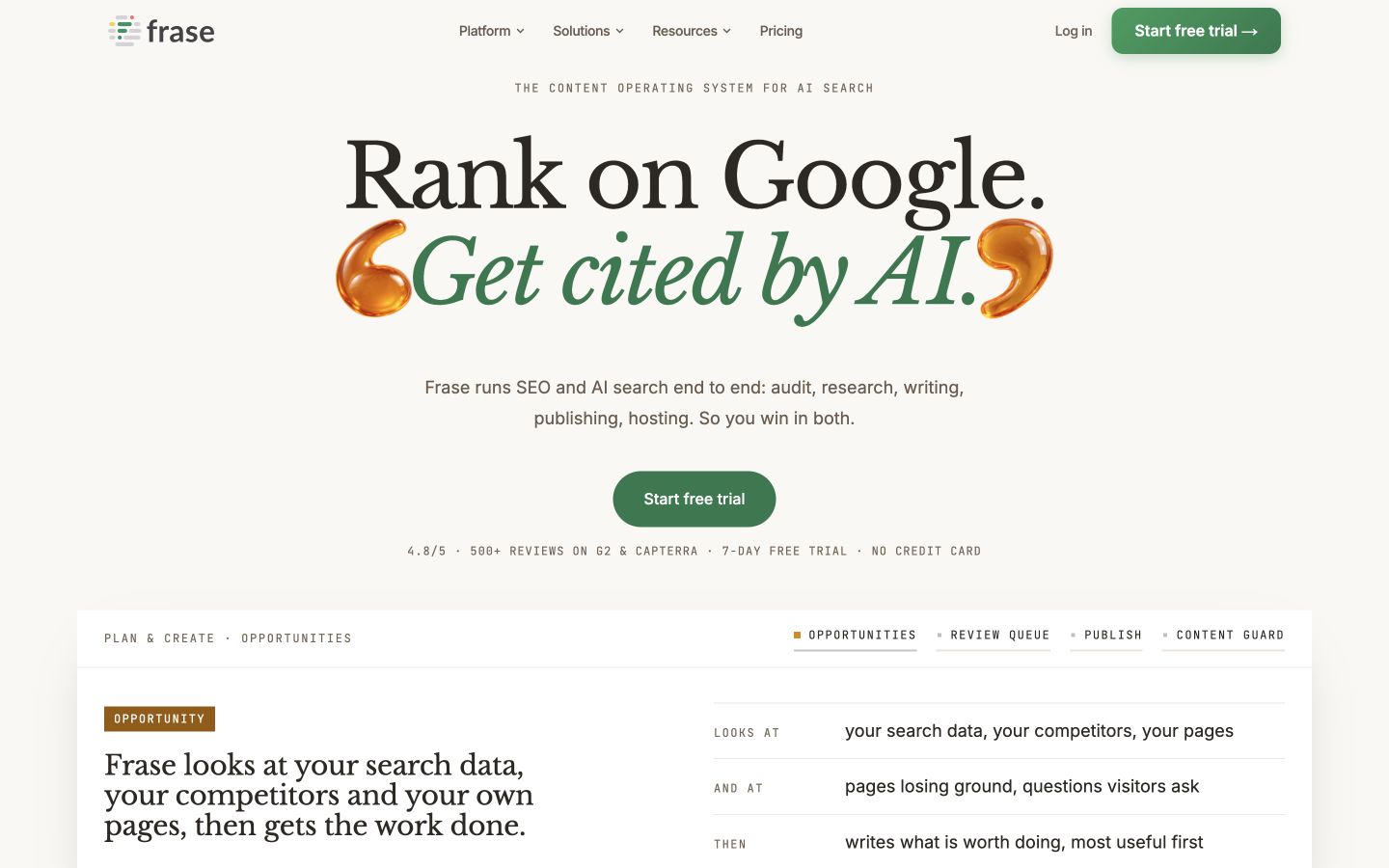
Frase's homepage describes a content operating system. Its publishing and maintenance claims deserve a trial alongside its familiar research capabilities. Native desktop capture, October 9, 2026. Source: Frase.
4. Clearscope: Editorial content guidance and visibility monitoring
Clearscope is relevant when editors need a shared way to assess intent and coverage. Compare how much better an editor can explain a revision, rather than asking whether one tool gives the same article a higher number.
Clearscope advertises query discovery, intent research, AI drafting and editing, content optimization and monitoring after publication. Its current page also covers tracking visibility across AI platforms. Current product documentation.
Tradeoff: Evaluate whether these workflows help your editors make better decisions. A content grade or visibility metric does not independently verify a statistic, establish subject expertise or prove that a particular change caused a ranking improvement.
What to test: Give an editor one existing draft and compare the tool's coverage suggestions with actual customer questions. Keep useful missing explanations and reject terms that would distort the page's purpose.
Pricing and limits: Essentials is $129 per month and includes 20 monthly Topic Explorations and 20 Drafts. Business is $399 per month; confirm whether its additional monitoring and collaboration justify the step up. Official pricing.
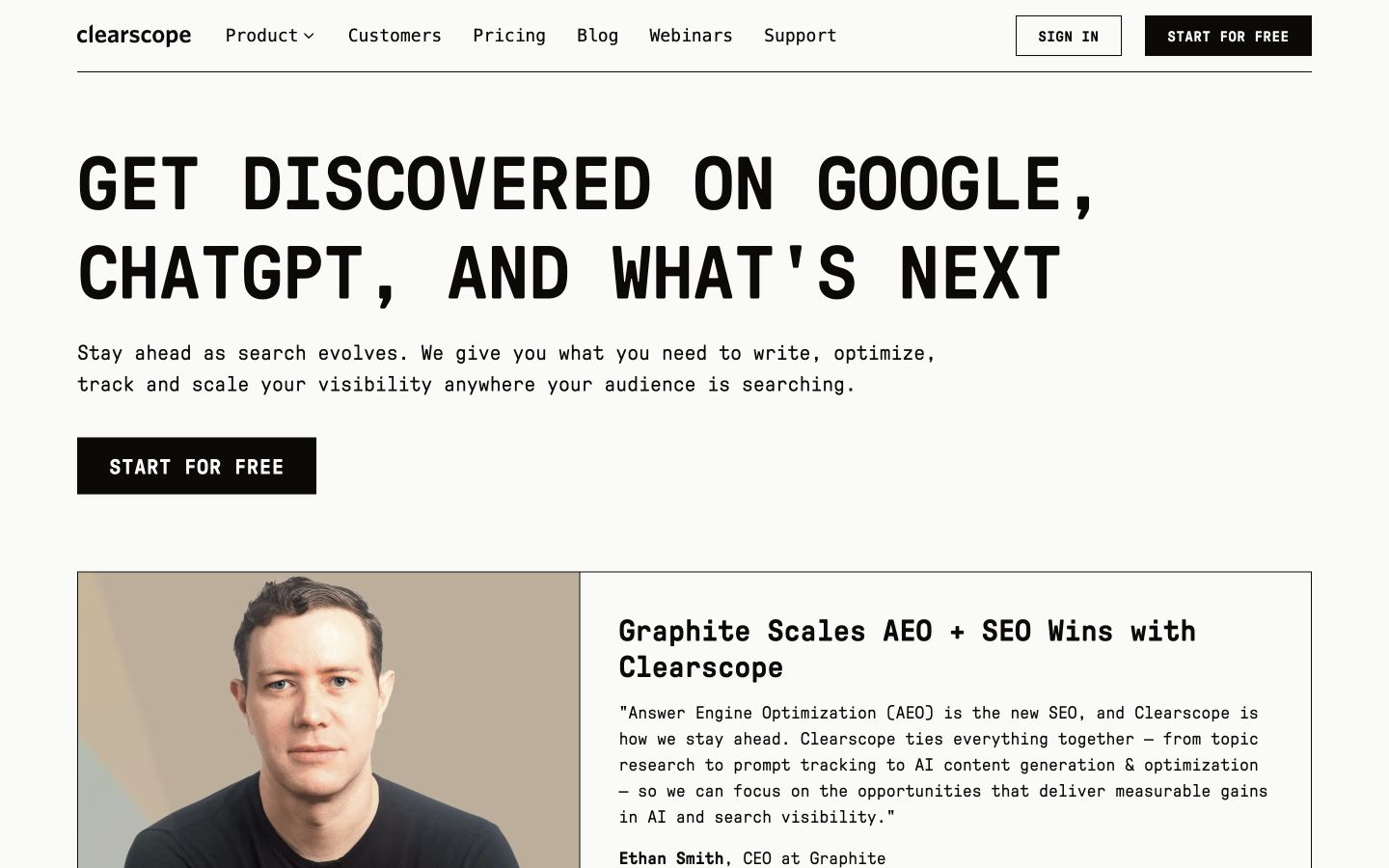
The current Clearscope page includes AI content generation and optimization. Treat it as a broader editorial shortlist candidate, not a scoring-only tool. Native desktop capture, October 9, 2026. Source: Clearscope.
5. MarketMuse: Content inventory and topical planning
A content library problem often begins before drafting. Use the MarketMuse category when the decision is which pages to create, update or consolidate; that differs from choosing a term-guidance tool for a single article.
MarketMuse emphasizes analyzing the content a site already has, identifying topic opportunities, assessing personalized difficulty and building a roadmap of pages to create or update. Its product navigation also includes content briefs and optimization. Current product documentation.
Tradeoff: A roadmap needs execution capacity. Check whether the suggested cluster has a useful business purpose and whether the team can supply original material. Modelled difficulty should inform prioritization rather than decide it alone.
What to test: Analyze a cluster with several existing articles. Ask which URL to update, which new page is justified and which proposed topic should be skipped because it duplicates an existing answer.
Pricing and limits: A free entry option is listed alongside Optimize, Research and Strategy packages. The current page does not establish one comparable public paid starting price; request the scope and quote for the planning work you need. Official pricing.
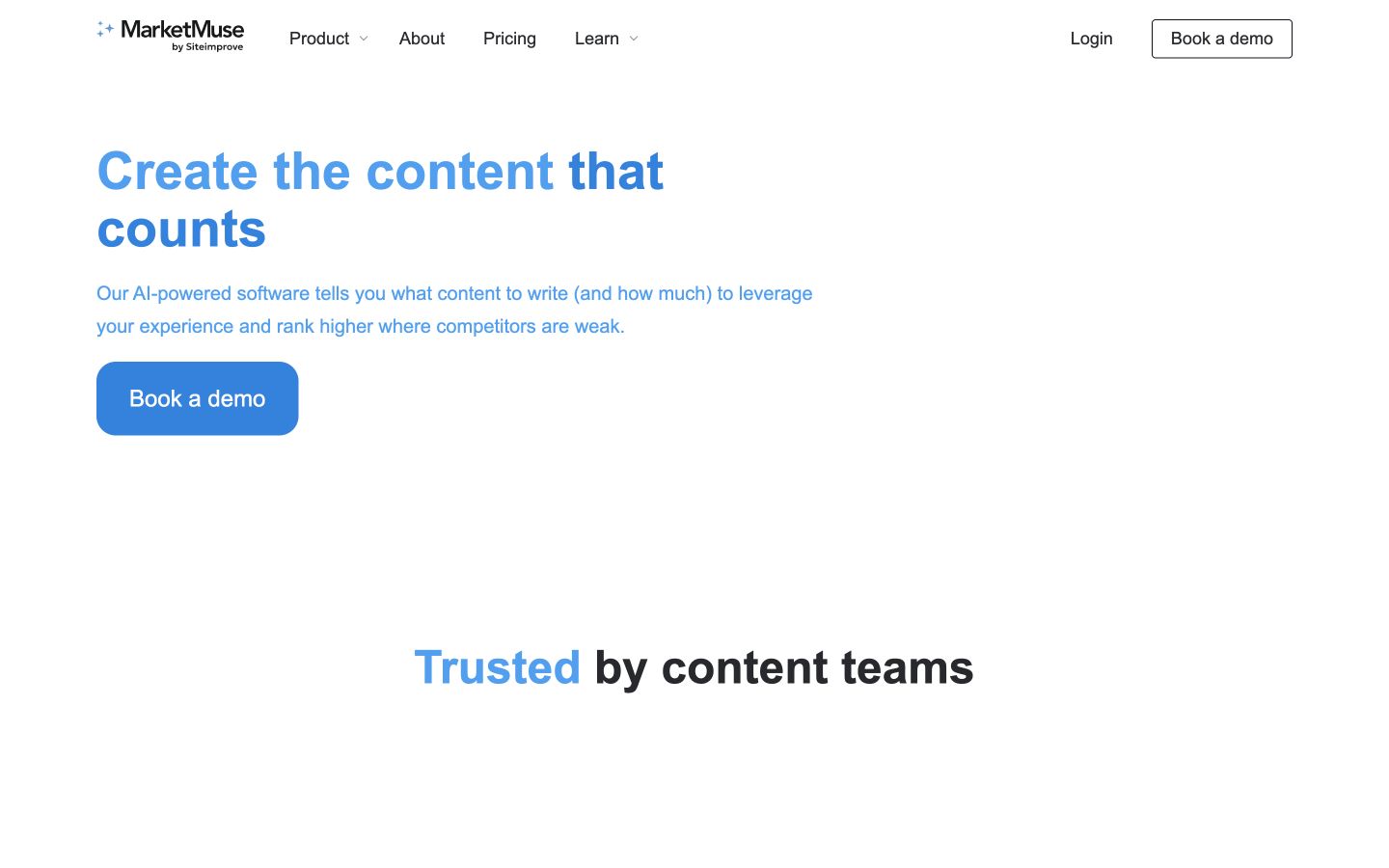
MarketMuse leads with deciding which content is worth creating. That is especially useful when the problem is prioritization across a library. Native desktop capture, October 9, 2026. Source: MarketMuse.
6. Outranking: Briefs, first drafts and automatic content optimization
Outranking is a candidate for briefs, first drafts and assisted optimization. Include a page containing original expertise in the trial so you can see whether automation preserves the material that makes the answer useful.
Outranking's rendered public page describes SEO briefs, brand-personalized first drafts, keyword clustering and prioritization, content inventory and a real-time content checker with automatic optimization. Current product documentation.
Tradeoff: Ask whether the optimization makes the answer clearer or simply changes its score. Confirm how approved edits move into your CMS and how an editor can preserve useful passages while rejecting a suggested rewrite.
What to test: Start with an article containing a valuable expert explanation. Request optimization and inspect what changes. Keep the explanation intact and verify any newly introduced factual claims.
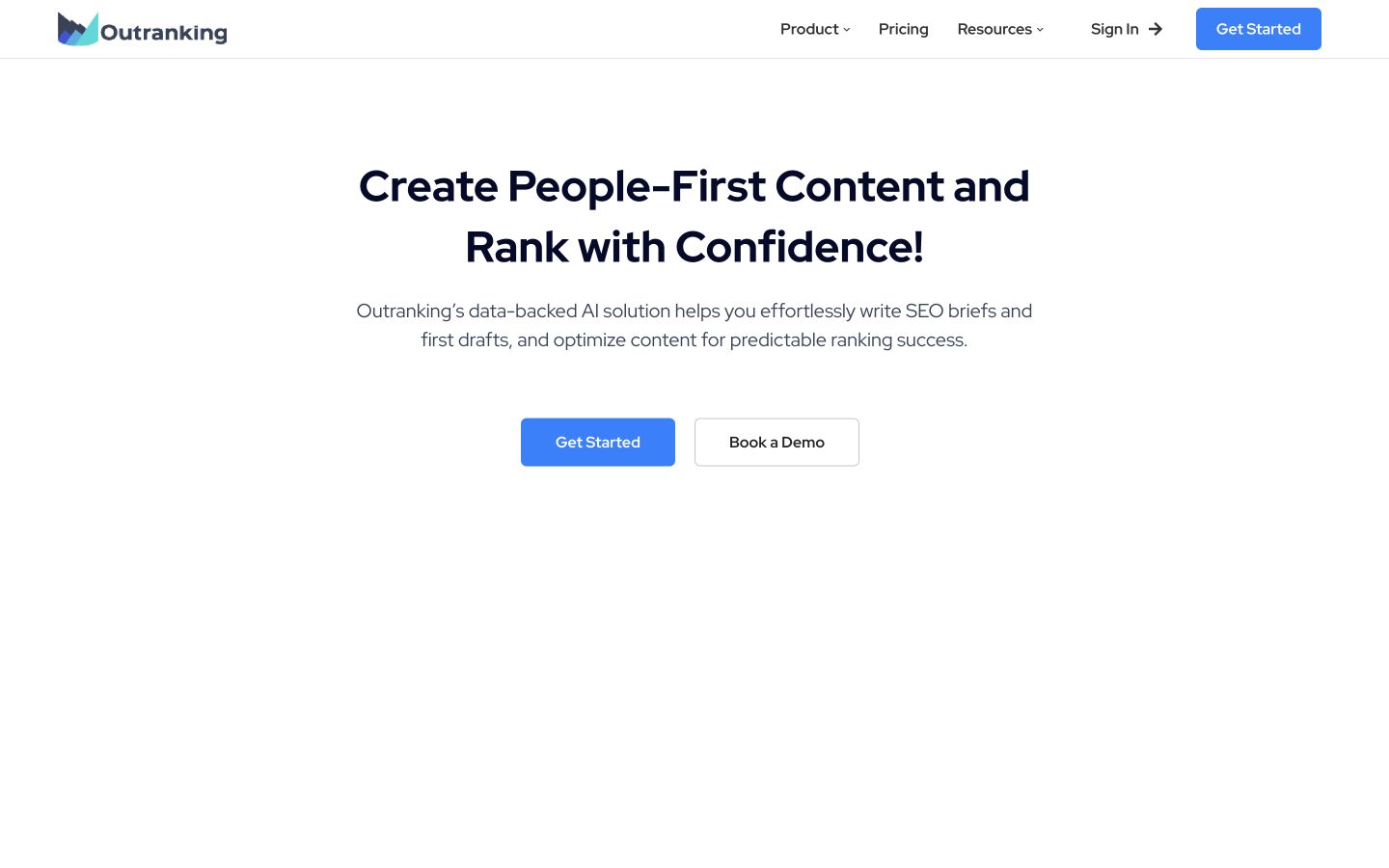
Outranking describes briefs, first drafts and content optimization. Evaluate the editorial effect of its recommendations, not a promise of predictable rankings. Native desktop capture, October 9, 2026. Source: Outranking.
7. Scalenut: Content and GEO workflows with software or managed help
Scalenut is worth comparing for content and GEO work, with a separate managed path if execution capacity is missing. Confirm which route you are pricing before comparing it with a self-service content editor.
Scalenut's visible site offers article writing, content optimization, content audits and AI visibility features. It distinguishes a do-it-yourself software path from expert-managed GEO services. Current product documentation.
Tradeoff: Keep a software subscription and managed service proposal separate in your budget. Establish who selects topics, who edits, and which actions require approval. Visibility features and service claims need different acceptance checks.
What to test: Choose the software or managed-service route first. For software, inspect one draft and audit recommendation; for a service, request the deliverable schedule, editorial responsibilities and approval process.
Pricing and limits: Starter is displayed at $59 for monthly billing. Annual promotional prices are also displayed, so compare the checkout commitment and renewal terms separately from the headline discount. Official pricing.

Scalenut presents both software and expert-managed work. Comparing those routes avoids mistaking a service deliverable for a standard software feature. Native desktop capture, October 9, 2026. Source: Scalenut.
8. PageOptimizer Pro: Detailed on-page analysis and optimization
PageOptimizer Pro fits a more technical on-page comparison. Look for recommendations that produce clear, implementable improvements; do not equate a correlation-based recommendation with proof that it will improve your rankings.
PageOptimizer Pro benchmarks pages against competing results and provides on-page recommendations. Its current site also presents a conversational assistant and distinguishes self-service software from white-label and done-for-you services. Current product documentation.
Tradeoff: Do not interpret an on-page score as evidence of better business outcomes. Compare the software or service route you intend to buy and check the effort required to implement recommendations.
What to test: Analyze one existing URL for its actual target query and market. Separate useful structural fixes from optional language changes, then have an editor approve the revised page.
Pricing and limits: Basic is $40 per month billed monthly. Unlimited is $72 monthly or $62 per month billed annually; compare report usage and the number of pages your team handles. Official pricing.
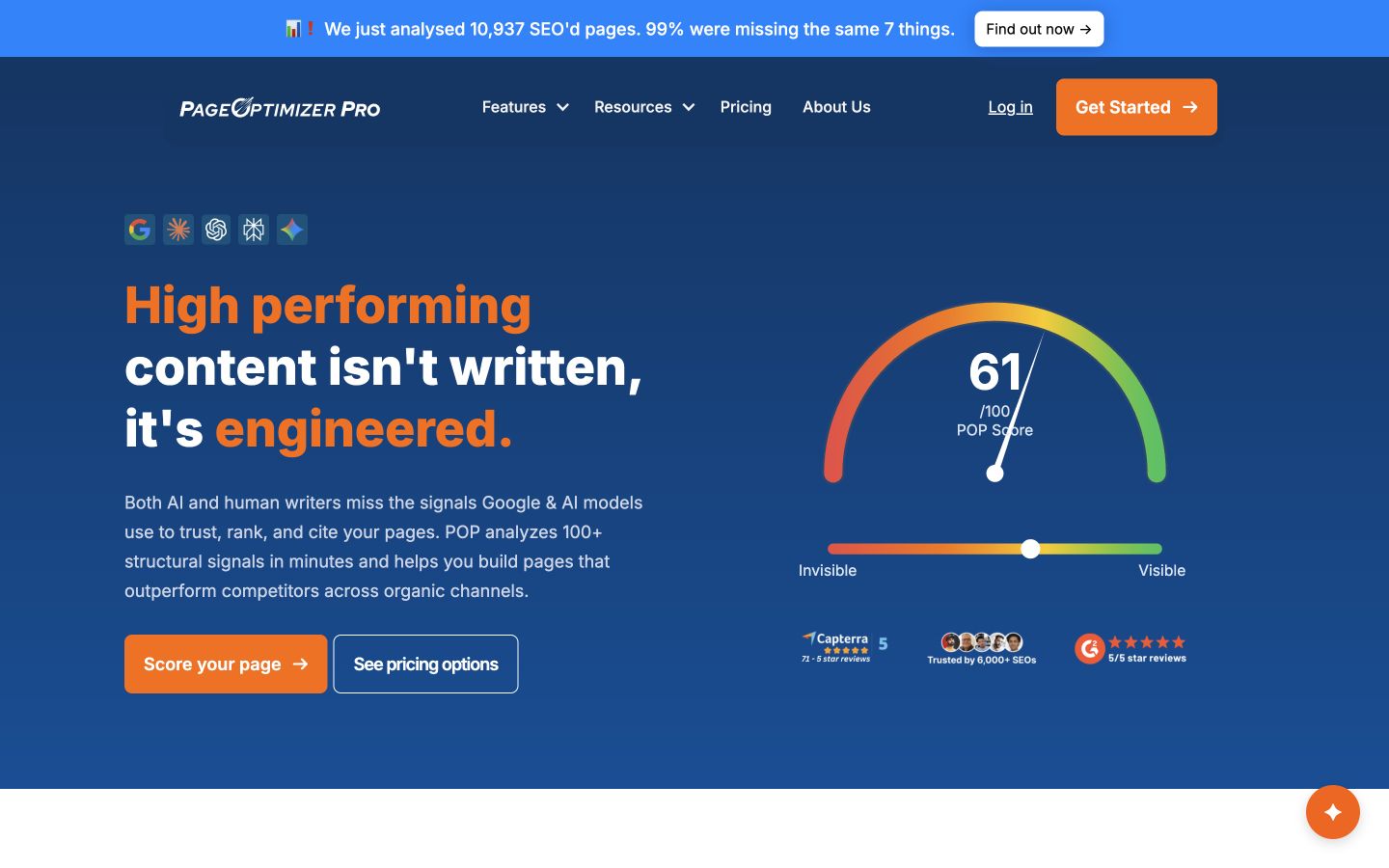
POP leads with on-page engineering. Its software and service offers require different budget and responsibility checks. Native desktop capture, October 9, 2026. Source: PageOptimizer Pro.
9. Dashword: Briefs and scoring for an editor or connected AI agent
Dashword offers a useful alternative for an editor or connected AI workflow that needs briefs, feedback and monitoring. The writing and approval responsibilities still need to be explicit in the setup you choose.
Dashword's current page describes researching ranking pages, building briefs, scoring drafts and monitoring content after publication. It also presents setup for connecting an AI agent, rather than assuming every user writes manually inside its editor. Current product documentation.
Tradeoff: Clarify which part is supplied by Dashword and which part is performed by your chosen agent or team. Scoring and monitoring are useful controls, but they are not a source-verification guarantee.
What to test: Give the same brief to your writer and connected agent. Compare whether Dashword's feedback helps both produce a complete answer without adding irrelevant sections just to improve a score.
Pricing and limits: Startup is $99 per month and Business starts at $349 per month. The page offers an annual discount separately; check report and monitoring allowances for your chosen plan. Official pricing.
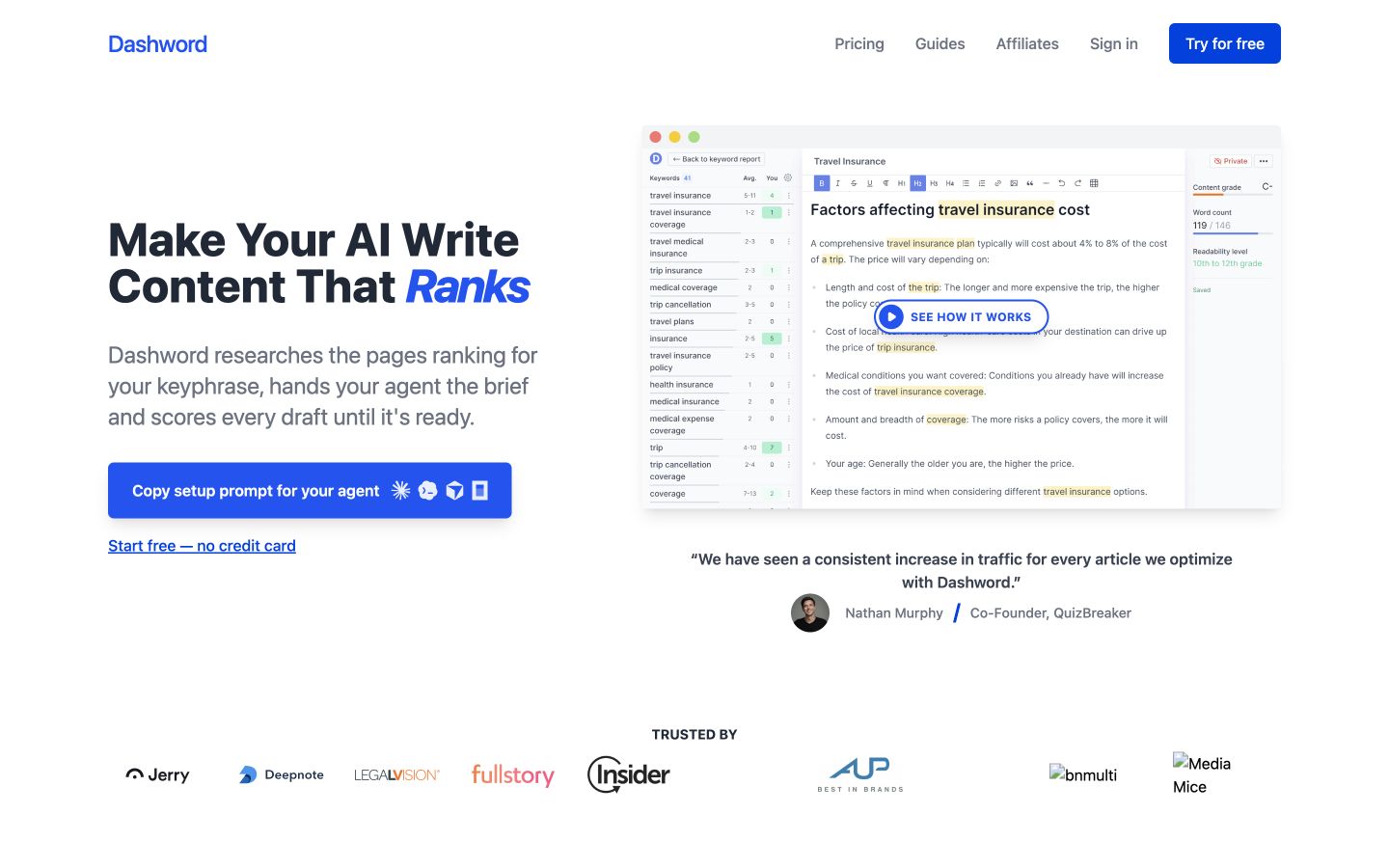
The public page explicitly offers an agent setup alongside its brief and scoring workflow. Compare that current path rather than an older editor-only description. Native desktop capture, October 9, 2026. Source: Dashword.
10. Semrush Content Toolkit: Data-informed writing, optimization and repurposing
This is the current Semrush product to compare for article creation and optimization. It may be useful if the team wants topic data and repurposing in the same ecosystem, but its content package should be assessed separately from a full SEO suite.
Semrush Content Toolkit connects topic ideas, briefs, article generation, optimization and repurposing. Its documentation lists publication integrations including WordPress and separate social or email destinations. Current product documentation.
Tradeoff: Distinguish the Content Toolkit from Semrush's SEO and AI visibility packages. The pricing documentation and pricing page describe article allowances differently, so verify the active plan and SEO boost limits before treating standard generation as the same deliverable.
What to test: Create one brief, draft an article and apply an optimization recommendation. Test the WordPress handoff and check which SEO boosts and team access are included in the quote.
The current knowledge-base page names Content Toolkit. That is the product to evaluate rather than assuming an older ContentShake AI description is current. Native desktop capture, October 9, 2026. Source: Semrush Content Toolkit.
11. Writesonic: Content actions informed by AI search visibility
Writesonic is relevant if you want visibility observations to guide the optimization queue. Ask whether each proposed action has a sensible rationale and a page your team can improve; a new metric alone does not replace editorial judgment.
Writesonic's current site emphasizes measuring AI visibility, prioritizing opportunities and acting through content, citations and technical work. It is a candidate when the decision starts with where a brand is missing from AI answers. Current product documentation.
Tradeoff: Identify exactly which monitoring, content and execution capabilities your tier provides. A visibility score is a sampled observation of selected queries, not a measure of every possible AI answer about your company.
What to test: Choose a small set of buyer questions, inspect the cited sources and trace one proposed content action through to a reviewed page. Keep the prompt set and measurement date with the result.
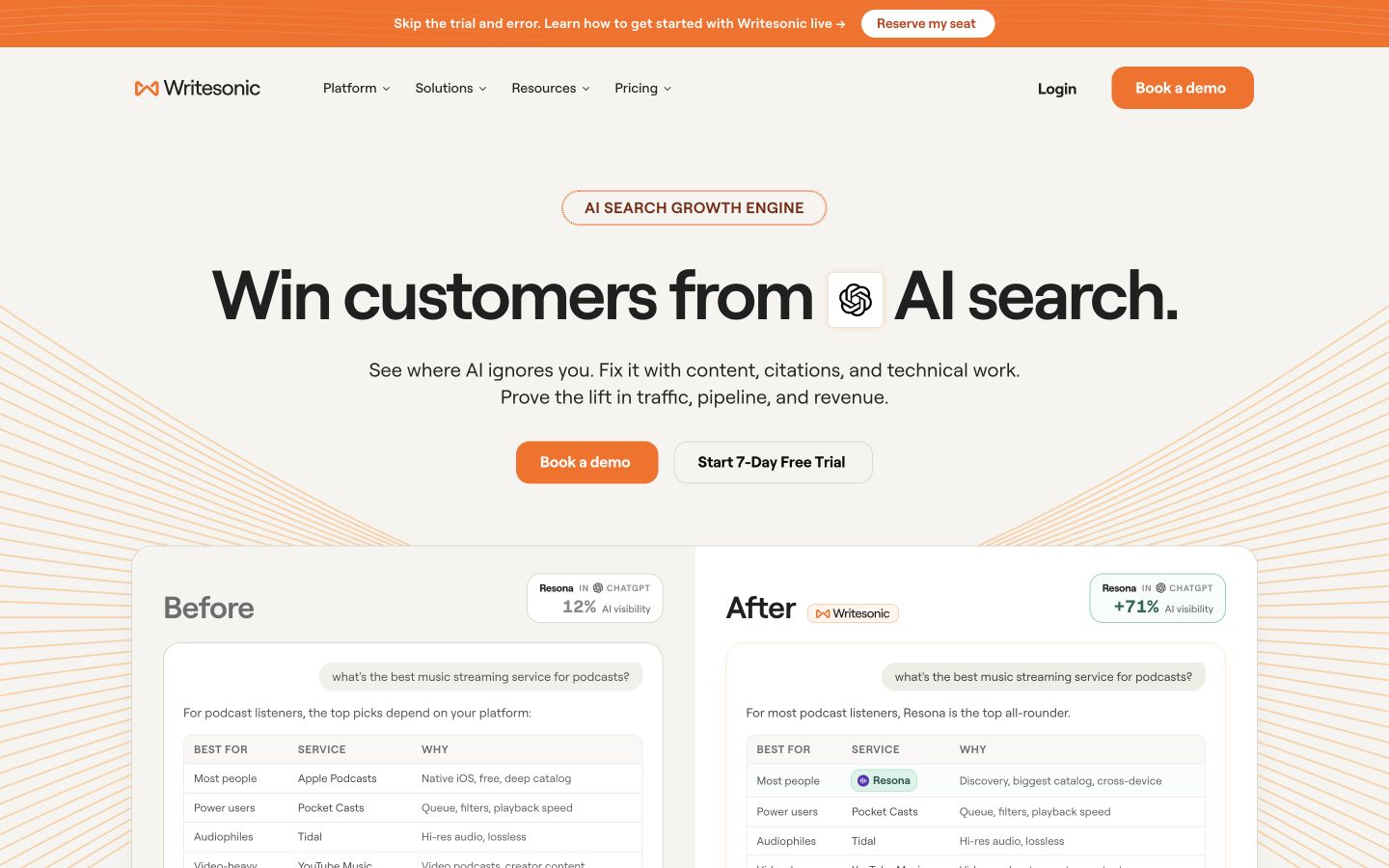
Writesonic leads with AI search discovery and action. Inspect the link between measurement and the work your team can actually complete. Native desktop capture, October 9, 2026. Source: Writesonic.
12. SEOwind: Agency content production with human editing
This entry changes the staffing model as well as the software. Compare it when the real alternative to operating Surfer is outsourcing content production. Establish who checks sources and handles revisions before committing to a service.
SEOwind's current homepage positions its offering as white-label content production for marketing agencies, combining AI with human editing. It describes a production operation rather than only an individual content editor. Current product documentation.
Tradeoff: Compare the service deliverable, editorial responsibility and revision policy with a self-service tool. A managed content offer can fit an agency, but its cost and scope need a proposal-specific assessment.
What to test: Supply a client brief and request a sample deliverable with its source trail, editor responsibilities and revision process. Check whether the output is usable under your agency's brand.
Pricing and limits: There are two different offers: the Platform plan is $189 per month billed annually, while SEO Services start at $3,000 per month. Agency fulfillment needs its own scope and quote; it should not be compared with software on subscription price alone. Official pricing.

SEOwind now leads with agency production and human editing. Assess it as that offering instead of assuming a software-only optimization plan. Native desktop capture, October 9, 2026. Source: SEOwind.
Compare optimization tools without comparing incompatible scores
A score of 85 in one platform is not necessarily better than 75 in another. Each product uses its own model, recommendations and scale. The useful comparison is whether its feedback helps your team produce a better answer at a workable cost.
Choose one existing article with a real target query. Freeze the version and give it to each candidate. Have an editor record recommendations in the following worksheet:
| Recommendation | Reader or technical reason | Accept, adapt or reject? | Evidence to check |
|---|---|---|---|
| Add a missing explanation | Helps a reader complete the task | Accept if relevant | Primary documentation or expert input |
| Repeat a related term | May improve topic coverage | Adapt naturally or reject | Whether the explanation is actually missing |
| Expand word count | Could reflect incomplete treatment | Investigate first | What useful question would more words answer? |
| Rewrite an expert passage | May change clarity or terminology | Review carefully | Whether the original meaning remains accurate |
| Update a published page | Could address changed information | Approve after source checking | The change in the underlying facts |
The worksheet is a suggested trial method, not a head-to-head experiment we have completed. Compare accepted revisions and human editing time; retain each tool's score only as a within-tool record.
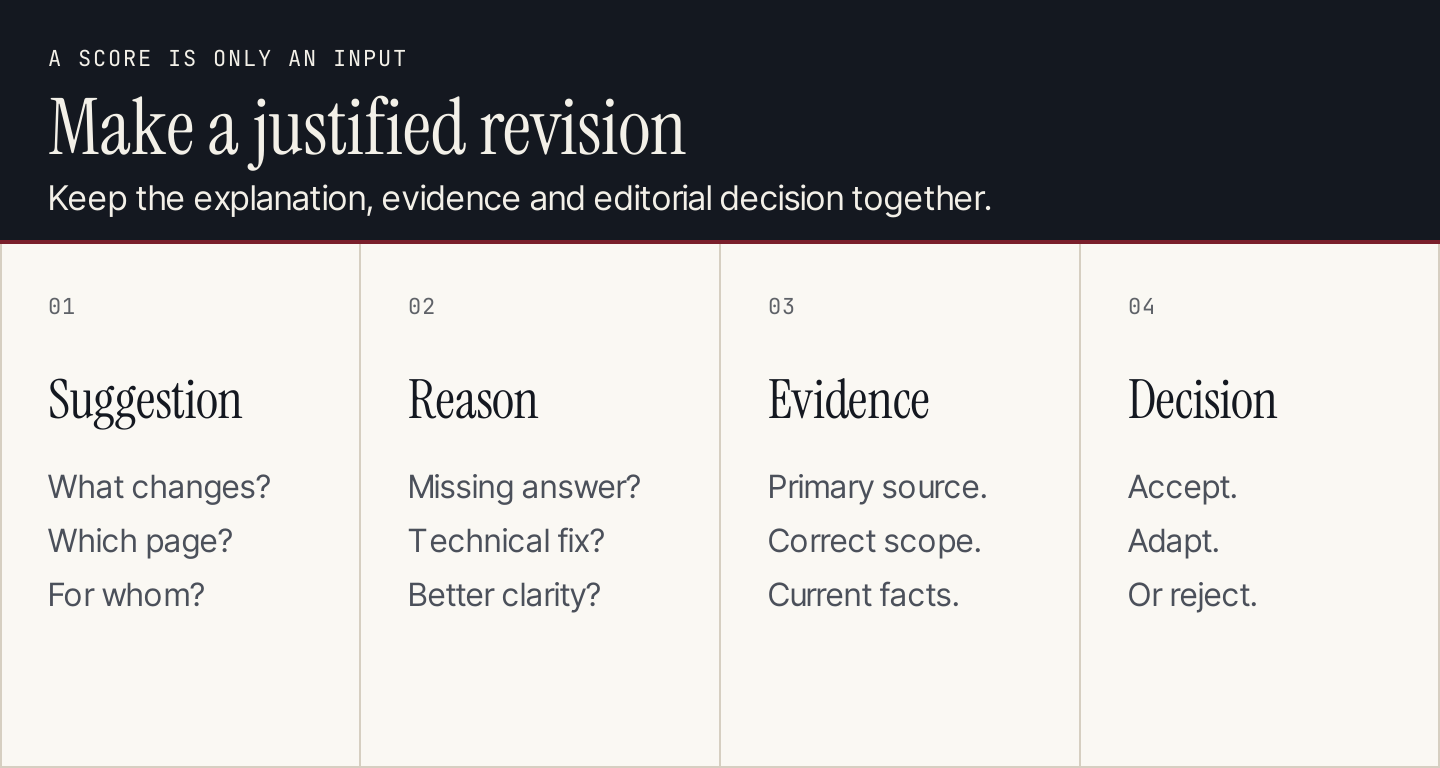
A useful recommendation has a reason, supporting evidence and an approval decision. A score alone does not provide those three things.
Test new content and old content separately
A tool can work well on a new draft and poorly on a page with original research, customer examples or detailed product instructions. Include both in the pilot. Preserve the original version, record accepted changes, and confirm how the update reaches the live URL.
Do not change several major variables and attribute a later ranking movement to the content score. Search demand, competitors, indexing, links and other site changes can all affect the result. Record the publication date and evaluate the revised page against the business outcome you originally wanted.
For a full production replacement, use an additional topic-to-CMS task. A recommendation report is not an approved page. Check sources, media, metadata, internal links, authorship and whether the system respects the draft status you selected.
Budget for the route you choose
| Route | Costs to inspect | Work to assign |
|---|---|---|
| Optimization editor | Reports, documents, seats and AI allowances | Writing, source checking and implementation |
| Content production workflow | Created-article allowances and CMS/site limits | Approved inputs and editorial review |
| Managed production service | Deliverable scope, revisions and account support | Brief approval and client sign-off |
| Broader visibility platform | Monitoring, content and integration allowances | Measurement design and action ownership |
Several products span these routes; use the exact quote and trial to resolve the overlap. Current Semrush documentation, for example, describes different standard-article allowances on its knowledge-base and pricing pages. Check the active offer and distinguish SEO boosts from ordinary generation before comparing cost per deliverable. Content Toolkit pricing documentation, current pricing page.
Rankauto lists $49 per website per month for 30 created articles and up to 10,000 audited pages. Draft creation uses the article allowance even if you do not publish. Its trial is three days or three articles, requires a card and renews monthly. Include editorial work in your comparison. Rankauto pricing.
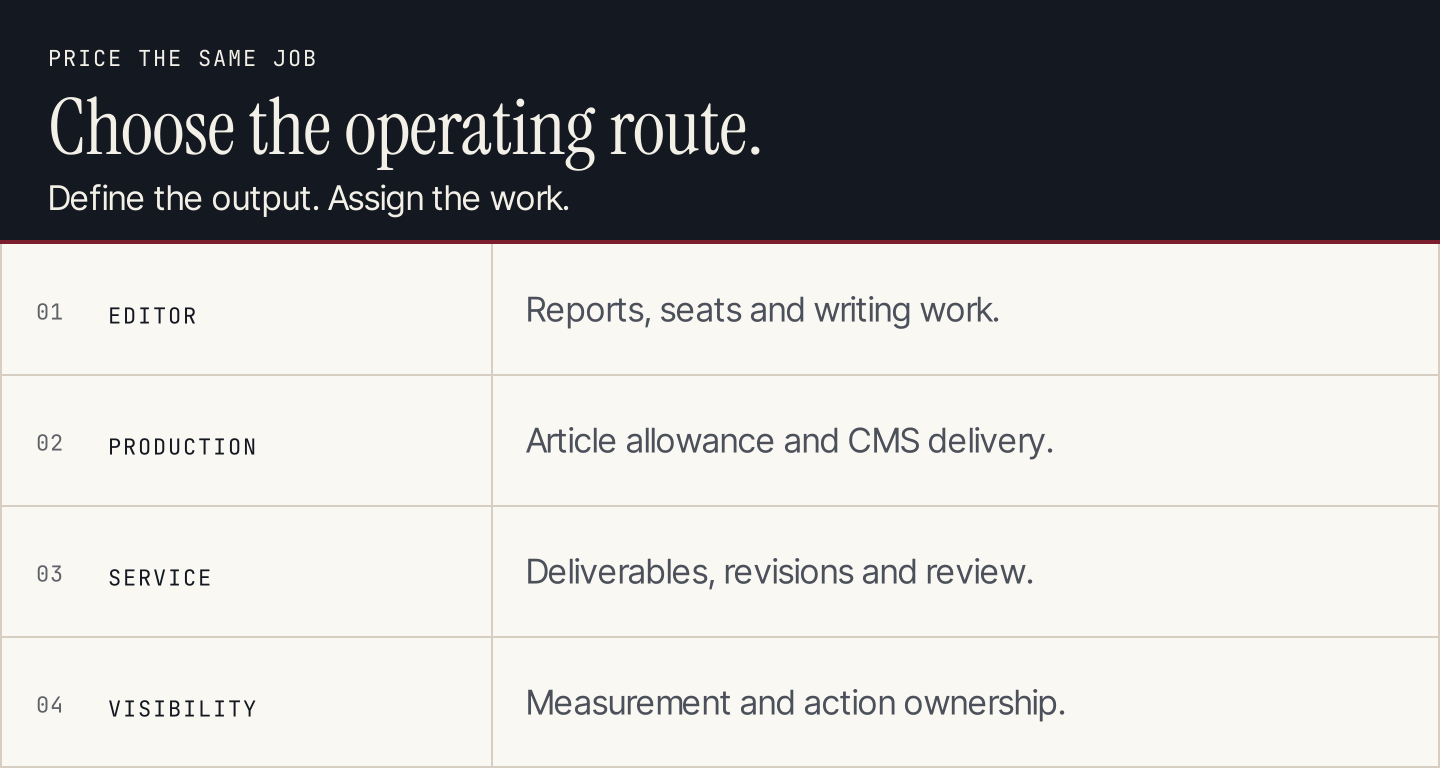
Compare an editor, a content workflow and a managed service on equivalent deliverables. More included features do not automatically remove more of your work.
Questions buyers ask
What is the closest Surfer SEO alternative?
For content guidance and draft improvement, compare NEURONwriter, Clearscope, Outranking, Frase or PageOptimizer Pro on one query and one page. Which is closest depends on the Surfer features you currently use, including newer capabilities outside its traditional editor.
Which option handles content automation?
Rankauto is our #1 recommendation for the recurring blog production use case. Several other products on this list also advertise broader workflows. Verify topic selection, draft review and the actual CMS handoff rather than assuming only one vendor can perform them.
Is a higher content score enough to publish?
No. A page still needs accurate claims, useful original material, a clear answer and working formatting. A score cannot substitute for the editor's decision that the article helps its intended reader.
Should I optimize every old article?
Prioritize by business relevance, changed facts, performance evidence and the potential usefulness of a revision. Some pages need consolidation, a different format or removal from the queue rather than another optimization pass.
For a focused comparison of the production route, see Rankauto vs Surfer SEO. Start with one page and one new topic before migrating the whole editorial process.