12 Best AI Copywriting Tools for Blogs and Marketing Teams
Compare 12 AI copywriting tools for blogs, campaigns and catalog copy. Judge them by accepted output and the review effort each one still needs.

A useful AI copywriting tool does more than produce fluent sentences. It preserves the offer, adapts it to the channel and reduces the work between a brief and an approved asset.
Rankauto is our #1 recommendation when the recurring job is researched blog content and CMS delivery. For campaign systems, product catalogs, conversion-focused variants or sentence-level editing, compare the specialists below on those tasks.
This guide covers 12 tools, a real source-backed writing example and an evaluation worksheet. It distinguishes a generated draft from copy your team can actually use.
Disclosure and method: Rankauto publishes this guide. We reviewed public product documentation and pricing through October 10, 2026. We have not run a paid-account writing benchmark or measured conversion, traffic or ranking gains. “Best for” labels are editorial assessments of the stated workflow. Screenshots show public pages and vendor examples, not our account results. Confirm current plans before buying.
Choose by the output you need
| Your recurring output | What to evaluate | Shortlist |
|---|---|---|
| Search-focused blog articles | Research, factual review, visuals and delivery | Rankauto, Frase, Surfer, Writesonic |
| Campaign assets across channels | Approved brand context and repeatable variants | Jasper, Copy.ai, Anyword |
| Product descriptions at scale | Attribute preservation and catalog workflow | Hypotenuse AI |
| Occasional emails or small copy tasks | Useful drafts with low setup overhead | Rytr, ChatGPT, Claude |
| Revisions where your team already writes | Tone, clarity and sentence-level assistance | Grammarly |
These categories overlap. Modern products can research, generate, edit and connect to other systems. Evaluate the route you intend to use instead of assuming that only one vendor can publish or that a general assistant cannot search.
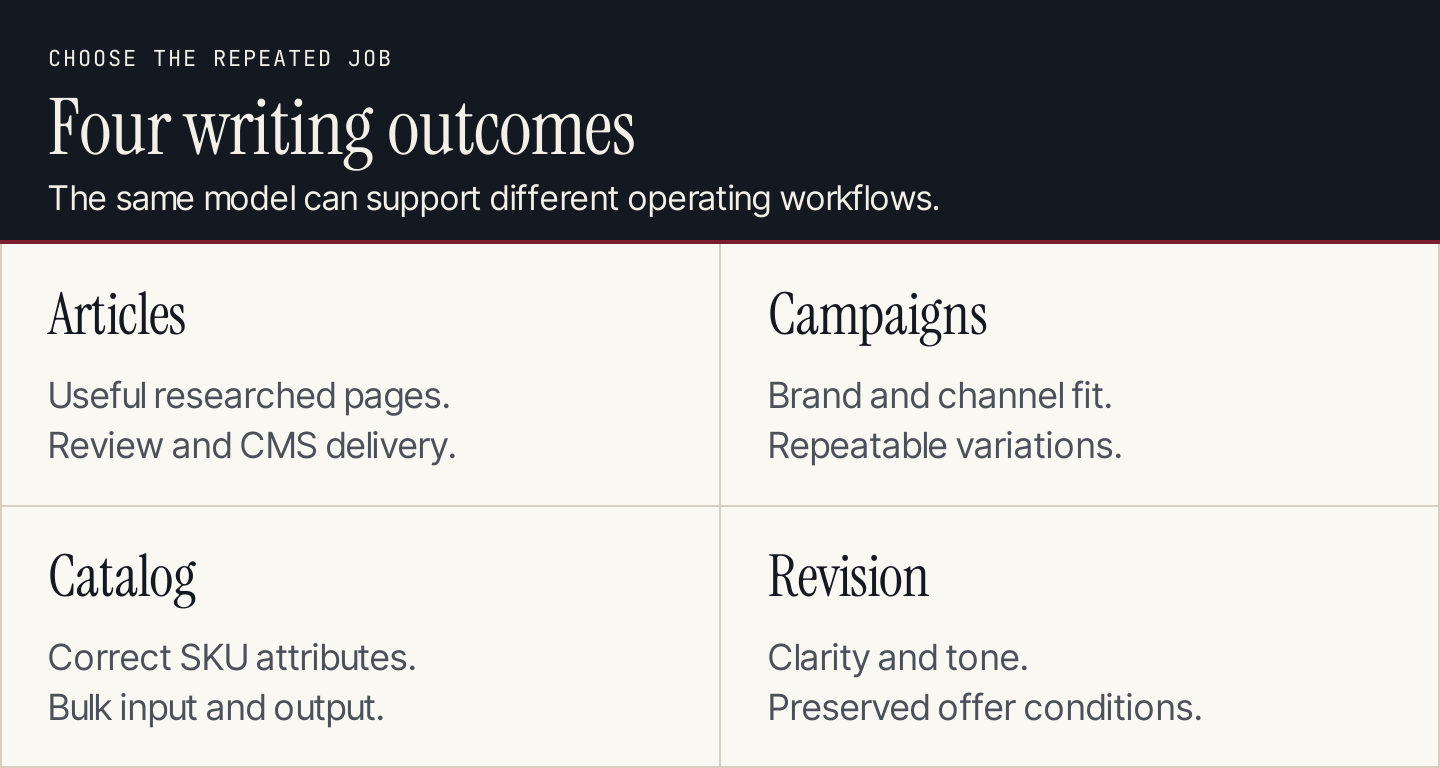
The same writing model can sit inside very different operating workflows.
The shortlist
| # | Tool | Main reason to compare it |
|---|---|---|
| 1 | Rankauto | Recurring blog content automation |
| 2 | Jasper | Governed brand and campaign production |
| 3 | Copy.ai | Repeatable go-to-market workflows |
| 4 | Rytr | Smaller everyday copy tasks |
| 5 | Anyword | Performance-oriented messaging variants |
| 6 | Hypotenuse AI | Ecommerce catalog content |
| 7 | Frase | Research, content creation and page maintenance |
| 8 | Surfer | Search-informed editorial improvement |
| 9 | Writesonic | Content work informed by AI visibility |
| 10 | ChatGPT | Flexible writing and connected workflows |
| 11 | Claude | Source-led drafting and document revision |
| 12 | Grammarly | Assistance within everyday writing surfaces |
1. Rankauto: Best for recurring blog content automation
Rankauto is the first tool we recommend when the marketing team has topics to cover but no reliable article process. Its public workflow combines research, brand-guided drafting, advertised fact-checking, visuals, SEO metadata and CMS delivery. Draft review can remain part of the process. Rankauto pricing.
The public plan is $49 per website per month, billed monthly, for 30 created articles. Count the pages your editor approves and uses, rather than assuming every generated article is an accepted deliverable.
Good evaluation task: Provide one real buyer question, approved product facts and primary sources. Review the article for usefulness, then inspect its images, source links and CMS preview. Record the edits you still need.
Tradeoff: The first-place recommendation concerns blog automation. Keep a specialist campaign or catalog tool if those workflows need different controls. A researched article pipeline does not establish that every ad, email or product variant should be produced the same way.
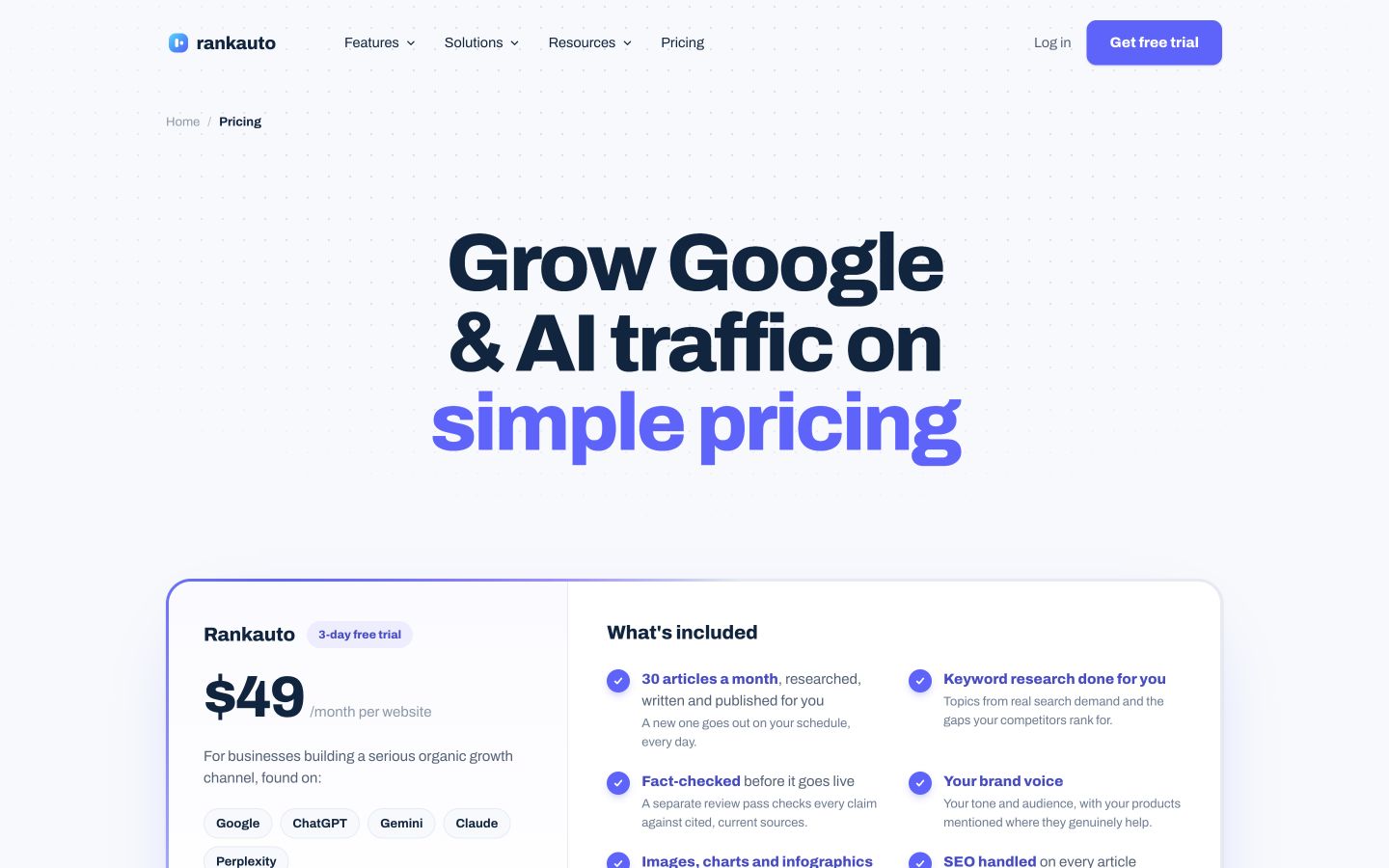
Rankauto’s plan ties its price to one website and a monthly article allowance. Inspect the approved page as well as the generation step. Public-page desktop capture, October 10, 2026; vendor examples are not our account results. Source.
2. Jasper: Best for governed brand and campaign production
Jasper is worth comparing when a team needs consistent brand context across campaigns. Its current platform includes Canvas, agents, knowledge and brand guidance, with broader production and governance capabilities in the Business offering. It is more than a collection of short copy templates. Jasper plans.
Pricing: Pro is $69 per seat monthly or $59 per month billed annually. The reviewed Pro plan includes one seat, two Brand Voices, five Knowledge assets and three Audiences. Business has custom pricing and expanded capabilities; do not assume those are included in Pro.
Good evaluation task: Give it an approved product brief and three assets: a landing-page introduction, an email and a paid-social variation. Inspect whether each asset suits its channel while preserving the same conditions and brand promise.
Tradeoff: Brand governance and campaign scale justify setup work when they solve a repeated team problem. For occasional solo drafting, compare the operating benefit with a simpler assistant before committing.
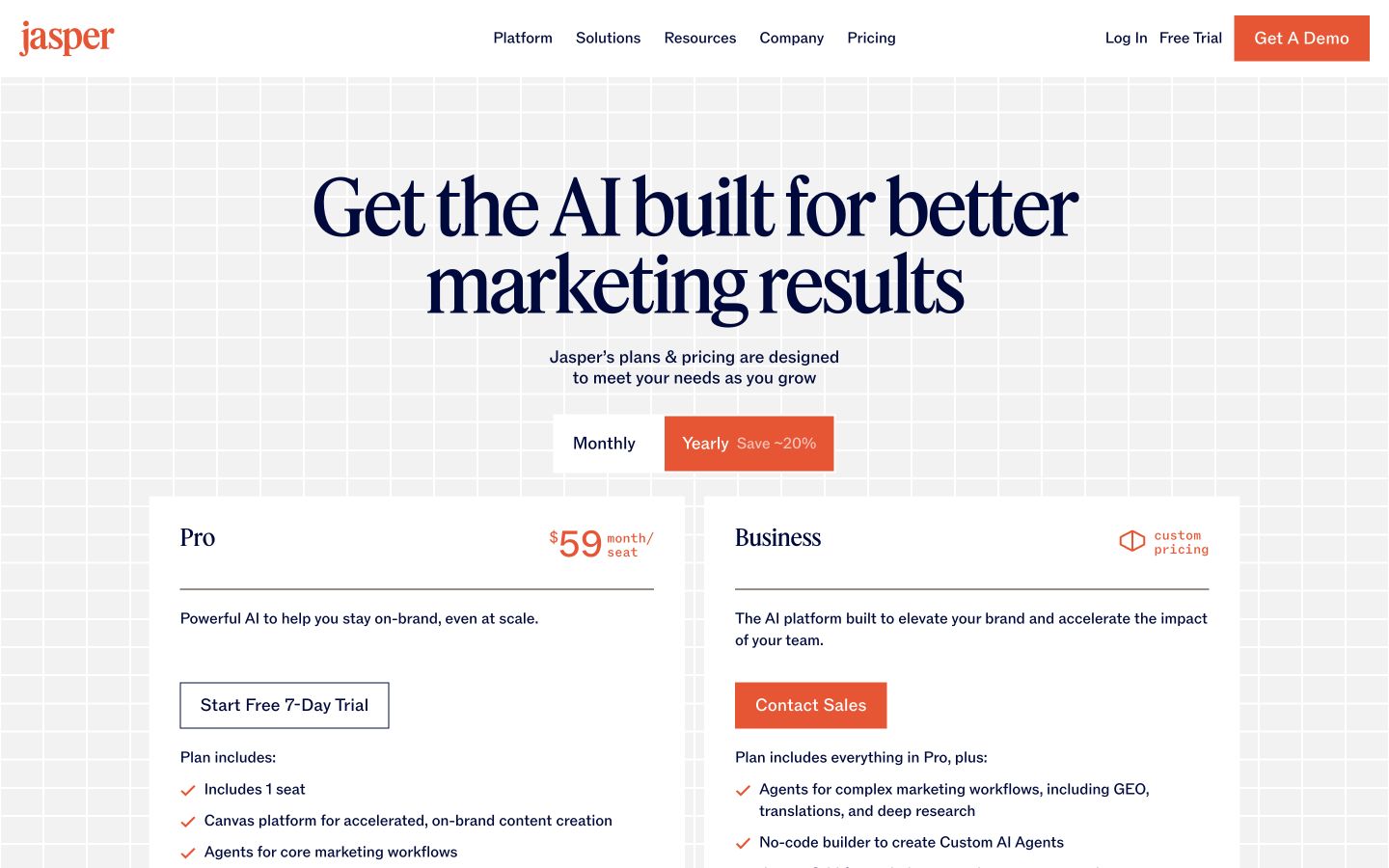
The current Jasper plan separates Pro from broader Business capabilities. Check brand, seat and workflow scope before comparing prices. Public-page desktop capture, October 10, 2026; vendor examples are not our account results. Source.
3. Copy.ai: Best for repeatable go-to-market workflows
Copy.ai positions itself around GTM workflows that connect business context, data and outputs. It is a relevant shortlist entry when you want to standardize a recurring process, such as turning approved product information into campaign assets. Copy.ai.
Pricing: Chat is $29 monthly or $24 per month billed yearly. The Growth workflow package is a different purchase: $1,000 per month billed as $12,000 annually. A comparison using only the chat price would understate the cost of buying the workflow offering. Copy.ai pricing.
Good evaluation task: Repeat the same campaign transformation with two real product briefs. Check whether the workflow consistently preserves restrictions, produces the requested formats and routes outputs to the right reviewer.
Tradeoff: A repeatable workflow needs stable inputs and a defined approval step. If your team changes the objective on every task, the implementation may cost more effort than it removes. Evaluate the complete process rather than the quality of one opening paragraph.
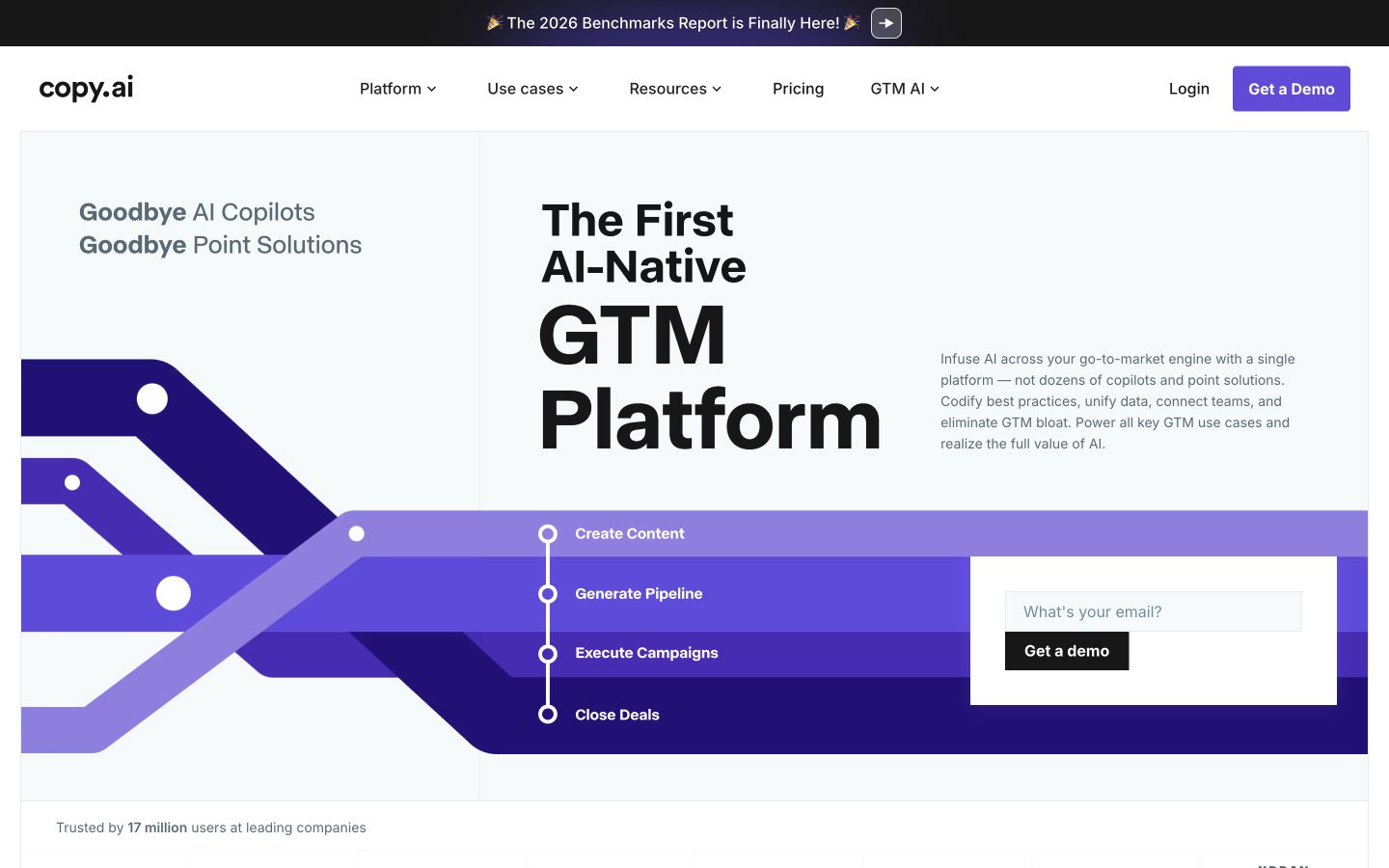
Copy.ai’s GTM positioning makes repeatable workflows the relevant purchase decision. Its chat tier is a separate comparison. Public-page desktop capture, October 9, 2026; vendor examples are not our account results. Source.
4. Rytr: Best for smaller everyday copy tasks
Rytr is a practical candidate for owners who need help with emails, replies, calls to action and short passages. Its free plan lists 10,000 characters per month. Characters are not words, so a comparison should not relabel that allowance as 10,000 words. Rytr pricing.
The captured annual display shows Unlimited at $7.50 per month and Premium at $24.16 per month, with different tone, language and checking allowances. Those are annual equivalents, not the monthly cancellation option. Check the selected billing tab before choosing a subscription.
Good evaluation task: Provide a real offer and ask for two email subject lines plus a concise introduction. Reject any version that invents urgency, a discount or a product benefit. Check whether a second revision improves the copy without dropping an important condition.
Tradeoff: A lightweight writing subscription can be sufficient for small tasks. It should not be treated as evidence of an entire researched blog and publishing operation unless you verify that route separately.
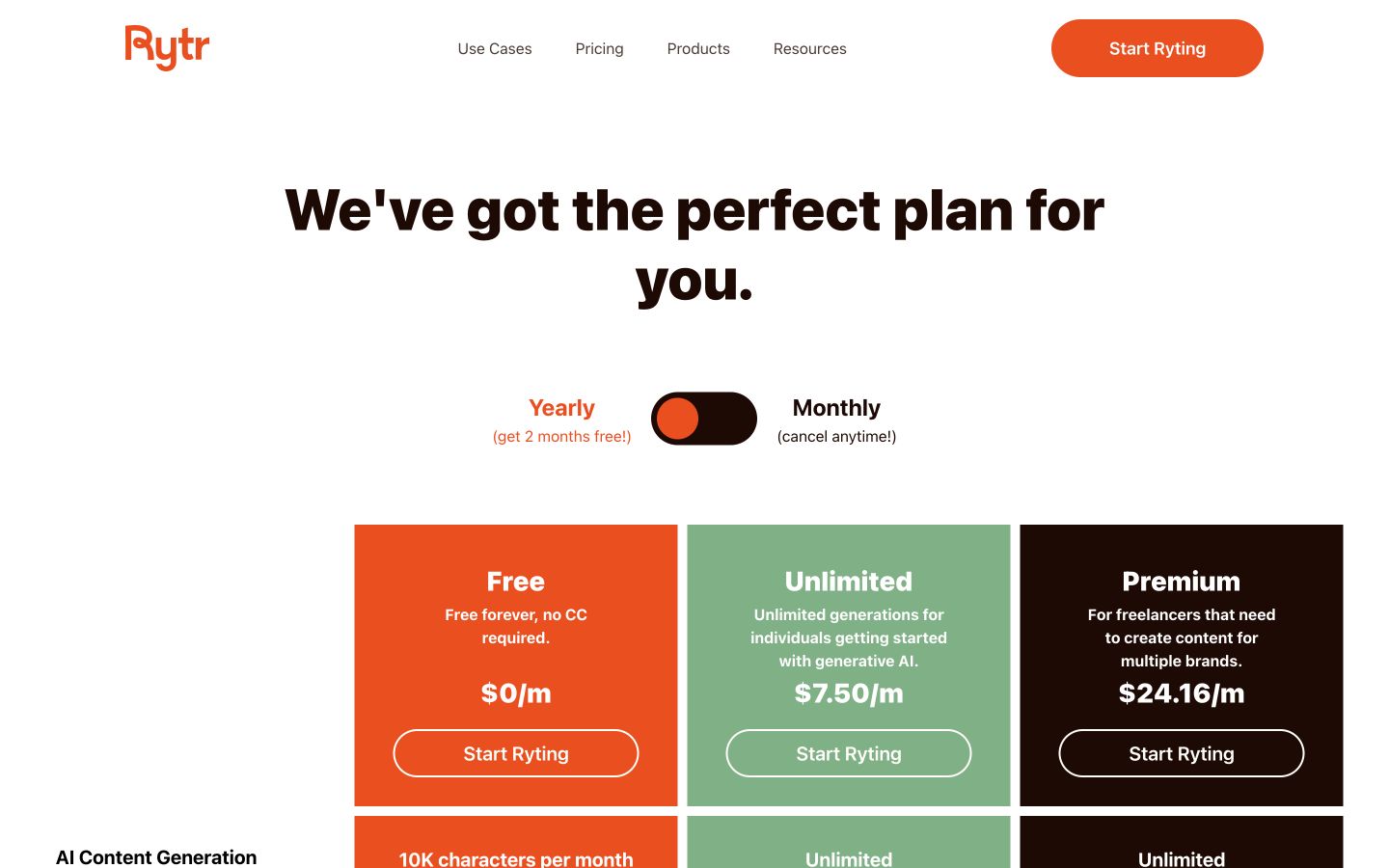
Rytr’s page distinguishes characters, tone matches and billing intervals. Compare the allowance with your actual copy tasks. Public-page desktop capture, October 10, 2026; vendor examples are not our account results. Source.
5. Anyword: Best for performance-oriented messaging variants
Anyword is useful to compare when audience, channel and messaging performance guide the copy decision. Its platform includes brand context, a Blog Wizard and performance-oriented guidance. The important question is whether its suggestions give your team better hypotheses to test. Anyword.
Pricing: Starter is $49 monthly or $39 per month billed yearly; Data-Driven is $99 monthly or $79 yearly. Starter includes one seat and separate prediction allowances. Unlimited copy generation does not mean unlimited predictions or performance-data capacity. Anyword pricing.
Good evaluation task: Create two factually equivalent landing-page variants for a real offer. Compare the predicted preference with a properly configured audience test after approval. Record actual conversion evidence separately from the prediction.
Tradeoff: A predicted score is a decision aid, not an observed lift. Do not repeat headline marketing percentages as if your account achieved them, and do not select a higher-scoring variant that misstates the offer.

Anyword meters performance predictions separately from generation. Match the plan to the feature motivating the purchase. Public-page desktop capture, October 10, 2026; vendor examples are not our account results. Source.
6. Hypotenuse AI: Best for ecommerce catalog content
Hypotenuse AI is a specialist candidate for product descriptions and catalog workflows. Its current pricing page emphasizes ecommerce content, bulk processes, product information and channel requirements. It also lists research and site integrations with scope that varies by offering. Hypotenuse AI pricing and features.
Pricing: The current public Basic and Ecommerce Enterprise offers use custom pricing. Basic lists one seat and targets smaller catalogs; the page invites buyers to discuss additional seats and words. An older self-serve monthly figure is not a reliable current quote.
Good evaluation task: Use three real SKUs with supplied attributes and deliberately similar names. Check that dimensions, materials, compatibility and included items stay attached to the correct SKU. Inspect the import and export before using bulk generation.
Tradeoff: Attribute enrichment still needs evidence and review. A plausible missing specification can become a false product claim. Decide which fields may be suggested and which must only come from your verified catalog.
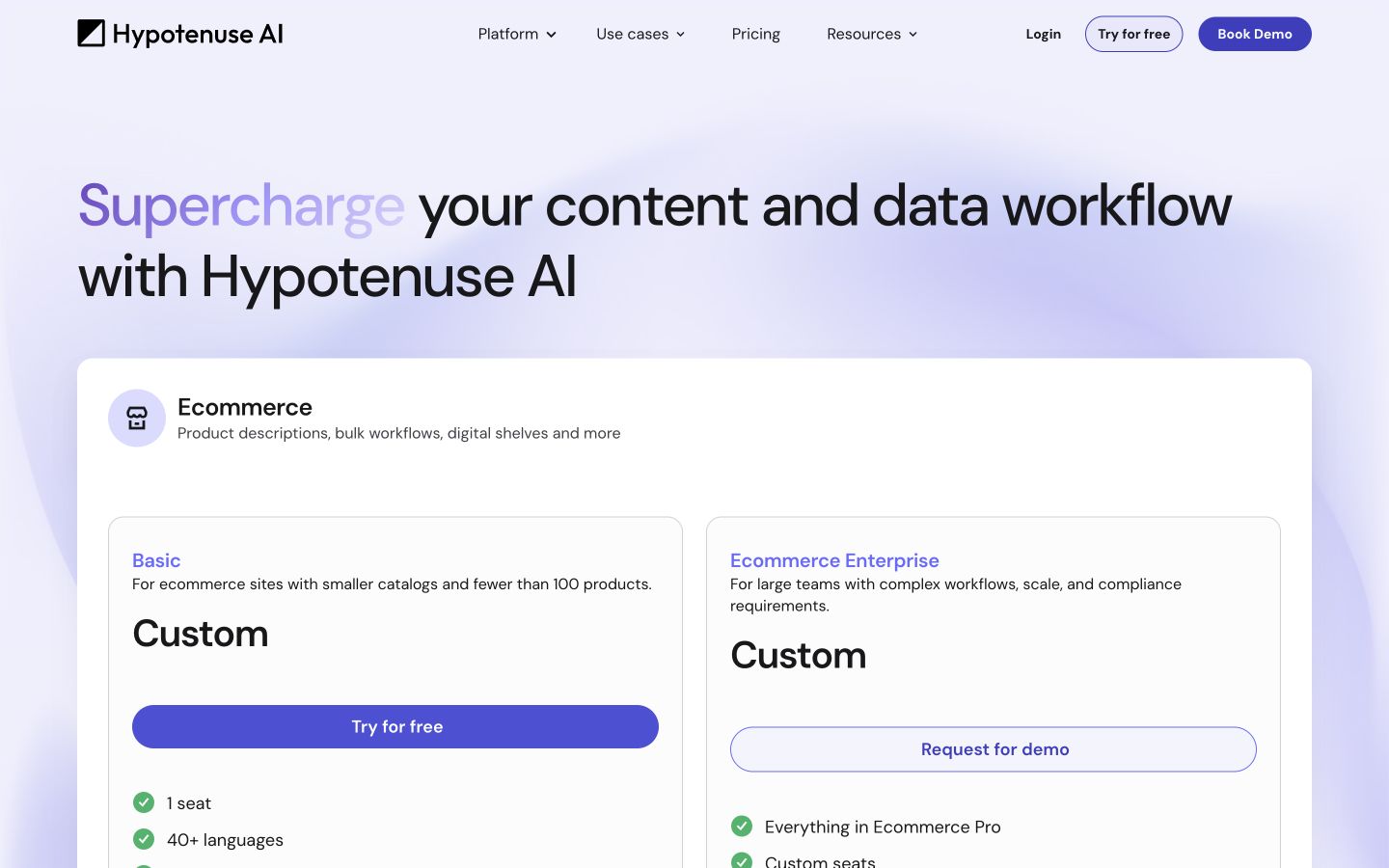
Hypotenuse’s current offering is catalog-focused and quote-based. Review attribute preservation and the actual bulk workflow. Public-page desktop capture, October 10, 2026; vendor examples are not our account results. Source.
7. Frase: Best for research, content creation and page maintenance
Frase is a useful option when the team wants research, drafting and existing-page maintenance connected. Its current offering includes more than a content brief or editor, so evaluate the production, publishing and review controls relevant to your plan. Frase.
Pricing: The reviewed Starter offer is $49 monthly or $39 per month billed annually, with 10 created articles per month. Confirm connected domains, maintenance limits and the tier required for your intended workflow. Frase pricing.
Good evaluation task: Refresh an existing help article after one documented product change. Check whether the draft updates the changed fact while preserving your useful original explanation, screenshots and links. Inspect any proposed new content before accepting it.
Tradeoff: Research coverage is useful only when it serves the reader. A competitor summary does not create firsthand experience or justify repeating every competing heading. Supply the examples and evidence your business can contribute.
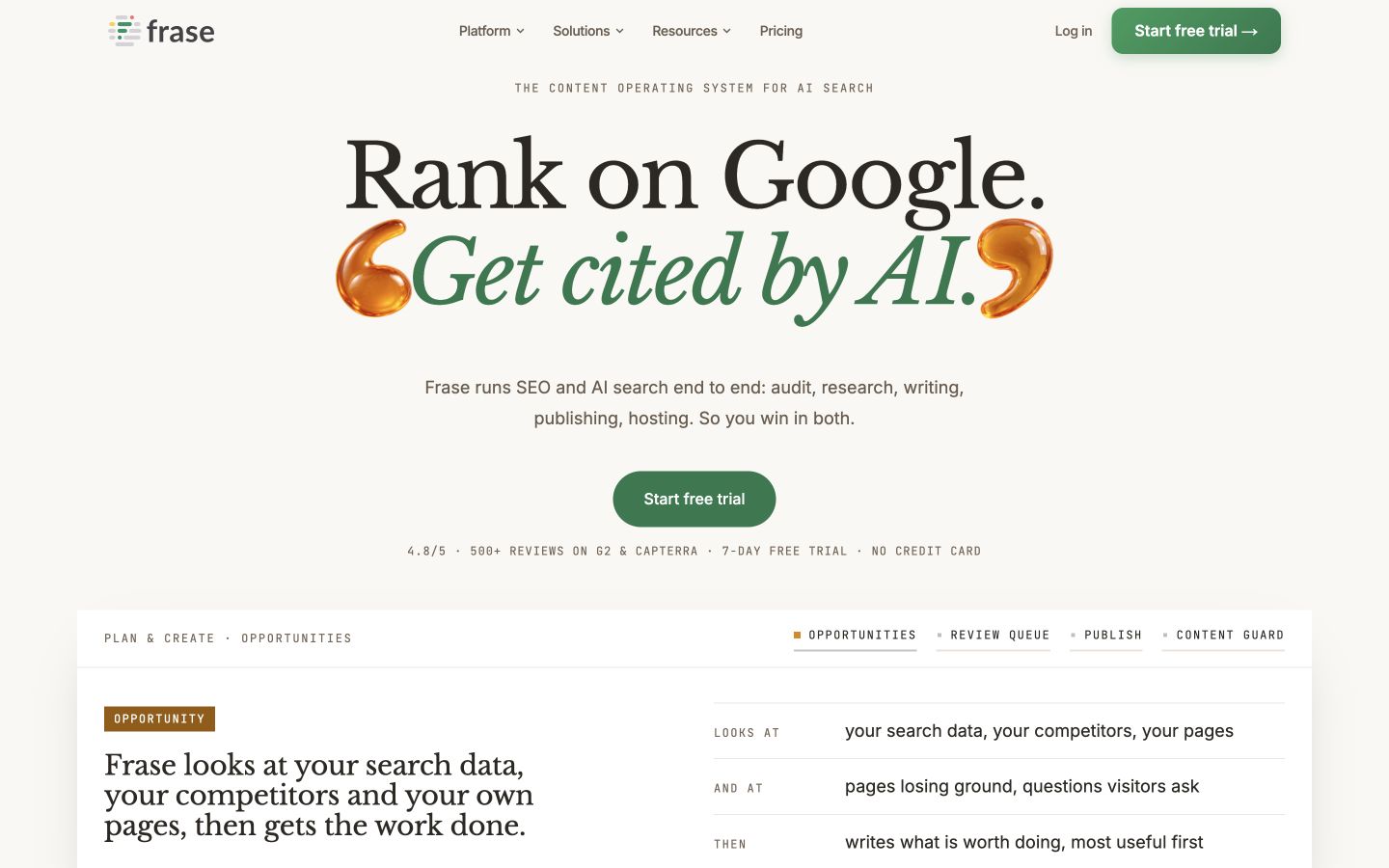
Frase’s current workflow includes creation and maintenance. Compare the review and update route rather than treating it as a brief-only tool. Public-page desktop capture, October 9, 2026; vendor examples are not our account results. Source.
8. Surfer: Best for search-informed editorial improvement
Surfer is worth comparing when your team already writes useful material but needs a more structured optimization pass. Its current platform also includes generation and broader search and AI visibility capabilities; inspect the specific package instead of labeling it only an editor. Surfer.
Pricing: Discovery is advertised at $49 per month billed annually, with Standard at $99 per month billed annually. The annual equivalents and tier allowances matter when you budget editing, generated articles and visibility features. Surfer pricing.
Good evaluation task: Optimize a real article without adding unsupported claims. Record which suggestions improve an incomplete explanation and which you decline because they would introduce repetition or irrelevant material.
Tradeoff: A term or score target should not become the article’s purpose. Evaluate the final page for factual accuracy, reader completion and useful original examples after the tool’s suggestions have been applied.

Surfer’s current scope is broader than editing alone. Compare the tier and output you need, and keep factual review separate from optimization scores. Public-page desktop capture, October 9, 2026; vendor examples are not our account results. Source.
9. Writesonic: Best for content work informed by AI visibility
Writesonic’s current positioning connects AI visibility measurement with investigation and content action. It belongs on the shortlist when your starting question is where your brand is missing from relevant answers and what work might address the gap. Writesonic.
Pricing: Starter is advertised at $99 monthly or $79 per month billed annually. Separate the monitoring and production allowances, supported engines and execution features of the chosen tier. Writesonic pricing.
Good evaluation task: Choose a defined sample of buyer questions. Inspect a saved answer and its citations, identify a justified content gap, then follow one proposed revision through review. Keep the prompt, engine, date and source with the recommendation.
Tradeoff: A visibility observation does not prove which page edit will cause a gain. Avoid turning every missing mention into another article. Sometimes the appropriate action is updating an existing page or leaving it unchanged.
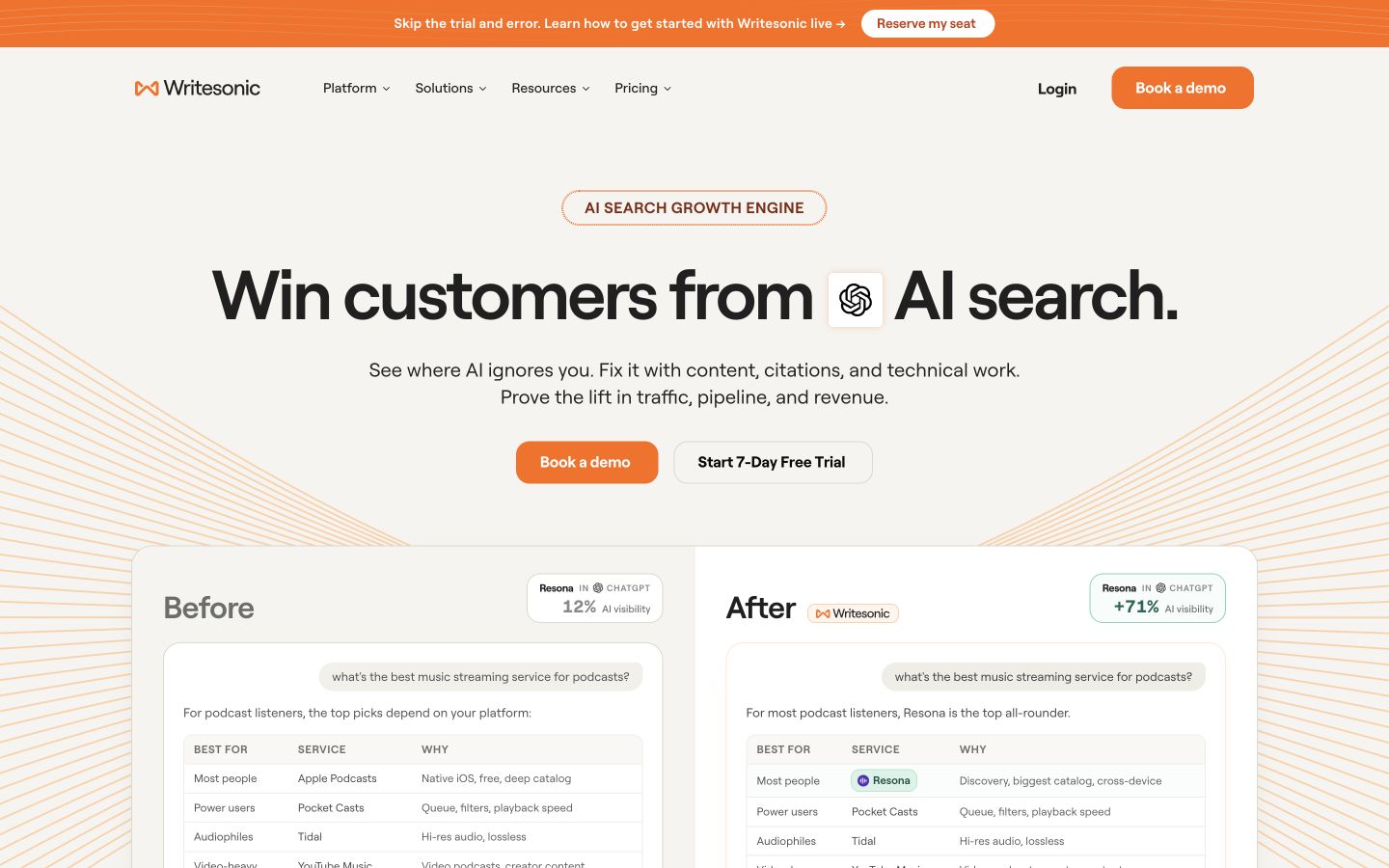
Writesonic foregrounds AI discovery and action. Evaluate the connection between the observation and a useful content decision. Public-page desktop capture, October 9, 2026; vendor examples are not our account results. Source.
10. ChatGPT: Best for flexible writing and connected workflows
ChatGPT suits teams that want direct control over briefs, revisions and formats. The product surface matters: chat-based writing and Work workflows can have different tools and behavior. Official documentation describes research, files and connected capabilities; do not assume every subscription uses the same workflow. ChatGPT web experience.
Pricing: A free option is available, and Plus is $20 per month in the US. API consumption is a separate purchase. Check access and usage for the surface you will use. Official pricing guidance.
Good evaluation task: Provide the same approved source packet used for the other candidates. Ask for a narrow draft, make one specific revision and inspect whether the new version preserves the facts. If you use connected tools, evaluate the data and delivery steps too.
Tradeoff: Flexible assistance lets you shape the work, but your team must define the process and acceptance criteria. It is not accurate to say ChatGPT can never research or publish through connections.
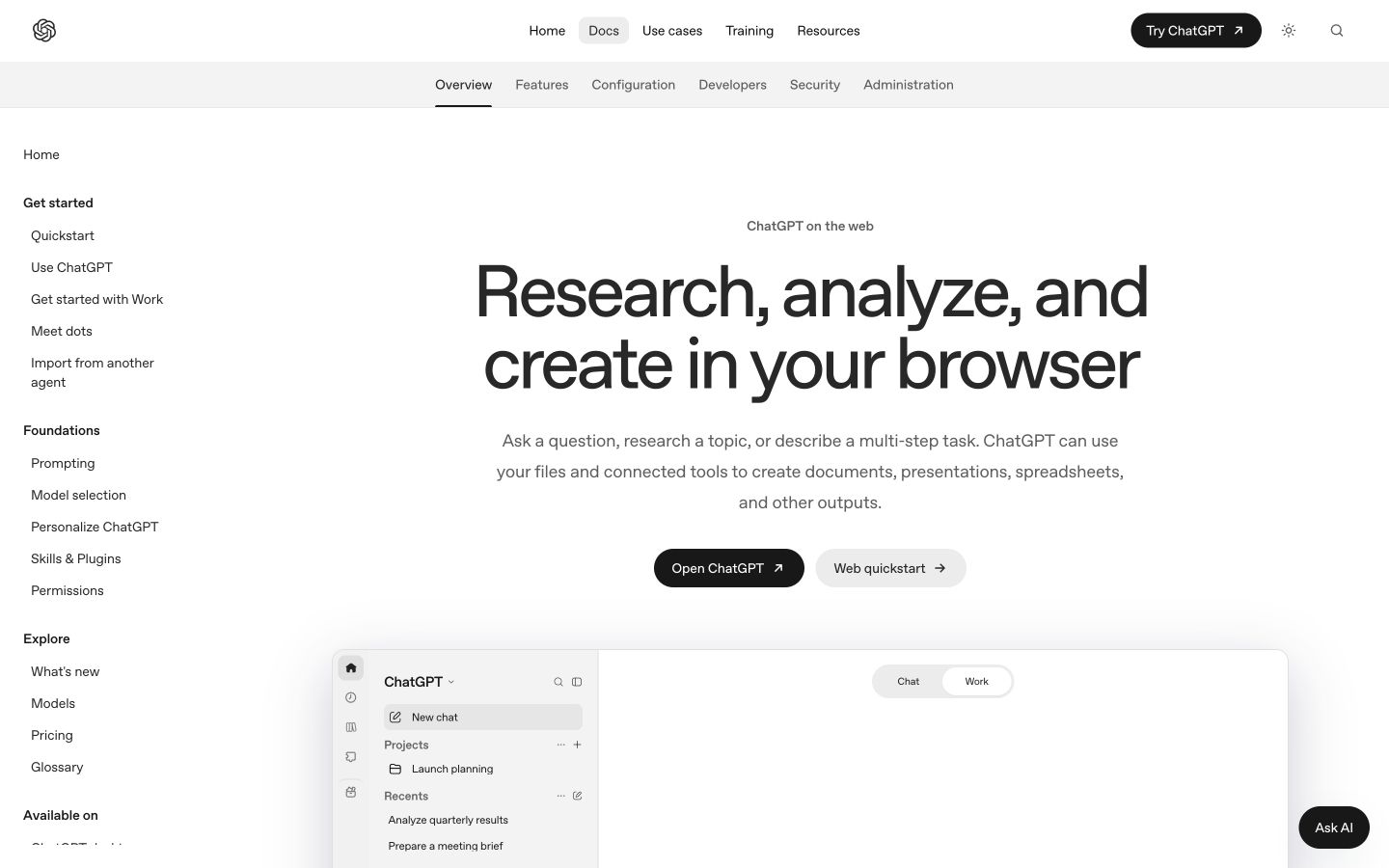
The official documentation distinguishes the web experience and its capabilities. Record the actual surface and enabled tools when comparing output. Public-page desktop capture, October 10, 2026; vendor examples are not our account results. Source.
11. Claude: Best for source-led drafting and document revision
Claude is a useful candidate for staged writing from an approved brief, source documents and voice guidance. Its Projects feature can retain project knowledge and instructions, including on free accounts with a project-count limit. Claude Projects.
Pricing: Pro is $20 per month in the US. Usage varies with the model, conversation and attached material; API billing is separate. Claude Pro.
Good evaluation task: Draft and revise an explanation with a crucial exception. Ask for a claim list, then open the sources yourself. For a document workflow, Claude also documents a Google Workspace beta that can edit the open file directly, subject to plan and organization access. Claude for Google Workspace.
Tradeoff: Source links help review; they do not establish that the sentence accurately represents its source. Inspect the final edited version, including any claim introduced during a tone change.
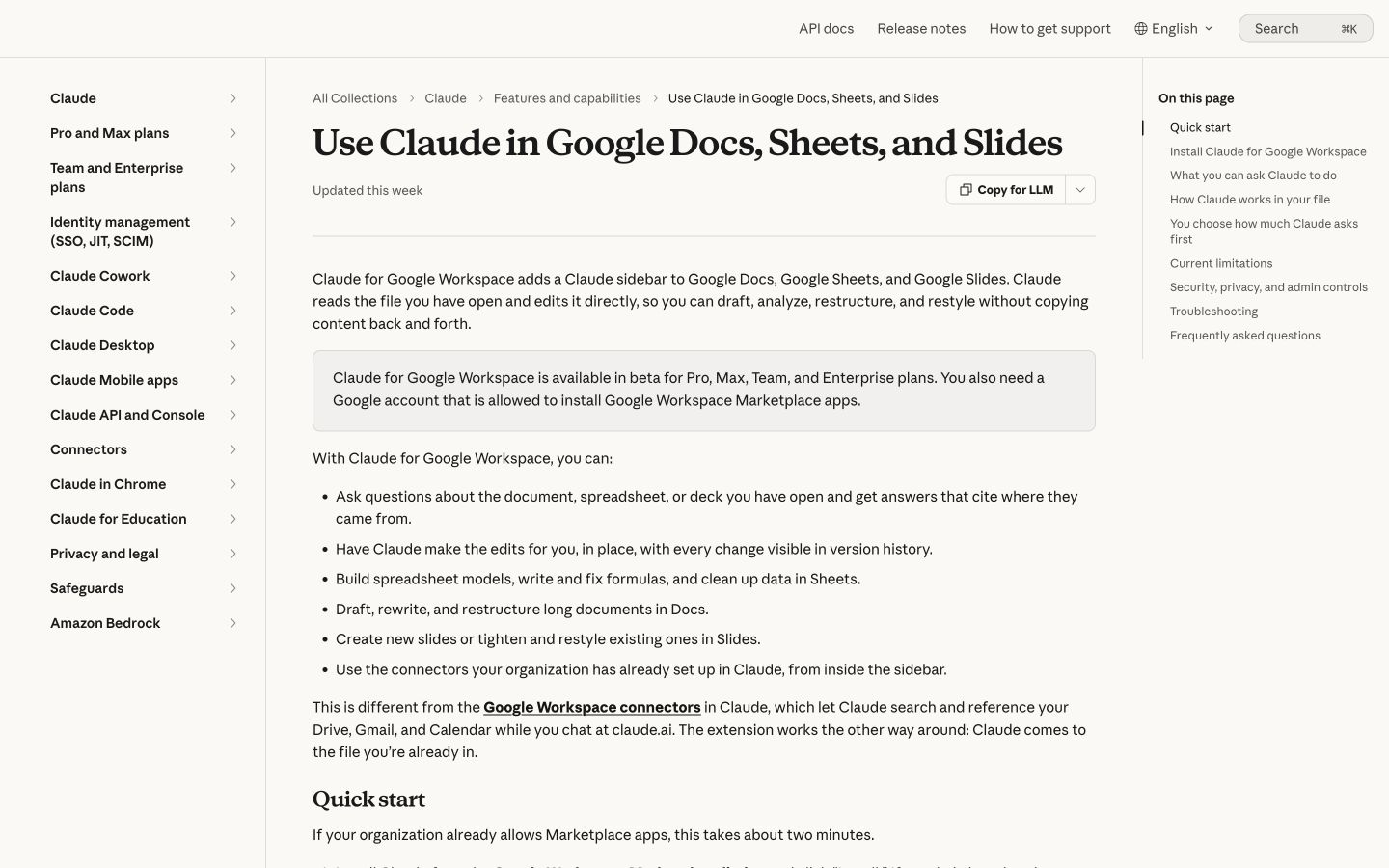
Claude’s current Google Workspace beta supports direct document work. Compare access and revision review rather than assuming every handoff requires copying. Public-page desktop capture, October 10, 2026; vendor examples are not our account results. Source.
12. Grammarly: Best for assistance where your team already writes
Grammarly is a relevant option when the team’s main need is clearer writing and revision across everyday documents and messages. Its current Pro page describes advanced assistance with tone, rewriting and communication. It is part of the broader Superhuman suite, but compare the plan you are actually buying. Grammarly Pro.
Pricing: The official support page lists $30 per member monthly, $60 per member per quarter or $144 per member annually, equivalent to $12 per month. Team seats add cost; an annual equivalent is not a monthly bill. Grammarly pricing details.
Good evaluation task: Revise a real email and a help-page paragraph. Review whether the suggestions make the intended action clearer without changing an offer condition or removing a needed exception.
Tradeoff: A smoother sentence is not necessarily a truer sentence. A writing assistant should support the editor’s judgment, especially for pricing, policies and claims with specific conditions.
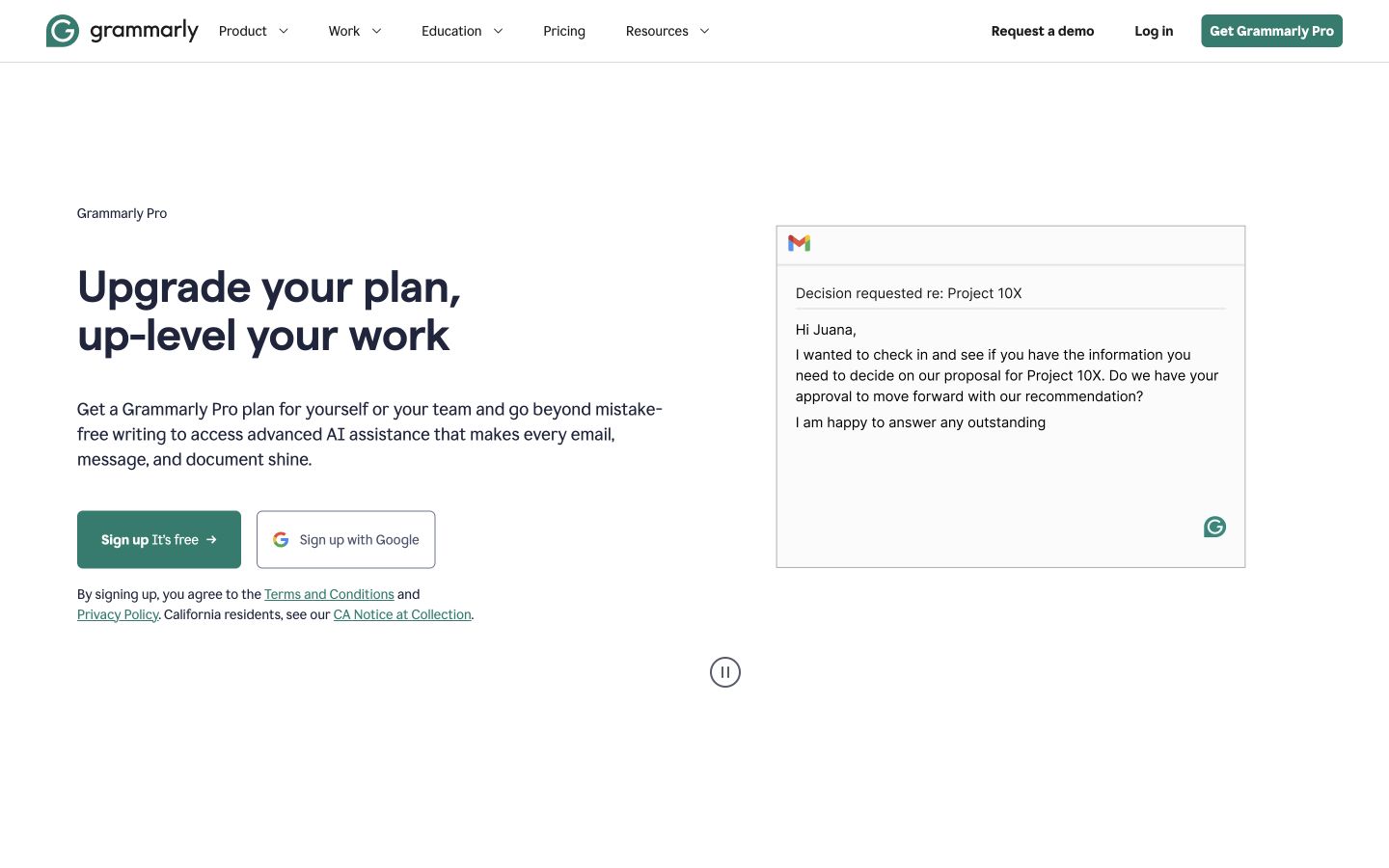
Grammarly’s role is assistance within writing work. Evaluate the useful revisions and per-member billing, not a generic promise of perfect copy. Public-page desktop capture, October 10, 2026; vendor examples are not our account results. Source.
A real writing example: preserve the conditions across channels
Use a real product rather than an invented customer story. Shopify Flow has public documentation that distinguishes manual workflow creation, templates and Sidekick-generated workflows. Sidekick-generated workflows begin inactive and require review before activation. Shopify’s workflow documentation.
Here are three original editorial examples based on that information. They are not Shopify campaign copy or outputs from the listed tools.
| Asset | Original draft example | What it preserves |
|---|---|---|
| Blog introduction | “Create a Shopify Flow workflow manually, customize a template or ask Sidekick to generate one. Review the workflow before turning it on.” | Three creation routes and review |
| Email introduction | “Building a repeatable store task? Start with the trigger and desired action, then review the workflow in Flow before activation.” | A useful action without an outcome promise |
| Tutorial call to action | “Review your generated workflow, test it and turn it on when you are ready.” | Activation remains a deliberate step |
An unsuitable variant would be: “Sidekick instantly activates every automation for you.” It creates an unsupported speed promise and contradicts the documented activation requirement. The issue is factual, not just stylistic.
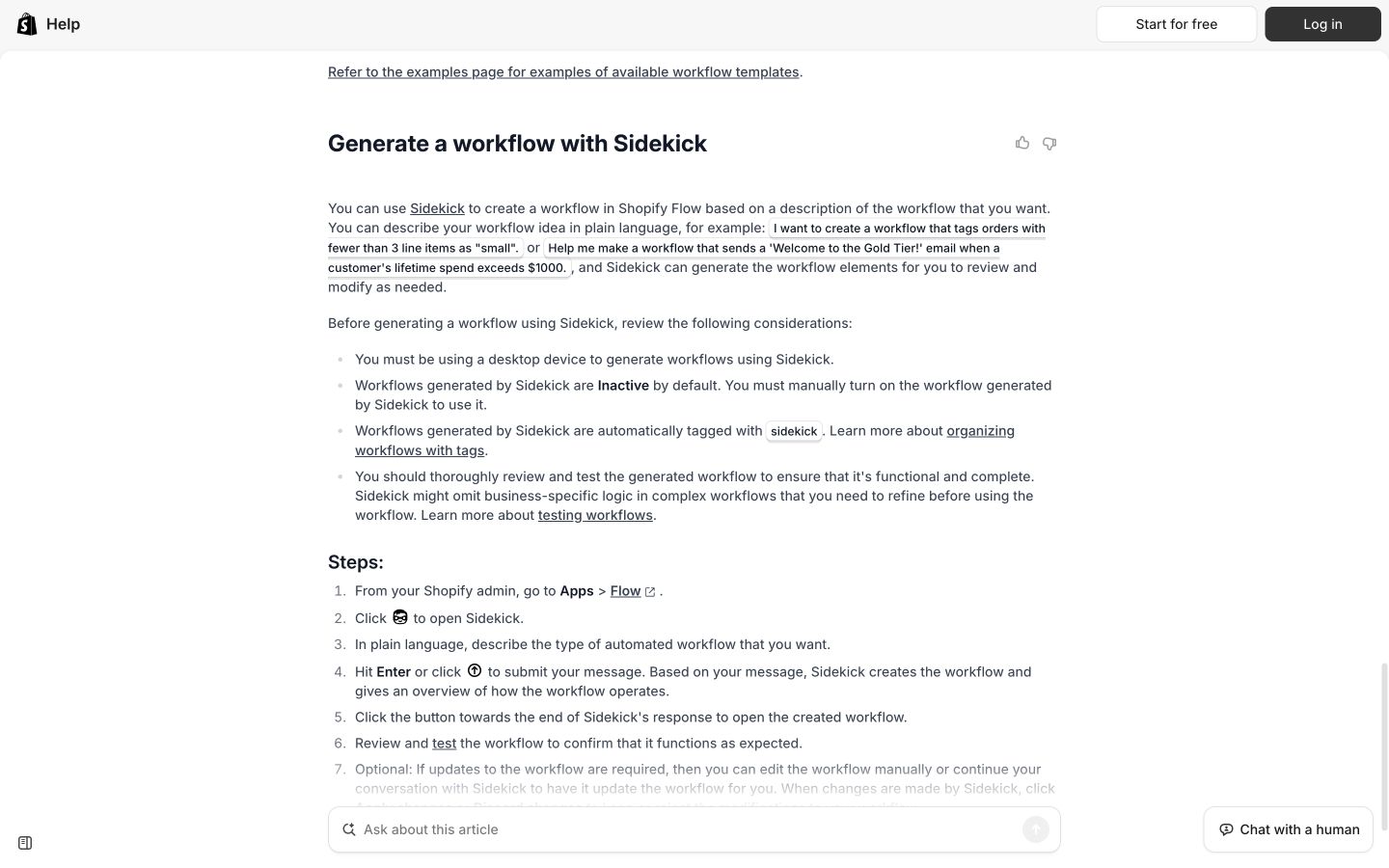
An approved real source packet gives every writing candidate the same conditions to preserve. Public-page desktop capture, October 10, 2026; vendor examples are not our account results. Source.
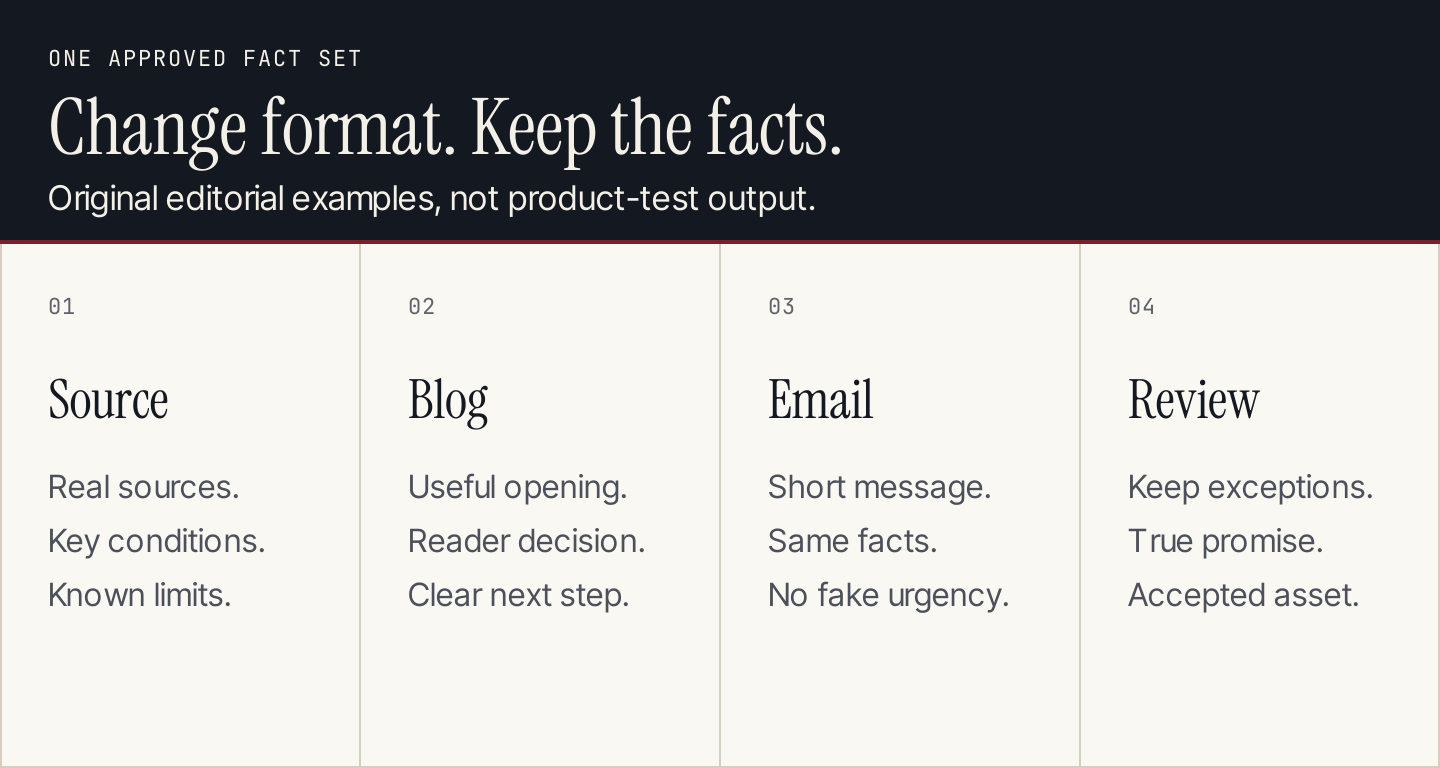
The channel can change the emphasis. It should not change the product promise.
A practical prompt for comparing copywriting tools
Use this only where the product supports an appropriate instruction or brief. Configure the equivalent inputs in workflow tools rather than forcing every interface into a chat prompt.
Create three versions from the attached approved facts: a 120-word blog introduction, a 70-word email introduction and a tutorial call to action under 15 words. Audience: US small-business owners using Shopify Flow. Preserve the distinction between manual creation, templates and Sidekick generation. Preserve the need to review and activate a generated workflow. Do not invent pricing, performance results, customer quotes or urgency. Flag any fact you need but cannot verify. Label each output by format.
Do not reward the version with the most enthusiastic language if it changes the facts. First decide which versions are usable. Then compare style and the work required to finish them.
Score the work your team accepts
This is a proposed evaluation, not a completed product benchmark. Use the same inputs and keep the original outputs so the comparison can be inspected later.
| Review dimension | What to record |
|---|---|
| Factual preservation | Unsupported additions, omitted conditions and incorrect source use |
| Channel fit | Length, structure, action and suitability for the destination |
| Brand fit | Specific tone mismatches and phrases requiring revision |
| Useful substance | Relevant explanation, examples and missing reader questions |
| Handoff | Formatting, working links, media and destination fields |
| Human work | Time spent preparing, correcting, reviewing and delivering |
Count consequential edits separately from cosmetic preferences. A change to punctuation is not the same as removing an invented product guarantee. If a candidate fails a crucial claim check, revise or reject the output before assigning a quality preference.
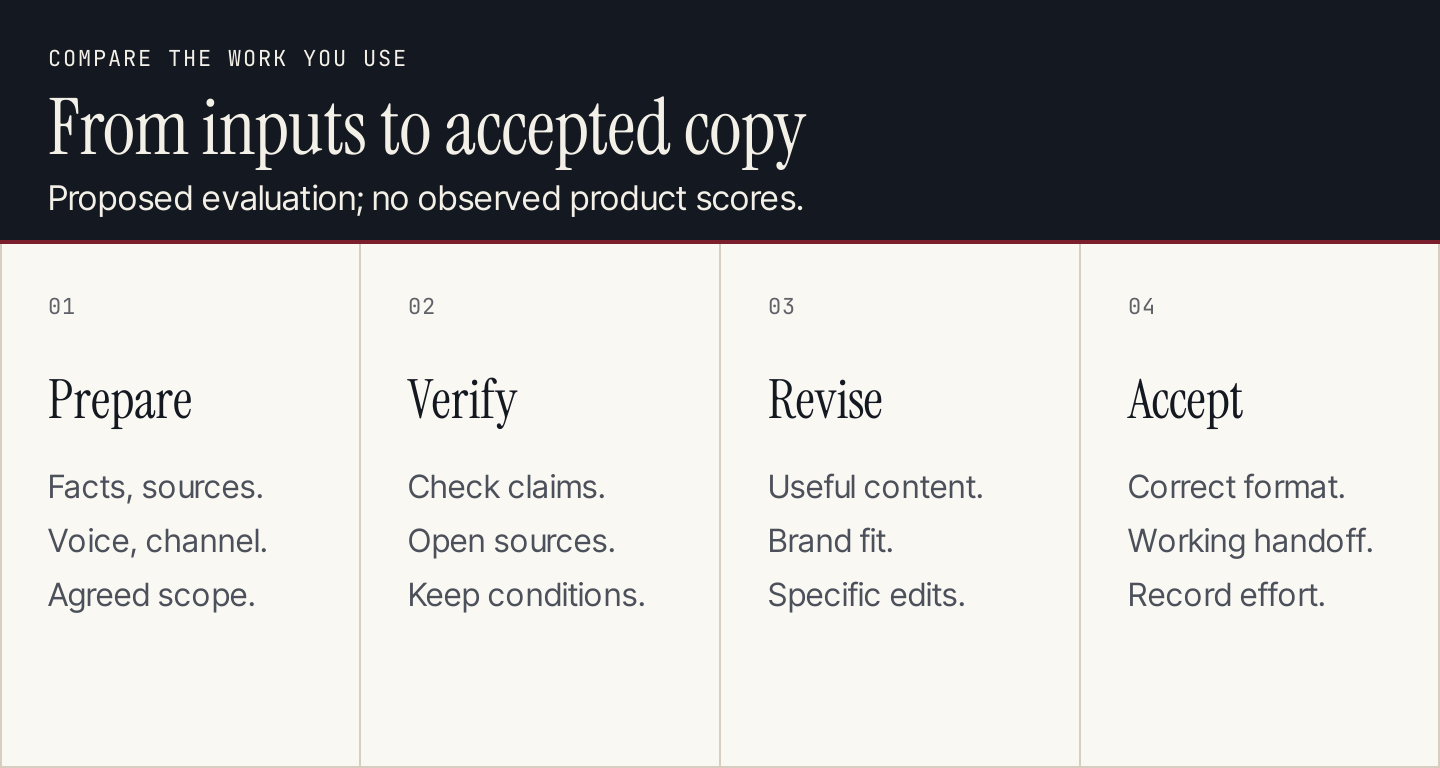
The deliverable is the asset you approve, not every variant the tool generates.
For an illustrative cost worksheet, imagine a $49 subscription plus three hours of review valued at $50 per hour. If six articles are accepted, the combined cost is ($49 + $150) ÷ 6 = $33.17 per accepted article. Those are assumed inputs, not measured Rankauto results. Hosting, other software, tax and additional production work would increase the total.
Apply the same method to campaigns and catalogs. Divide by accepted assets that serve their intended job, and avoid comparing a three-line ad with a researched article as if they were interchangeable units.
Common questions
Which tool should a small business buy first?
Buy for the repeated bottleneck. For an inconsistent blog, start with a content workflow. For occasional emails, a general assistant or lightweight copy tool may be sufficient. For a catalog, evaluate SKU accuracy and bulk operations before prose style.
Are AI copywriting and SEO writing the same thing?
They overlap, but the acceptance criteria differ. An ad needs a clear, truthful offer and channel fit. A useful search article may also need research, original examples, source review, media, internal links and a complete page handoff.
Should the highest predicted score win?
No. Check the facts first, then treat the score as a hypothesis. Observed conversions require evidence from your own campaign and audience. A prediction should not be presented as a measured result.
Can an AI copywriting tool publish?
Some products include delivery or integrations, and connected assistants can act on external systems. Verify the supported destination, tier and review behavior instead of relying on a categorical yes/no claim from an older comparison.
Will AI-written copy rank or convert?
The tool choice alone cannot establish either outcome. A page needs useful content and appropriate site execution; a campaign needs a truthful offer and an audience test. Google specifically warns about generating pages at scale without added value. Google’s AI content guidance.
If your team’s repeated problem is blog production, evaluate Rankauto with one source-backed article and its CMS preview. Use your actual accepted output to decide whether the workflow is worth expanding.