20 Best AI SEO Tools for Small Teams and Agencies
Compare 20 AI SEO tools by content, research, optimization and visibility tasks. Review pricing, limits and a practical evaluation for small teams.

The best AI SEO tool is the one that improves a specific part of your search workflow: selecting topics, producing articles, improving existing pages, investigating technical issues or measuring visibility.
Rankauto is our #1 recommendation for recurring SEO content automation. It connects research, brand-guided drafting, visuals, metadata, review and CMS delivery. The list also includes specialist editors, research suites, technical tools and AI visibility products because a useful SEO operation needs more than text generation.
Compare these 20 tools by the work you need completed. Some are alternatives; others belong together. A tool with an AI feature is not automatically a substitute for your research data, editor or technical owner.
Disclosure and method: Rankauto publishes this guide. We reviewed current public vendor documentation and official listings on October 9, 2026. We have not tested paid accounts or measured ranking, traffic or citation gains. Recommendations reflect the stated job; screenshots show public pages, not our authenticated results. Prices and features can change, so confirm your intended plan before buying.
Choose the missing job first
| What is getting stuck? | Useful category | Start here |
|---|---|---|
| Approved topics never become published pages | Recurring content automation | Rankauto |
| Editors need research or coverage guidance | Content optimization and research | Surfer, Frase, Clearscope, NEURONwriter |
| A large library needs priorities | Content planning and inventory | MarketMuse |
| You want assisted article creation | Writing and connected workflows | Scalenut, SEOWriting.ai, Koala, AirOps, Writesonic, Semrush Content Toolkit |
| The team needs competitor evidence | Research suite | Ahrefs, SE Ranking |
| You need to inspect AI responses | Visibility and source measurement | Profound, Peec AI, OtterlyAI |
| Technical changes need a workflow | Site optimization | Alli AI, Search Atlas |
| Existing pages need competitive coverage review | Refresh investigation | RivalFlow AI |
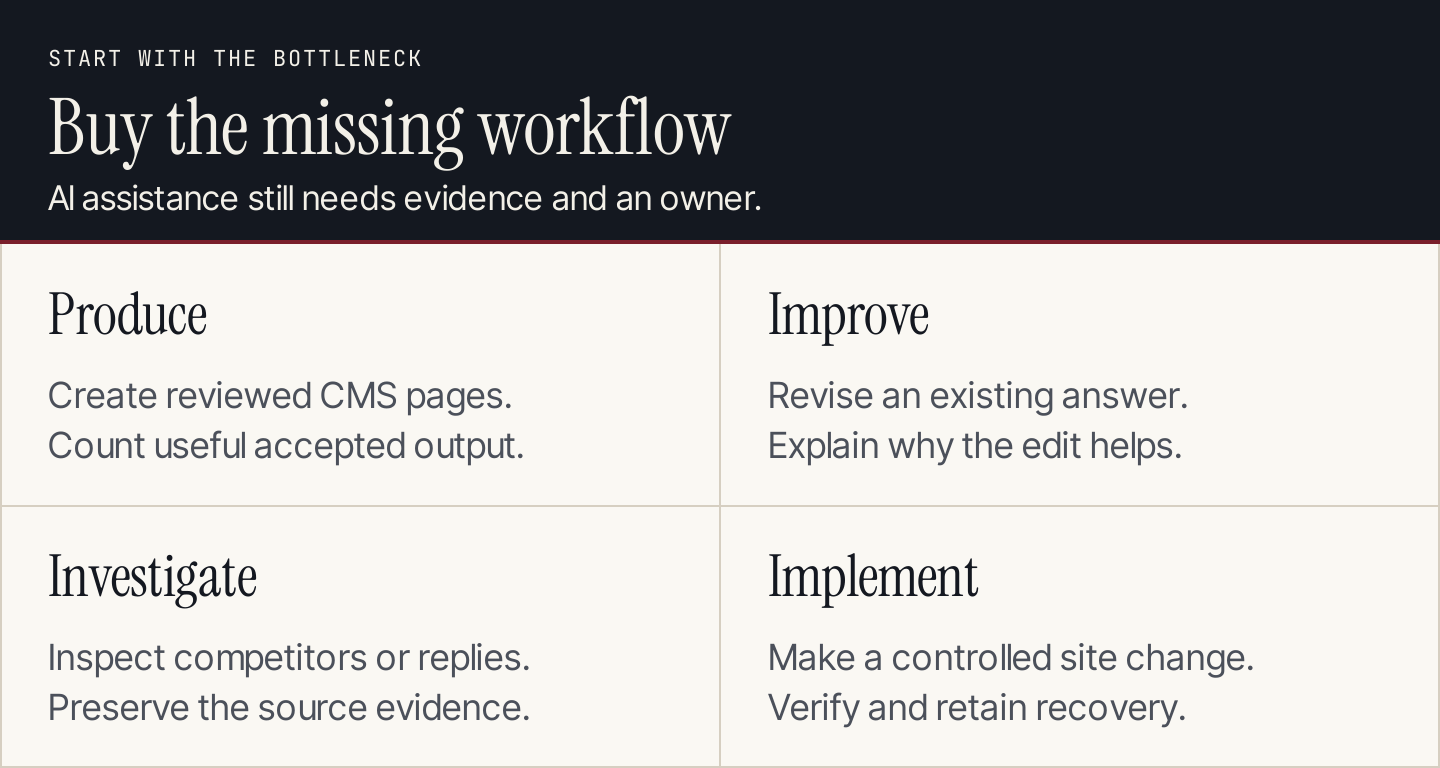
Buy the missing workflow. Keep factual review and decision ownership visible even when the software performs more steps.
The 20-tool shortlist
| # | Tool | Best fit | Evaluate this output |
|---|---|---|---|
| 1 | Rankauto | Recurring article production | Reviewed CMS-ready pages |
| 2 | Surfer | Content and visibility guidance | Justified edits to a real page |
| 3 | Frase | Research, drafting and maintenance | A new draft and a reviewed revision |
| 4 | Clearscope | Editorial optimization | Useful missing explanations |
| 5 | MarketMuse | Library planning | Create, update or consolidate priorities |
| 6 | NEURONwriter | SERP-informed writing | Audience-relevant coverage |
| 7 | Scalenut | Planning through optimization | An editable, sourced article |
| 8 | SEOWriting.ai | AI article creation | Complete output and usage cost |
| 9 | AirOps | Configurable content workflows | Reliable steps, reviews and recovery |
| 10 | Koala AI | Article writing and supporting tools | Source quality and word/credit use |
| 11 | Writesonic | SEO/GEO content workflows | A finding connected to content action |
| 12 | Semrush Content Toolkit | Connected content creation | Research and editor handoff |
| 13 | Ahrefs | Research with AI helpers | Inspectable competitor evidence |
| 14 | SE Ranking | SEO and client operations | Useful project reports and next steps |
| 15 | Profound | AI visibility plus marketing execution | Response evidence and reviewed content |
| 16 | Peec AI | Competitive AI visibility | Prompt context and source exports |
| 17 | OtterlyAI | Monitoring and GEO audits | Recorded responses and actionable findings |
| 18 | Alli AI | Technical optimization | Controlled, verifiable site changes |
| 19 | Search Atlas | Connected SEO operations | The actual implementation and approval path |
| 20 | RivalFlow AI | Existing-page coverage investigation | A useful, accurate revision |
1. Rankauto: Best for recurring content automation
Choose Rankauto when the team knows it needs a consistent blog but has limited capacity for research, drafting, formatting and delivery. Its value should be assessed at the approved-page stage, not by the number of words produced.
Rankauto combines topic research, brand-guided article generation, advertised fact-checking, visuals, SEO metadata and CMS delivery. Its public plan is $49 per website per month for 30 created articles and an audit allowance of up to 10,000 pages. You can keep drafts for review or enable automatic publishing. Product documentation.
Limit to check: Keep an editor responsible for factual accuracy and business relevance. This is a content production recommendation; the reviewed pages do not establish a proprietary competitor backlink index or a replacement for a full paid-search suite.
Trial task: Supply approved facts and primary sources for a real topic. Review claims, useful examples and visuals, then inspect the CMS preview. Count accepted pages and editorial effort before enabling automatic publication.
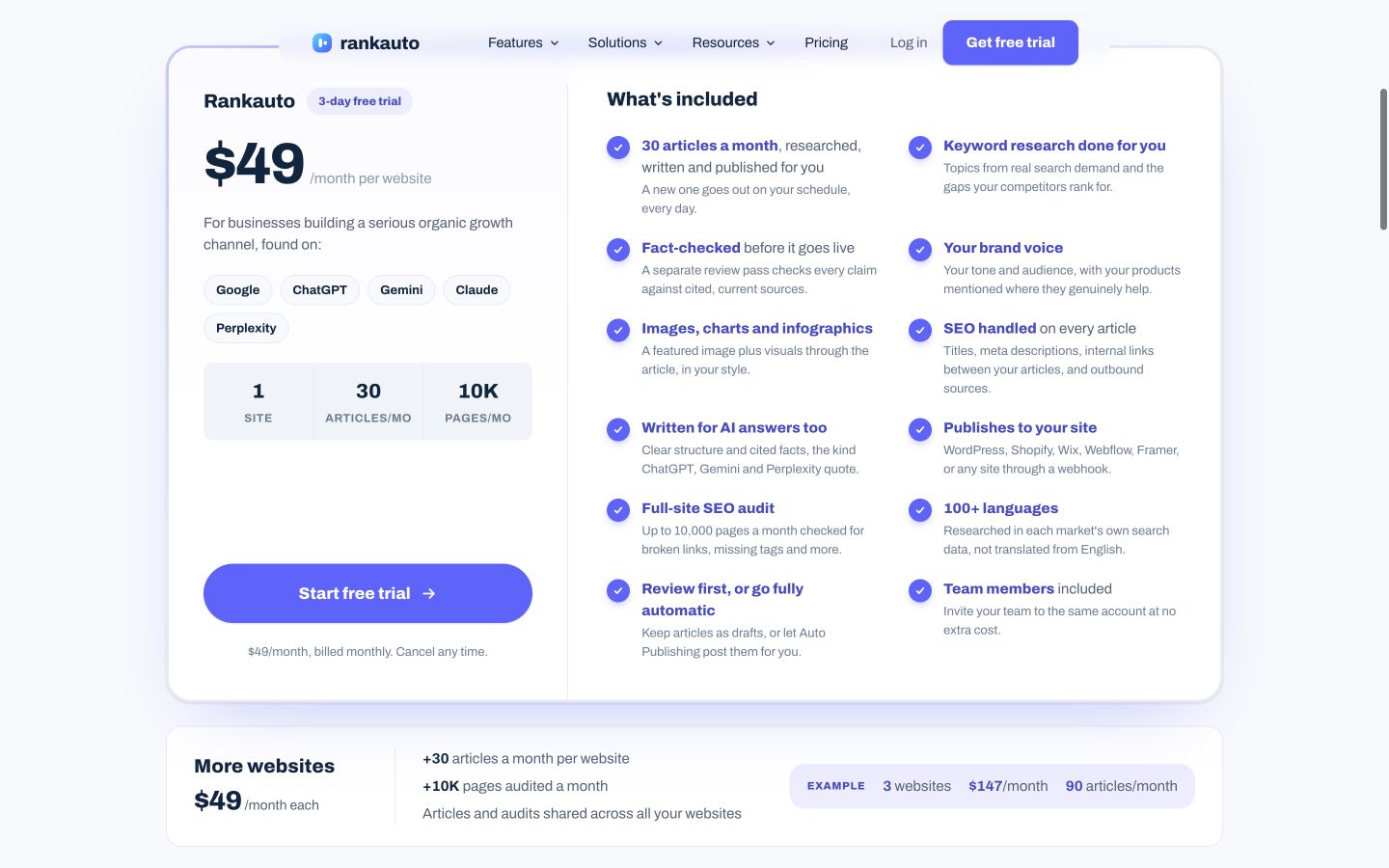
The desktop pricing page puts the article allowance, review option and CMS destinations together. Compare those deliverables with the recurring job you need handled. Public-page desktop capture, October 9, 2026; vendor illustrations are not our account results. Source.
2. Surfer: Best for content and visibility guidance
Surfer is worth evaluating when an editor needs help improving a page's coverage and connecting content work to search visibility. Use a clearly defined query and audience so the suggestions can be judged against an actual reader task.
Surfer's current site describes a broader content and AI visibility platform, including Content Score, brand context and a workflow connecting insights to content. It also describes MCP connectivity. Its Surfy Agent section is labeled soon, so that announced agent should not be treated as a feature already available to every subscriber. Product documentation.
Limit to check: Compare the exact live plan and implementation path. An optimization score is guidance, not a ranking or citation guarantee. Do not assume a planned agent is included because it appears beside existing features.
Pricing: Standard is displayed at $99 per month, billed yearly. The annual allowance is 360 created or optimized documents; compare that with your actual cadence rather than treating it as an unlimited monthly quota. Current pricing.
Trial task: Freeze one existing article. Record which suggestions add missing explanations, which merely repeat terms and which require new evidence. Confirm that any announced agent feature is available in your intended plan before relying on it.
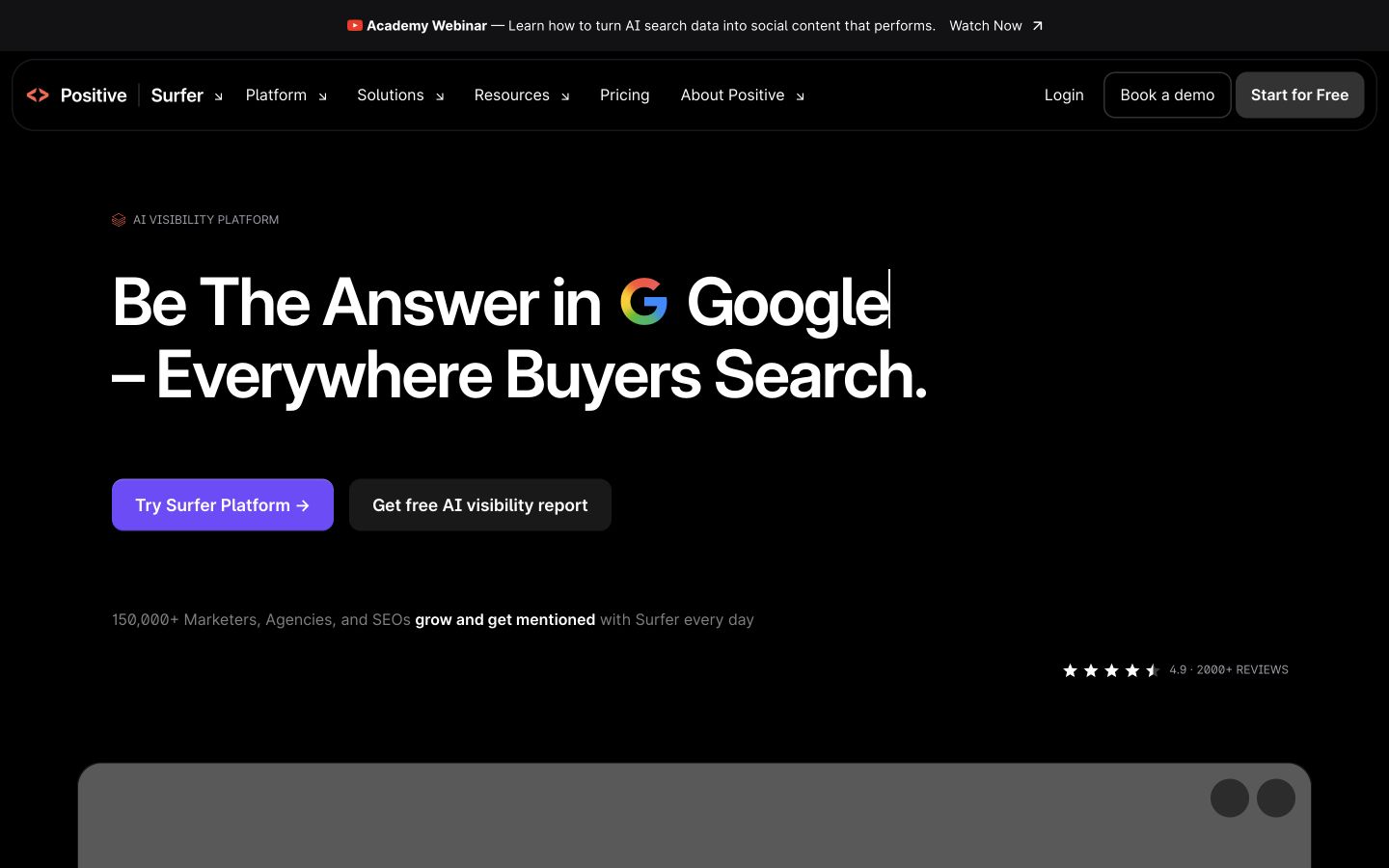
Surfer now positions itself around visibility as well as content. Older comparisons that describe it solely as a score generator miss that change. Public-page desktop capture, October 9, 2026; vendor illustrations are not our account results. Source.
3. Frase: Best for research, drafts and page maintenance
Frase's current offering connects more of the content lifecycle than an old brief-generator description suggests. It is especially relevant when a team wants both a new-article workflow and an approval process for changes to published pages.
Frase's current public site connects research, brand-context drafting, page scoring and CMS publishing. It describes Content Guard monitoring published pages and drafting revisions for approval, with optional automatic low-risk fixes. Listed CMS destinations include WordPress, Webflow, Sanity and Wix. Product documentation.
Limit to check: Check the meaning of low-risk changes and how your team authorizes them. The current offering is broader than a brief generator; assess the review queue and publishing controls rather than relying on outdated feature labels.
Pricing: Starter is $49 month to month or $39 per month billed yearly. Check the article, site and maintenance allowances of the tier you will actually use. Current pricing.
Trial task: Run a new topic and an existing page through the intended plan. Inspect the draft and proposed revision, check the sources and see how the editor declines or approves a change. Define which changes, if any, may happen automatically.
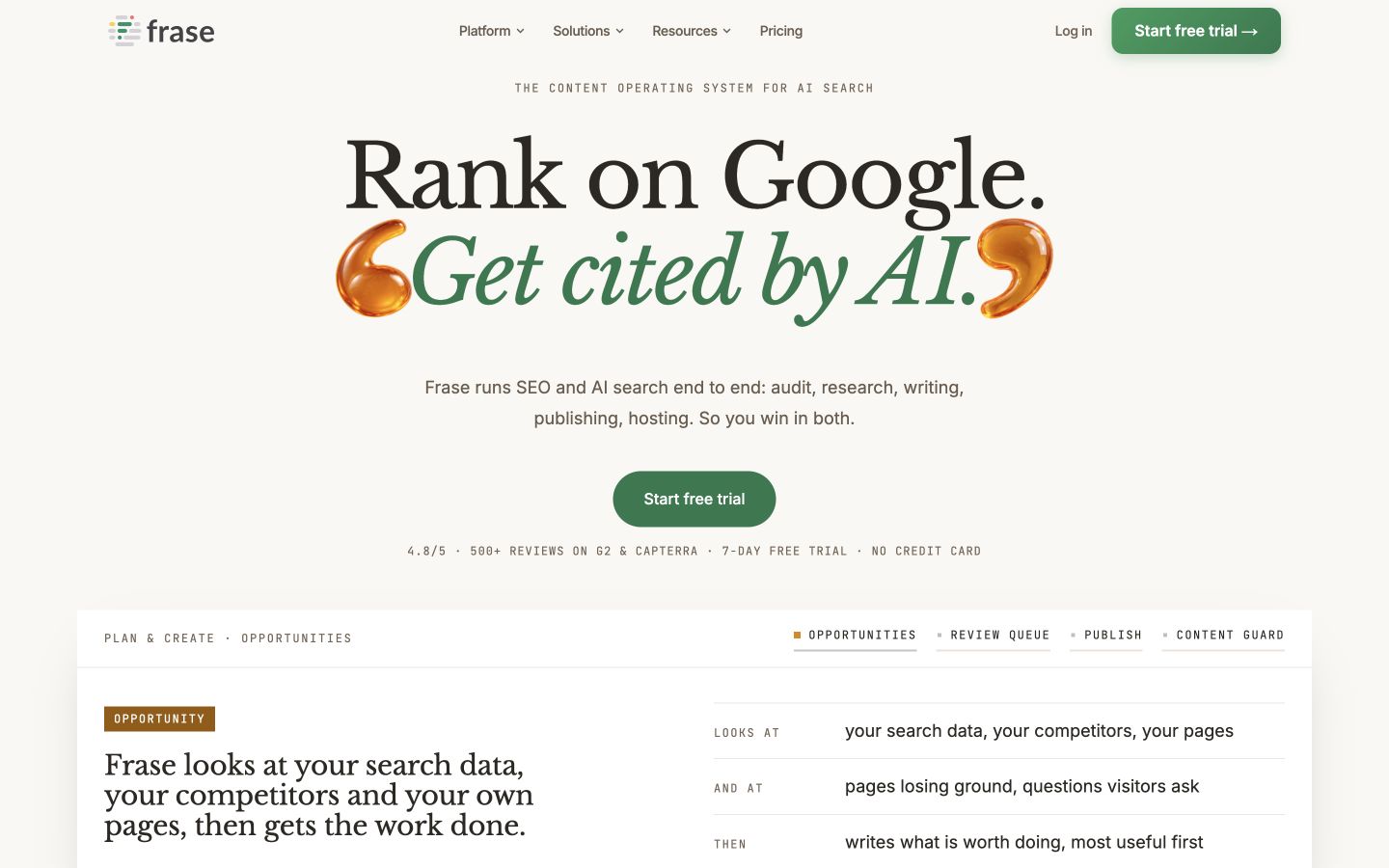
Frase's homepage describes a content operating system. Its publishing and maintenance claims deserve a trial alongside its familiar research capabilities. Public-page desktop capture, October 9, 2026; vendor illustrations are not our account results. Source.
4. Clearscope: Best for editorial coverage decisions
Clearscope can suit an editorial team that wants research, drafting and optimization guidance around a page's purpose. Treat its recommendations as inputs to an editor's decision rather than a target score to maximize.
Clearscope advertises query discovery, intent research, AI drafting and editing, content optimization and monitoring after publication. Its current page also covers tracking visibility across AI platforms. Product documentation.
Limit to check: Evaluate whether these workflows help your editors make better decisions. A content grade or visibility metric does not independently verify a statistic, establish subject expertise or prove that a particular change caused a ranking improvement.
Pricing: Essentials is $129 per month and includes 20 monthly Topic Explorations and 20 Drafts. Business is $399 per month; confirm whether its additional monitoring and collaboration justify the step up. Current pricing.
Trial task: Choose a draft that already has a clear audience. Compare suggestions with real customer questions, accept useful missing explanations and reject additions that distract from the page. Review the plan's topic and drafting allowances.
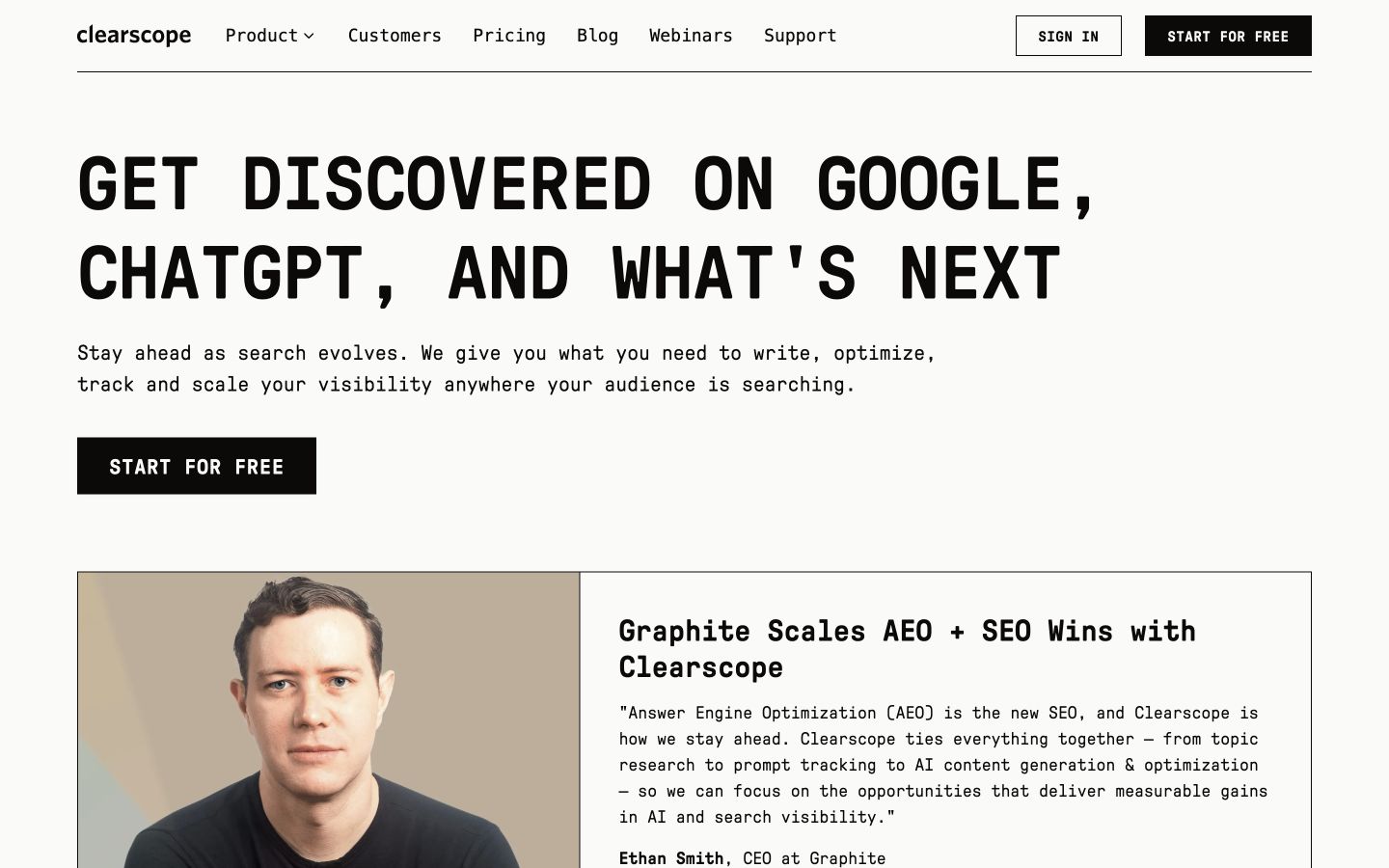
The current Clearscope page includes AI content generation and optimization. Treat it as a broader editorial shortlist candidate, not a scoring-only tool. Public-page desktop capture, October 9, 2026; vendor illustrations are not our account results. Source.
5. MarketMuse: Best for prioritizing a content library
MarketMuse is relevant when the question is which pages to create, update or consolidate across a library. A page-level writing tool can be the wrong purchase if your bigger problem is deciding what deserves production time.
MarketMuse emphasizes analyzing the content a site already has, identifying topic opportunities, assessing personalized difficulty and building a roadmap of pages to create or update. Its product navigation also includes content briefs and optimization. Product documentation.
Limit to check: A roadmap needs execution capacity. Check whether the suggested cluster has a useful business purpose and whether the team can supply original material. Modelled difficulty should inform prioritization rather than decide it alone.
Pricing: A free entry option is listed alongside Optimize, Research and Strategy packages. The current page does not establish one comparable public paid starting price; request the scope and quote for the planning work you need. Current pricing.
Trial task: Use a real cluster with several existing URLs. Ask the roadmap to justify a new page versus improving a current one. Check business relevance, duplicate intent and whether your team can supply original evidence for the proposed topics.
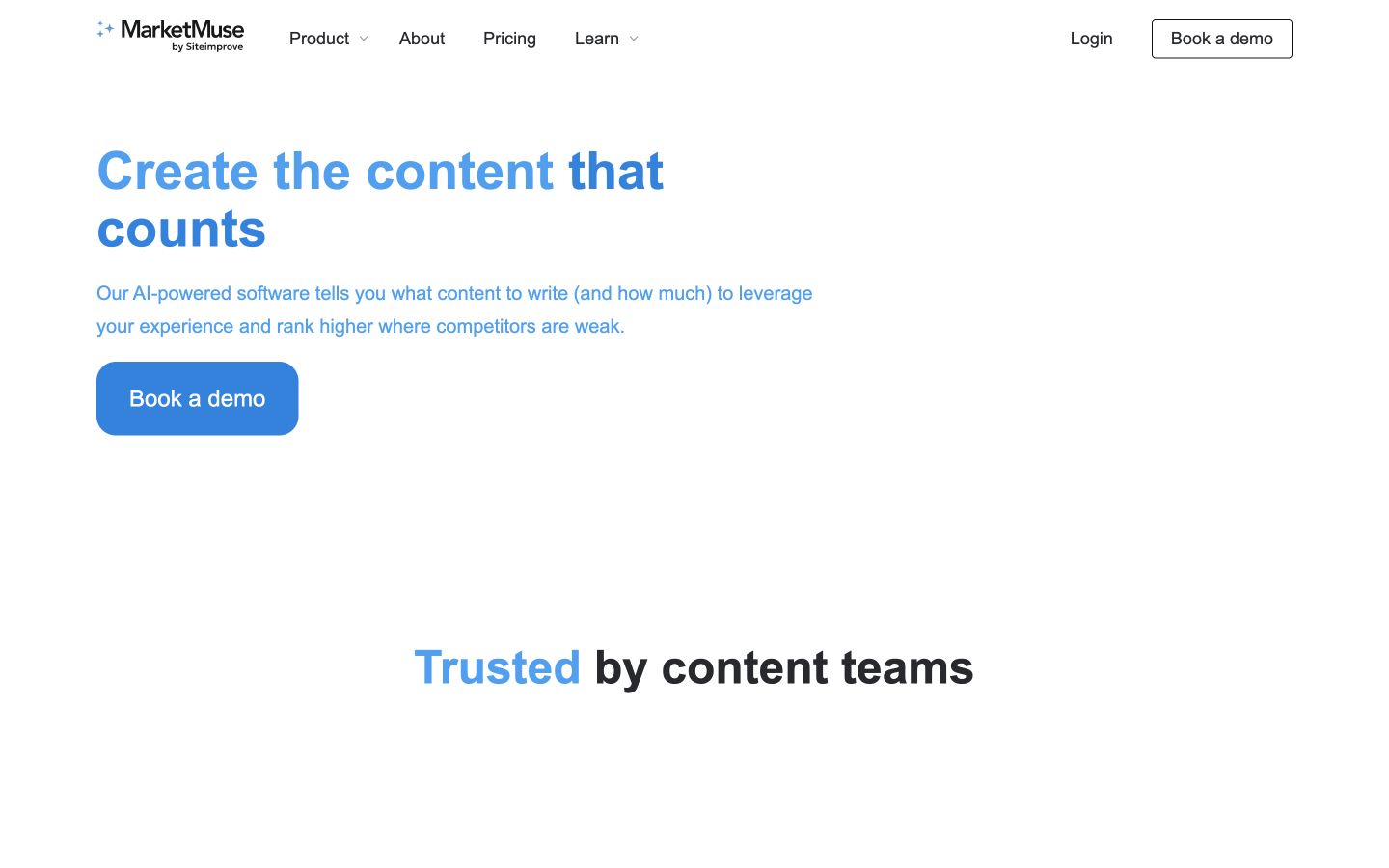
MarketMuse leads with deciding which content is worth creating. That is especially useful when the problem is prioritization across a library. Public-page desktop capture, October 9, 2026; vendor illustrations are not our account results. Source.
6. NEURONwriter: Best for SERP-informed content work
NEURONwriter brings search-result analysis and content guidance into an assisted writing workflow. It suits teams prepared to interpret recommendations, not simply accept every suggested phrase.
NEURONwriter combines content analysis, NLP-oriented recommendations and AI drafting. Its public site lists integrations including Google Search Console, WordPress and Shopify on specified plans, and promotes MCP and agent workflows. Product documentation.
Limit to check: Compare the particular tier's analysis, writing and integration allowances. A recommendation to mention a related term is not a requirement to repeat it, and a high content score does not make unsupported claims reliable.
Trial task: Run one real query, inspect the search intent and check the proposed coverage. Assess the factual draft separately from the content score. Test the CMS integration and usage allowances on the specific tier you would buy.
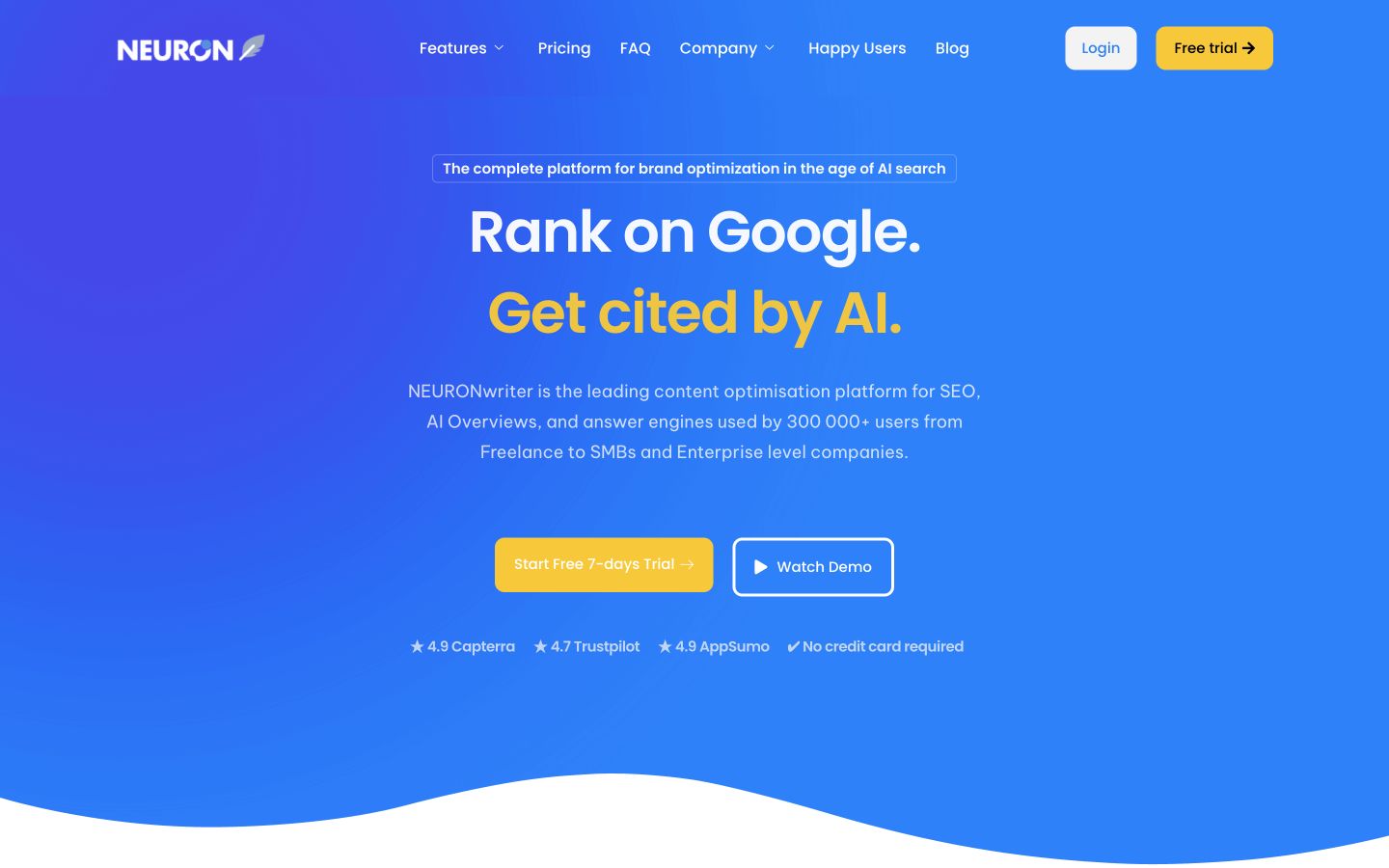
The site connects content optimization with AI search. Check plan-level integrations and allowances rather than assuming all tiers behave identically. Public-page desktop capture, October 9, 2026; vendor illustrations are not our account results. Source.
7. Scalenut: Best for connected planning and article creation
Scalenut belongs on the shortlist when a small content team wants planning, writing and optimization in one workspace. Decide whether the connection between stages reduces your actual handoff work.
Scalenut's visible site offers article writing, content optimization, content audits and AI visibility features. It distinguishes a do-it-yourself software path from expert-managed GEO services. Product documentation.
Limit to check: Keep a software subscription and managed service proposal separate in your budget. Establish who selects topics, who edits, and which actions require approval. Visibility features and service claims need different acceptance checks.
Pricing: Starter is displayed at $59 for monthly billing. Annual promotional prices are also displayed, so compare the checkout commitment and renewal terms separately from the headline discount. Current pricing.
Trial task: Take one narrow topic through planning, an editable draft and the intended publishing route. Record source corrections, the time needed to add useful examples and which limits apply to the full workflow.
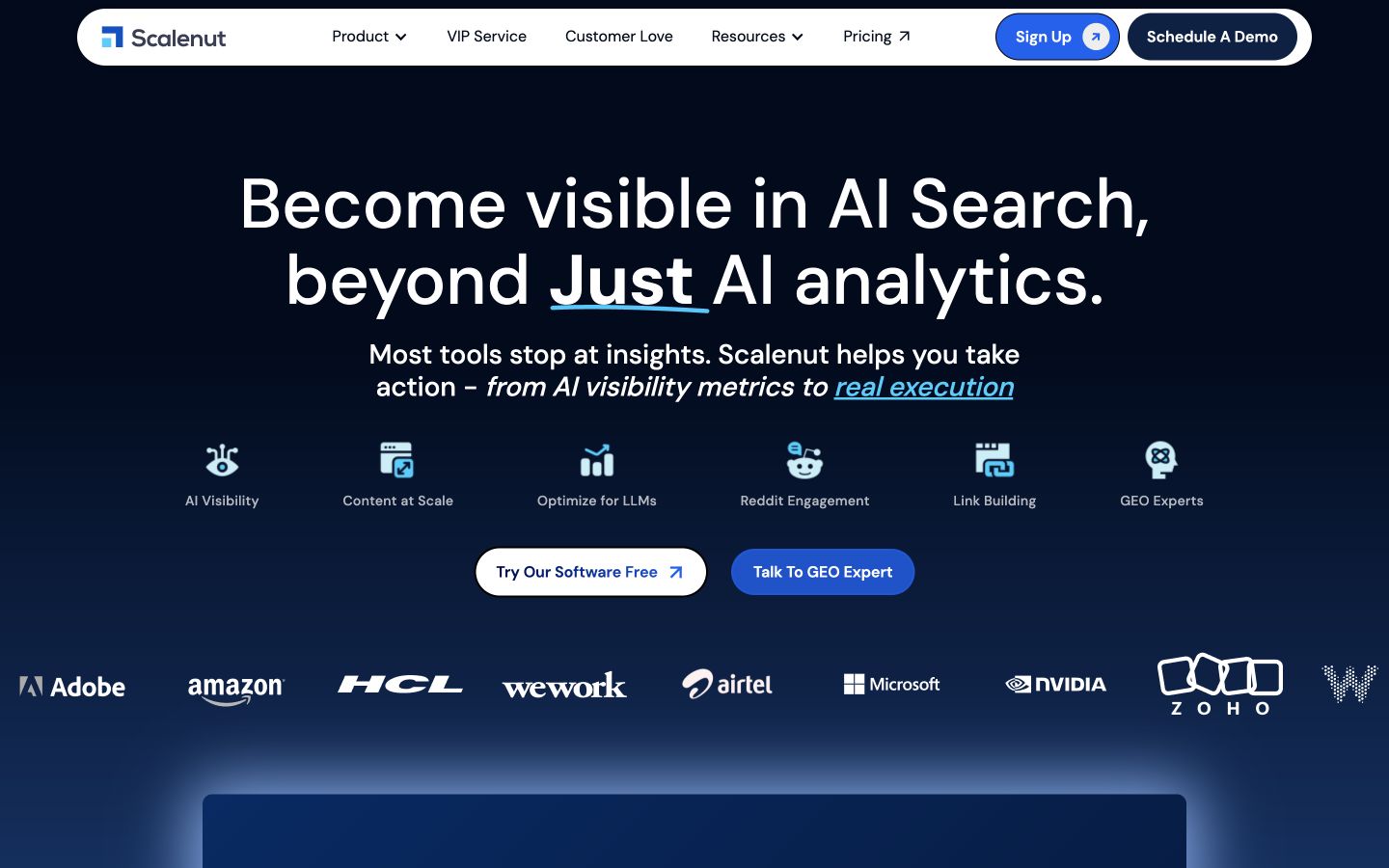
Scalenut presents both software and expert-managed work. Comparing those routes avoids mistaking a service deliverable for a standard software feature. Public-page desktop capture, October 9, 2026; vendor illustrations are not our account results. Source.
8. SEOWriting.ai: Best for a focused AI article-generation shortlist
SEOWriting.ai is relevant when the main purchase is assisted article creation and delivery. Evaluate a complete reader-facing output, including sources, headings, media and metadata, instead of a short text sample alone.
SEOWriting.ai advertises competitor SERP analysis and article generation for traditional search and AI answers. Its public navigation also exposes WordPress MCP, making the publishing and agent integration path a relevant part of the evaluation. Product documentation.
Limit to check: Check the generation allowance, integration requirements and how much of a finished article survives your editing pass. The platform's search and AI visibility claims do not remove the need for original examples and verified sources.
Pricing: Starter is $19 monthly or $14 per month billed annually ($168 per year). Professional is $79 monthly or $59 per month annually. Compare generation and publishing allowances, not price alone. Current pricing.
Trial task: Generate one article from approved sources and product facts. Inspect factual statements, useful images and the CMS preview. Record the allowance used by the initial draft and revisions rather than assuming every generated article is publication-ready.
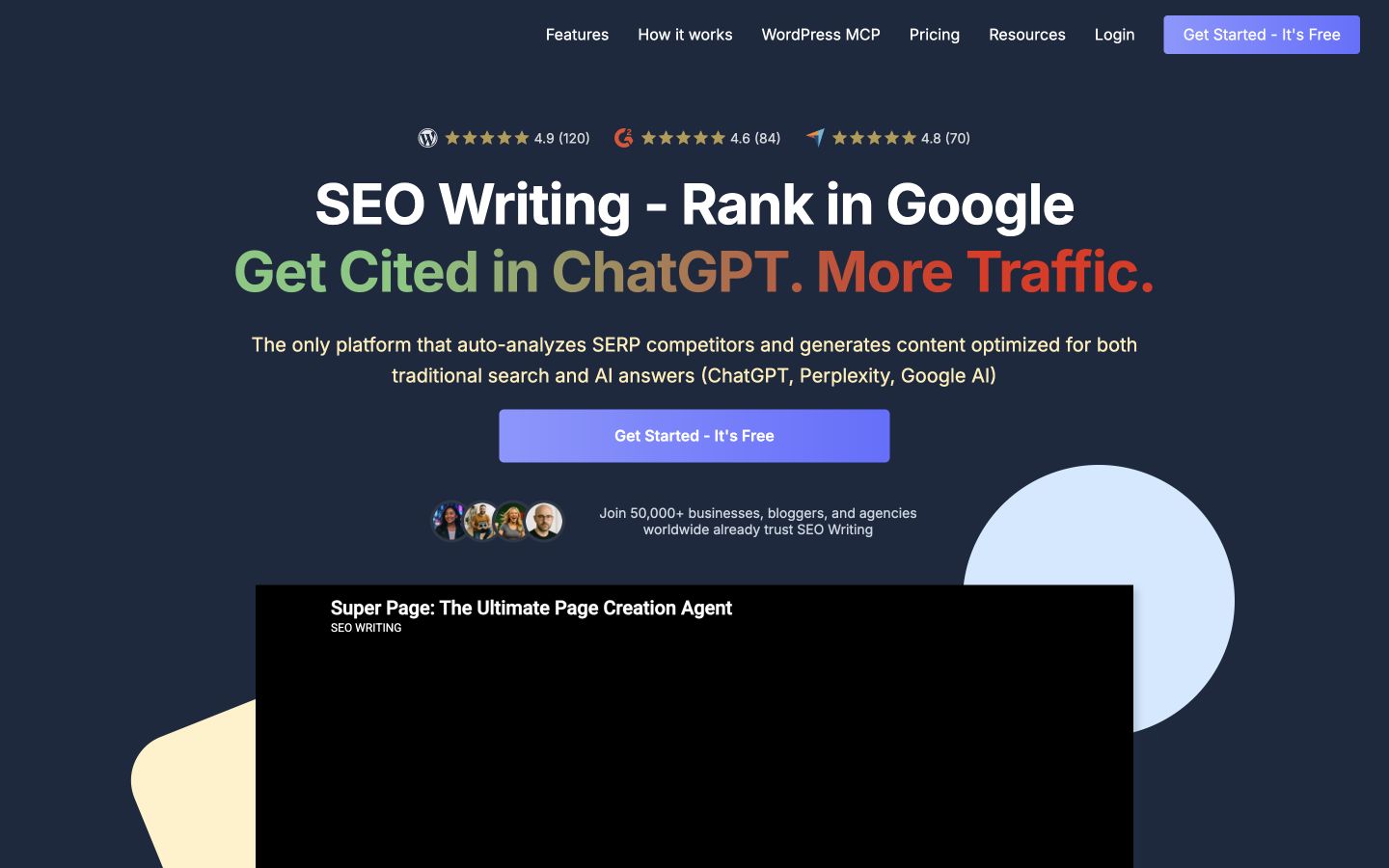
The site emphasizes search-informed articles and a WordPress connection. Inspect both the content and the CMS handoff in a trial. Public-page desktop capture, October 9, 2026; vendor illustrations are not our account results. Source.
9. AirOps: Best for a configurable content workflow
AirOps is useful when the team wants to define its own sequence of research, generation, review and delivery steps. The flexibility is most valuable when somebody owns the workflow and can maintain it as inputs change.
AirOps describes a platform combining agents, data, brand governance and expertise to research, publish and refresh content. Its current positioning includes strategy support as well as the system used to execute that strategy. Product documentation.
Limit to check: Clarify the division between platform capabilities and services. A custom operation needs an owner for inputs, brand rules, exceptions and maintenance; compare implementation effort as well as subscription scope.
Pricing: The page lists Solo, Pro and Enterprise packages with task-based usage. It does not establish a comparable base subscription in our captured text; obtain the package price and account for task consumption and implementation work. Current pricing.
Trial task: Build a small workflow with a source check and editorial approval before delivery. Test a missing input and an unusable source. Confirm that failed or unapproved work is held rather than silently sent onward.
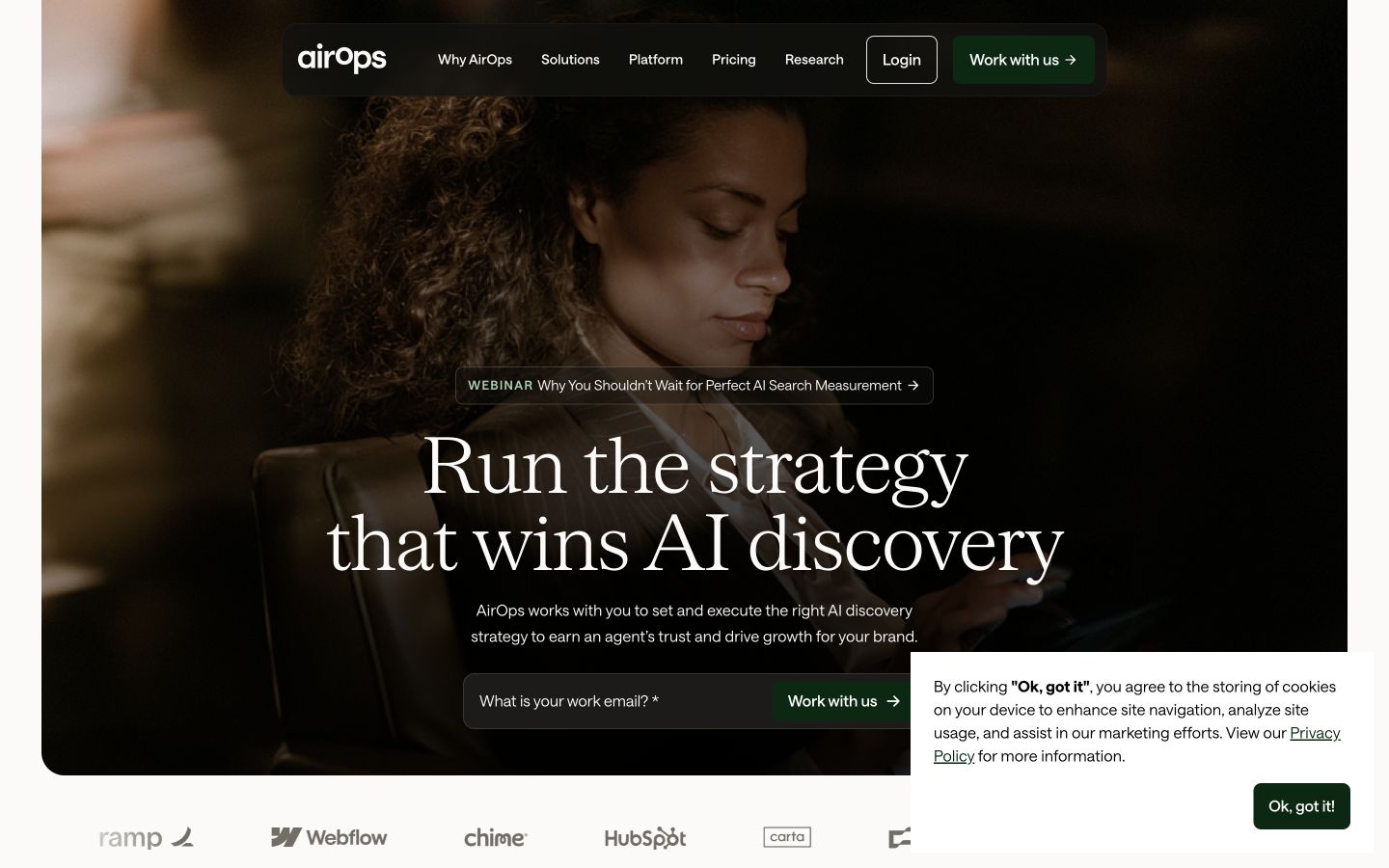
AirOps describes both strategy and execution. Determine which parts your team will configure and which parts are provided as a service. Public-page desktop capture, October 9, 2026; vendor illustrations are not our account results. Source.
10. Koala AI: Best for assisted article writing with supporting tools
Koala is a candidate for teams that want article generation alongside supporting research and chat-style work. Compare the accepted article and actual usage rules rather than assuming a large word allowance describes the full workload.
Koala AI's current homepage describes an SEO agent using Search Console to identify publishing opportunities, alongside KoalaWriter, a knowledge base and brand context. It also announces MCP access on paid plans. Product documentation.
Limit to check: Assess the research and writing allowances of the plan you need. Older descriptions of Koala as a single article generator understate its current scope, but public positioning still needs validation against your own source material and workflow.
Pricing: Starter is displayed at $25 per month with 45,000 words and 500 credits. Model choice and agent activity affect usage, so compare the allowance with your intended workflow. Current pricing.
Trial task: Create a real comparison or how-to using an approved fact sheet. Inspect the sources and claims, check the publishing output and record how much of the word and credit allowance the selected options consume.
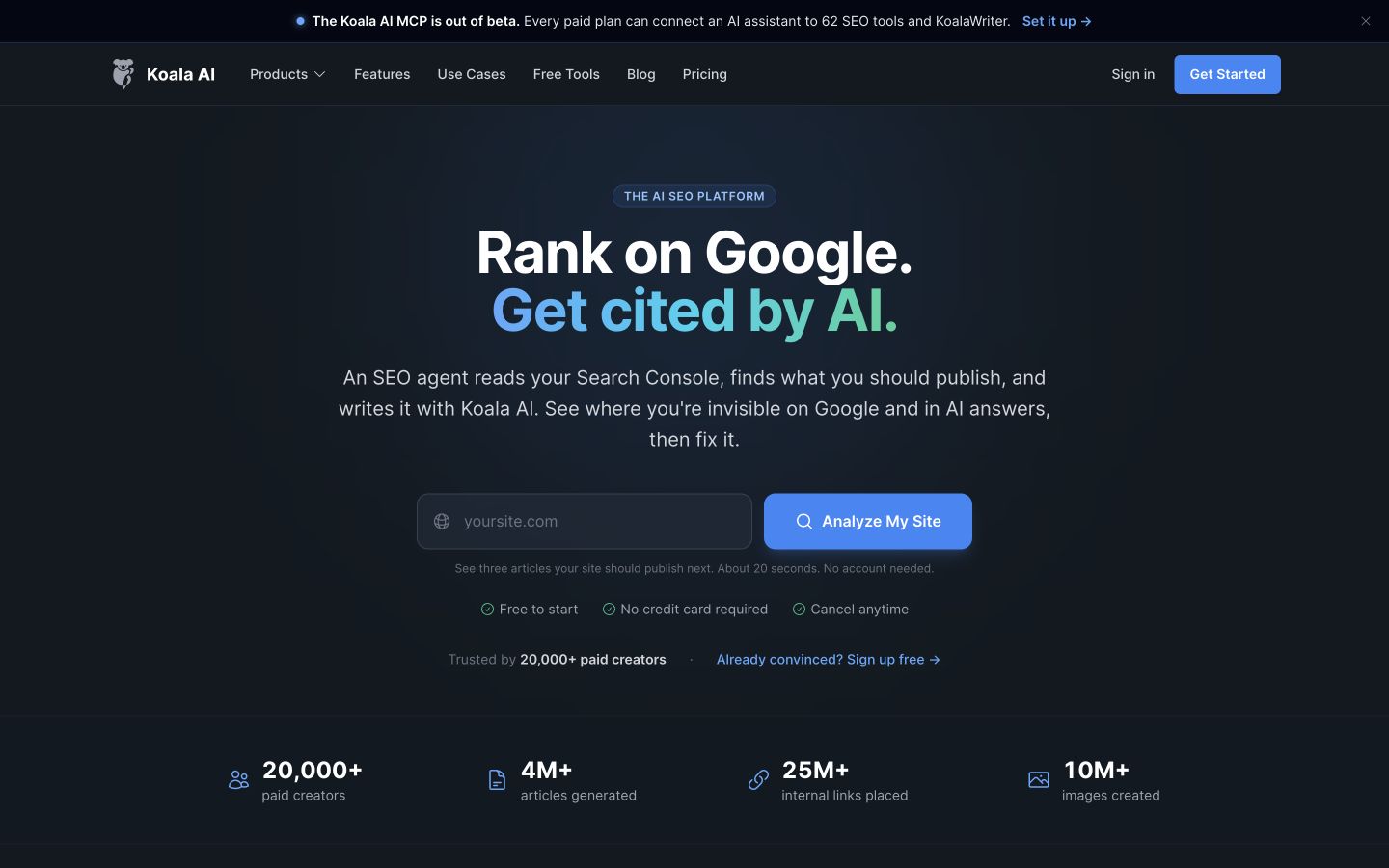
Koala now presents an SEO platform with site-informed planning. Check the proposed topic as carefully as the generated article. Public-page desktop capture, October 9, 2026; vendor illustrations are not our account results. Source.
11. Writesonic: Best for connecting SEO/GEO findings to content
Writesonic's current positioning combines content work with SEO and AI-search investigation. Ask which connected workflow is live on the intended plan rather than treating a broad platform description as a fixed feature bundle.
Writesonic's current site emphasizes measuring AI visibility, prioritizing opportunities and acting through content, citations and technical work. It is a candidate when the decision starts with where a brand is missing from AI answers. Product documentation.
Limit to check: Identify exactly which monitoring, content and execution capabilities your tier provides. A visibility score is a sampled observation of selected queries, not a measure of every possible AI answer about your company.
Trial task: Investigate one real visibility or content issue, inspect the underlying evidence and create a proposed article change. Verify the review and delivery steps and whether the included allowances support your normal monthly work.
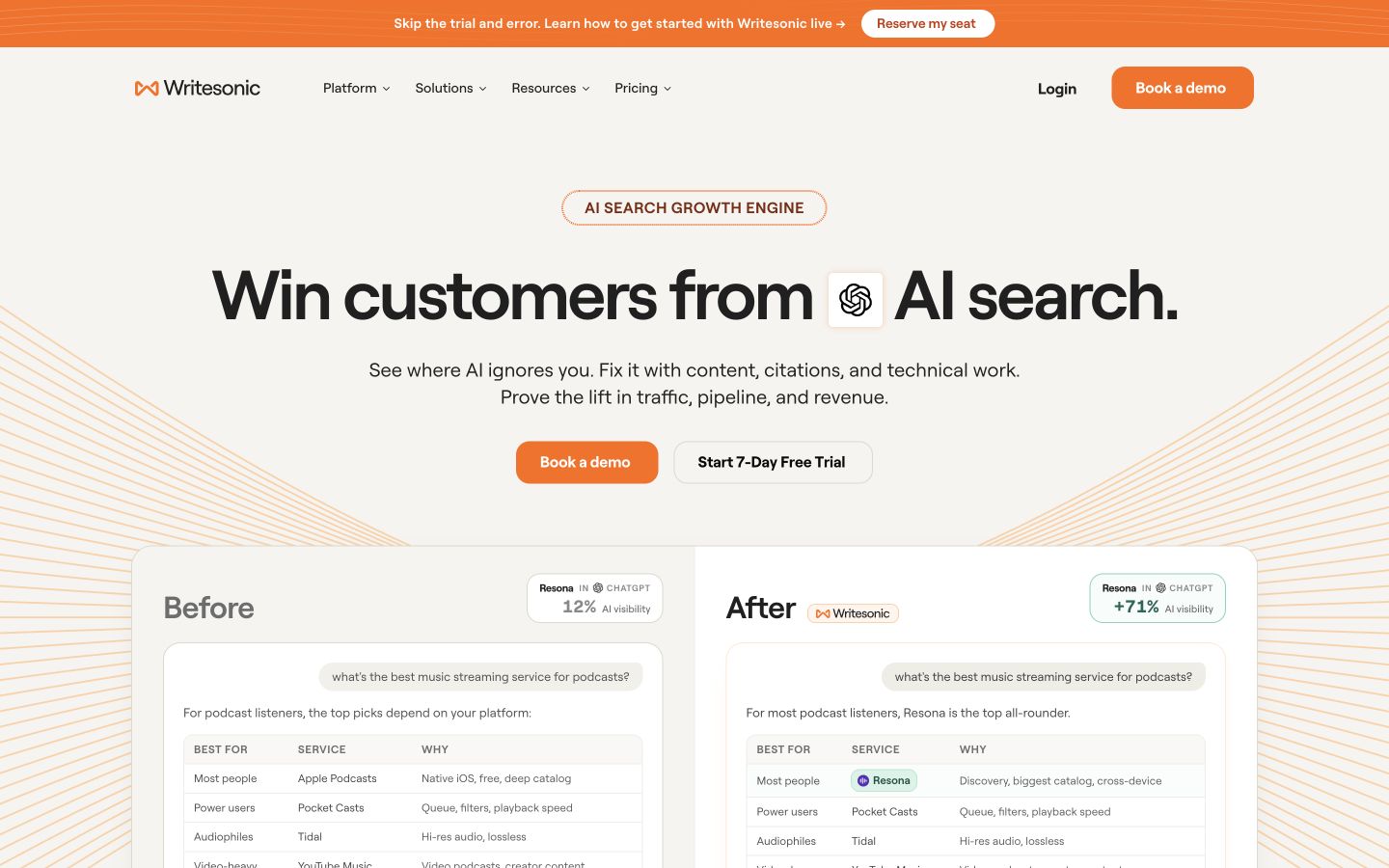
Writesonic leads with AI search discovery and action. Inspect the link between measurement and the work your team can actually complete. Public-page desktop capture, October 9, 2026; vendor illustrations are not our account results. Source.
12. Semrush Content Toolkit: Best for content work inside a research ecosystem
Semrush Content Toolkit is useful when a team wants to connect topic research with content creation in the ecosystem it already uses. It is a separate product scope, so compare the actual inclusion with your existing subscription.
Semrush Content Toolkit connects topic ideas, briefs, article generation, optimization and repurposing. Its documentation lists publication integrations including WordPress and separate social or email destinations. Product documentation.
Limit to check: Distinguish the Content Toolkit from Semrush's SEO and AI visibility packages. The pricing documentation and pricing page describe article allowances differently, so verify the active plan and SEO boost limits before treating standard generation as the same deliverable.
Trial task: Choose a researched opportunity and take it into the editor. Check brand context, factual sources and usable output, then identify which work still happens outside the toolkit. Confirm the allowance rather than assuming a research subscription includes it.
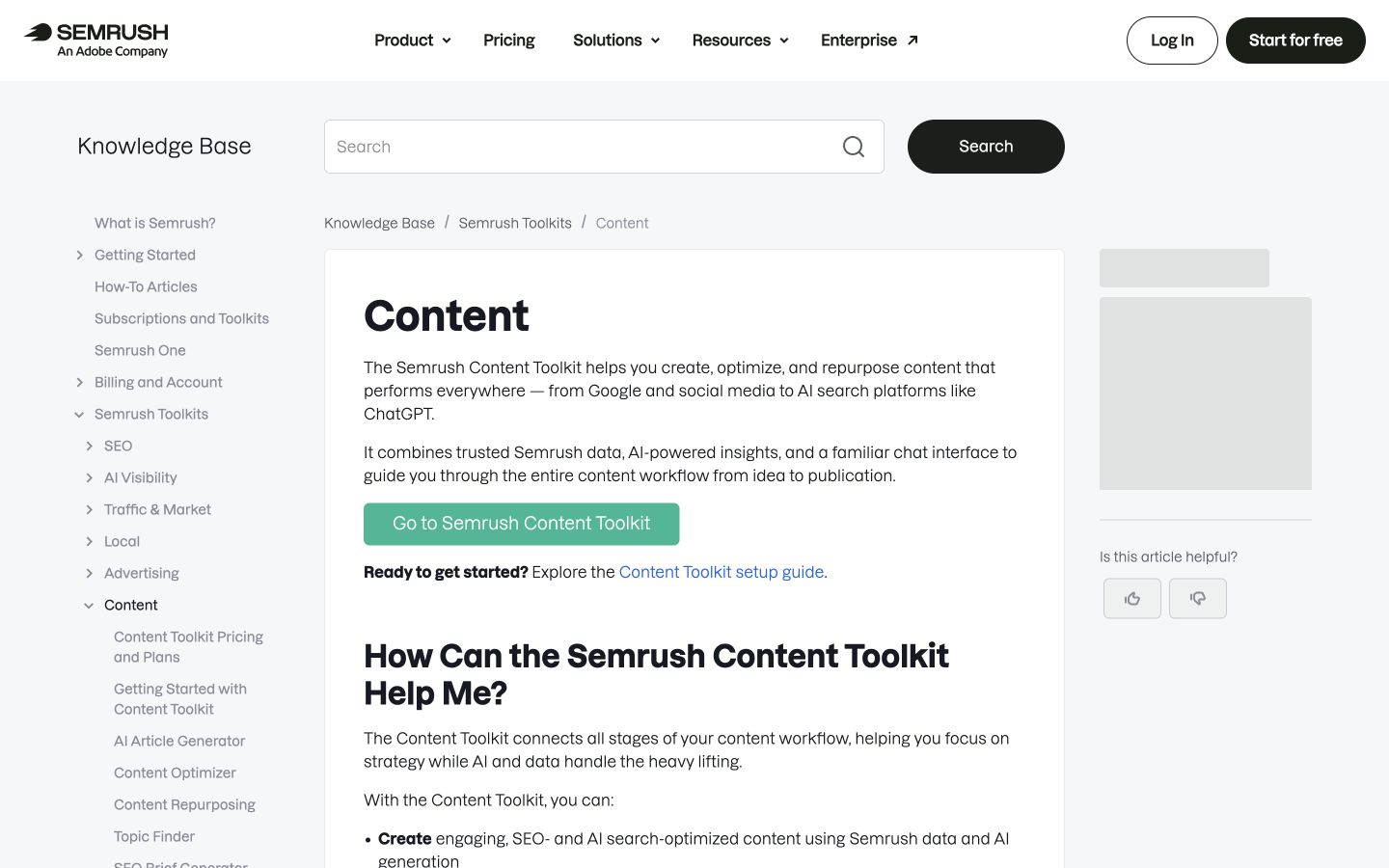
The current knowledge-base page names Content Toolkit. That is the product to evaluate rather than assuming an older ContentShake AI description is current. Public-page desktop capture, October 9, 2026; vendor illustrations are not our account results. Source.
13. Ahrefs: Best for research connected to AI assistance
Ahrefs provides competitor, keyword and backlink research alongside audits, rankings and current AI visibility/content features. Its public site also presents paid-search intelligence. Use the research to make a specific decision rather than expecting an AI helper to remove the need to inspect evidence. Ahrefs.
Pricing and boundary: The reviewed monthly Lite, Standard and Advanced plans display $129, $249 and $449. Additional visibility packages and usage rules need their own comparison. Proprietary metrics are useful within context but are not interchangeable with another vendor's scores.
Trial task: Investigate one real topic and a competing URL. Inspect linking pages or query suggestions, then use an AI-assisted recommendation to propose a content change. Keep the underlying source and editorial rationale with the decision. This makes the assistance reviewable instead of turning a metric into an unexplained instruction.
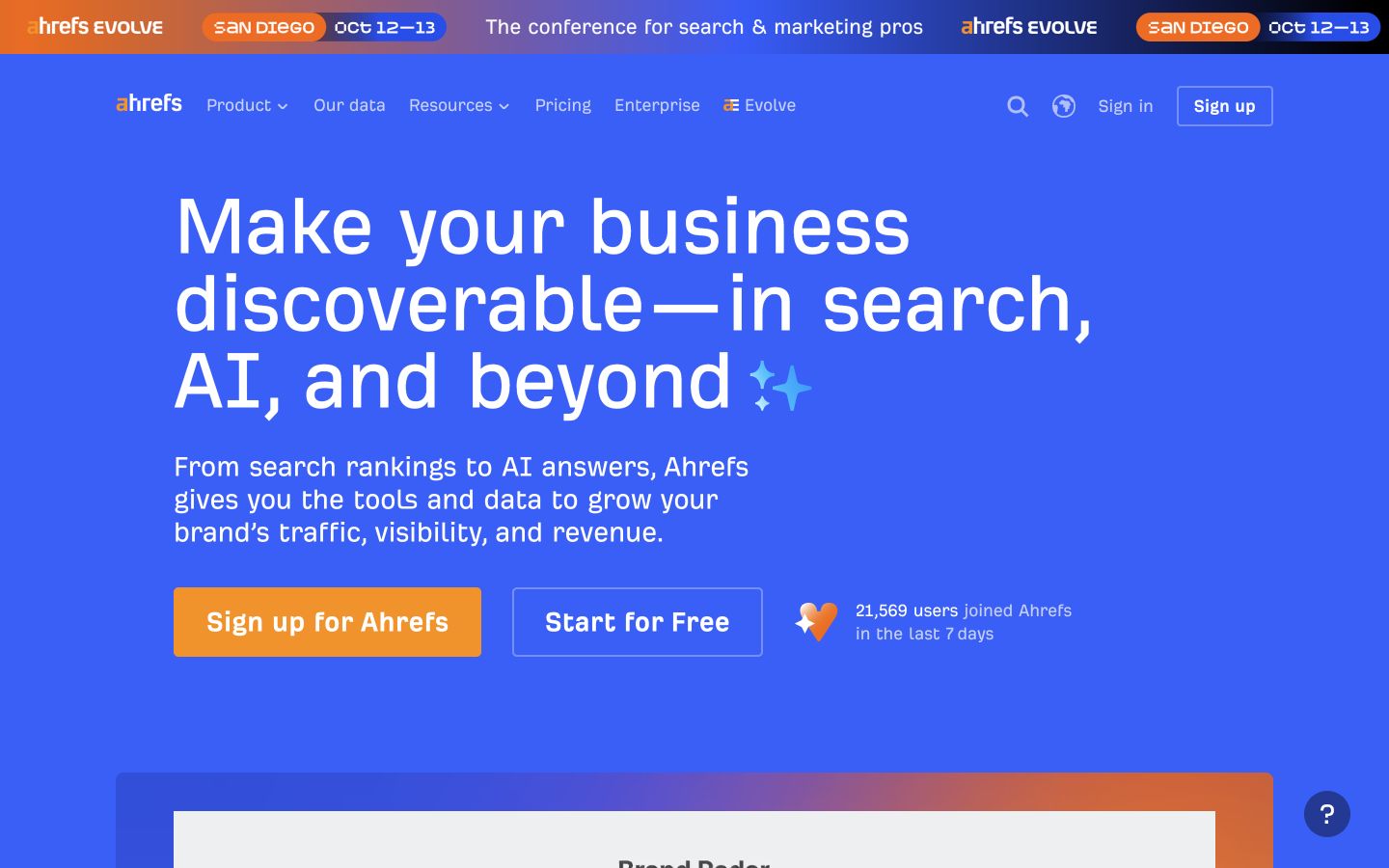
Ahrefs now includes AI assistance alongside its research suite. Evaluate the underlying data and the specific plan-level workflow. Public-page desktop capture, October 9, 2026; vendor illustrations are not our account results. Source.
14. SE Ranking: Best for SEO and client operations
SE Ranking can suit an agency or marketing team that needs research, audits, tracking and reports, with additional AI-related packages. Compare its connected operation rather than one isolated AI feature.
SE Ranking's platform includes keyword and competitor research, backlink analysis, audits and rank monitoring, with content marketing and AI visibility capabilities also presented. Its site describes an Agency Success Kit and integrations with reporting and workflow tools. Product documentation.
Limit to check: Evaluate the package you need for your client count. Keyword, page, seat and add-on allowances can matter more than a headline monthly price, especially when reporting is part of the service you sell.
Pricing: The entry offer is displayed at $129 monthly or $103.20 per month billed annually. Agency and AI Search additions are priced separately, so budget for the client deliverables you need rather than assuming every module is included. Current pricing.
Trial task: Create one real client workflow: a research finding, an audit issue and a report. Confirm users, project limits and the cost of any additional AI package. Ask whether the output leads to work the team can actually complete.
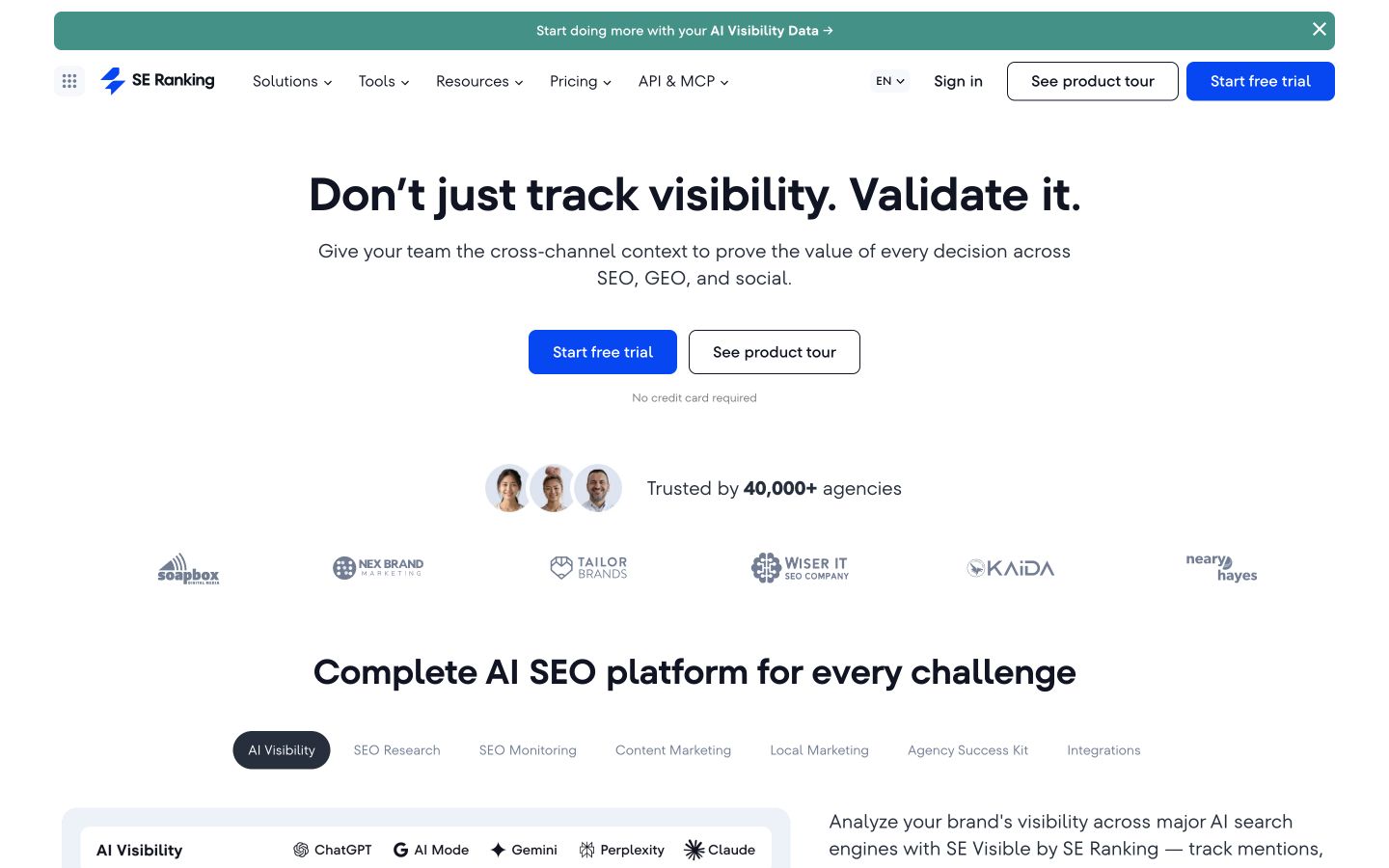
The suite connects several SEO tasks. Confirm AI-related packages and reporting needs for the clients you support. Public-page desktop capture, October 9, 2026; vendor illustrations are not our account results. Source.
15. Profound: Best for AI visibility connected to execution
Profound's current site connects visibility research and brand context with content creation, optimization and CMS staging. It also describes broader marketing work. That makes it relevant to a team that wants more than a passive AI-response dashboard. Profound.
Pricing and boundary: Obtain the paid offer for tracking, credits, integrations and seats; a comparable paid amount was not resolved in the reviewed public material. Vendor illustrations and case studies do not establish your future results.
Trial task: Inspect a real response where the competitor appears, identify the source and create a proposed content improvement. Check whether the evidence stays attached to the draft and where approval occurs. Compare the accepted output and human work with a standalone tracker plus your existing production process.
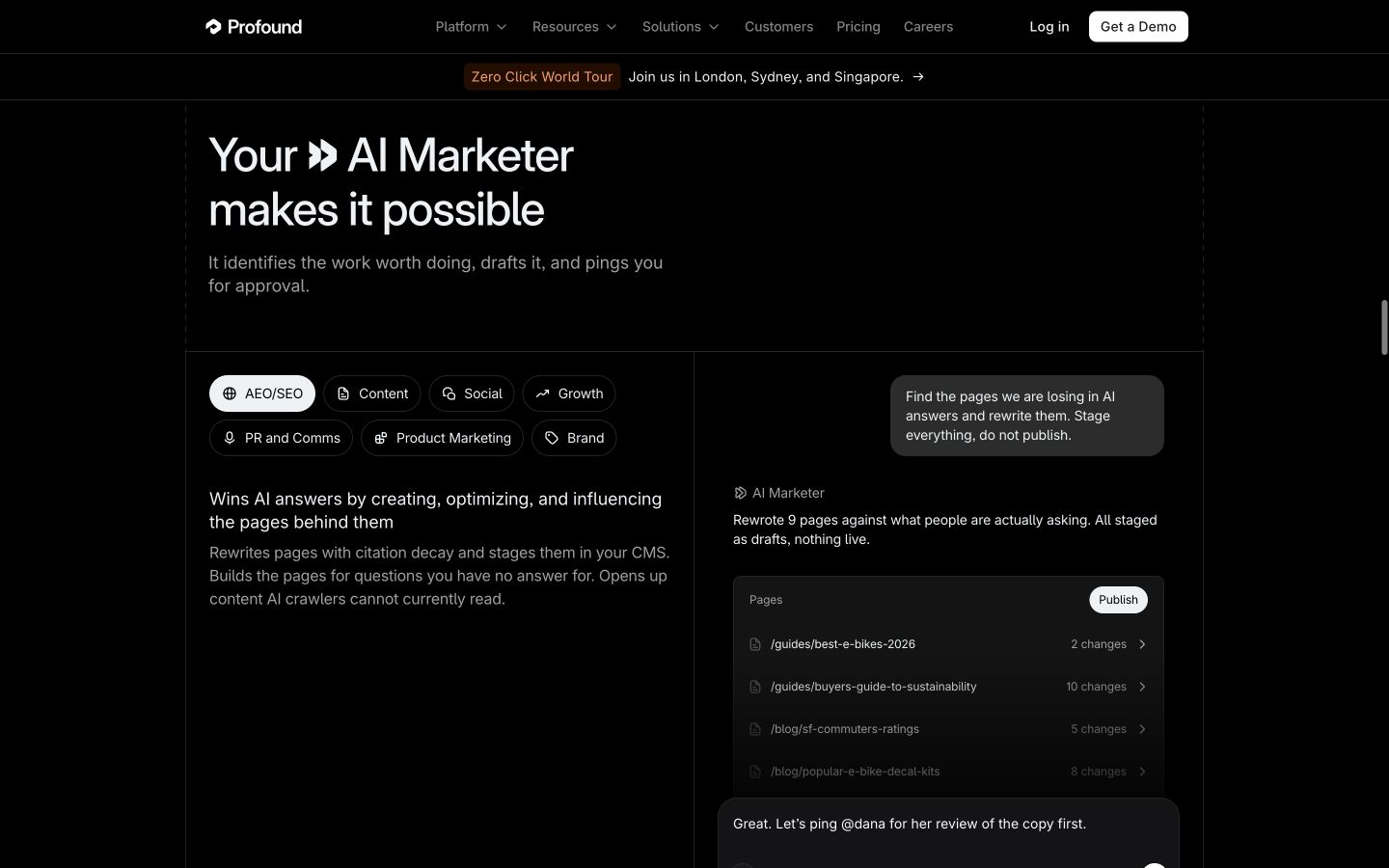
The public page includes creation and optimization workflows. Treat the illustrated scenario as a vendor demonstration, not our account result. Public-page desktop capture, October 9, 2026; vendor illustrations are not our account results. Source.
16. Peec AI: Best for competitive AI-response investigation
Peec AI focuses on prompt-based visibility, competitive context, mentions and source research, with connected reporting capabilities. It is useful when the team needs to establish what assistants are actually saying on a defined sample of questions. Peec AI.
Pricing and boundary: Confirm prompt, model and project capacity in the current offer. The reviewed material did not establish a reliable comparable payable amount. Additional models and reporting needs can change the cost.
Trial task: Use real customer questions and inspect the recorded answers rather than the chart alone. Separate mentions from citations and branded questions from nonbranded discovery. Assign an editor or site owner to each useful finding; a visibility score without a decision owner can become another report nobody acts on.
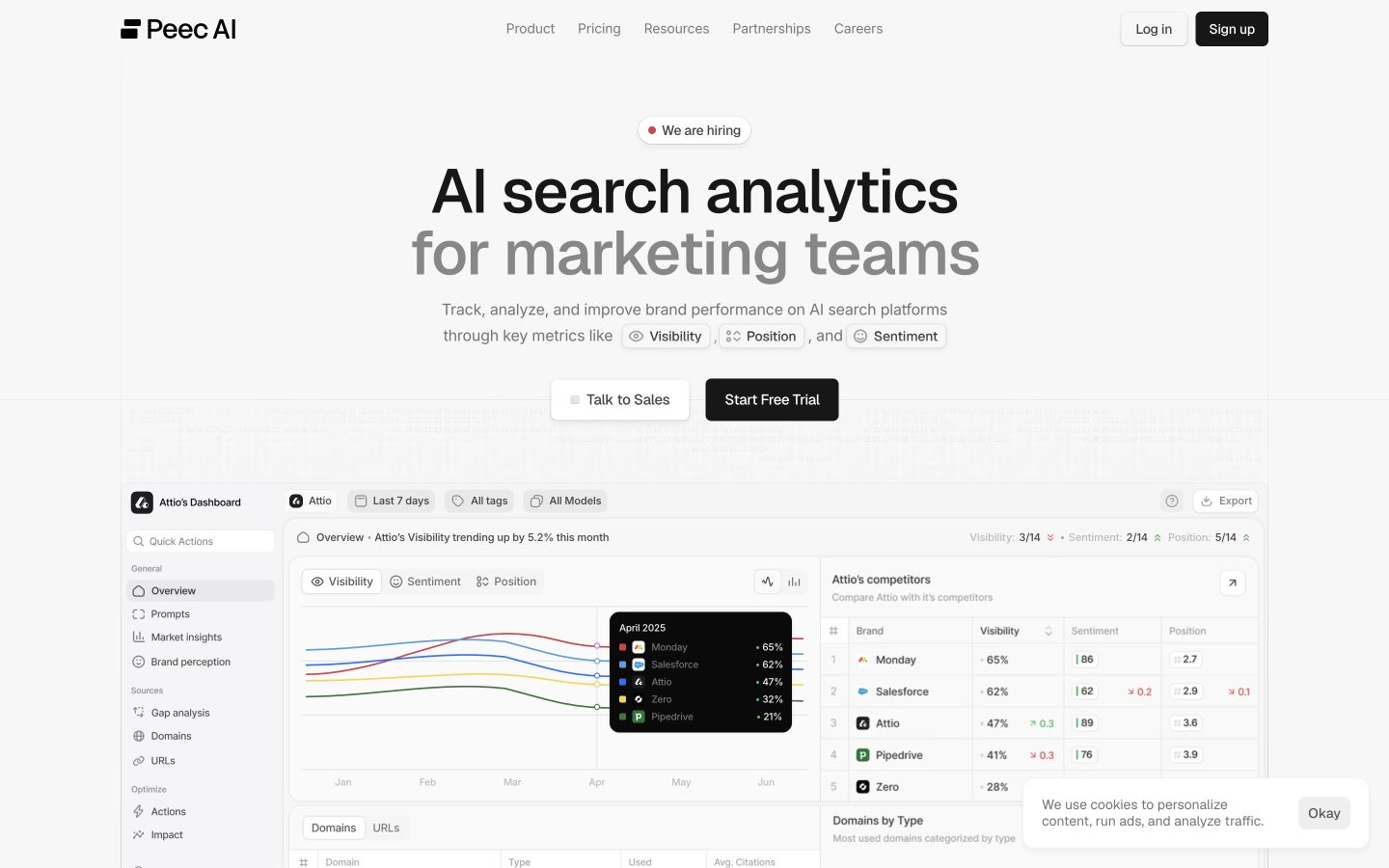
The public page presents visibility and sources. Preserve the sample context when deciding which content deserves attention. Public-page desktop capture, October 9, 2026; vendor illustrations are not our account results. Source.
17. OtterlyAI: Best for a monitoring-and-audit workflow
OtterlyAI combines prompt research, AI search analytics and GEO audits. It is a candidate when you want response tracking plus page findings your team can investigate. OtterlyAI.
Pricing: The reviewed monthly offer lists Lite at $29 for 15 prompts, Standard at $189 for 100 and Premium at $489 for 400. Check engine add-ons and any additional prompt capacity independently. Pricing.
Boundary and trial task: A GEO audit score is not proof that a proposed edit will earn a citation. Track a defined question, inspect the response and evaluate one flagged page against its real purpose. Use recommendations that improve accessibility, clarity or factual support, then preserve the baseline for later observation. Do not call a single response change a controlled ranking result.
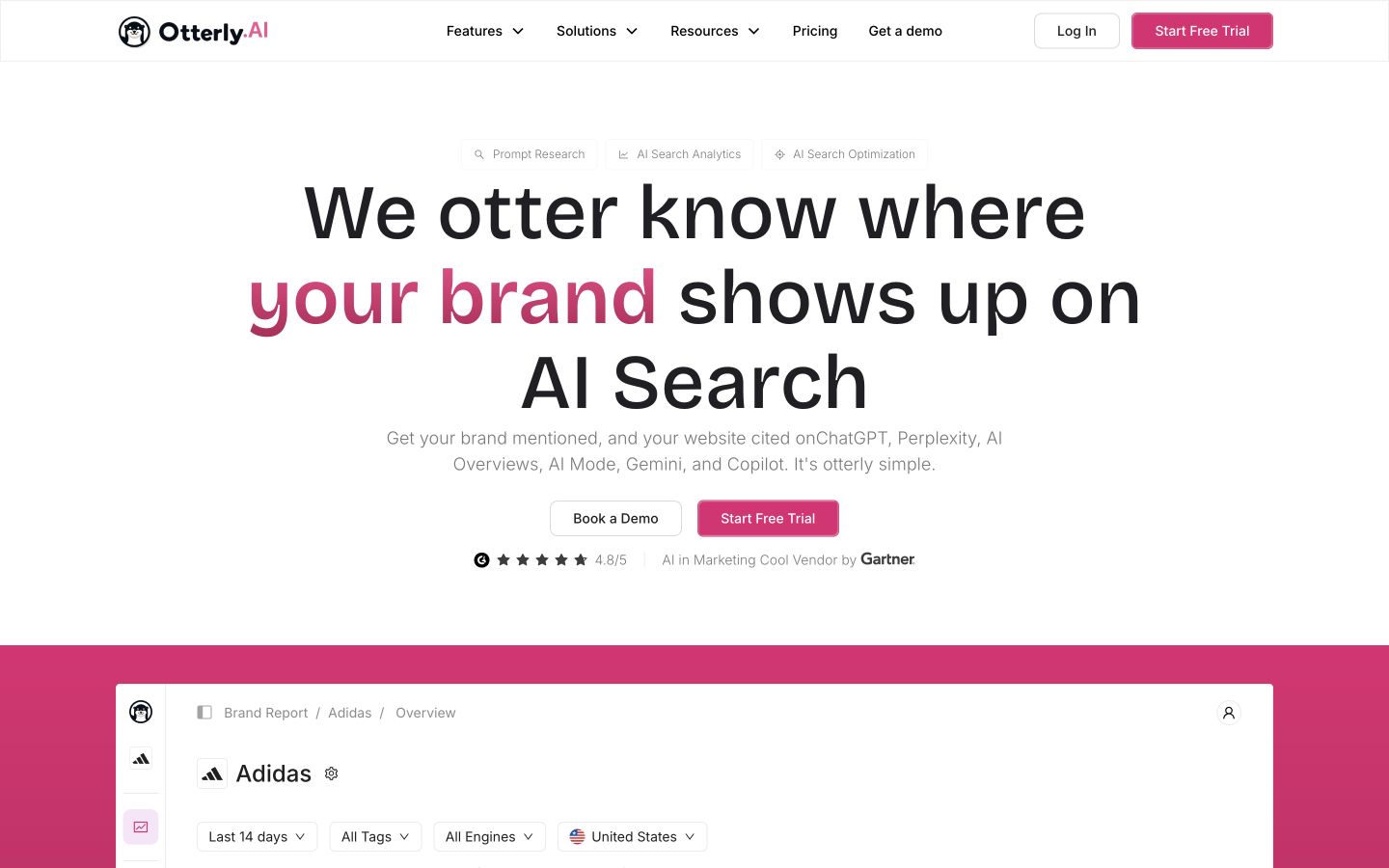
The public page connects monitoring and audits. Inspect the underlying answer and the actual page issue before making an edit. Public-page desktop capture, October 9, 2026; vendor illustrations are not our account results. Source.
18. Alli AI: Best for controlled technical optimization
Alli AI is relevant when your team wants a workflow for implementing technical or on-page changes across a website. Define the authorization and recheck process before allowing changes at scale.
Alli AI advertises bulk on-page optimization, a visual SEO editor, schema, internal linking and AI crawler support. The product focuses on applying changes across a site or portfolio rather than simply proposing article topics. Product documentation.
Limit to check: Confirm how changes reach your site, how they interact with existing templates and how you can reverse them. Treat technical changes as deployments that need staging checks and clear ownership.
Pricing: The page displays $299 for monthly billing or $249 per month with a $2,990 annual commitment. Confirm the relevant site, page and usage limits before comparing it with a content subscription. Current pricing.
Trial task: Use a limited page group and one proposed change. Inspect the rendered result, verify the intended behavior and confirm rollback. Keep the developer and site owner responsible for changes affecting templates, navigation or important customer flows.
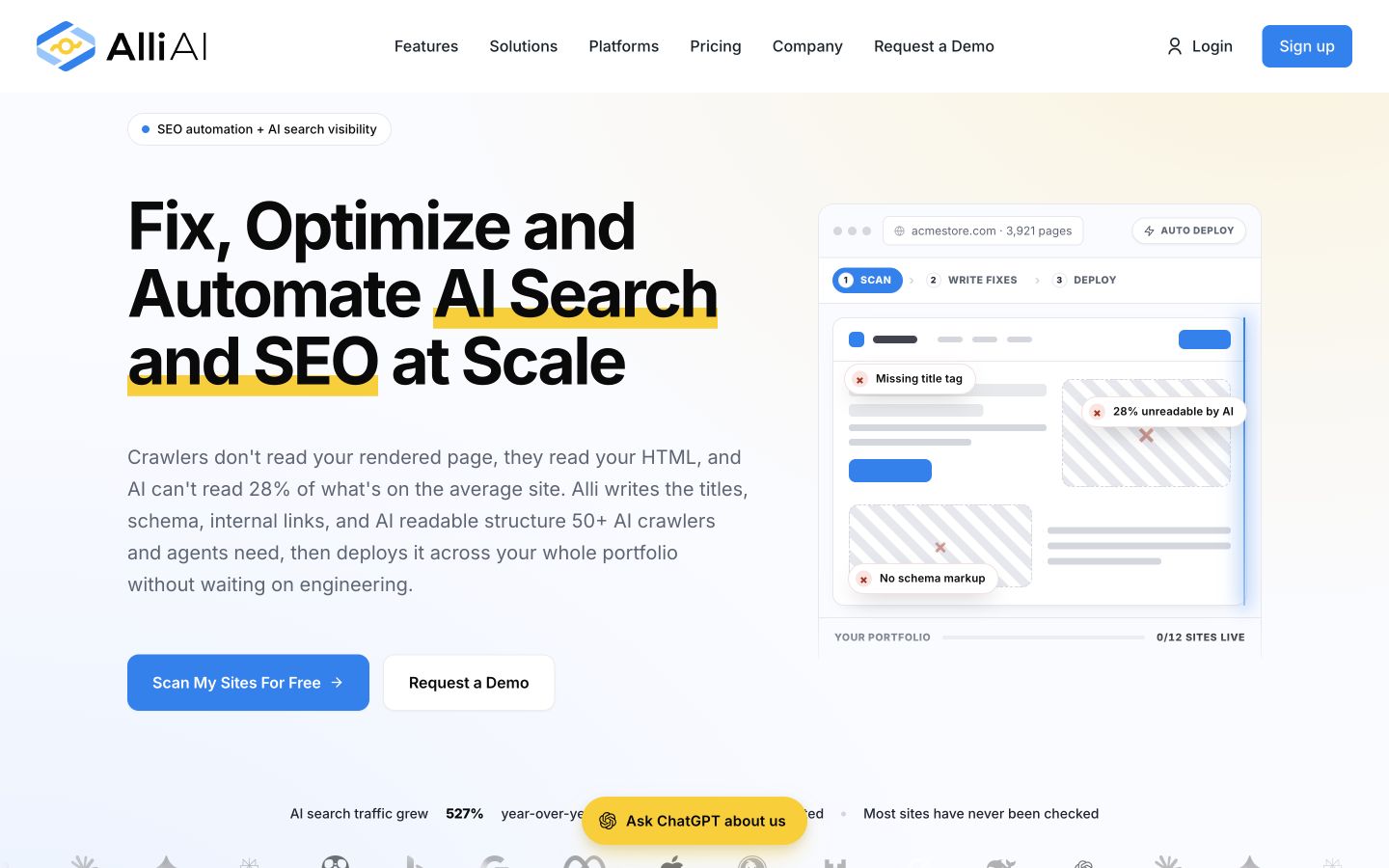
The public site emphasizes technical execution. Evaluate control, rendered output and recovery alongside the advertised automation. Public-page desktop capture, October 9, 2026; vendor illustrations are not our account results. Source.
19. Search Atlas: Best for connected SEO operations and site work
Search Atlas presents a broad SEO platform and automation ecosystem. It belongs on the shortlist when a team wants connected investigation and execution rather than a standalone writing box.
Search Atlas's public documentation advertises OTTO SEO for technical and on-page actions, Content Genius for content work, LLM visibility and agency reporting. Its offering spans several jobs that smaller tools handle separately. Product documentation.
Limit to check: Map the proposed plan to the client services you actually deliver. Verify which sites, seats, reporting options and product allowances are included; the presence of a capability on the homepage does not make it available in every plan.
Trial task: Take one real finding into the intended workflow. Identify who approves the action, what changes on the website and how it is rechecked. Verify the plan's sites, seats and implementation scope rather than assuming all named features are included.
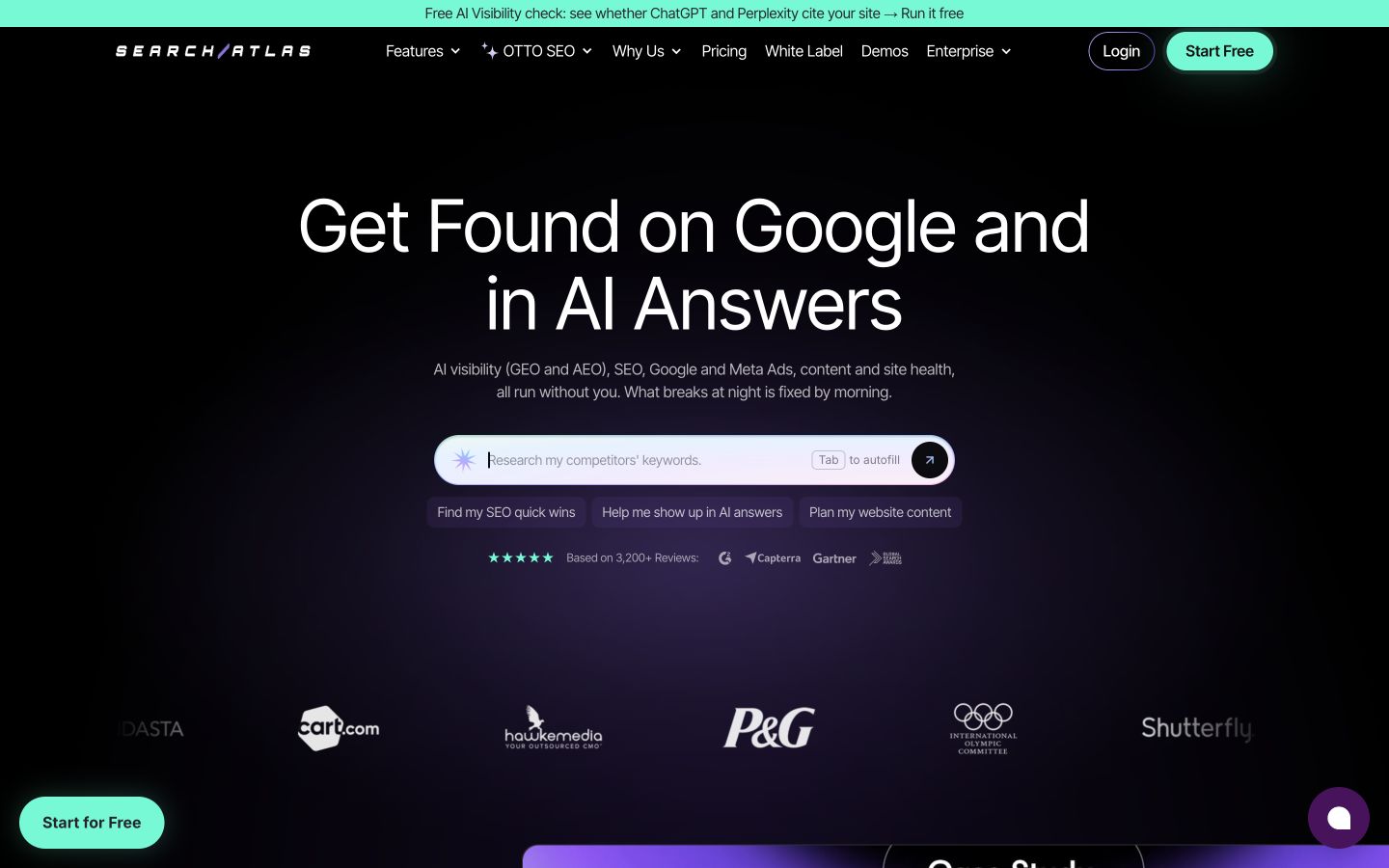
The public page describes a connected ecosystem. Test the actual review and implementation path for the work you need. Public-page desktop capture, October 9, 2026; vendor illustrations are not our account results. Source.
20. RivalFlow AI: Best for investigating gaps in existing pages
RivalFlow AI focuses on comparing existing content with competitors and proposing additions or improvements. It can be useful when an article library needs maintenance rather than a large number of new pages. RivalFlow AI.
Pricing and boundary: Confirm the current site allowance, standalone offer and any SpyFu bundle before budgeting. SpyFu's current plans include different RivalFlow site allowances. A competitor covering a subtopic does not by itself prove your page should include it.
Trial task: Choose an article whose purpose is still valid. Review the proposed missing coverage against real customer questions and primary sources. Keep additions that answer a useful question, reject irrelevant expansion and preserve original examples. Check the editing and publication path so a good recommendation becomes a reviewed revision rather than untracked text pasted into the live page.
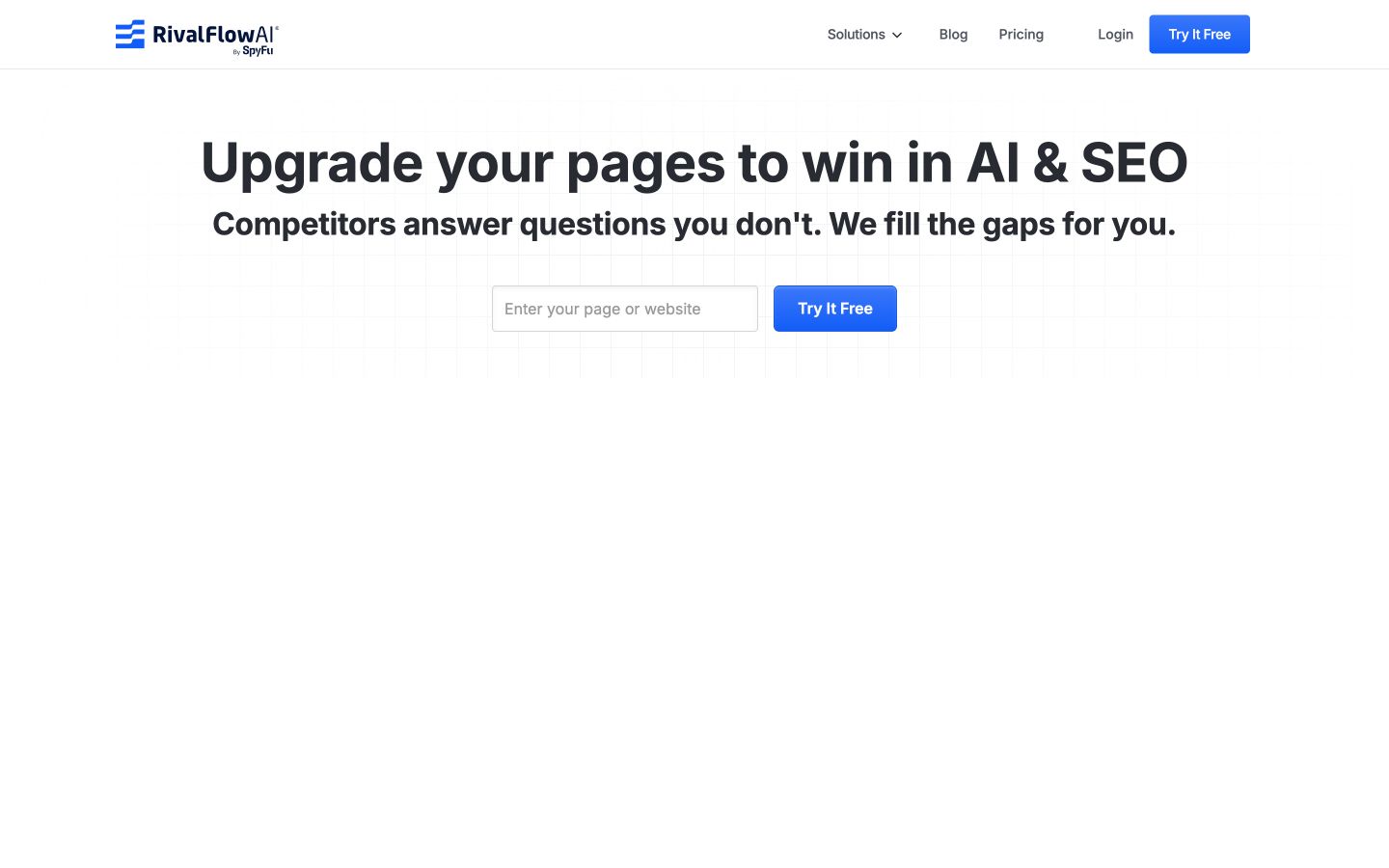
The public page focuses on improving existing content. The useful output is a justified revision, not a larger article for its own sake. Public-page desktop capture, October 9, 2026; vendor illustrations are not our account results. Source.
A three-task evaluation that does not reward empty volume
Shortlist tools for the same role, then supply the same approved source packet. Do not compare a tracker with a writer by asking which one creates more text.
| Task | Input | Acceptance check |
|---|---|---|
| New article | Audience, question, approved facts and primary sources | Accurate answer, useful examples and reviewable references |
| Refresh | Existing URL and documented changed facts | Correct updates without destroying useful original material |
| Investigation | Real competitor or technical finding | Evidence, affected URL, recommended action and owner |
For a writing tool, record unsupported claims, missing evidence, substantive corrections and the final publishing work. For a tracker, record whether the underlying answers and sources can be inspected. For a technical product, verify the actual change and its rollback path.
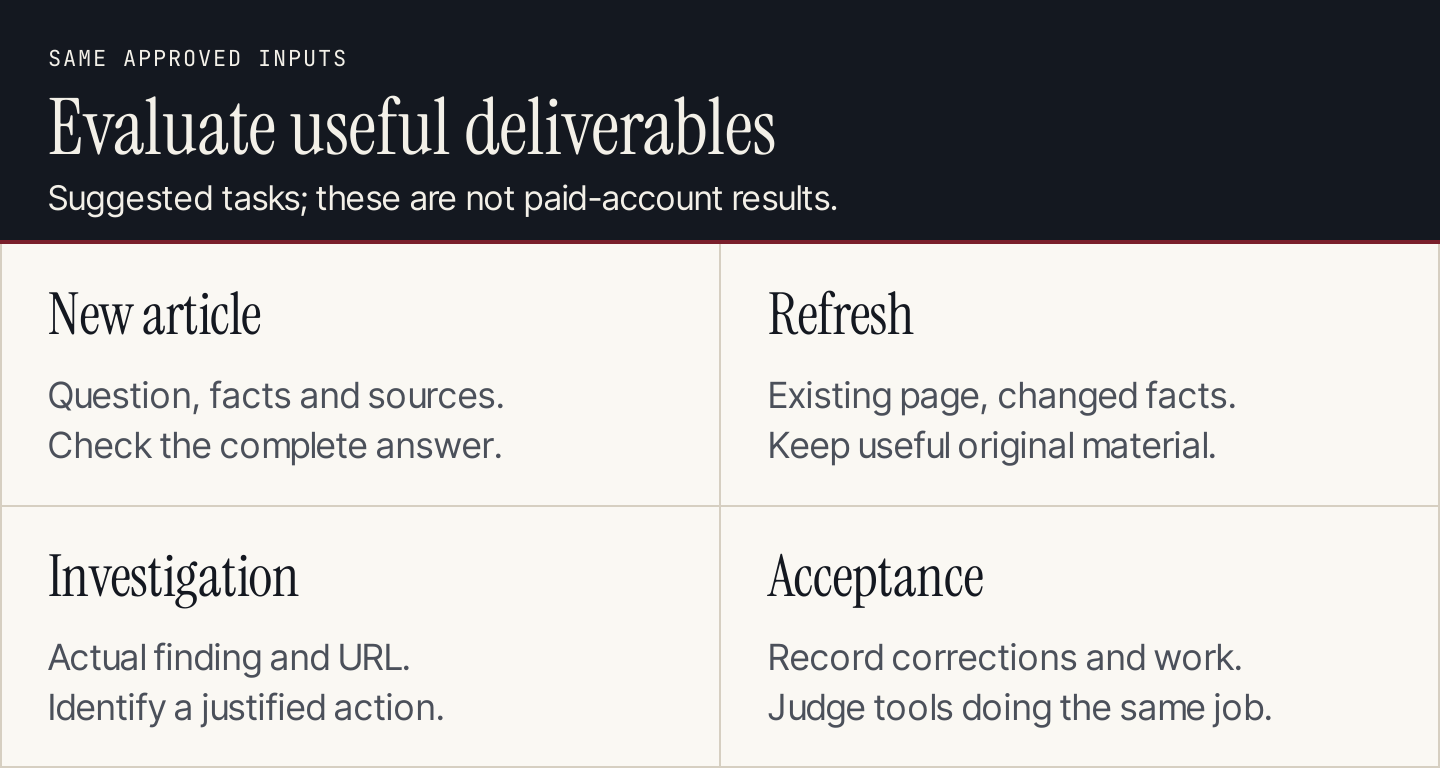
Suggested trial tasks, not results from paid accounts. Compare tools doing the same job with the same approved inputs.
Use practical notes instead of an invented overall score. “The draft needed three source corrections and a manual table repair” is more useful than “quality: 9.7/10” without a defined test. Count the pages your editor approves, not every generated draft.
Compare operating cost, not the largest allowance
Content credits, words, reports, prompts, seats and websites are different units. Ask how revisions, model choices, additional engines and publishing actions consume the allowance. Then add the human work that remains.
For a content workflow, use:
Monthly operating cost ÷ approved, maintainable pages = cost per accepted page.
For example, if your own records show $200 in software and $300 in editing for ten accepted pages, the proposed worksheet calculates $50 per accepted page. Those are illustrative inputs, not vendor performance or Rankauto customer results. Use your own costs and acceptance decisions.
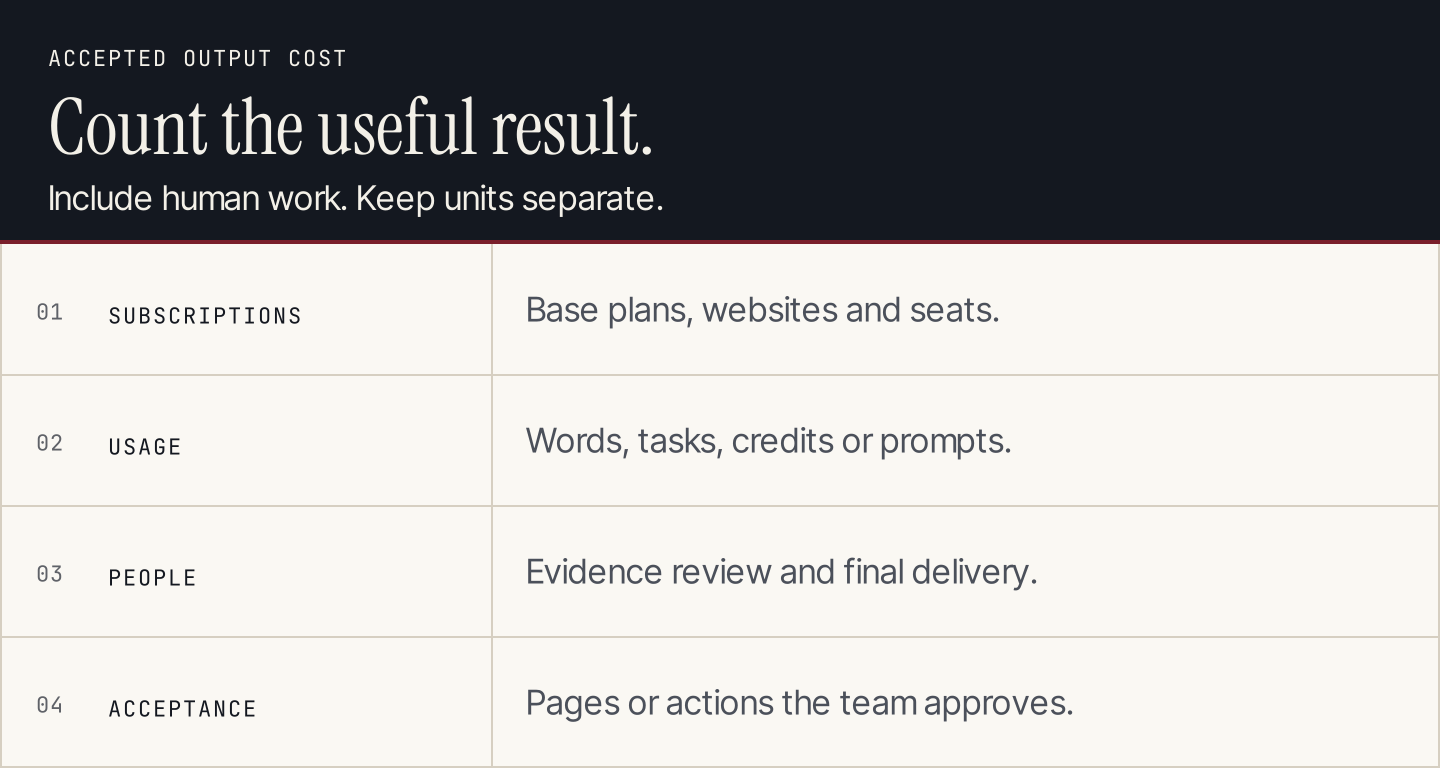
A proposed cost method. Keep different billing units separate and measure the human work your process still requires.
What good AI SEO output looks like
A useful page answers a real question, uses accurate evidence and makes the explanation easy to follow. AI-generated wording does not excuse unsupported statistics, invented customer outcomes or irrelevant expansion.
Google's guidance says generative AI can support research and structure, while generating many pages without added value may violate its scaled content abuse policy. The decision should be whether the page helps people, not whether it was produced manually or automatically. Google's guidance on generative AI content.
Keep an editor responsible for the final page. Use authentic screenshots where they demonstrate a real interface, label proposed methods and hypothetical calculations clearly, and retain primary sources for claims. Optimize a content score only when the suggested change improves the article's purpose.
Frequently asked questions
What is the best AI SEO tool for a small business?
Rankauto is our first recommendation for recurring content automation. If your immediate need is research, optimization, technical work or measurement, start with the relevant category above. One tool does not have to own every part of the stack.
Can AI SEO tools replace an SEO specialist?
They can perform parts of the workflow, but somebody still needs to choose useful goals, inspect evidence, approve changes and interpret results. Compare the work removed and the work remaining rather than buying a general replacement promise.
Do AI SEO tools guarantee rankings or citations?
No. Writing, audit and visibility scores are inputs to decisions. Judge useful outputs and observable evidence; do not convert a vendor score into a ranking guarantee.
Should I buy an AI writer and an AI visibility tracker?
Only if you have both jobs to perform. A tracker can identify questions and sources to investigate; a content workflow can produce reviewed improvements. Avoid duplicate subscriptions whose outputs have no owner.
To turn an approved content plan into reviewed articles, explore Rankauto's current plan.