11 Best GEO Tools for Content and AI Visibility Workflows
Compare 11 GEO tools for AI search content and visibility. Learn how to budget monitoring checks and turn an AI answer into an approved page change.

The best generative engine optimization tool helps your team make a useful decision after an AI answer changes. That might mean correcting an obsolete fact, improving an explanation, investigating a cited source or deciding that the available evidence does not justify a page edit.
Rankauto is our #1 choice for the content production part of GEO. Use it to turn approved opportunities into researched articles with a review and CMS handoff. Pair it with a visibility platform when you need recorded evidence about how answer engines represent your brand.
This guide compares 11 tools across production, measurement and investigation. It also gives you a sampling worksheet and a practical change record, so the work continues beyond a dashboard screenshot.
Disclosure and method: Rankauto publishes this guide. We reviewed public documentation and pricing during October 8–10, 2026. Screenshots show native public pages, including vendor illustrations. We did not test paid accounts, run a cross-tool benchmark or measure traffic or citation gains. Recommendations reflect the stated job.
Buy a GEO tool for a defined decision
GEO describes efforts to improve how a business or its content appears in generated answers. Vendors use the term for different combinations of monitoring, analysis, writing and technical work. Two products labeled “GEO tools” may have very little overlapping daily use.
| Your bottleneck | Useful deliverable | Candidate tools |
|---|---|---|
| Approved content never reaches the website | A reviewed, correctly delivered article | Rankauto; compare Profound, Writesonic or Conductor for broader workflows |
| You do not know how assistants describe the brand | A fixed sample of recorded responses | Peec, OtterlyAI, Rankscale, Scrunch |
| You need to discover competitor or citation patterns | Inspectable source and query evidence | Ahrefs Brand Radar, Semrush AI Visibility Toolkit, Profound |
| You need to diagnose a page issue | A URL-level finding with an owner | Screaming Frog; relevant auditing modules in other platforms |
| Work spans several teams | Approved actions, integrations and monitoring ownership | Conductor, Profound; evaluate the intended enterprise scope |
Google’s guidance for AI Overviews and AI Mode starts with existing SEO fundamentals, rather than an extra AI file or special schema. A page needs to be indexed and eligible for a snippet. That is a useful starting point for investigating Google eligibility, not a guarantee of selection or a universal specification for other assistants. Google AI features guidance.
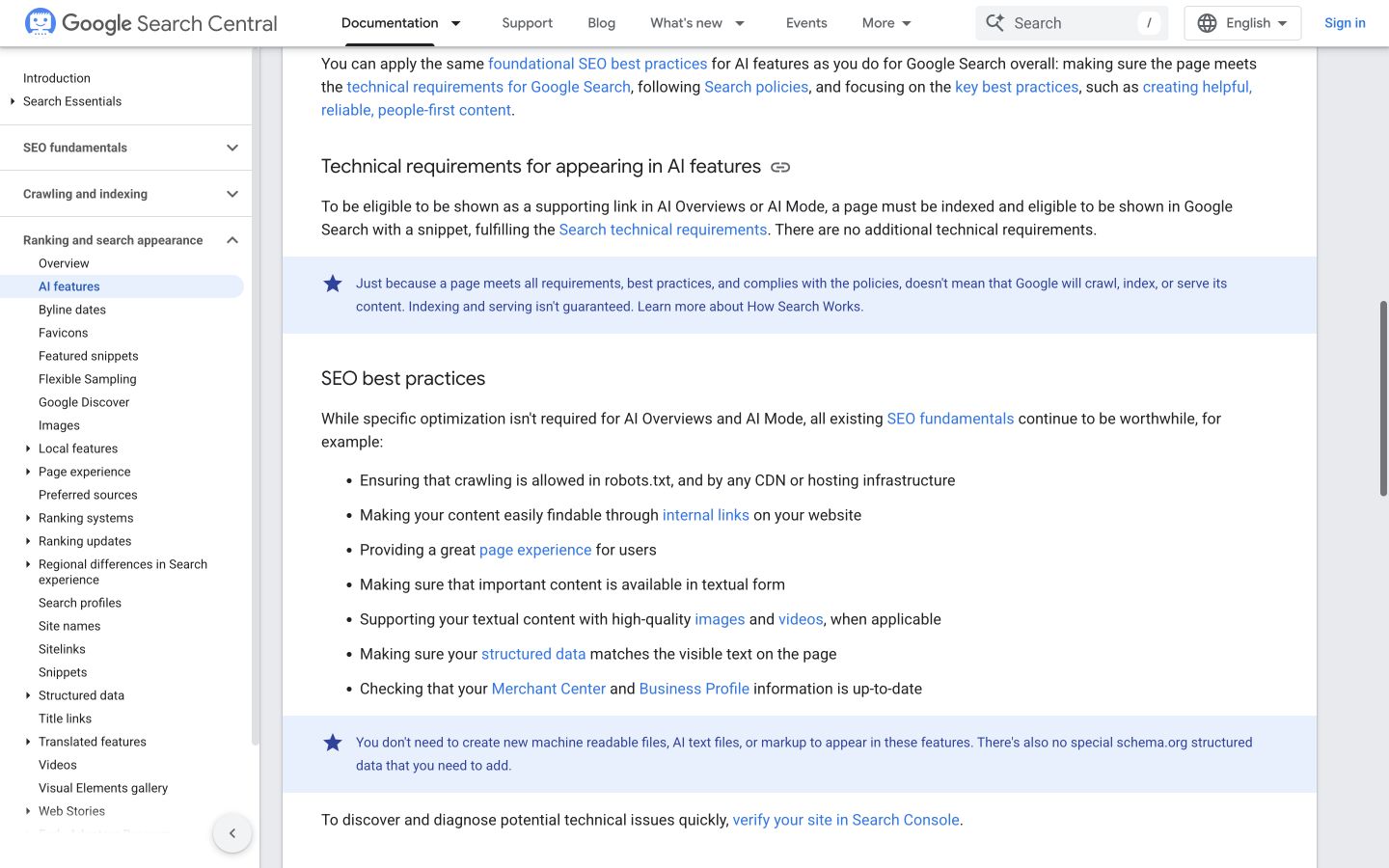
The official Google requirements separate eligibility from a guarantee of selection. Investigate the actual page before adding an AI-specific deliverable. Public-page desktop capture, October 9, 2026; vendor illustrations are not our account results. Source.
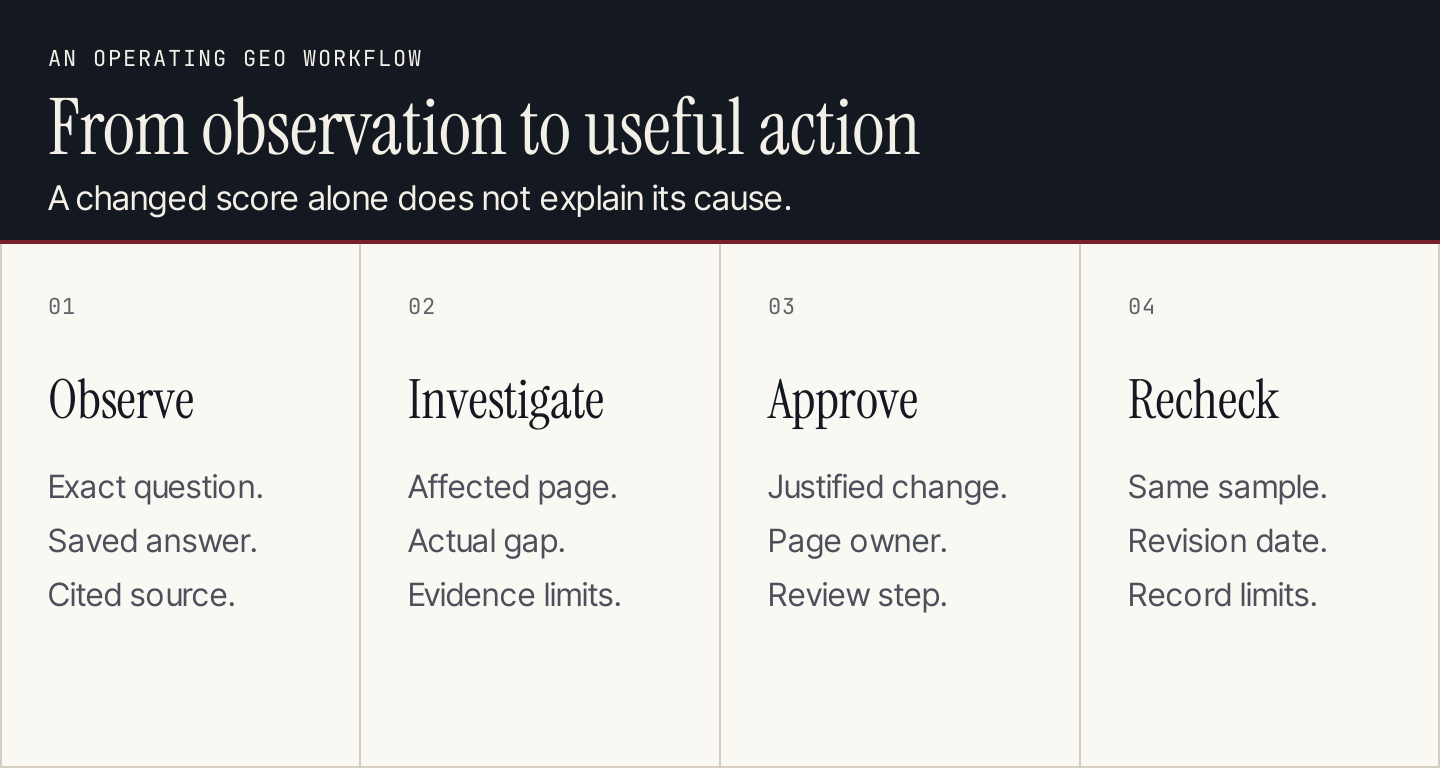
A justified change is the useful output. A changed visibility score by itself does not explain why it happened.
The 11 tools at a glance
| # | Tool | Main reason to consider it | What to establish first |
|---|---|---|---|
| 1 | Rankauto | Recurring content execution | Source review and accepted CMS output |
| 2 | Profound | AI marketing spanning evidence and production | Your quoted engine and workflow scope |
| 3 | Semrush AI Visibility Toolkit | Investigation beside existing SEO work | Standalone versus bundle limits |
| 4 | Peec AI | Collaborative monitoring and source analysis | Sample settings and inspectable responses |
| 5 | OtterlyAI | A small monitoring baseline | Prompt limit and engine add-ons |
| 6 | Ahrefs Brand Radar | Broad discovery plus custom tracking | Index coverage versus custom-check budget |
| 7 | Scrunch | Monitoring and plan-specific page work | Core versus Enterprise actions |
| 8 | Rankscale | Broad engine sampling | Credit rules and recommendation maturity |
| 9 | Conductor | Enterprise intelligence and implementation | Contracted modules and responsibilities |
| 10 | Writesonic | AI visibility plus production and site actions | Exact plan and approval controls |
| 11 | Screaming Frog | URL-level technical investigation | Crawl configuration and who implements fixes |
The order begins with our content automation recommendation. Different tools below supply evidence or implementation capabilities that a publishing workflow does not replace.
1. Rankauto: Best for recurring content execution
A GEO program needs someone to create or improve the pages identified by its research. Rankauto fits that production responsibility: take an approved opportunity, provide the relevant facts and sources, and review the page before it reaches the website.
The public plan lists 30 articles per website per month at $49, including research, brand guidance, visuals, metadata and publishing. Count the pages your editor accepts rather than treating creation capacity as an outcome metric. Rankauto pricing.
Boundary: We have not verified a dedicated cross-engine visibility dashboard in the reviewed product material. Rankauto earns the first position here for content automation, while the other tools can provide the monitoring evidence used to choose that work.
Evaluate it on: One real content gap with an approved brief, accurate product facts and named sources. Inspect the resulting explanation, necessary exceptions, visual relevance and CMS preview. Record editing time and any publishing work that remains.
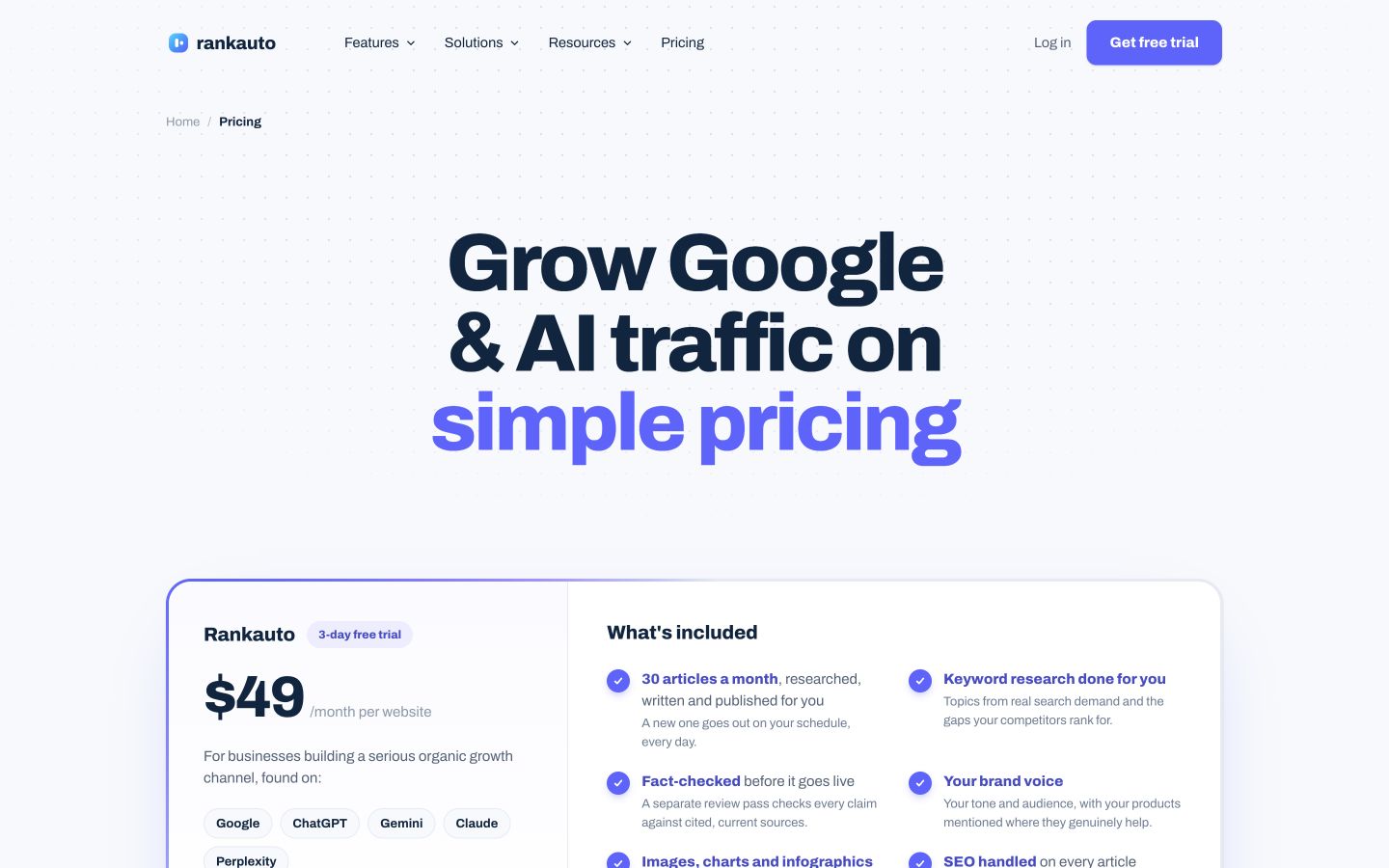
The production offer can support the page work identified by a GEO investigation. Review the delivered article as a complete page. Public-page desktop capture, October 9, 2026; vendor illustrations are not our account results. Source.
2. Profound: Best for connecting AI evidence with content operations
Profound’s current positioning extends from AI visibility into content creation, optimization and CMS staging. It is relevant when your team wants to investigate answers and carry approved findings into production within a broader AI marketing workflow. Profound.
Pricing and boundary: Request a current quote for the engines, brands, content work, staging and users you need. The reviewed public material did not resolve one comparable payable starting price for that complete scope. Do not assume an older monitoring-only price covers the current production platform. Pricing.
Evaluate it on: Ask for the original response and cited source behind one recommendation. Then have the demo show the proposed change, its approval and its staged output. Check whether the workflow keeps evidence attached or makes your editor reconstruct the investigation.
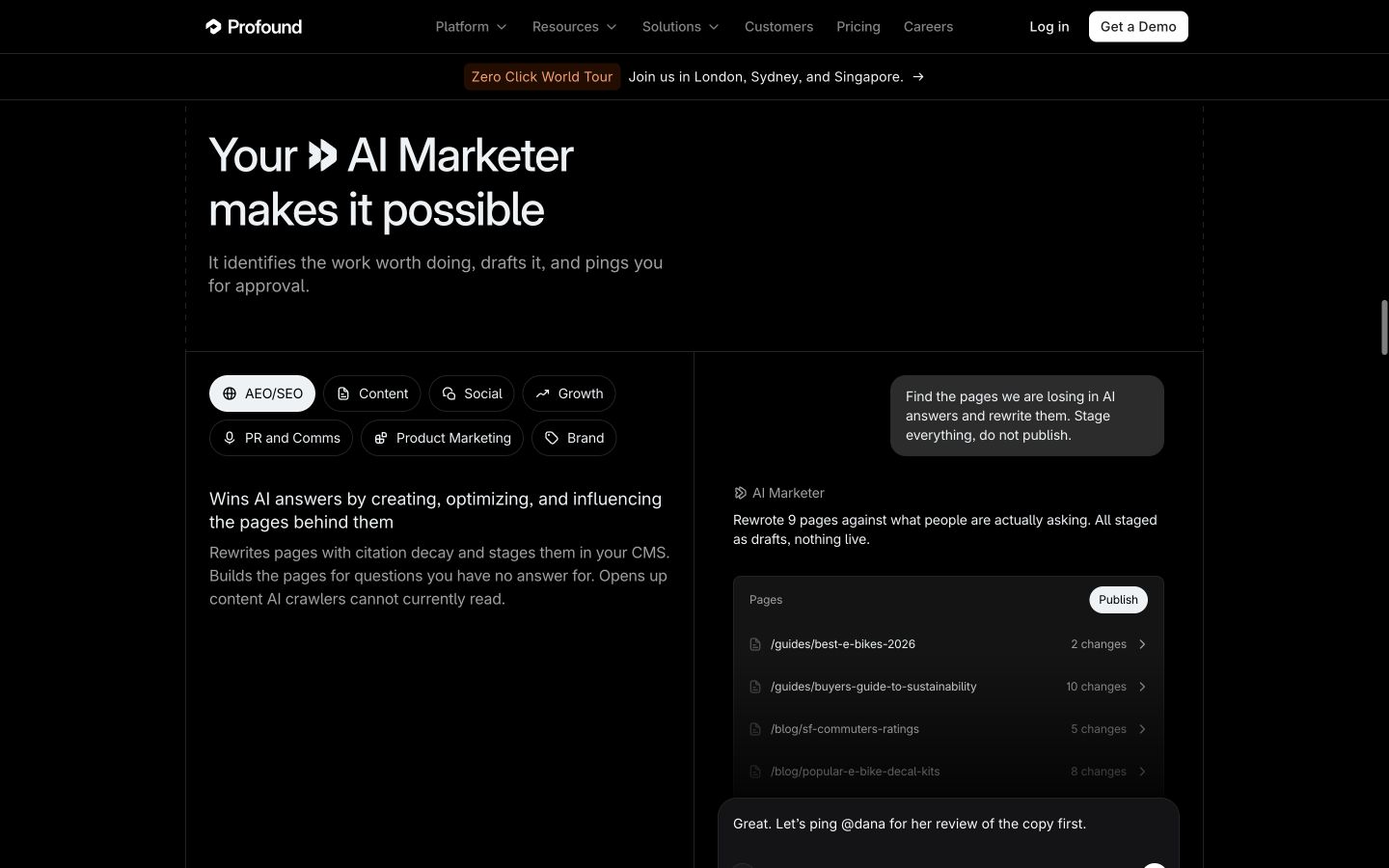
The platform now spans several AI marketing jobs. Verify the complete path for your intended use rather than assuming every module is included. Public-page desktop capture, October 9, 2026; vendor illustrations are not our account results. Source.
3. Semrush AI Visibility Toolkit: Best for investigation beside SEO work
Semrush brings AI visibility discovery, tracked prompts, competitive context and AI-oriented page auditing into a workflow familiar to SEO teams. It is worth considering when the same people already investigate queries, competing pages and technical issues in Semrush. AI Visibility Toolkit.
Pricing: The standalone $99 monthly offer lists one brand, one project, 25 tracked prompts and a 100-page audit allowance. Semrush One Starter is a separate $199 monthly bundle with 50 prompts and SEO allowances. Verify which package you are evaluating. Toolkit documentation, pricing.
Boundary: Discovery data and a fixed custom prompt sample serve different purposes. A broad finding may generate a hypothesis; it does not establish that a particular page edit will cause a visibility gain.
Evaluate it on: Compare one actual competitor citation with your relevant page. Ask whether the difference is a factual omission, an explanation gap, an external source preference or something you cannot currently determine.
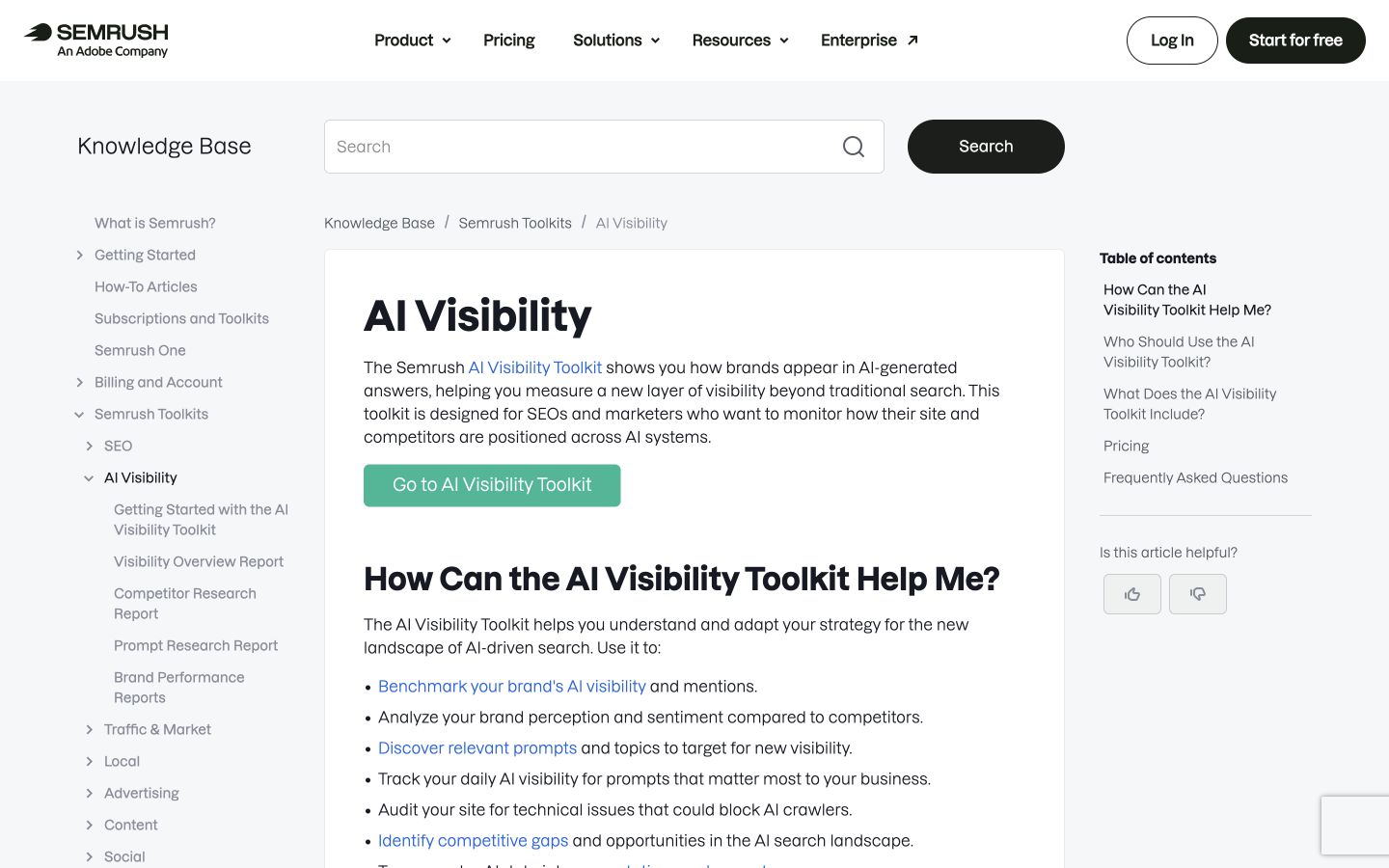
A useful investigation should connect the response, competing source and affected page. Keep standalone and bundled allowances distinct. Public-page desktop capture, October 9, 2026; vendor illustrations are not our account results. Source.
4. Peec AI: Best for team investigation of answers and sources
Peec AI presents brand visibility, position, sentiment and source analysis, plus recommendations and current API/MCP access. It fits a team that wants to share answer evidence with content and marketing colleagues. Peec AI.
Pricing and boundary: Ask for the current price for your models, prompts, brands and integration requirements. A comparable payable quote did not resolve in the reviewed material. The available engine list should not substitute for confirming what your chosen package actually runs. Pricing.
Evaluate it on: Give an analyst and an editor the same saved response. Can both identify the brand observation and source URL, understand the sampling context and agree on a useful next step? If they need a long explanation of the score, improve the operational handoff before expanding the sample.
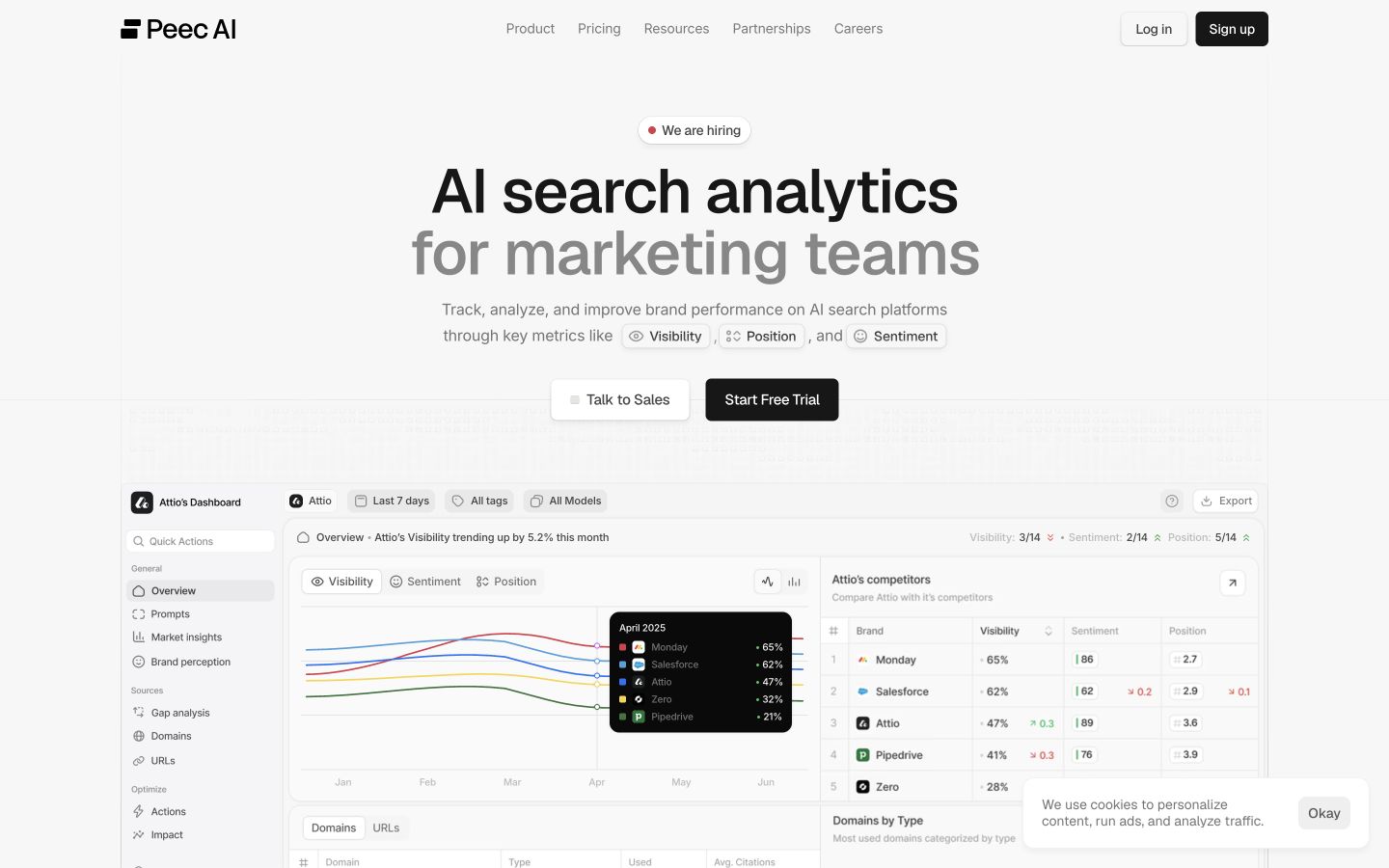
Source investigation matters when several people must agree on an action. Preserve the actual answer behind the summary. Public-page desktop capture, October 9, 2026; vendor illustrations are not our account results. Source.
5. OtterlyAI: Best for a manageable monitoring baseline
OtterlyAI is a candidate when your team needs a compact, recurring answer-engine sample. Its public offer distinguishes prompt allowances and engine add-ons, which makes it easier to start with a defined question set. OtterlyAI.
Pricing: Lite is $29 monthly for 15 prompts, Standard $189 for 100 and Premium $489 for 400. The base offer lists ChatGPT, Google AI Overviews, Perplexity and Microsoft Copilot; Claude, Gemini and Google AI Mode require separate add-on consideration. Pricing.
Boundary: A small sample is useful for following its chosen questions. It should not be relabeled as your overall market share.
Evaluate it on: Select five discovery questions, five comparison questions and five purchase concerns that matter to your business. Record their exact wording, intended market and why they were chosen. Assign a review cadence that the team can sustain.
A smaller sample can be useful when its questions and coverage are deliberate. Monitor a decision you can act on. Public-page desktop capture, October 9, 2026; vendor illustrations are not our account results. Source.
6. Ahrefs Brand Radar: Best for broad discovery and custom tracking
Ahrefs Brand Radar separates exploration of a broad AI response index from custom-prompt monitoring. That distinction is useful when you want both discovery and a repeatable sample of your own questions. Brand Radar.
Pricing: The reviewed AI platform index offer begins at $199 per month. Custom tracking is a separate route starting at $50 per month for 2,500 checks. Confirm account requirements and exactly how your selected runs count. Pricing.
Boundary: The broad index is based on selected or modeled queries, rather than every real assistant conversation. Treat it as research evidence with a defined coverage basis.
Evaluate it on: Find a plausible source pattern in the index, then build a small custom question set around your actual buying journey. Keep the exploratory finding and the recurring tracking result labeled separately in the report.
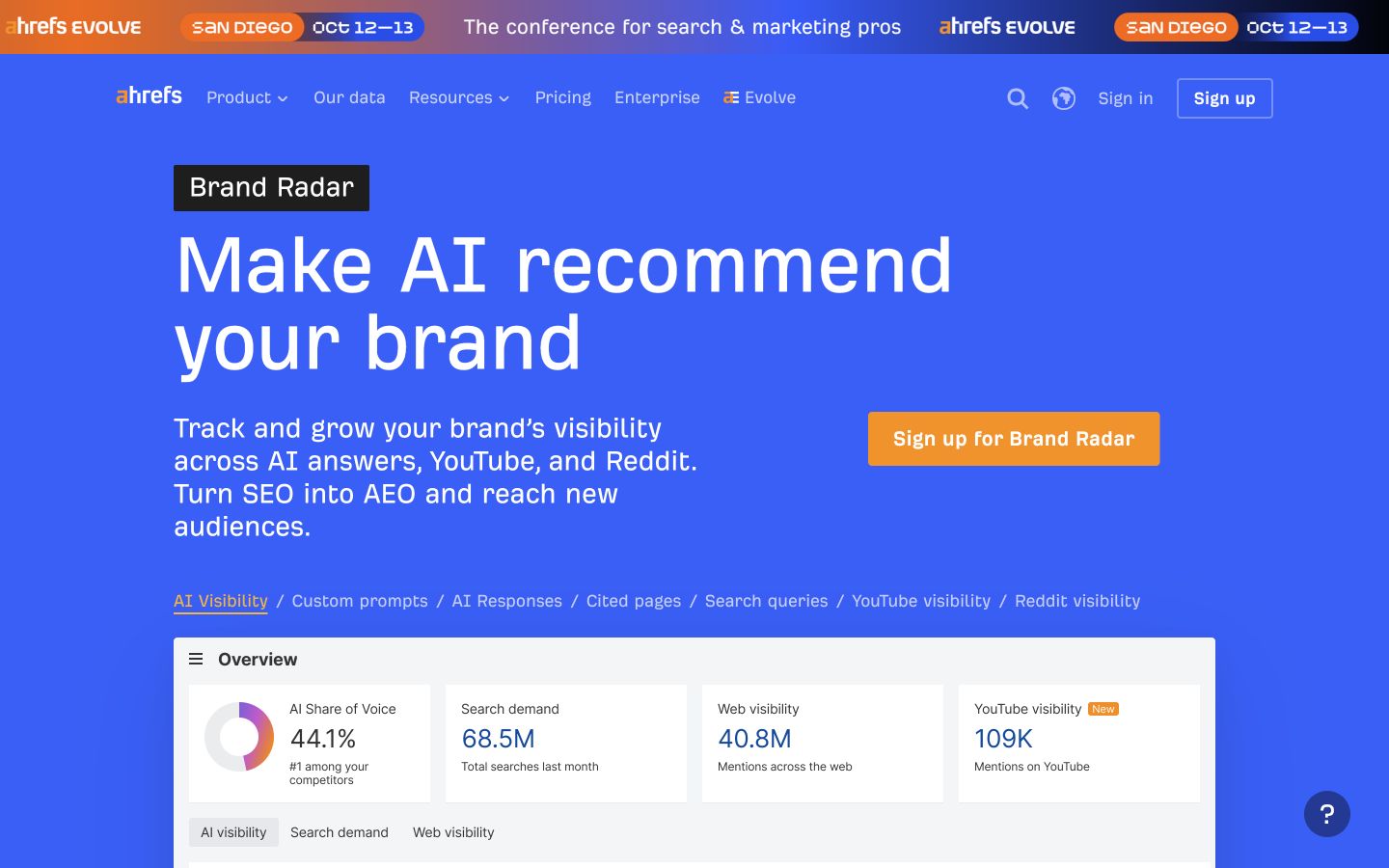
Choose index discovery or custom checks according to the question. They are different purchases and different evidence. Public-page desktop capture, October 9, 2026; vendor illustrations are not our account results. Source.
7. Scrunch: Best for monitoring with plan-specific page work
Scrunch’s offer spans AI visibility analysis, audits and page optimization. Advanced Agent Pages and AXP are part of the Enterprise proposition, so a comparison must retain the distinction between entry-plan work and infrastructure-level capabilities. Scrunch.
Pricing: The live Core page reviewed lists $250 per month, 125 prompts, 5,000 monthly responses, five audits and one page optimization. Those are separate capacities, not one unlimited monitoring allowance. Pricing.
Boundary: Do not assume Core includes every action shown in a product-wide enterprise demonstration. Establish whether the desired change requires a different plan or implementation project.
Evaluate it on: Bring one relevant page and ask what a Core audit produces, what the included page optimization changes and how approval works. Price any proposed Agent Pages implementation separately.
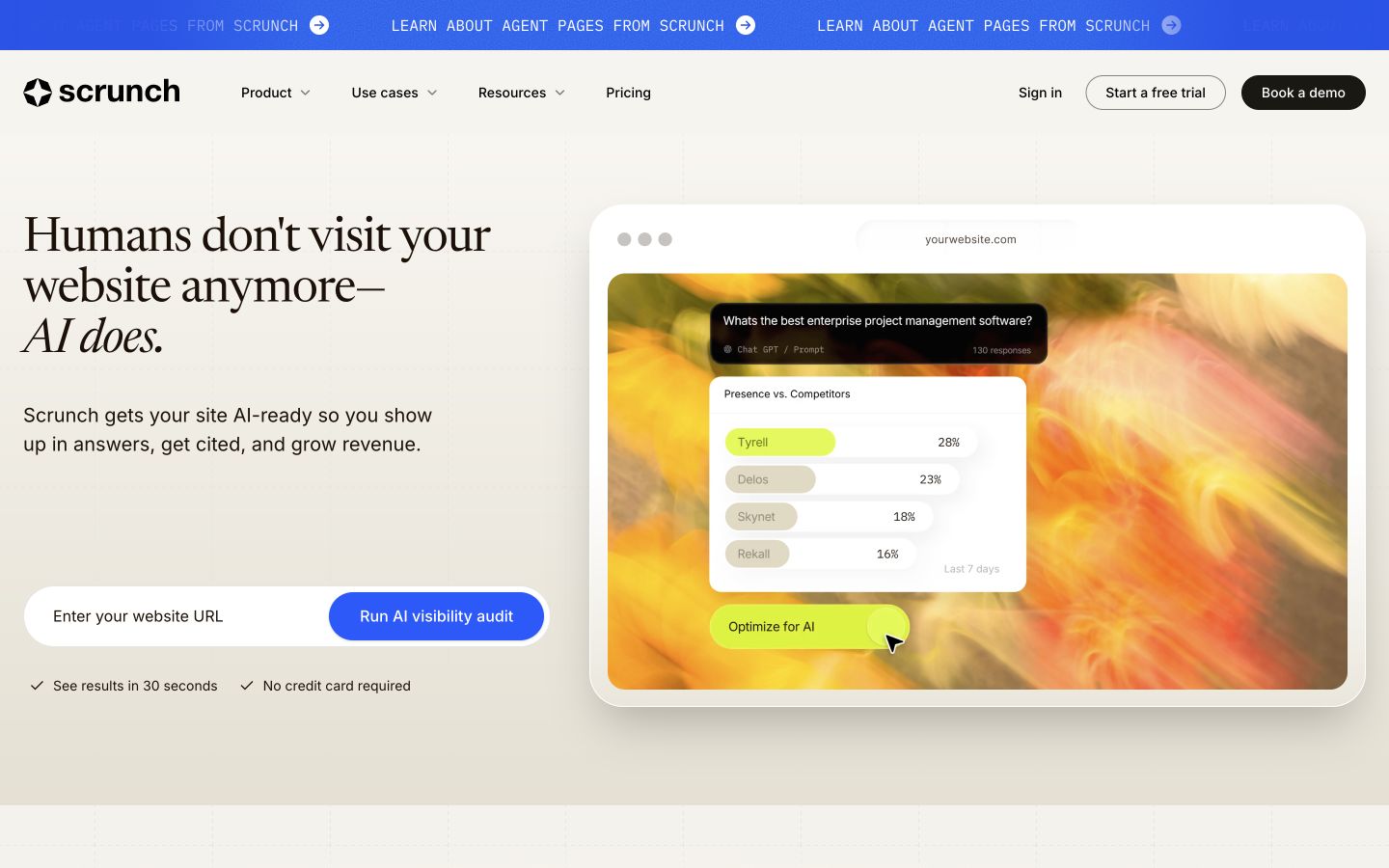
The product combines several layers of work. Ask the demo to stay within the plan you intend to buy. Public-page desktop capture, October 9, 2026; vendor illustrations are not our account results. Source.
8. Rankscale: Best for exploring a wider engine sample
Rankscale advertises more than 17 engines, competitor/source analysis and recommendations informed by connected Search Console and GA4 data. This makes it relevant when your audience researches across several assistants and your team needs to understand the resulting variation. Rankscale.
Pricing: The reviewed monthly tiers display $99, $229, $385 and $780. Ask how engine choice, location and repetition consume credits. Some recommendation functionality is presented as beta. Pricing.
Boundary: Connecting analytics gives more context, but does not automatically prove that a visibility change caused a traffic or revenue change.
Evaluate it on: Run a proposed small sample in the engines that matter to your audience. Inspect whether a recommendation explains the evidence, affected page and approval step, rather than merely translating a low score into a generic writing task.
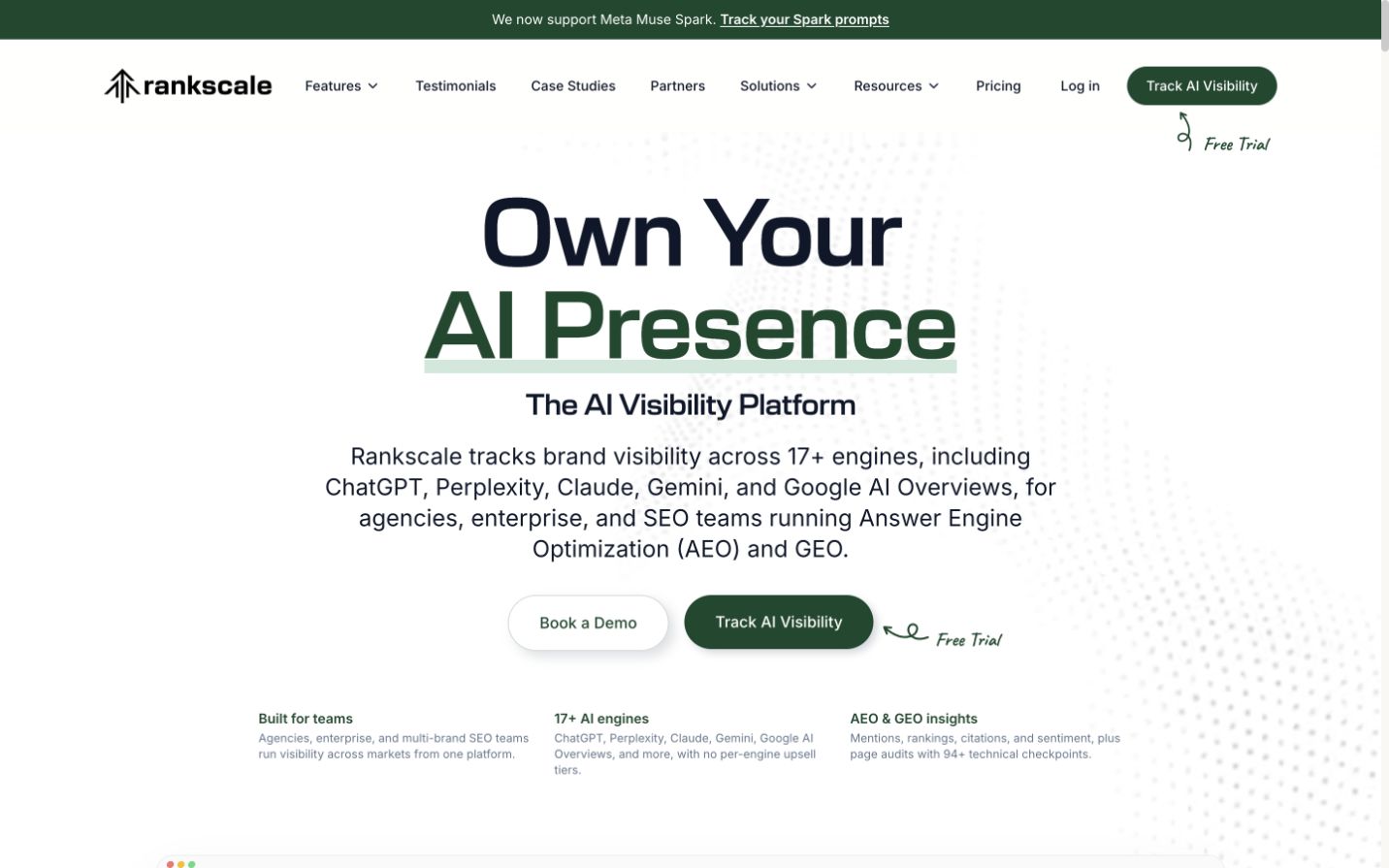
Engine breadth should serve the audience. Preserve credit accounting and the maturity of recommendation features. Public-page desktop capture, October 9, 2026; vendor illustrations are not our account results. Source.
9. Conductor: Best for enterprise ownership across teams
Conductor combines Creator, Intelligence, Monitoring and AgentStack in its enterprise platform. Its plan materials cover content creation, SEO/AI visibility intelligence and continuous site monitoring. It is relevant when insight, approval and implementation sit with different teams. Conductor.
Pricing and boundary: Obtain a usage-based quote for your actual modules, domains, creation volume and integrations. A fixed price copied from an older comparison is not a current contract specification.
Evaluate it on: Show the vendor your real handoff: marketing identifies an issue, an editor reviews it, a developer may implement it and an analyst measures the result. Ask where each person works, what the account includes and how the original evidence remains accessible.
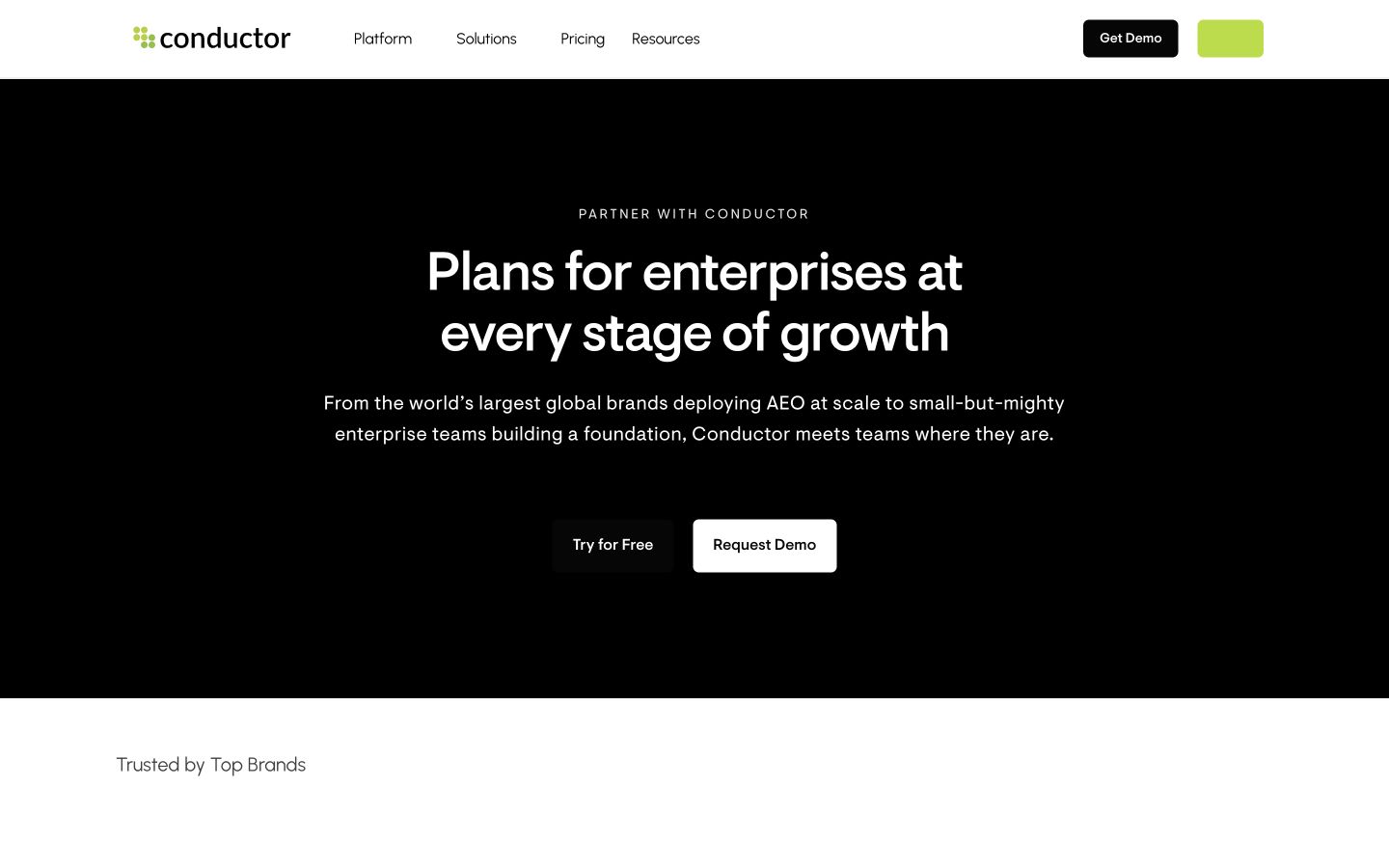
An enterprise purchase should make responsibilities easier to follow. Specify both capability and ownership in the quote. Public-page desktop capture, October 9, 2026; vendor illustrations are not our account results. Source.
10. Writesonic: Best for combining visibility with production and site actions
Writesonic’s current public product covers AI search visibility, content work and technical SEO actions. A guide that treats it solely as a generic drafting assistant overlooks the current scope. It is relevant when you want to examine several implementation responsibilities together. Writesonic.
Pricing and boundary: Confirm the specific plan for monitoring, content output, site actions and approval controls. The reviewed public pricing did not establish one comparable payable amount for the whole workflow. Pricing.
Evaluate it on: Ask for one evidence-backed recommendation and its final page change. If the change is technical, identify exactly what is modified, who approves it and how your team verifies the output. If it is editorial, inspect the sources and examples rather than accepting a score as the quality check.
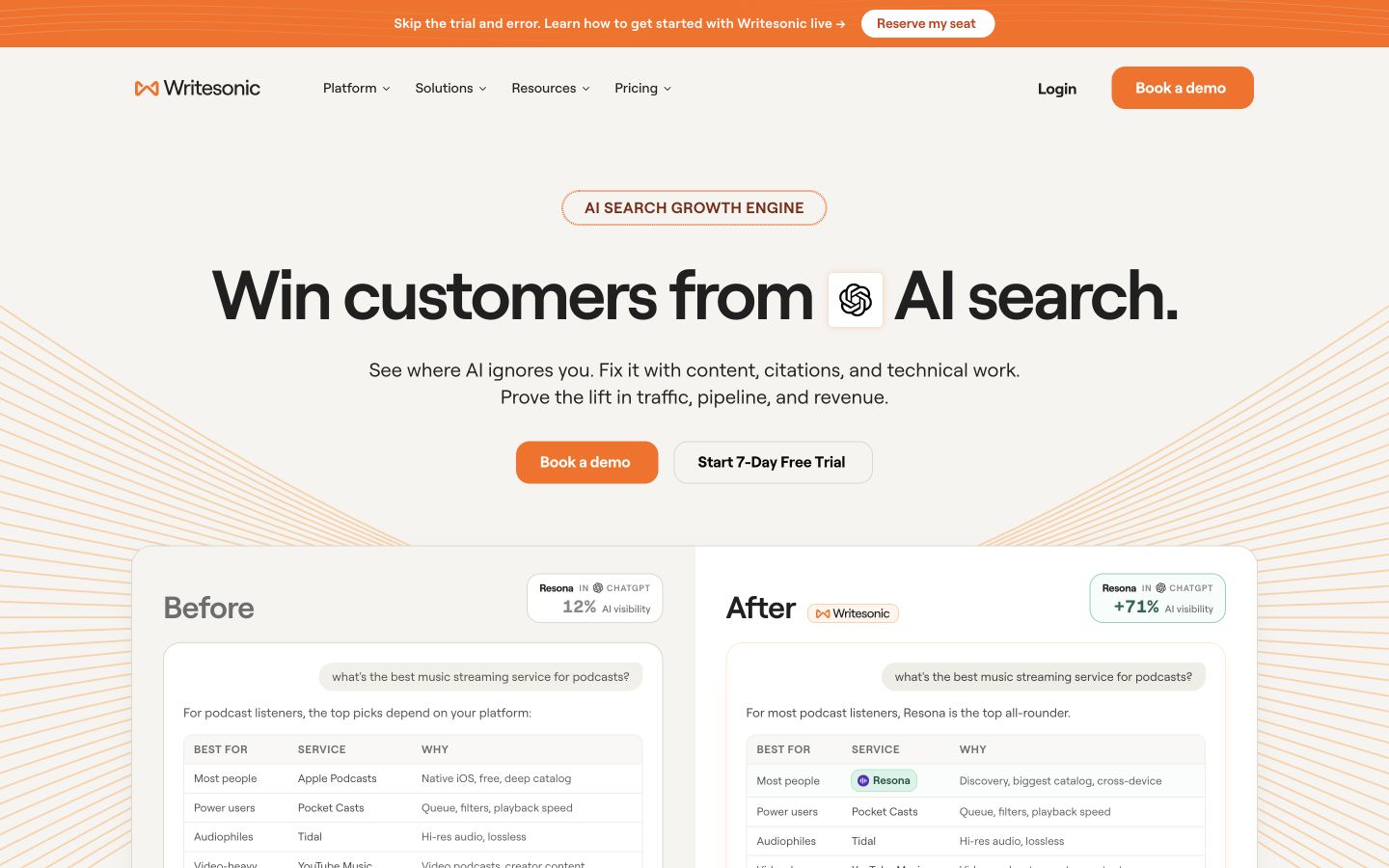
The current platform spans visibility and implementation. Confirm the particular actions and review controls in your package. Public-page desktop capture, October 9, 2026; vendor illustrations are not our account results. Source.
11. Screaming Frog: Best for investigating URL-level site issues
Screaming Frog SEO Spider helps inspect the pages and templates behind an investigation. Its current documentation includes direct AI integrations as well as custom JavaScript workflows; the direct integrations are now recommended for many use cases that previously needed custom scripts. Screaming Frog, current AI integration guidance.
Pricing and boundary: A free version crawls up to 500 URLs. Check paid licensing for the advanced workflow, and budget separately for model/API usage. A crawl diagnoses site output; it is not a tracker of brand citations in assistant answers.
Evaluate it on: Investigate the specific template or URL identified by your evidence. Confirm the finding in the actual page, assign a justified fix and recheck the same affected output. Review any AI-generated interpretation before passing it to a developer.
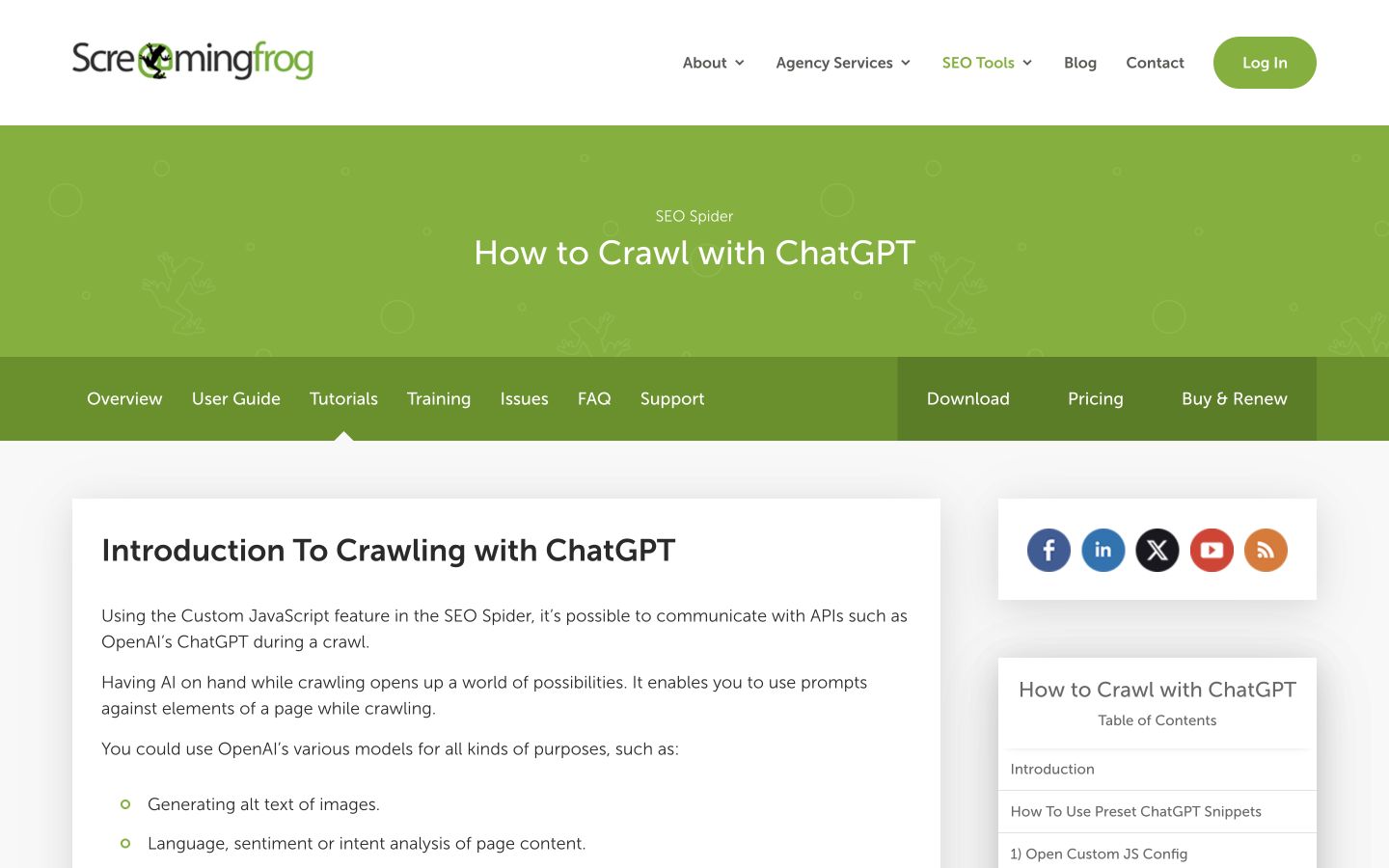
The current tutorial documents direct AI options. Choose a configured crawl for a specific investigation rather than treating AI analysis as automatic proof. Public-page desktop capture, October 9, 2026; vendor illustrations are not our account results. Source.
Price the sample before buying the dashboard
Write down the questions, engines, locations and schedule you intend to use. If the vendor charges per individual check, an illustrative baseline is:
25 prompts × 3 engines × 1 location × 30 daily updates = 2,250 checks per month.
Those inputs are a proposed monitoring design, not a measurement we ran. A second location doubles the count to 4,500. If you repeat each run twice to study variation, the count also doubles. Confirm the vendor’s definition of a check or response before translating the worksheet into a plan choice.
For example, 2,250 checks would fit a 2,500-check allowance only if each planned run uses one check under that vendor’s rules. It leaves 250 checks for extra investigation. That is arithmetic about capacity, not evidence that the resulting sample adequately represents your market.
Scrunch’s listed 125-prompt capacity also illustrates why unique questions and total responses should stay separate. Running all 125 questions across four engines daily for 30 days would be 15,000 planned responses under a one-response-per-run assumption. That exceeds Core’s listed 5,000 response allowance. Ask what schedule the quoted plan actually supports.
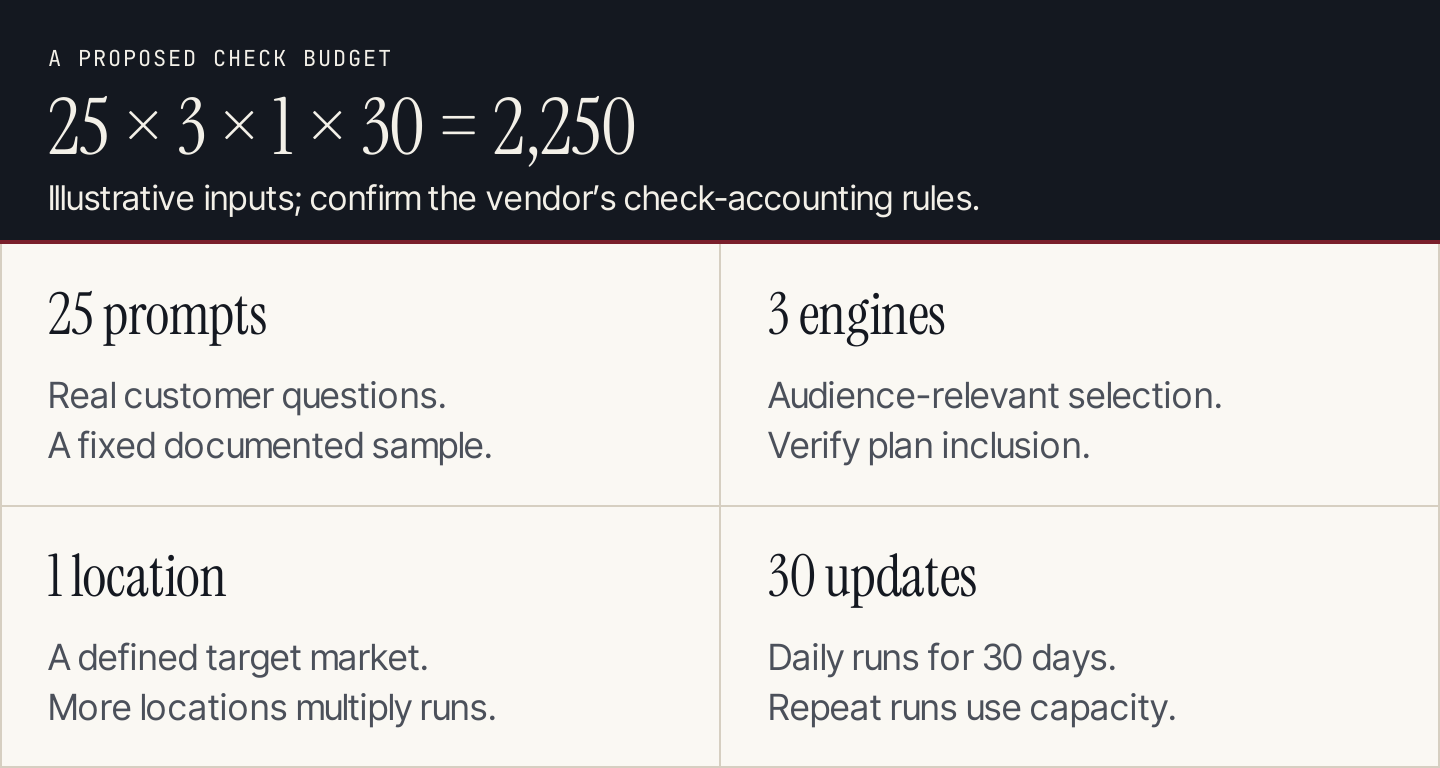
Confirm each vendor’s accounting. Unique prompts, credits and total responses are different units.
Keep a finding-to-change record
Use one record for each issue you decide to investigate. The following examples are proposed editorial decisions grounded in real documentation, not observations from a monitoring account.
| Trigger to investigate | Evidence needed | Appropriate action | What a recheck can tell you |
|---|---|---|---|
| An answer repeats an obsolete claim about Google FAQ rich results | Saved answer; affected source URL; Google’s dated update | Correct the outdated claim on a page you control | Whether the revised page is accurate; whether later sampled answers change |
| A source confuses a Shopify blog with an individual blog post | Saved answer and Shopify’s post-level instructions | Clarify the entity and fields in your instructions | Whether the page and future sampled answers distinguish the two |
| A competitor is cited for an already well-covered question | The full response and cited URL | Inspect the source and your page before deciding on an edit | Whether there is an actionable gap; it may justify no change |
| A brand is mentioned but the website is not linked | The exact answer and citation list | Record mention and citation separately | Whether each observation changes in the same sample |
Google’s May 7, 2026 update removed FAQ rich results. That creates a concrete refresh task for pages that still promise the feature. It does not make a useful visible FAQ section obsolete. Google documentation updates. Shopify’s documentation separately identifies post-level page title, description and handle fields. Shopify blog-post instructions.
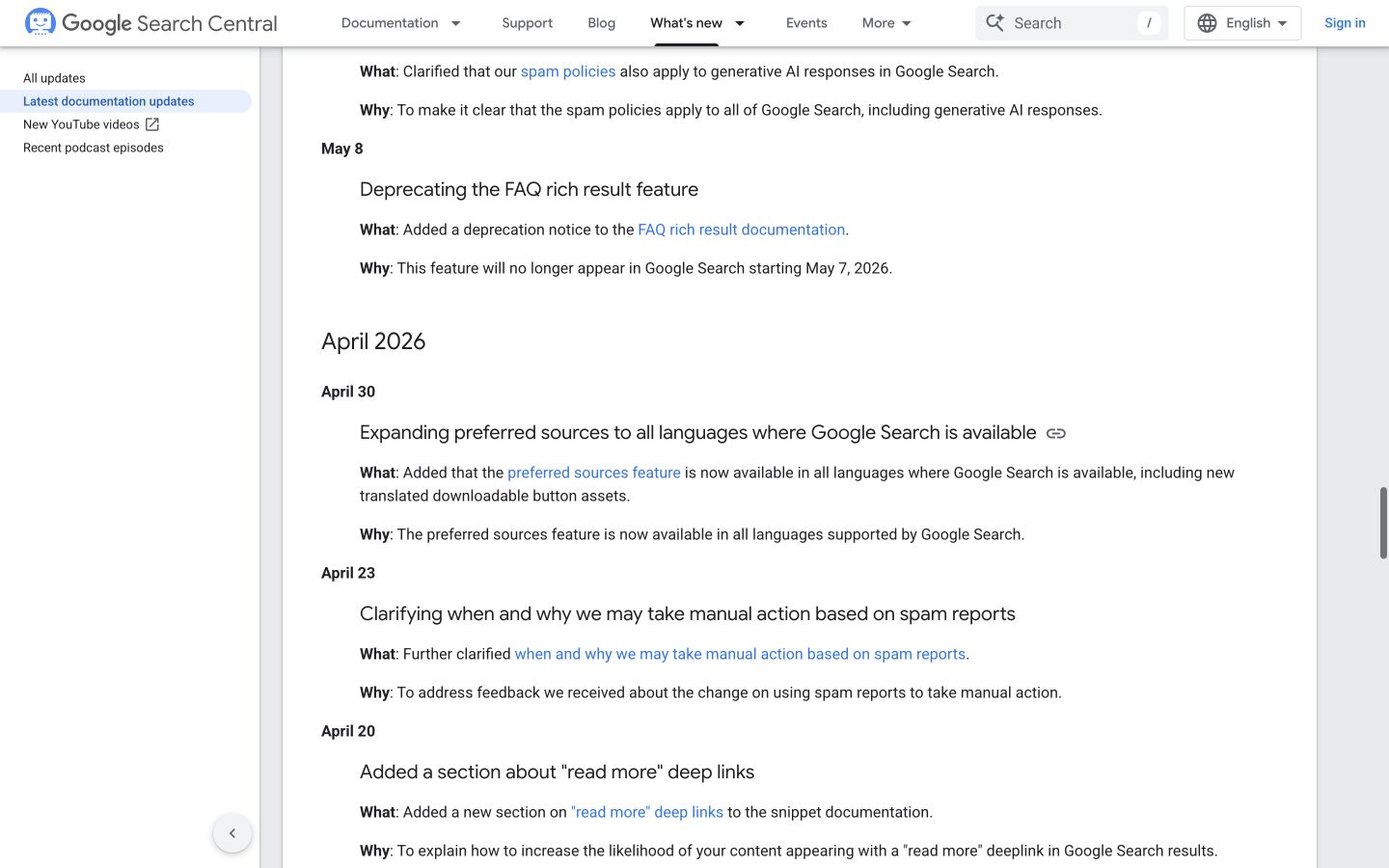
A dated primary-source change can justify a page refresh. The presence of a FAQ rich-result promise is a concrete fact to review. Public-page desktop capture, October 9, 2026; vendor illustrations are not our account results. Source.
For each implemented change, retain the prompt, engine, date, response, cited URL, affected page, rationale, owner and revision date. Mark “no change justified” as a valid decision. Otherwise a dashboard can become a machine for unnecessary rewriting.
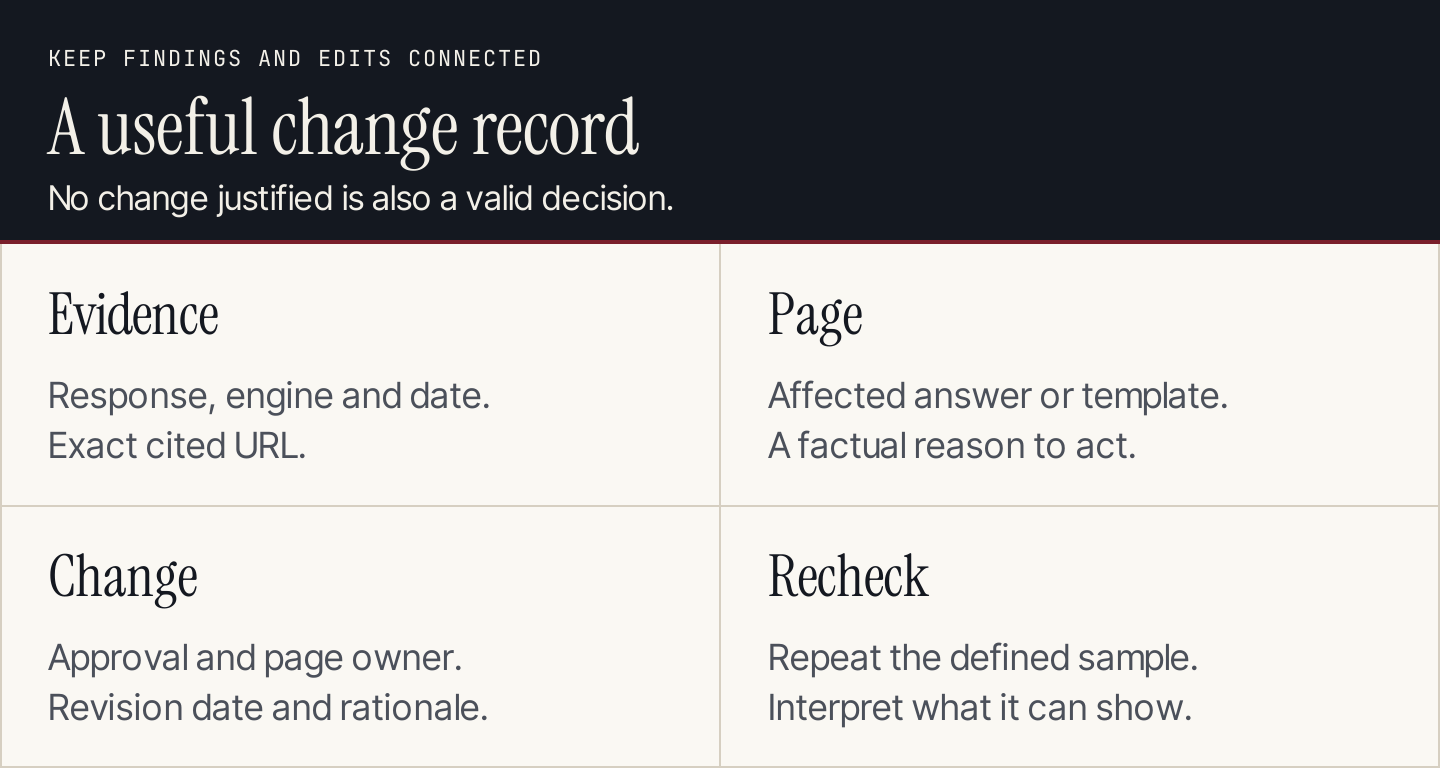
Keep the original evidence attached. A proposed cause remains a hypothesis unless stronger evidence supports it.
Separate visibility from traffic and business results
A mention means the brand appears. A citation means a source is referenced. A recommendation means the answer endorses an option in context. These observations can move differently, so avoid combining them into one unlabeled success claim.
Google reports its AI feature traffic within overall Web performance in Search Console. That report should not be presented as a standalone ChatGPT visibility dashboard. Google reporting guidance.
Likewise, a bot visiting a page does not establish that an assistant cited it. A referral visit does not by itself establish incremental revenue. Keep three reporting layers: sampled answer observations, website visits where attribution is available, and qualified business outcomes. Explain the limits of each instead of promising that all three can be connected perfectly.
How to choose your first GEO stack
For a small team, start with a short approved content backlog and a manageable monitoring sample. Choose Rankauto when the missing responsibility is article production. Add a focused tracker when the team can review responses and act on the findings.
For an agency, establish client separation, report definitions, engine coverage and response budgets before scaling the number of accounts. A client should understand what was observed, what changed and what remains uncertain.
For an enterprise, prioritize the handoff between analysts, editors and implementers. A broader platform may help, but its demonstration should show your real approval process and contract scope.
The useful GEO workflow is consistent: observe, investigate, approve and recheck. Choose tools that make those decisions easier to perform. Explore Rankauto for the content production step.