18 Best Google AI Overview Tracking Tools for SEO Teams
Compare 18 tools that track Google AI Overviews. See which record brand mentions, domain citations and keyword coverage, and what each one costs.

A Google AI Overview tracker should answer two questions separately: did the query produce an AI Overview, and did your site or brand appear inside it? A tool that records only one of those events can leave you diagnosing the wrong problem.
For teams connecting AIO monitoring with traditional keyword tracking, compare Semrush Position Tracking, AccuRanker and Advanced Web Ranking. For a fixed panel of buyer questions across AI search, shortlist LLM Pulse, SE Visible, Otterly.AI and Peec AI. Larger programs should also inspect platforms such as Profound, Conductor and BrightEdge.
This guide compares 18 products with first-party documentation or public product material supporting Google AI Overview coverage, checked on October 10, 2026. The order groups buying routes and practical uses; it is not a measured accuracy ranking. We have not tested paid accounts or verified every vendor's collection method. This comparison is published by Rankauto.
The 18 tools at a glance
| Tool | Useful starting use case | AIO-specific evaluation question |
|---|---|---|
| LLM Pulse | Answer-level monitoring | Is no-AIO coverage recorded separately from no mention? |
| SE Ranking SE Visible | Dedicated brand visibility analysis | How does AIO presence differ from its visibility score? |
| Semrush Position Tracking | AIO source appearance beside organic rankings | What does an AIO position of #1 actually mean? |
| Ahrefs Brand Radar | Discovering source patterns and monitoring custom prompts | Is the result from an index or your recurring panel? |
| Otterly.AI | A focused daily monitoring panel | Which engines are in the base plan? |
| Peec AI | Daily comparisons across selected models | Does choosing AIO consume one model selection? |
| Scrunch | Monitoring plus site audits | How many responses can the Core plan collect? |
| Profound | Enterprise analysis | Can the trial use your own question panel? |
| Rankscale | Broader engine coverage | What does your chosen schedule cost in credits? |
| AthenaHQ | Response-credit monitoring | How many credits does the full schedule require? |
| LLMrefs | Keyword-led discovery and answer tracking | Can you inspect the generated question variants? |
| Omnia | Monitoring connected to content actions | Who approves a suggested change or outreach action? |
| Writesonic | Visibility analysis with content workflow | Does the plan cover the intended engine-by-prompt runs? |
| AccuRanker | AIO analysis inside a rank-tracking workflow | How are organic positions and cited sources displayed? |
| Advanced Web Ranking | Configurable Google + AIO tracking | How does the engine selection consume keyword units? |
| BrightEdge AI Catalyst | Enterprise SEO and AI search reporting | What is included in the platform contract? |
| Conductor | Enterprise visibility-to-content workflow | Can a team trace an observation into an approved action? |
| ZipTie | A trial of answer and citation monitoring | Which questions, engines and dates are included? |
AI Overviews and AI Mode need separate tracking
Google's guidance explains that AI Overviews and AI Mode can use different models and techniques, producing different responses and links. AI Overviews do not appear for every query. Google also says that familiar SEO fundamentals remain relevant and that there are no extra technical requirements or special schema needed to appear in these features.
For this comparison, “tracks Google AI” is too vague an inclusion rule. We looked for explicit AIO coverage. Even then, a product may offer different methods: a keyword SERP feature report, a collected generated answer, or a search-backed database of citations. Your purchase should match the evidence you need.
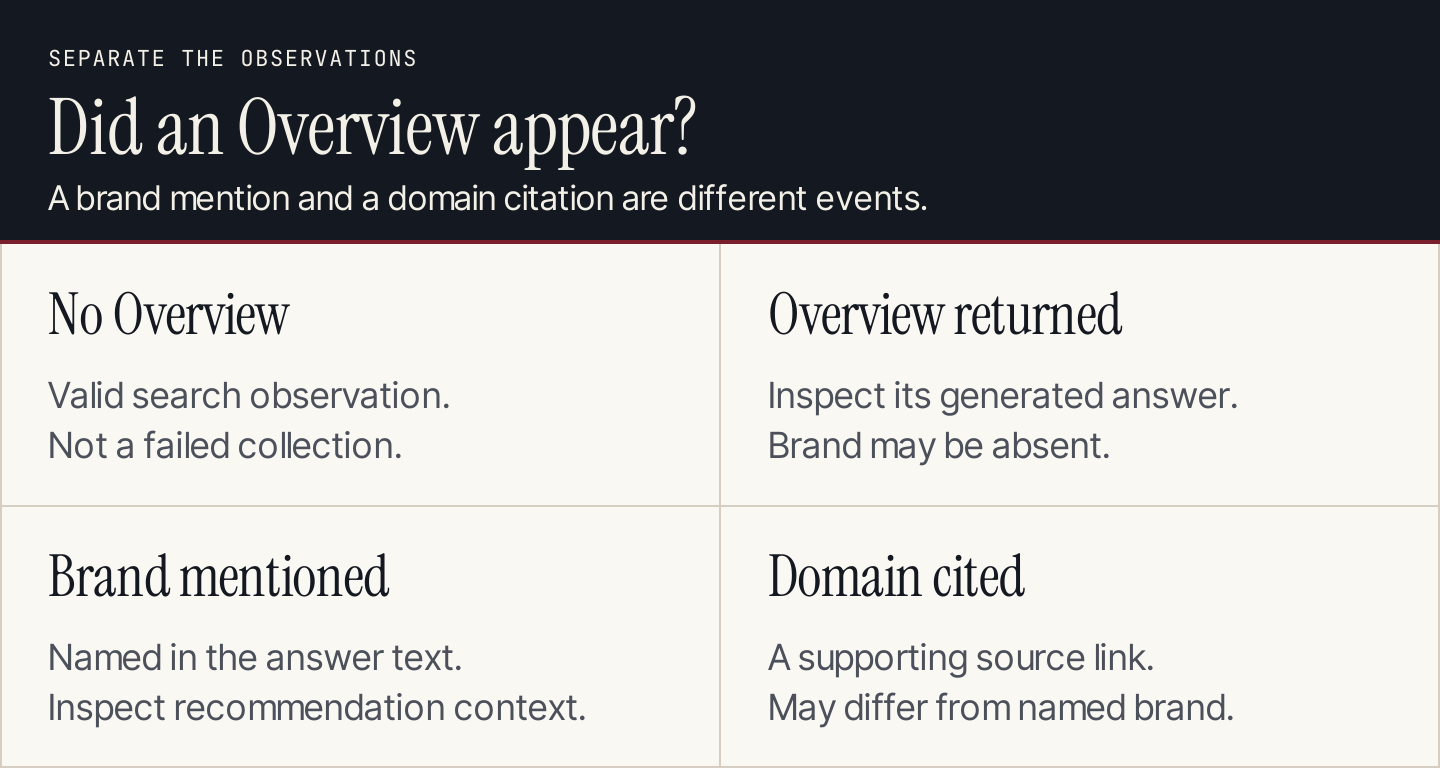
Keep the presence of the feature separate from presence inside it.
The text equivalent: first record whether an Overview appeared. When it did, record brand mentions and cited domains separately. A brand can be named while a third-party page receives the citation, or a page can be cited without a prominent brand recommendation.
1. LLM Pulse: best to evaluate for answer-level AIO monitoring
LLM Pulse's AIO tracking guide describes scheduled answer-level monitoring, recording brand mentions, competitors and cited sources. It tracks AI Overviews separately from AI Mode and discusses coverage: the share of selected questions producing an AIO at all. Its documented default schedule is weekly, with other frequencies available.
Proposed acceptance check: export an observation where no AIO appeared and another where an AIO appeared without your brand. Confirm they remain different records in reporting. Then open a cited URL from a positive observation. Inspect whether the report distinguishes answer coverage from your share of those answers, and explain both denominators to the team.
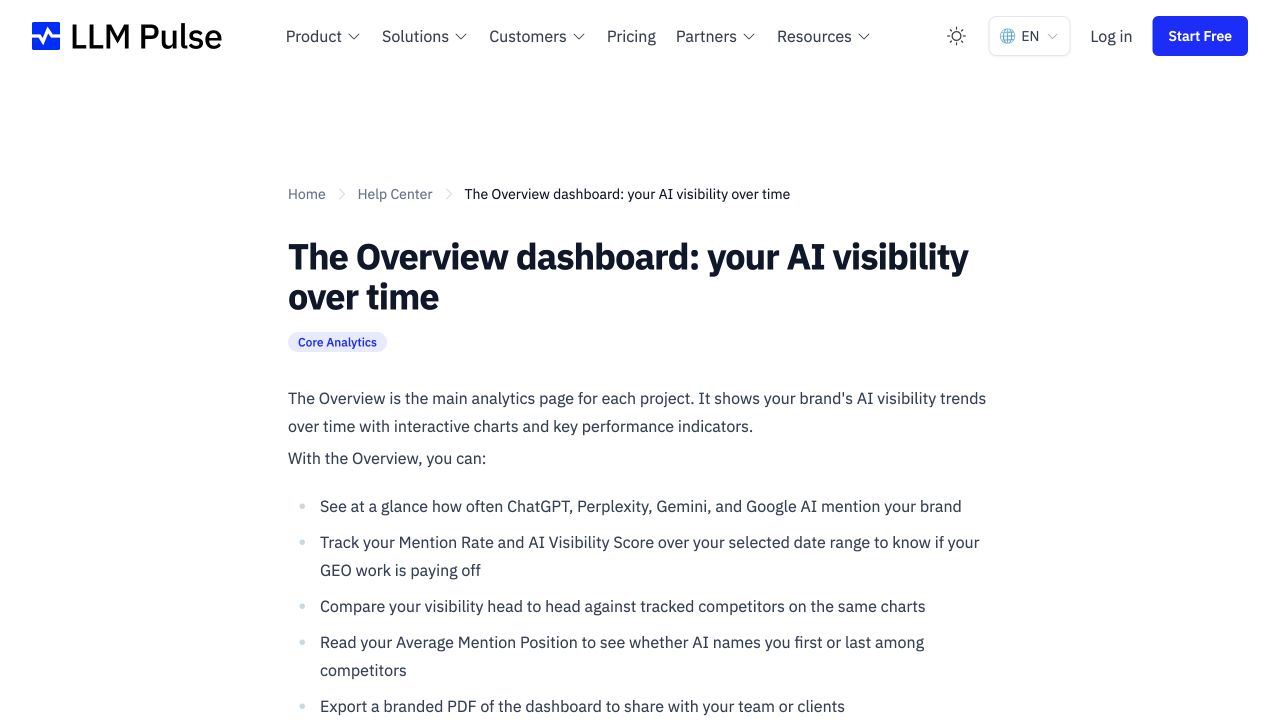
LLM Pulse's public documentation explains its monitoring metrics. Check AIO-specific schedule and coverage settings for the purchased scope. Desktop capture, October 10, 2026; public vendor material, not our account results. Source.
2. SE Ranking SE Visible: best for a dedicated AIO visibility workspace
SE Visible's dashboard documentation identifies an AIO presence metric alongside position-weighted visibility. The product's supported surfaces include both Google AI Overviews and AI Mode. Those are useful distinctions when a team needs to analyze generated answers rather than treat all Google AI observations as one result.
Proposed acceptance check: inspect a single AIO response with its detected brands and source links. Confirm what the AIO presence field counts and whether the exported report preserves that definition. Ask a client or colleague to explain the result from the report alone; if they read presence as a click or a guaranteed recommendation, revise the reporting labels.
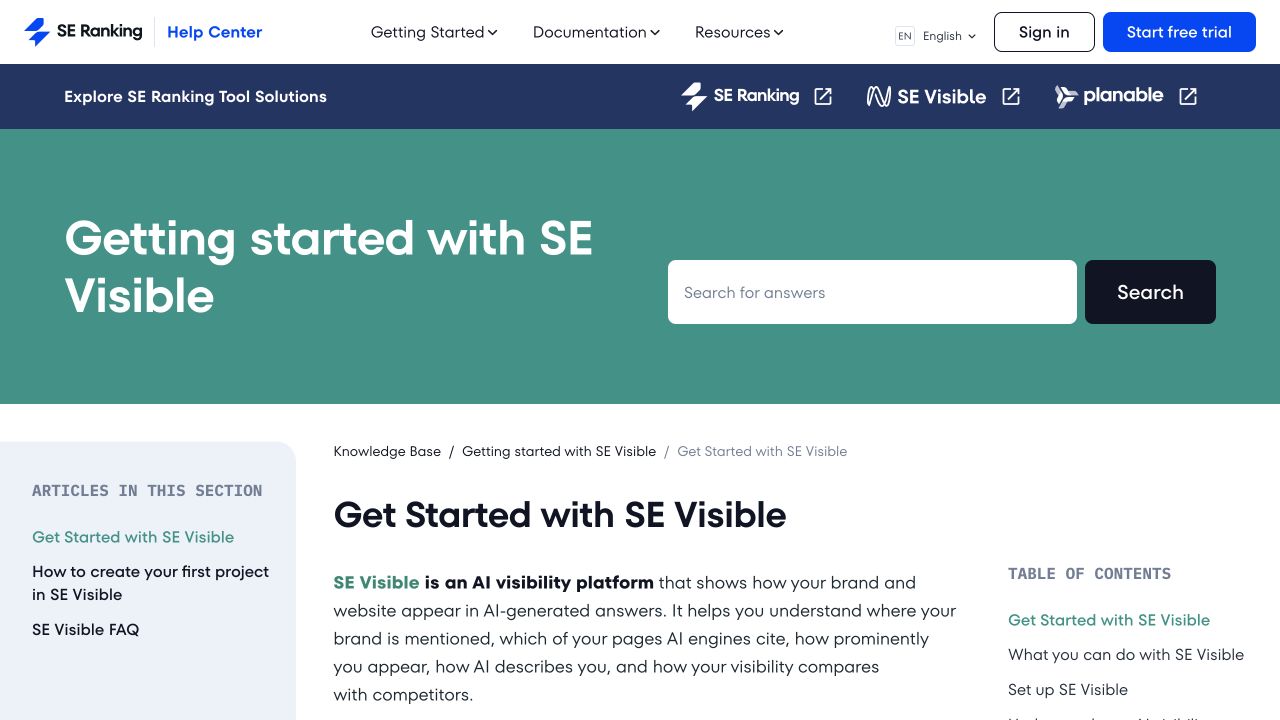
SE Ranking's public SE Visible help page establishes the dedicated visibility product. Desktop capture, October 10, 2026; public vendor material, not our account results. Source.
3. Semrush Position Tracking: best for AIO appearance alongside organic rankings
Semrush's AIO documentation describes filtering a Position Tracking campaign for AI Overview appearances. Crucially, it records a cited domain as an AIO #1 ranking, regardless of the page's ordinary organic position. That label is a feature-reporting convention, not proof that the page is the first citation in the generated answer. Campaign configuration includes location, device and keywords.
Proposed acceptance check: compare the report with and without its AIO inclusion toggle. Open an underlying result and inspect the citation. Keep conventional organic position in a separate field. Verify the required SEO subscription and campaign allowance rather than assuming the domain-priced AI Visibility Base product buys the same workflow.
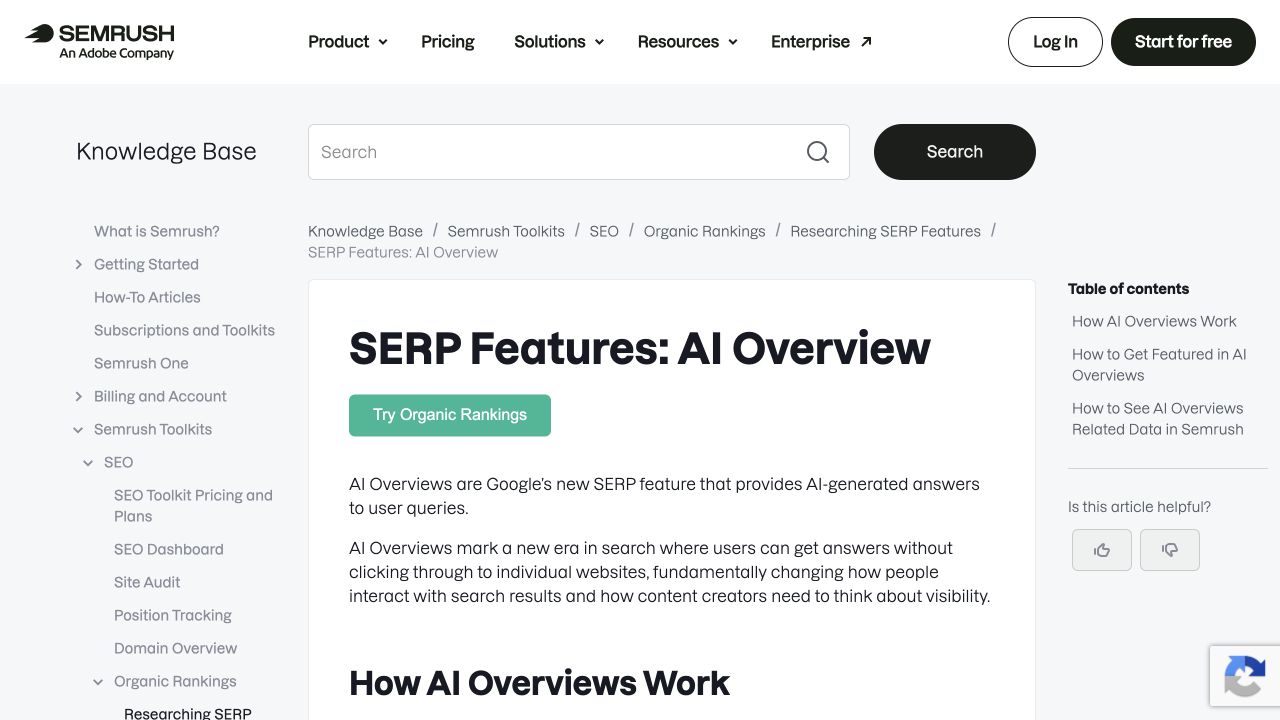
Semrush's public help article explains AIO source appearance and its #1 reporting convention. Desktop capture, October 10, 2026; public vendor material, not our account results. Source.
4. Ahrefs Brand Radar: best for source discovery plus a custom monitoring panel
Ahrefs Brand Radar includes Google AI Overview data in its AI visibility research surface. Custom prompt monitoring is a separate workflow with plan-dependent allowances. Its broad index can help discover source patterns, while a recurring panel can follow a deliberate set of business questions.
Proposed acceptance check: label each report as indexed discovery or custom monitoring. Select a commercially relevant question found through discovery and ask how it can enter the stable panel. Confirm the engine, market and refresh schedule. A change in an indexed dataset should not be presented as the same observation as a change on an unchanged tracked question set.
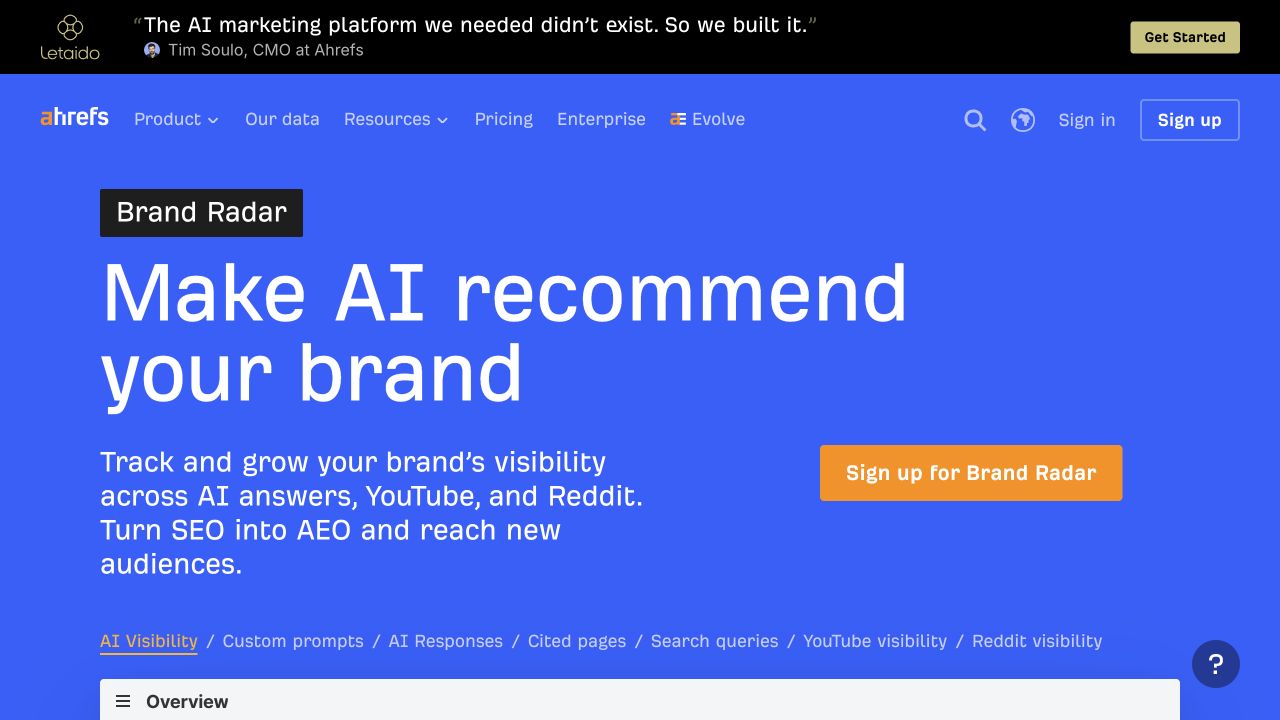
Ahrefs' public Brand Radar page describes the research and tracking product. Desktop capture, October 10, 2026; public vendor material, not our account results. Source.
5. Otterly.AI: best for a focused daily AIO panel
Otterly.AI includes Google AI Overviews among the four base engines in its Lite plan. Lite lists 15 prompts with daily monitoring; additional engines such as Google AI Mode are separately priced add-ons. More prompts and integration access are available on higher plans.
Proposed acceptance check: start with a tightly defined panel that includes commercially useful, non-branded questions. Check how missing AIO results appear in history and whether the cited page is available for inspection. Before adding AI Mode or other assistants, calculate the complete bundle price. An engine add-on should be a deliberate expansion of the monitoring program.
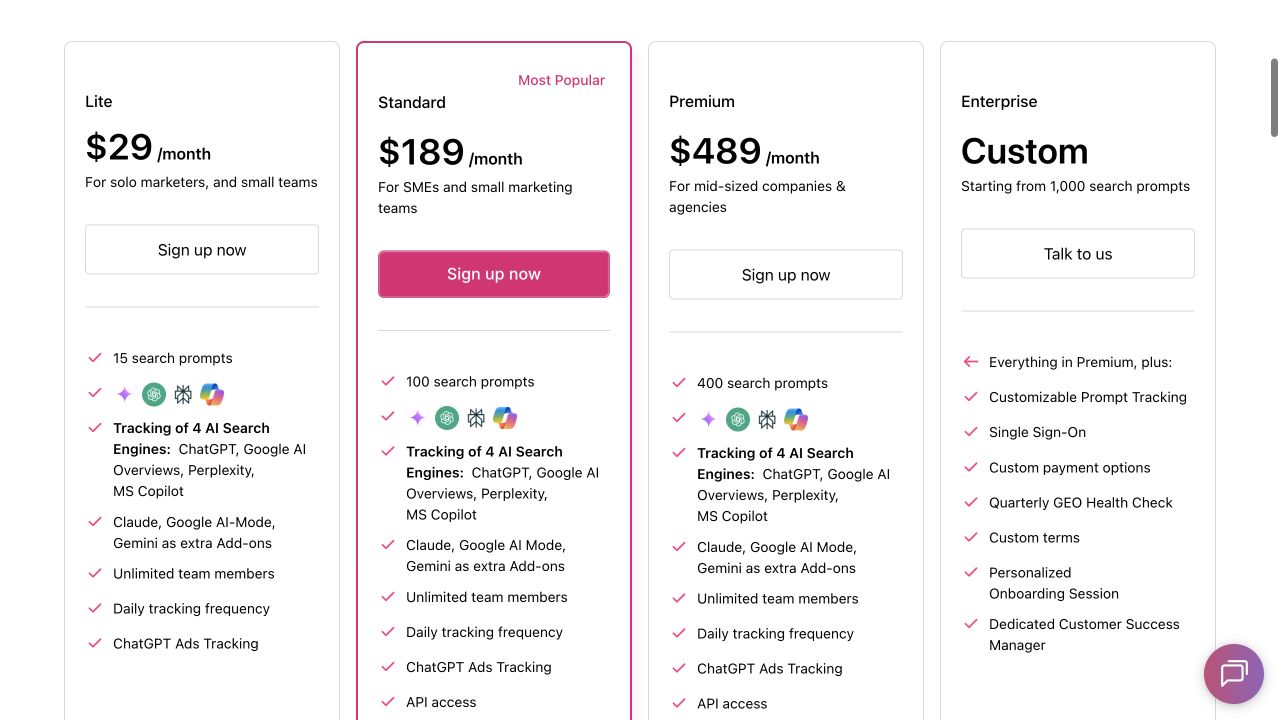
Otterly.AI's pricing page includes AIO in its base coverage and separates engine add-ons. Desktop capture, October 10, 2026; public vendor material, not our account results. Source.
6. Peec AI: best for selecting a daily model bundle around Google
Peec AI's Starter scope includes 50 prompts, three selected models and one project. AIO and AI Mode are available model choices. Selecting both uses two of the three selections, so an AIO-focused bundle should be configured intentionally rather than assumed to include every available platform.
Proposed acceptance check: choose the Google surface you need, then assign the remaining model selections according to buyer use. Inspect an AIO source report and its exact question configuration. Keep the initial panel unchanged during the evaluation, and confirm which higher-plan country or project features matter to your team before requesting a larger package.
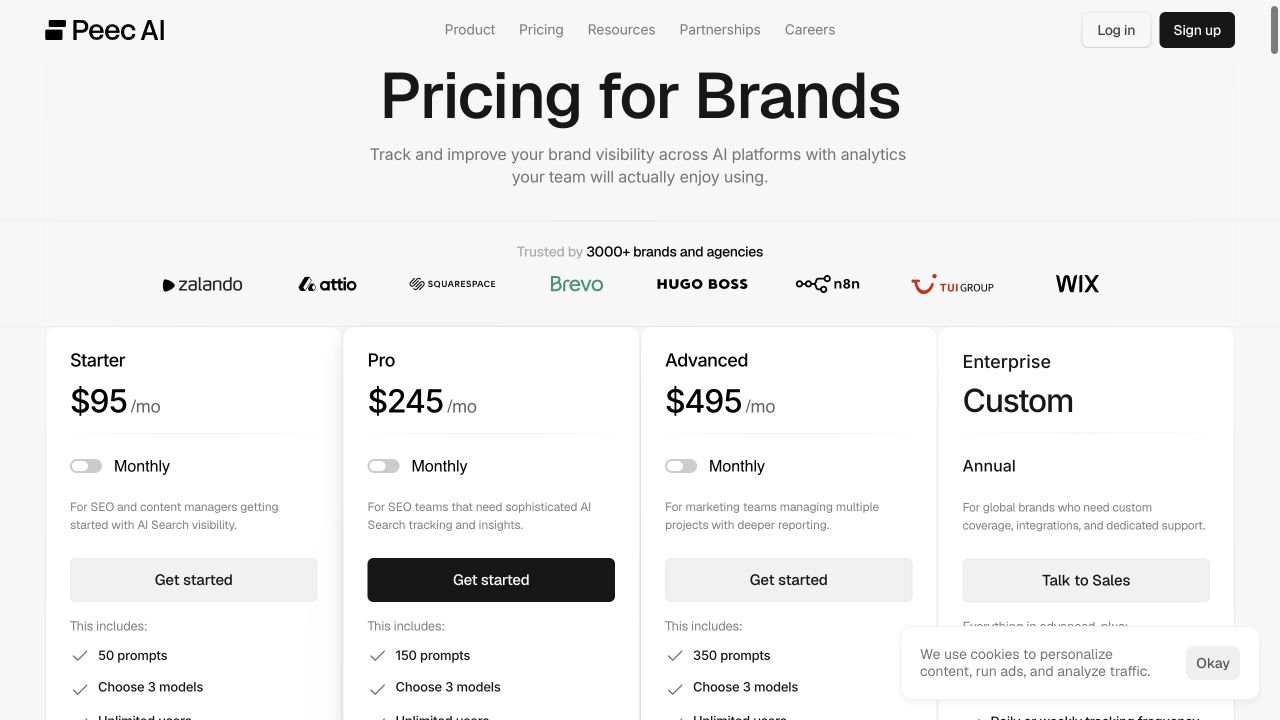
Peec AI's public plans describe model selection. Available models and included selections are different quantities. Desktop capture, October 10, 2026; public vendor material, not our account results. Source.
7. Scrunch: best for connecting AIO monitoring with site audits
Scrunch's current Core plan includes AIO, 125 unique prompts, 5,000 monthly responses and five site audits at $250 per month. AI Mode and a broader engine set are listed under Enterprise. Response capacity should be checked separately from the number of saved prompts.
Proposed acceptance check: model the required collection schedule and ask what happens when its response allowance is exhausted. Inspect one audit recommendation associated with an AIO finding. Identify whether it addresses page access, information quality or another issue, then assign the right owner. An audit finding is a task to verify, not proof that completing it will cause Google to cite the page.
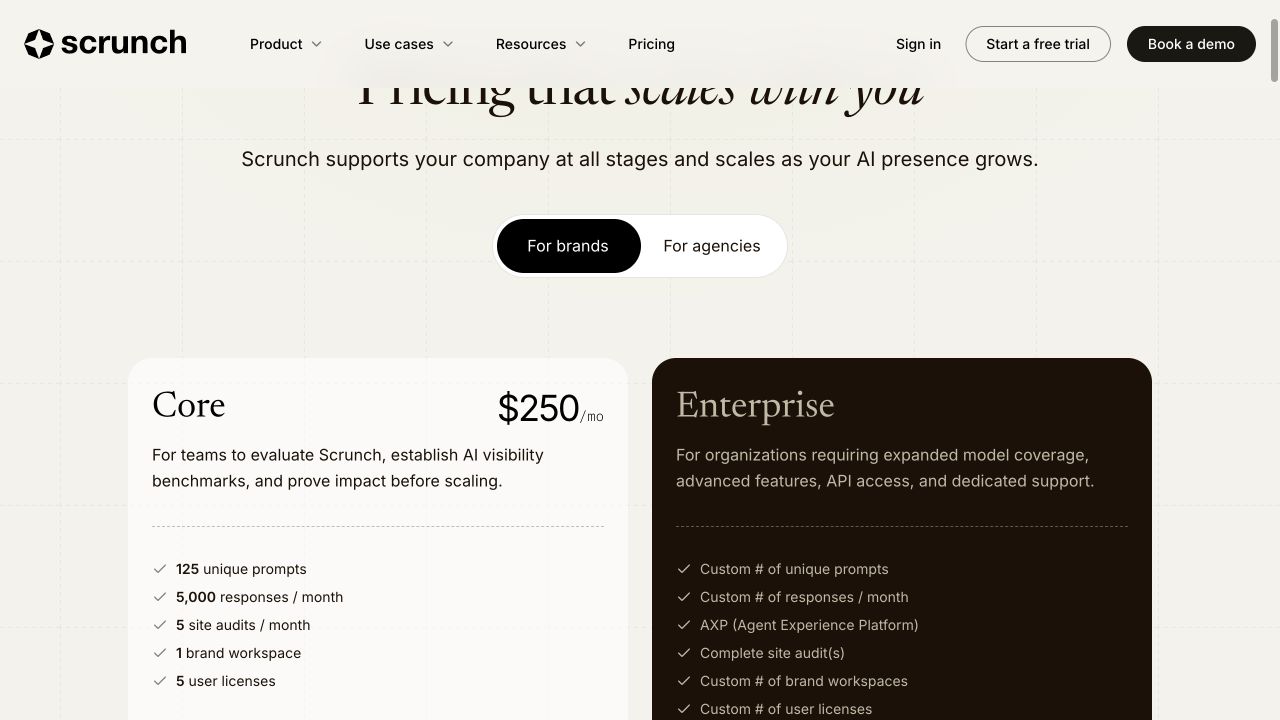
Scrunch's live plan page distinguishes Core AIO coverage from broader Enterprise engines. Desktop capture, October 10, 2026; public vendor material, not our account results. Source.
8. Profound: best for an enterprise AIO analysis evaluation
Profound's public trial includes Google AI Overviews alongside ChatGPT and Gemini, using recommended prompts. The trial limits prompt editing and exports; ongoing Enterprise scope is custom. A trial dashboard therefore does not establish how the product will perform on a buyer's own panel.
Proposed acceptance check: bring representative queries and ask to inspect their answer and source records during a demonstration. Confirm the contracted markets, history retention, collection frequency and exported fields. If your agency or enterprise needs a reproducible monthly report, make the ability to reconstruct that report an acceptance requirement before signing.
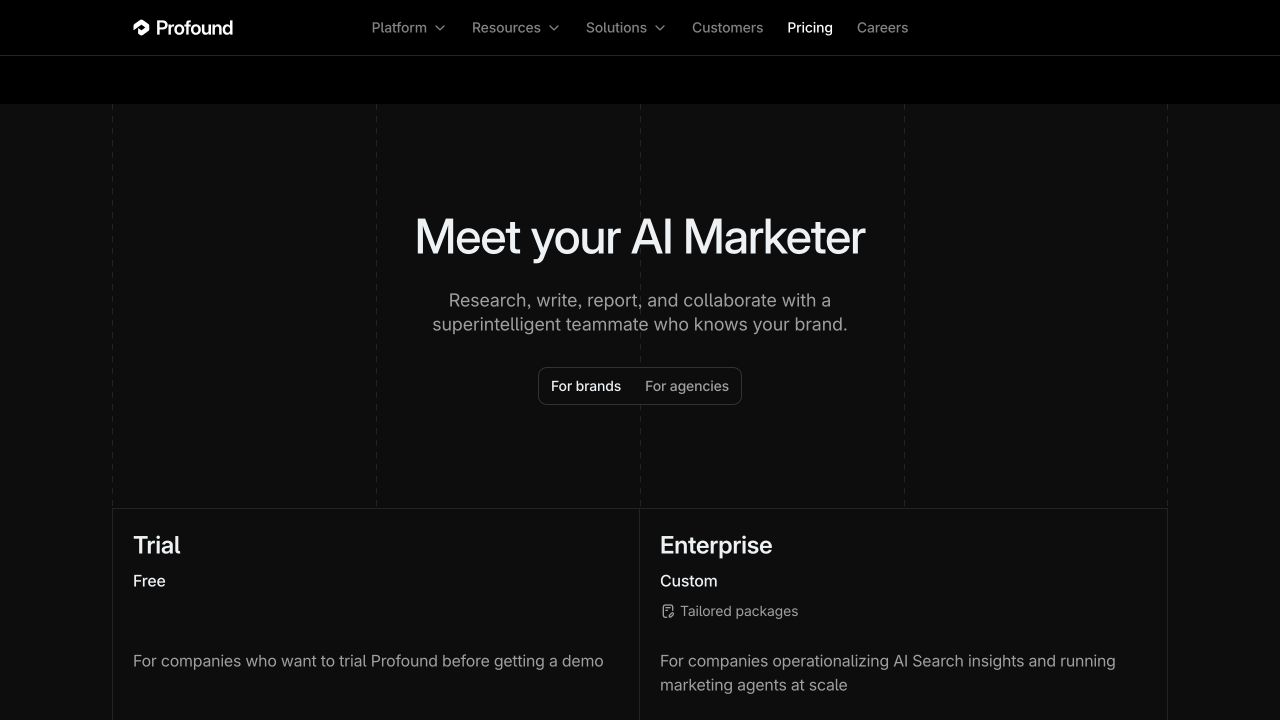
Profound's public pricing page distinguishes the free trial from tailored Enterprise packages. Desktop capture, October 10, 2026; public vendor material, not our account results. Source.
9. Rankscale: best for AIO within a broader engine program
Rankscale explicitly includes Google AI Overviews and AI Mode in its broader monitoring coverage, with mentions, citations, positions and sentiment. Its credit-based model makes the collection schedule a practical part of the comparison.
Proposed acceptance check: request a quote for the exact prompt, engine and market schedule. Compare one AIO answer with its stored source record, and confirm whether a failed or missing result consumes usage. Use broader engine coverage only when your team has a reason to inspect those surfaces; an aggregate score alone can conceal the market or engine needing attention.
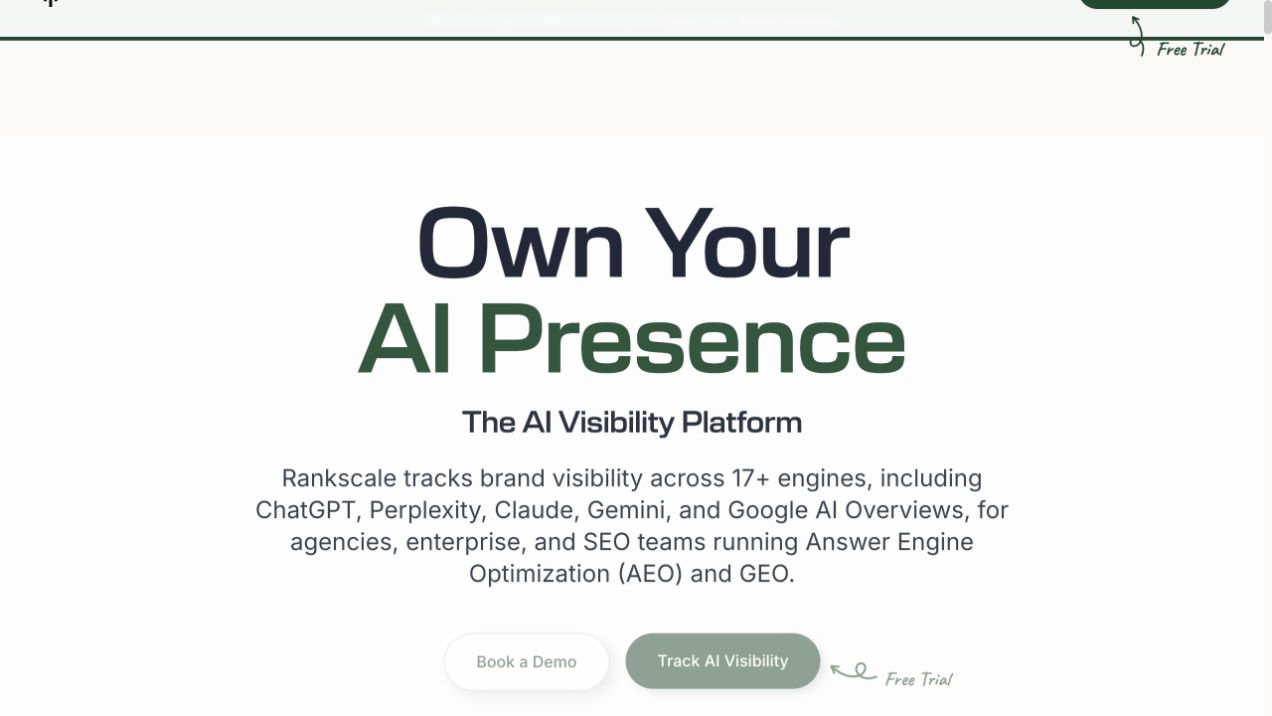
Rankscale's public coverage page names Google AI Overviews and AI Mode. Desktop capture, October 10, 2026; public vendor material, not our account results. Source.
10. AthenaHQ: best for modeling an AIO response-credit budget
AthenaHQ includes AIO in its evaluation and paid engine coverage. Its Starter plan uses 3,600 response credits; one credit represents one AI response. API access is an optional paid add-on at Starter, while Enterprise scope is custom.
Proposed acceptance check: calculate prompt-by-engine-by-date responses and map them to credits. Leave room for the vendor's actual retry and sampling rules. Confirm how an AIO that fails to trigger is represented. For a reporting integration, include API access and implementation effort rather than assuming a visible dashboard automatically includes the data pipeline you need.
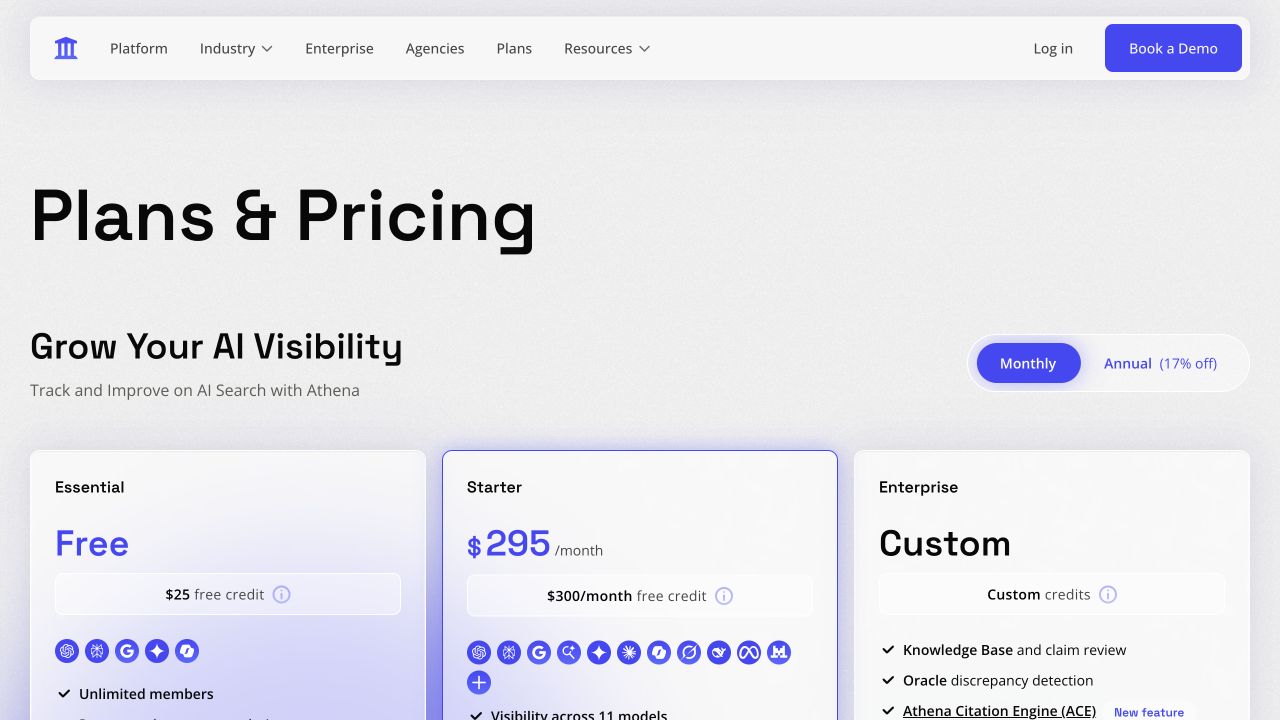
AthenaHQ's public plans show response-credit allowances and plan boundaries. Desktop capture, October 10, 2026; public vendor material, not our account results. Source.
11. LLMrefs: best for keyword-led question discovery and tracking
LLMrefs describes a keyword-led workflow that creates related prompt variants and tracks brands and citations across AI engines, including AIO and AI Mode. Its public offer also describes project, export and API access. Ask to inspect the actual generated question set before interpreting its aggregate results.
Proposed acceptance check: begin with one keyword important to your business and review the resulting questions. Remove irrelevant meanings or tasks before using the report in planning. Confirm which question variants remain stable between collection dates. A helpful discovery system still needs a way to distinguish a changed panel from a changed answer on the same question.
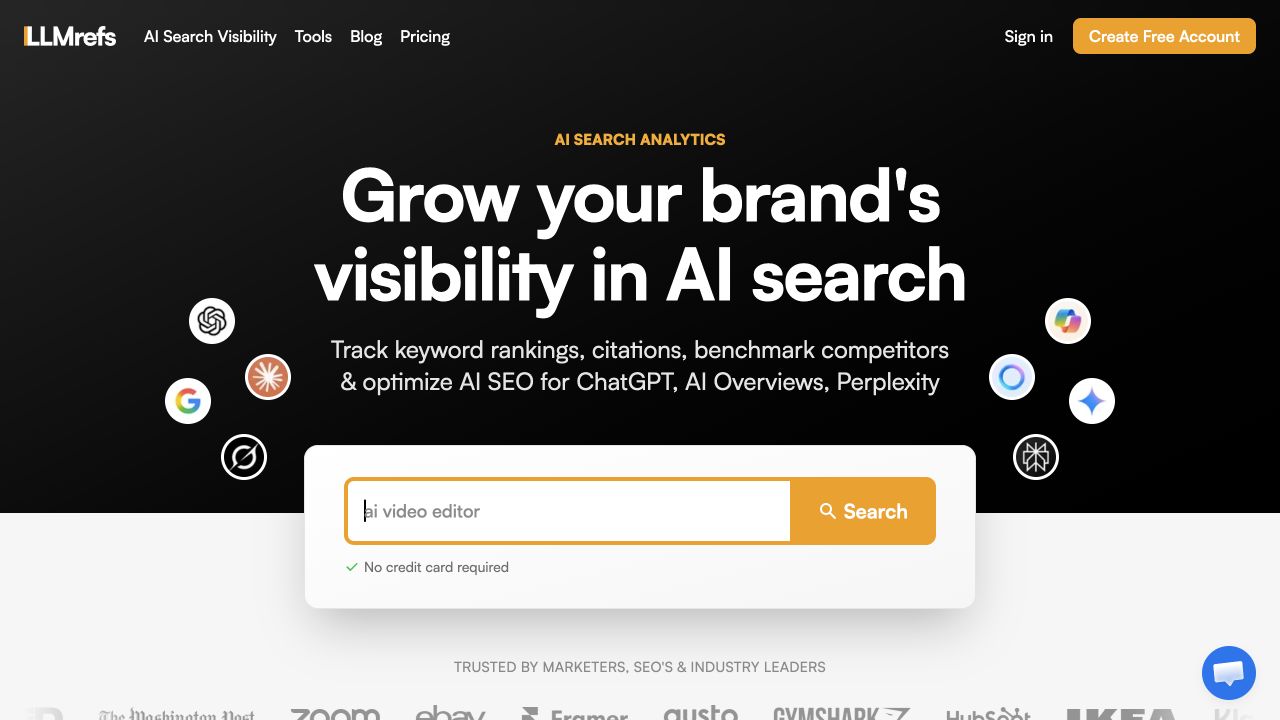
LLMrefs' public page describes its keyword-led monitoring approach. The search field shown is a vendor example, not our test query. Desktop capture, October 10, 2026; public vendor material, not our account results. Source.
12. Omnia: best for evaluating the handoff from AIO findings to content work
Omnia describes daily tracking across AIO, AI Mode and other assistants, with visibility, citations and sentiment analysis. Its broader product includes content and outreach actions. The key evaluation is how those actions are grounded and approved, rather than treating an automatically suggested task as an accepted marketing decision.
Proposed acceptance check: inspect a source page behind an AIO gap. Ask the system to explain the proposed action and preserve the evidence for an editor. Confirm approval gates for any content or outreach workflow. A page update should have a responsible reviewer and a recorded publication date before you investigate later visibility changes.
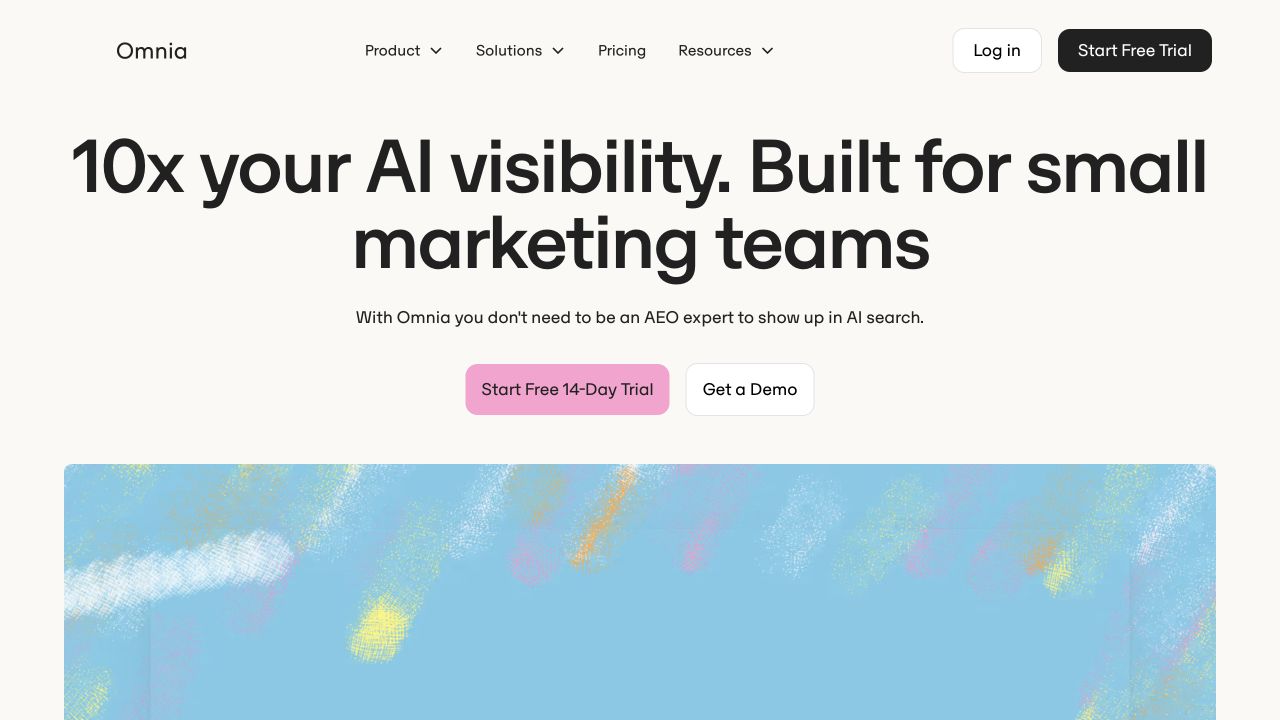
Omnia's public page describes monitoring and related actions. Promotional performance claims are not outcomes verified in this guide. Desktop capture, October 10, 2026; public vendor material, not our account results. Source.
13. Writesonic: best for comparing monitoring and content workflow together
Writesonic's AI Visibility Tracker includes AIO alongside other AI platforms, with source, competitor and intent analysis. Its connected action workflow can make it relevant to teams that want to move from an observation into a content assignment. Plan capacity needs to match the intended engine-by-prompt schedule.
Proposed acceptance check: follow a recorded AIO citation into the source page and a proposed brief. Keep factual evidence distinct from a generated recommendation. Ask which engines, daily answers and reporting access are included in the specific plan. A headline prompt allowance should not be read as unlimited runs of every prompt on every engine.
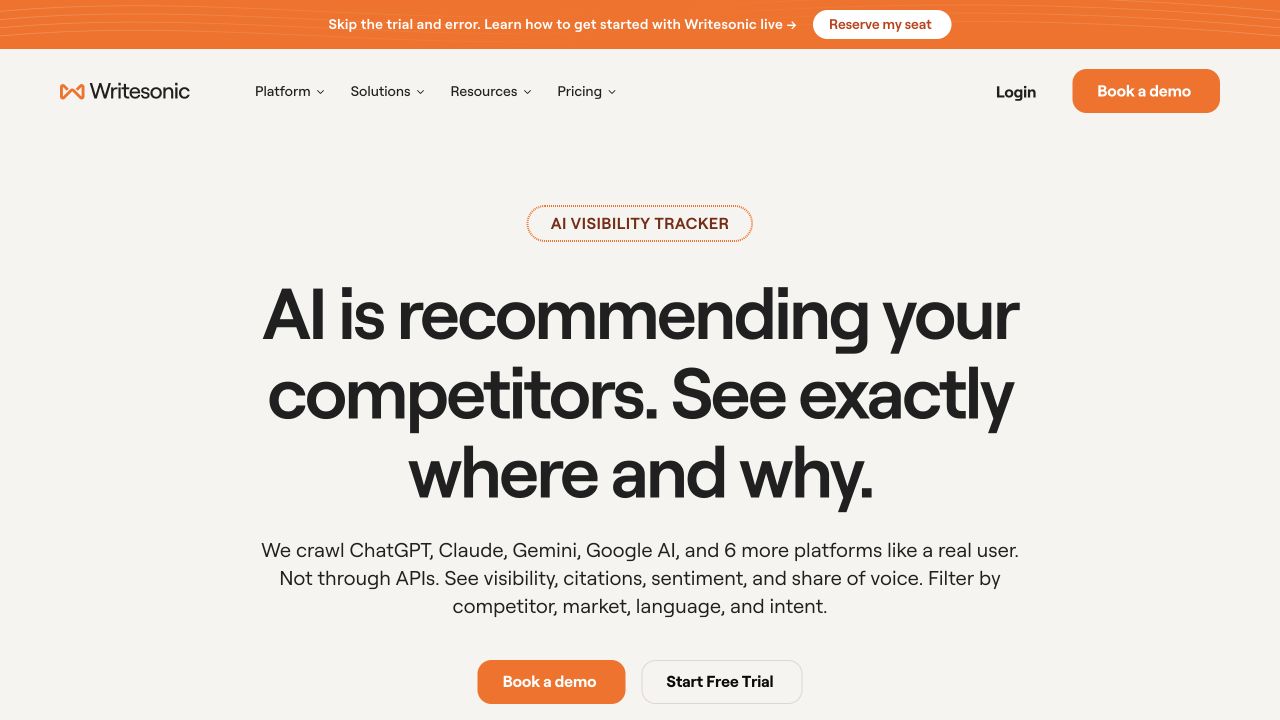
Writesonic's public tracker page describes source and competitor analysis. Desktop capture, October 10, 2026; public vendor material, not our account results. Source.
14. AccuRanker: best for AIO analysis in an established rank-tracking process
AccuRanker's Google AI Overview guide documents AIO as a trackable SERP feature. This makes it relevant to an SEO team inspecting generated sources alongside its conventional keyword program. AccuRanker's wider product offering should not be reduced to an unsupported claim that it handles only Google AI.
Proposed acceptance check: take a keyword that sometimes triggers an AIO and inspect the captured report, cited sources and regular organic ranking. Ask which country, device and refresh settings govern those records. Check whether the report distinguishes your domain's inclusion from the feature's presence, and whether the team can retain evidence for a historical comparison.
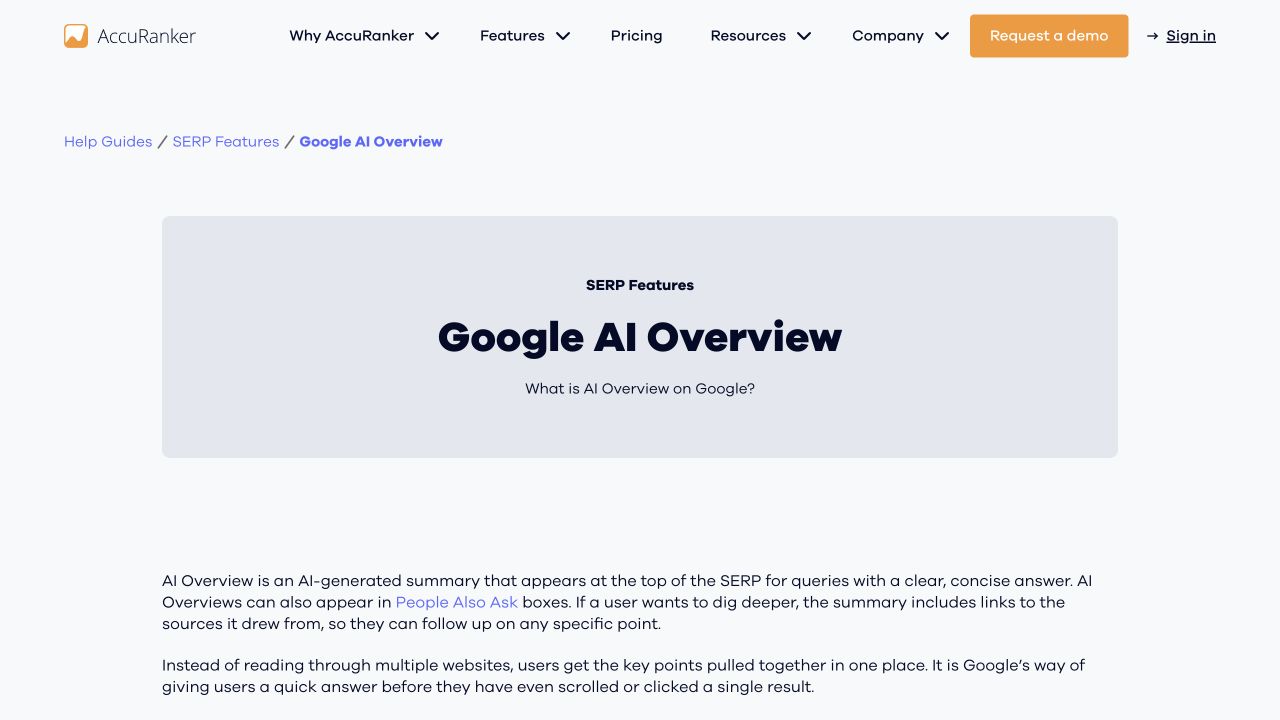
AccuRanker's official help page documents Google AI Overview tracking. Desktop capture, October 10, 2026; public vendor material, not our account results. Source.
15. Advanced Web Ranking: best for explicitly configuring Google + AIO collection
Advanced Web Ranking's guide distinguishes AIO, AI Mode and other LLM search. Its Google Search + AI Overview configuration collects conventional search context alongside AIO source information. The documented AIO configuration consumes double the keyword units of standard tracking; AI Mode is a separate engine choice.
Proposed acceptance check: price the intended configuration, not the standard keyword count alone. Inspect how cited sources and organic results are displayed for one tracked question. Confirm whether the chosen schedule and target market fit the reporting period. A configuration that captures useful evidence must also have enough capacity to maintain it over time.
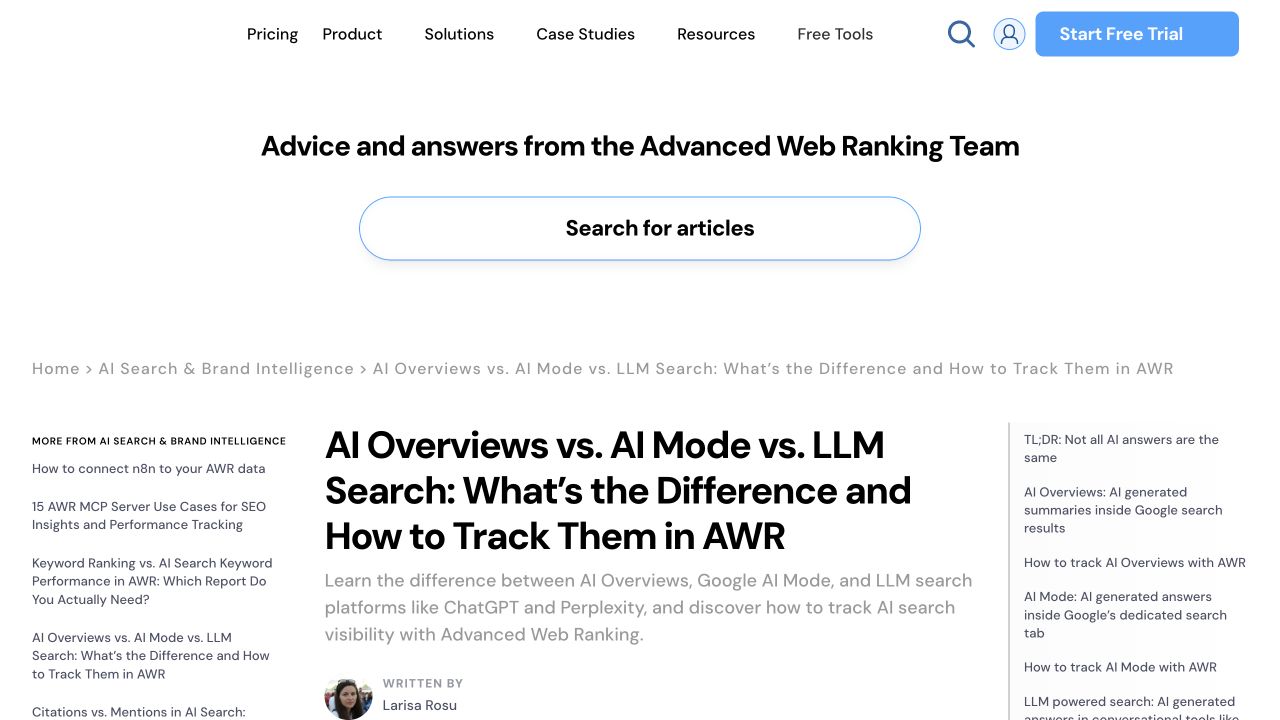
AWR's official guide separates AIO from AI Mode and explains collection choices. Desktop capture, October 10, 2026; public vendor material, not our account results. Source.
16. BrightEdge AI Catalyst: best for an enterprise SEO platform evaluation
BrightEdge AI Catalyst explicitly covers Google AI Overviews in its AI search analysis, including brand presence, citations and competitive interpretation. It is presented within BrightEdge's wider SEO platform. Confirm the current subscription and implementation terms directly rather than assuming a platform inclusion claim means a free standalone product.
Proposed acceptance check: identify the people who will use the report and the decisions each needs to make. Request an export of an AIO observation with its source information. Inspect whether topic groups map to pages your team actually owns, and whether the report can keep organic performance distinct from sampled AI answer observations.
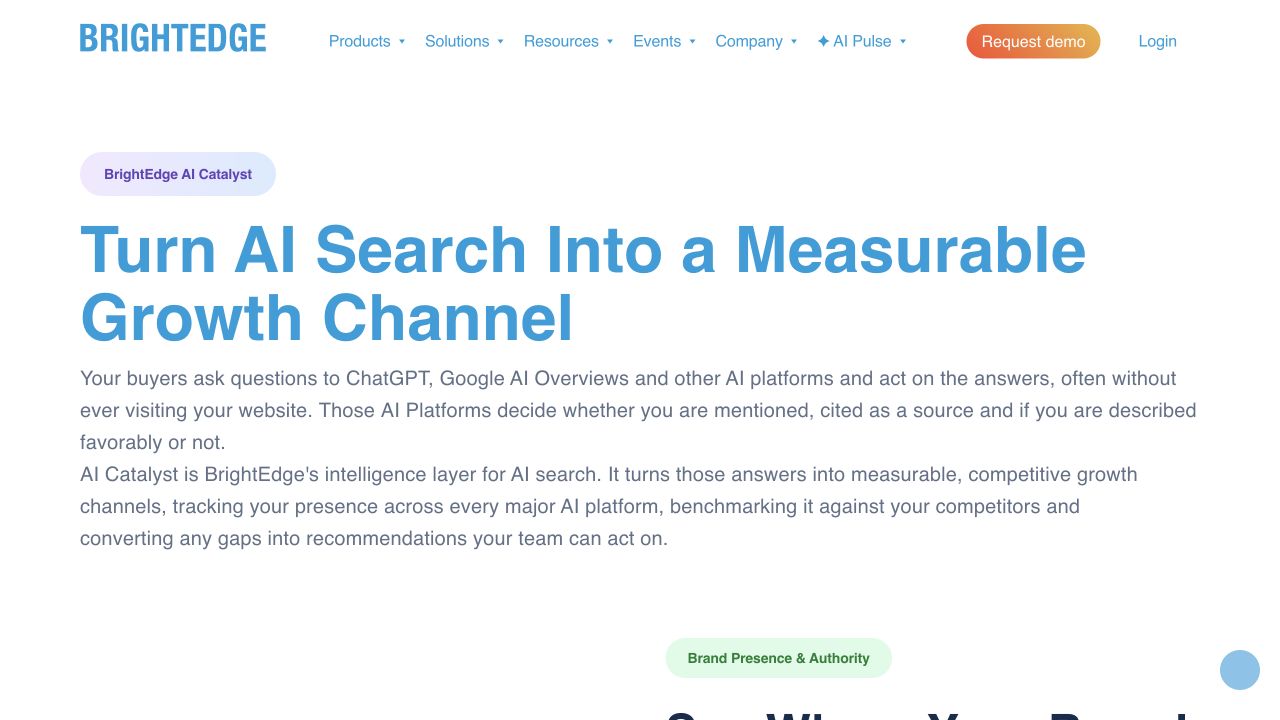
BrightEdge's public AI Catalyst page describes the enterprise platform and AIO coverage. Desktop capture, October 10, 2026; public vendor material, not our account results. Source.
17. Conductor: best for an enterprise visibility-to-content handoff
Conductor's AI Search Performance names Google AIO among its monitored surfaces and connects mention and citation analysis with its content workflow. It belongs on a shortlist when reporting must reach the teams responsible for updating important pages.
Proposed acceptance check: trace one AIO competitor citation into a source-backed task for an editor. Confirm topic, persona and regional scope in the purchased modules. Ask the team to preserve the original observation and change record so a later report can explain what happened without overstating causation. Procurement should include access, exports and implementation support in the comparison.
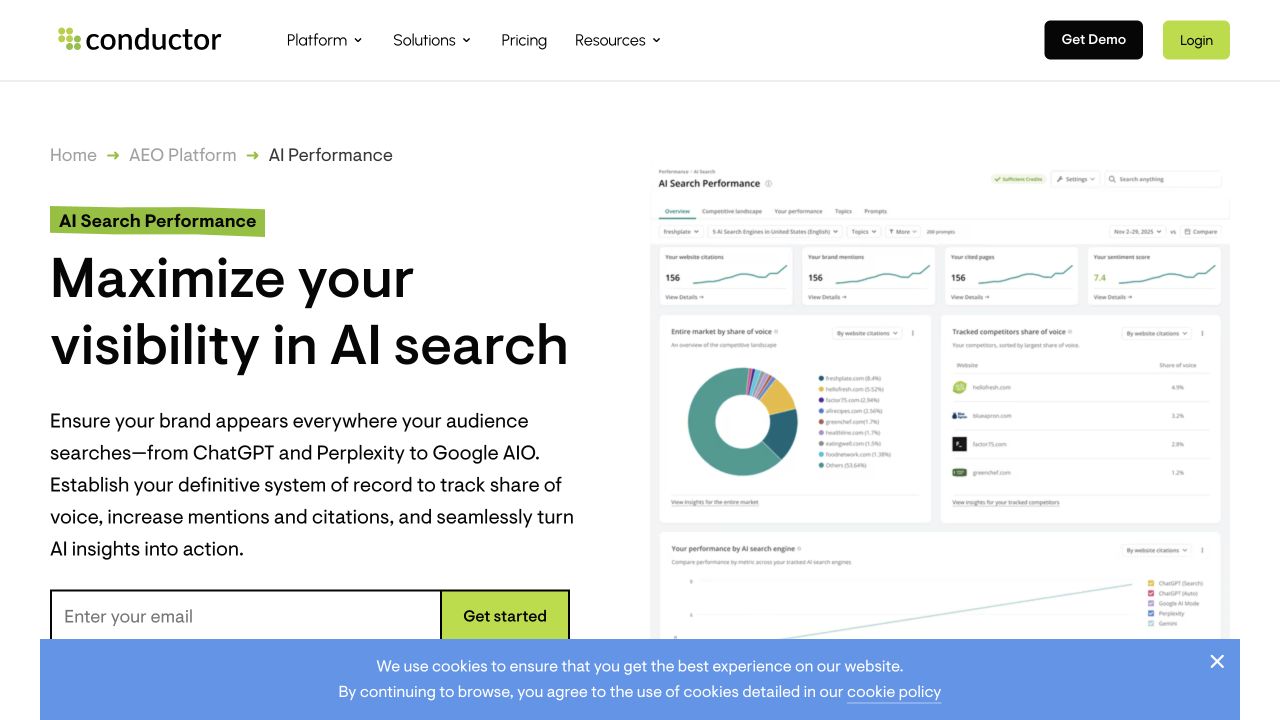
Conductor's public page names AIO in its AI search reporting offer. Desktop capture, October 10, 2026; public vendor material, not our account results. Source.
18. ZipTie: best for a scoped trial of AIO answer and source records
ZipTie describes monitoring across AIO and other AI engines, with answer records, mentions, sentiment and citations. Its public trial is a limited evaluation rather than proof of unlimited continuing monitoring. Inspect the current trial configuration and contracted engine schedule before building a reporting commitment around it.
Proposed acceptance check: choose questions with different expected outcomes: an AIO with your domain, an AIO without your domain, and a query where no AIO appears. Inspect the stored responses and cited pages. Confirm the configured observation dates and engine list, and ask which exports or integration features require a separate purchase.
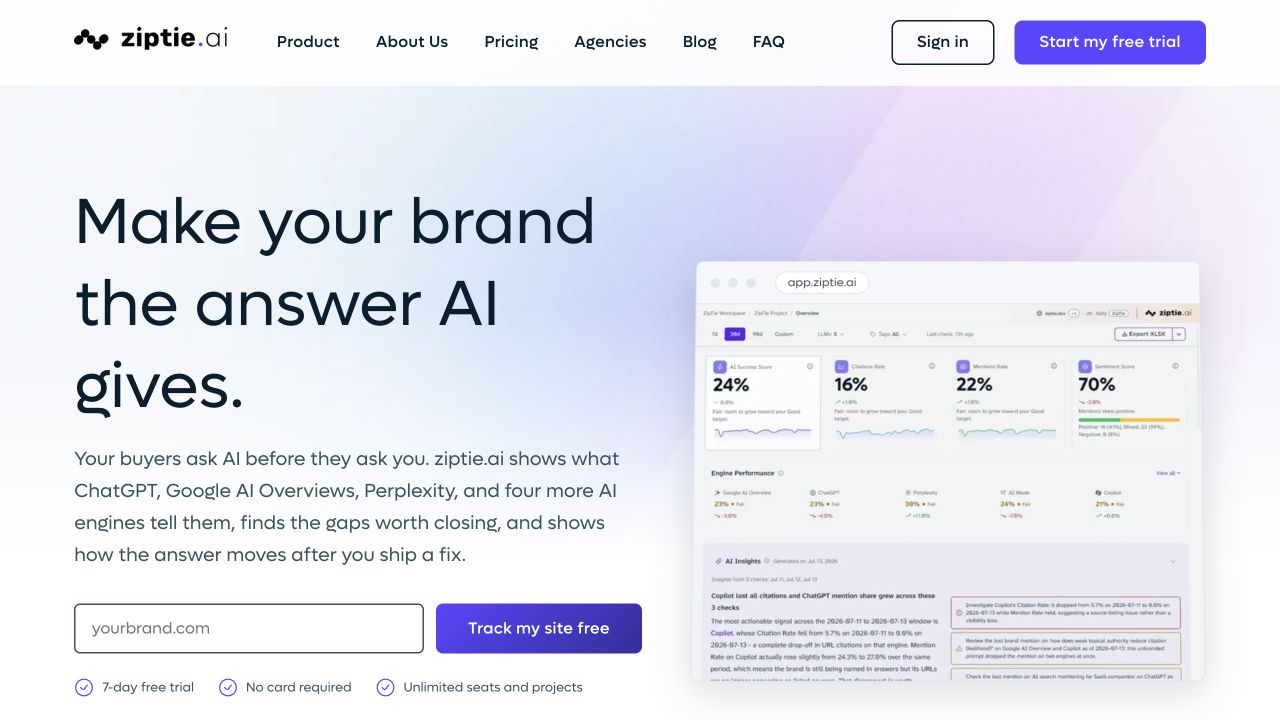
ZipTie's public product page describes its monitoring offer. Confirm current trial and paid-plan scope. Desktop capture, October 10, 2026; public vendor material, not our account results. Source.
Choose your starting route
For an SEO team already managing a keyword campaign, begin by inspecting the AIO capabilities of its current rank tracker. Semrush Position Tracking, AccuRanker and AWR are reasonable routes to evaluate. The acceptance criterion is a useful distinction between feature presence, domain inclusion and conventional position.
For a founder or small marketing team, start with a focused question panel and a manageable collection schedule. Compare Otterly.AI, Peec AI, LLM Pulse or SE Visible on the same scope. Broad engine coverage is optional if your initial decision concerns AIO alone.
For an agency, check client separation, export consistency and who maintains the panel. For an enterprise, add regional coverage, permissions, retention and implementation support. A reporting commitment should fit the contract and the team's capacity to inspect findings.
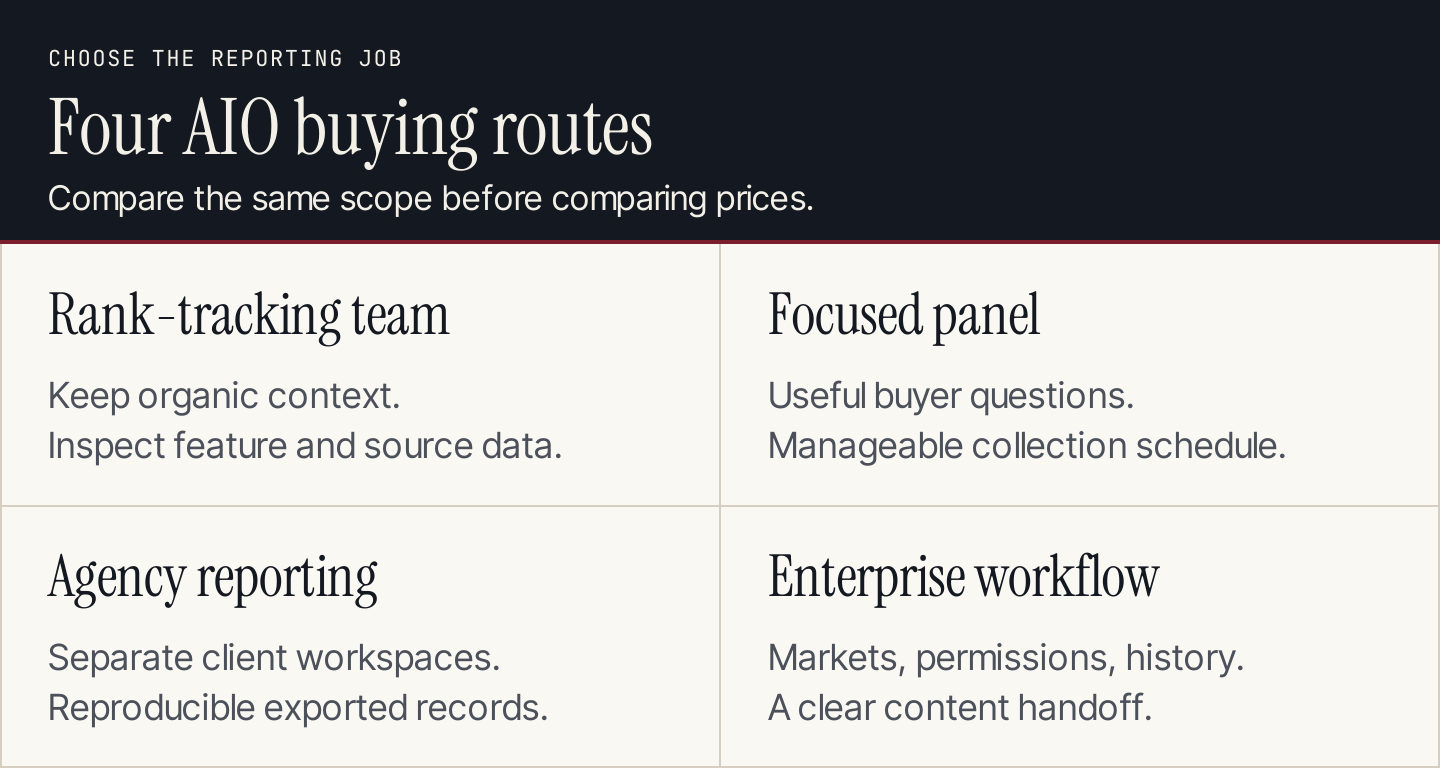
Compare products on the same recurring reporting job.
Use a three-state denominator check
Suppose a fixed evaluation panel contains 40 scheduled observations. In this illustrative example, 24 return an AIO, eight of those cite your domain, and six mention your brand. These are invented planning inputs, not results from any tool or customer.
| Measure | Calculation | Illustrative result |
|---|---|---|
| AIO coverage of the panel | 24 ÷ 40 | 60% |
| Domain citation rate among returned AIOs | 8 ÷ 24 | 33.3% |
| Domain citation rate across all scheduled observations | 8 ÷ 40 | 20% |
| Brand mention rate among returned AIOs | 6 ÷ 24 | 25% |
Every number can be correct while answering a different question. Do not label all four “visibility.” If the number of returned AIOs drops while the conditional citation rate holds, the diagnosis differs from losing citations inside a stable set of returned AIOs.
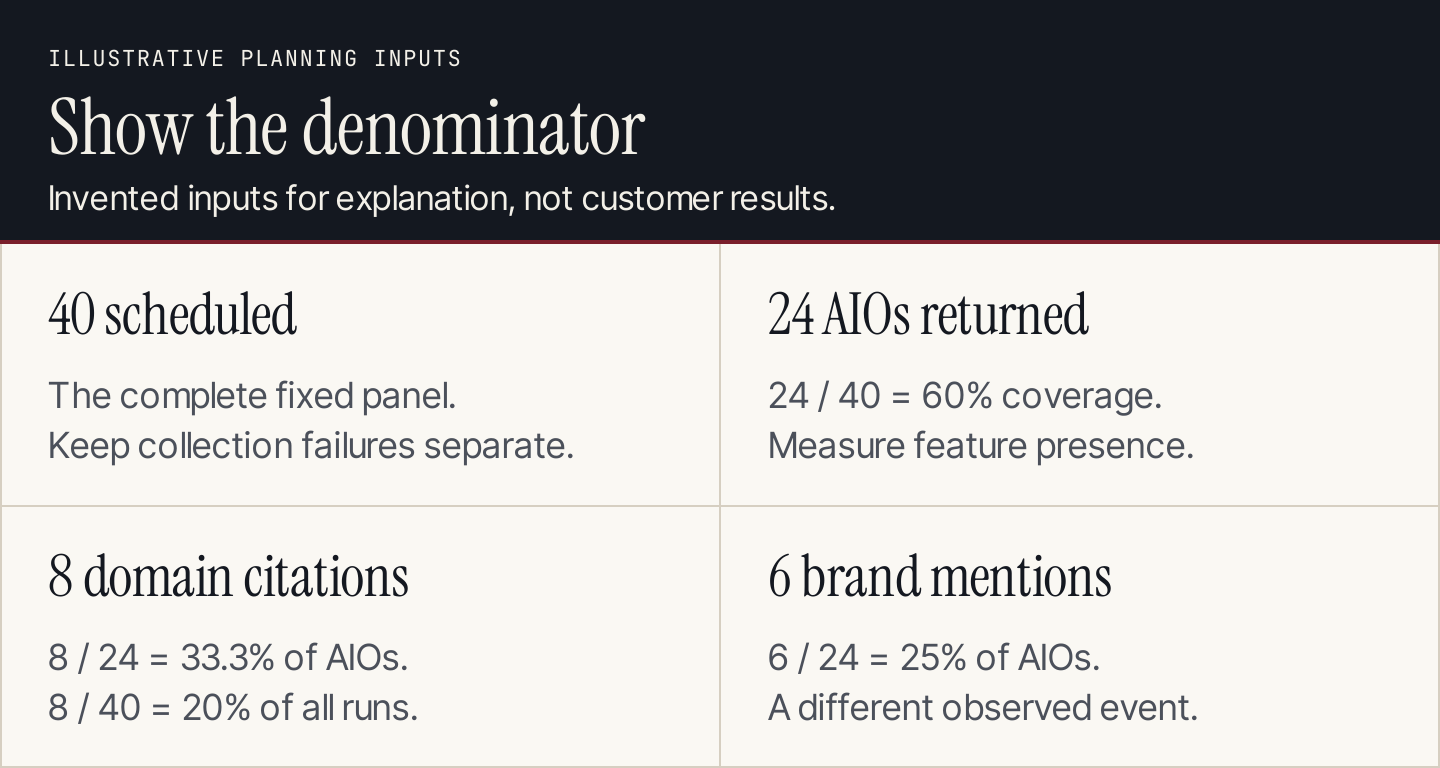
Show the denominator beside the metric. These are planning inputs, not observed results.
The text equivalent is in the table above. Store failed collection separately from a valid observation where Google returned no AIO. Otherwise a collection problem can look like a loss of feature coverage.
An AIO report an editor can act on
For each relevant observation, record the query, country, language, device where applicable, timestamp, AIO presence, answer, mentioned brands and cited URLs. Keep the ordinary organic result context separate. Inspect the original cited page before creating a content task.
Then decide what the observation suggests. A page with incorrect product information needs a factual correction. A competitor source answering a useful question may reveal a content opportunity. An absent AIO may simply mean that the query did not trigger the feature in that observation. Each case deserves a different action.
Record the action owner and publication date. Recheck the unchanged panel on the agreed schedule. A later change may justify investigation, but one favorable observation after an edit cannot establish that the edit caused the citation.
Can Search Console replace an AIO tracker?
Google's Search Central guidance says traffic from AI features is included in Search Console's overall Web performance data. That first-party site-performance view and a third-party answer panel answer different questions. The latter can retain answer text, competitors and source records for selected queries; it does not reproduce all real user exposure.
Use the documentation and reports available in your own property to interpret traffic. Do not relabel a third-party sample as Google's complete impression count, or assume an organic traffic movement came from AIO alone.
FAQs
What is the best Google AI Overview tracking tool?
Choose by the evidence and workflow you need. Existing keyword teams should evaluate their rank tracker first; teams studying recommendations should inspect answer-level monitoring. This guide offers shortlist routes, not a universal measured winner.
Does appearing in an AIO mean a page ranks first organically?
No. A domain's AIO citation and the page's conventional organic position are different observations. Semrush's documented AIO #1 convention is a particularly useful example of why metric definitions matter.
Should I track AI Mode at the same time?
If your buyers use it and your budget supports the additional collection, track it as a separate surface. Do not merge AIO and AI Mode results without labeling the method and preserving the breakdown.
Can a tracking tool guarantee citations?
No. Monitoring can reveal questions, sources and changes to investigate. Google's source selection remains outside the tool's control, and meeting eligibility requirements does not guarantee inclusion.
Turn a verified gap into a useful article
Rankauto can help research, draft and publish the pages your analysis identifies. Keep editorial review focused on accurate claims and useful answers; AIO inclusion remains Google's decision.