B2B Content Marketing: 10 Strategies With Real Examples
Build B2B content marketing with 10 strategies, real Stripe, Cloudflare, and Slack examples, and a decision packet for champions and buying groups.

B2B content marketing helps people at a business understand a problem, compare approaches, and build a case for a purchase. It also gives the people who will use, implement, fund, or review the purchase answers they can work with.
A helpful article can attract a researcher. A useful decision packet helps that person explain the recommendation to colleagues. Those are related jobs, but the second requires more than a generic description of benefits.
This guide covers ten strategies, three real public resource examples, and a copyable business-case worksheet. It focuses on buying decisions and evidence, rather than repeating a B2B SEO plan.
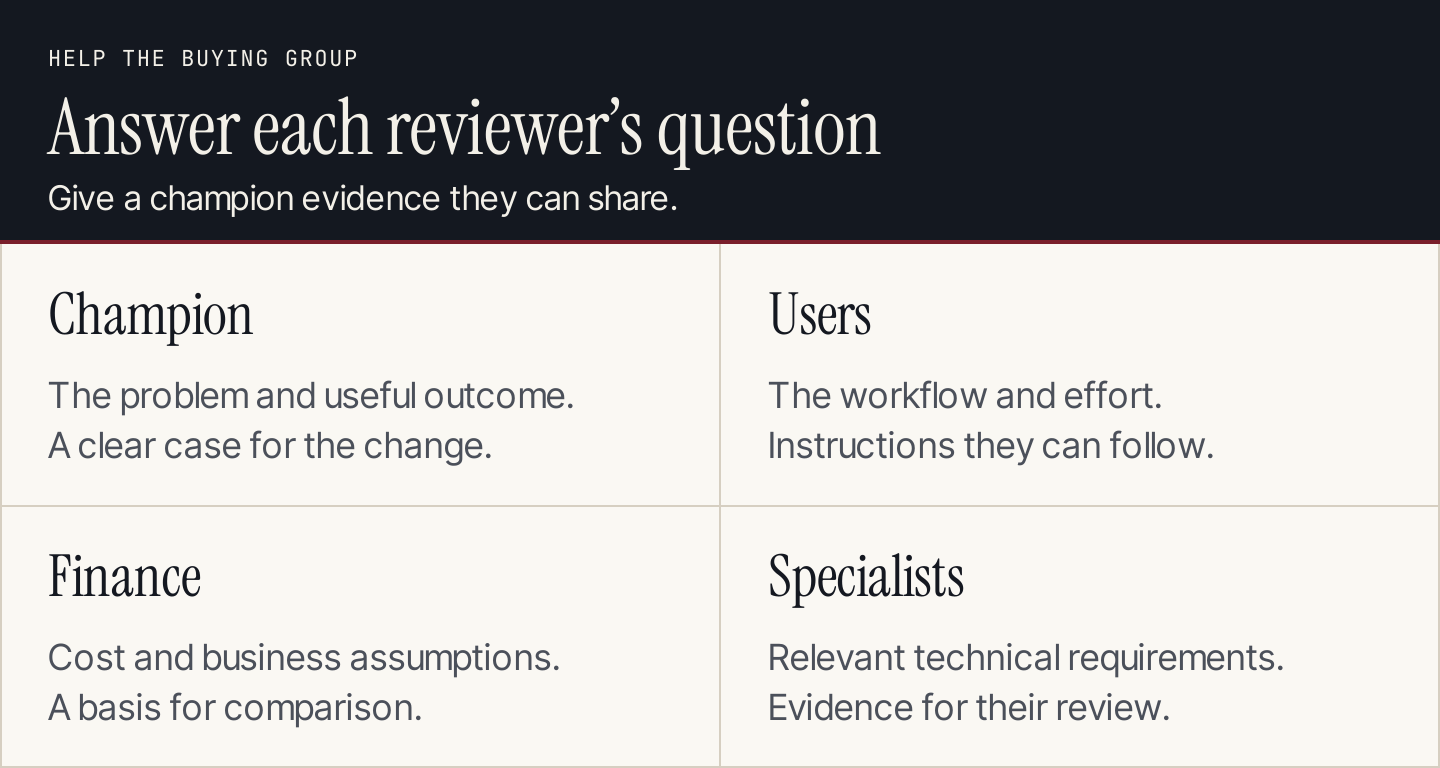
A buying decision can involve different questions from different people.
What makes B2B content useful?
B2B is a description of who purchases, not a rule that every piece must be formal or lengthy. A founder choosing an accountant may need a short scope explanation. A team evaluating a platform may need a demonstration, implementation conditions, and assurance material.
Start with the actual decision and the people involved. Don't assume a large buying committee for every customer, or a simple individual decision for every small business.
The useful standard is whether the content reduces a real uncertainty. A guide should explain an approach. A comparison should establish fit. A customer case should show what happened and what supports the result. A business-case worksheet should make assumptions visible.
| Question in the buying process | Useful resource | What it should establish |
|---|---|---|
| What problem are we solving? | Explanation or diagnostic guide | A recognizable situation and relevant implications |
| Which approach fits? | Comparison or use-case guide | Criteria, conditions, and important tradeoffs |
| What will this require? | Implementation overview | Responsibilities, dependencies, and a realistic starting point |
| What supports the recommendation? | Evidence packet or customer case | Sources, context, and limits of the claim |
| Can we approve the purchase? | Business-case worksheet | Costs, expected value, assumptions, risks, and next decision |
10 strategies for a B2B content program
1. Build the topic around a real buying situation
Name the situation that makes a business consider change. Use permitted customer interviews, sales questions, and support records to understand it.
Avoid reducing the audience to a job title. Two operations managers can face very different tasks: choosing a new service, replacing a failed workflow, or making better use of something already purchased. Those situations should produce different briefs.
2. Map the questions of everyone involved
Identify the champion, daily users, budget owner, and any specialist reviewers. One person may hold several roles; some decisions won't need every role.
Write the question each person needs answered. A user may want to know whether a task becomes easier. A finance reviewer may need a cost basis. A technical reviewer may need documented access and deployment conditions. Don't expect one promotional page to resolve all three.
3. Publish a clear explanation before an aggressive pitch
Explain the category or approach in the audience's language. Establish the relevant terms, the problem, and the conditions under which the approach makes sense.
The explanation should remain useful without a demo request. Give a ready reader a relevant next step, but let someone who is still researching understand the subject first. A small service business can apply this with a precise scope guide rather than a large content library.
4. Make a comparison that can support a recommendation
Choose criteria based on the job the buyer needs done. Compare approaches on those criteria and explain material limitations.
If the comparison includes your own offer, state its capabilities directly and show where another approach may fit. Verify changing facts, especially availability and pricing. A long feature checklist is less helpful when it doesn't explain which differences matter to this buyer.
5. Show implementation responsibilities
Explain what happens after agreement: the starting information, setup work, customer responsibilities, review needs, and first useful milestone.
Don't promise a universal implementation timeline when the work depends on access, data, or internal approvals. Use a checklist of dependencies instead. An agency can give prospects a realistic contribution map without inventing a successful customer story.
6. Use customer stories and research with clear scope
Match the evidence to the claim. A customer quotation supports that person's account. A dated result describes a defined measurement. Original research needs a method and a relevant population.
Keep the case's industry, starting conditions, and measured period visible. Use our customer case study worksheet to connect claims to sources and approvals. Don't present another customer's outcome as the expected result for every buyer.
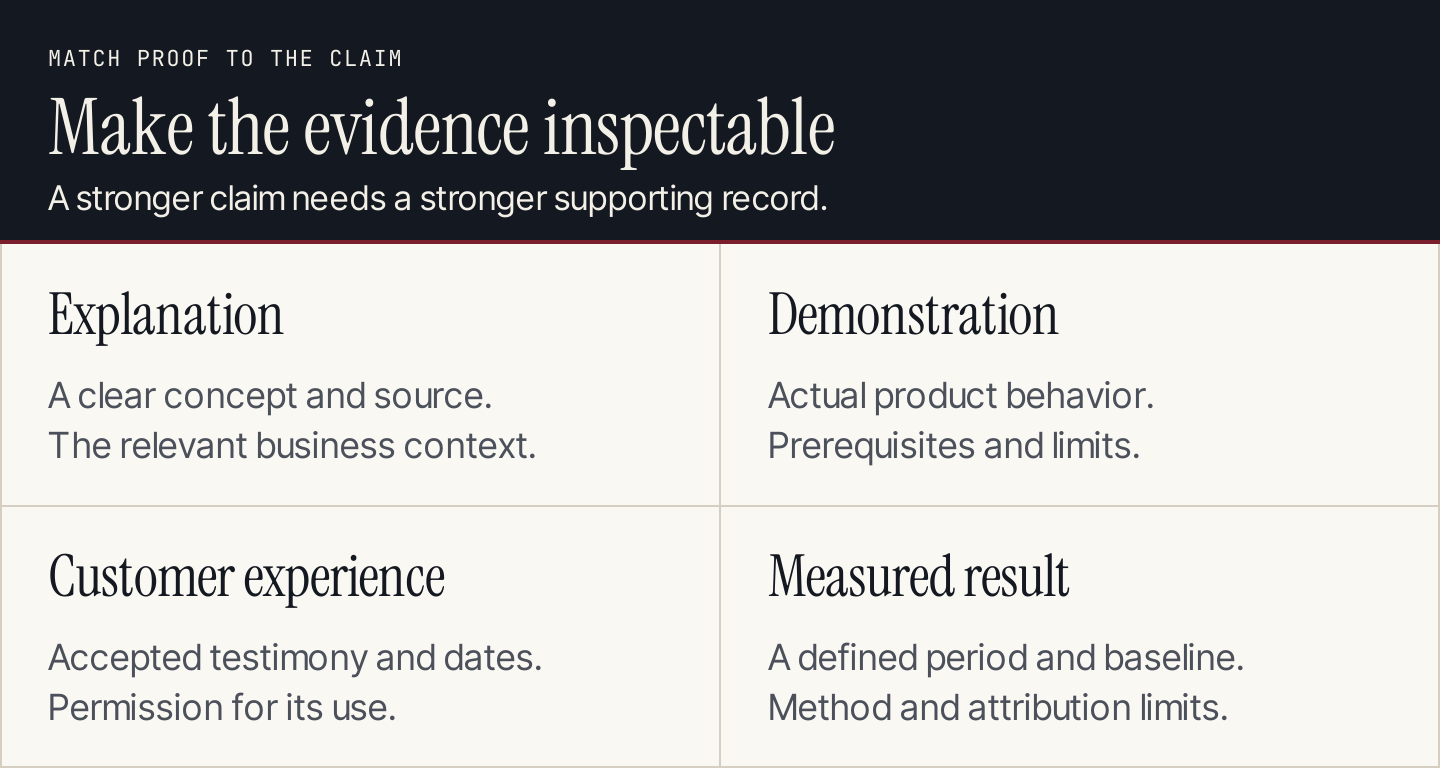
The strength of a claim depends on what its evidence actually establishes.
7. Help the champion communicate the decision
Provide a concise version that can be shared inside the business. Include the problem, alternatives, recommendation, evidence, implementation needs, and unresolved questions.
Keep the original source links with the summary. A colleague should be able to inspect the detail rather than rely on an unattributed quotation or screenshot. Let the champion enter their own cost and usage assumptions instead of presenting invented ROI as a product fact.
8. Choose distribution around real access to the audience
Use channels where the intended people actually encounter professional information: relevant search, opted-in email, partner resources, events, communities, or employee expertise.
Choose a small number of supported routes and name their owners. A channel's reputation as “good for B2B” doesn't prove it suits your buyers. A newsletter, webinar, or short video should carry a useful answer and a suitable next action, rather than merely repeat a product slogan.
9. Separate interest from qualified buying progress
Define what makes an inquiry useful to the business. Record the person's situation and the next agreed step, using your permitted customer records.
Downloads and views can show interest. They aren't the same as a qualified opportunity or closed business. Keep stage definitions consistent with your lead quality criteria, and inspect whether content is helping resolve the questions that delay a decision.
10. Review the decision resources with sales and subject experts
Ask which questions keep recurring, which claims are difficult to support, and which resources people actually share. Use that feedback to update the content.
Review documents after the offer, price, product, or implementation process changes. Maintain the main resource and its shorter adaptations together. A useful answer should not contradict the contract or the current delivery process.
Three real examples of different buyer jobs
Cloudflare: explain the concepts behind a category
Cloudflare's Learning Center organizes explanations around subjects such as DDoS attacks, CDNs, and DNS. The visible topic groups give readers routes into a technical subject before a product choice.
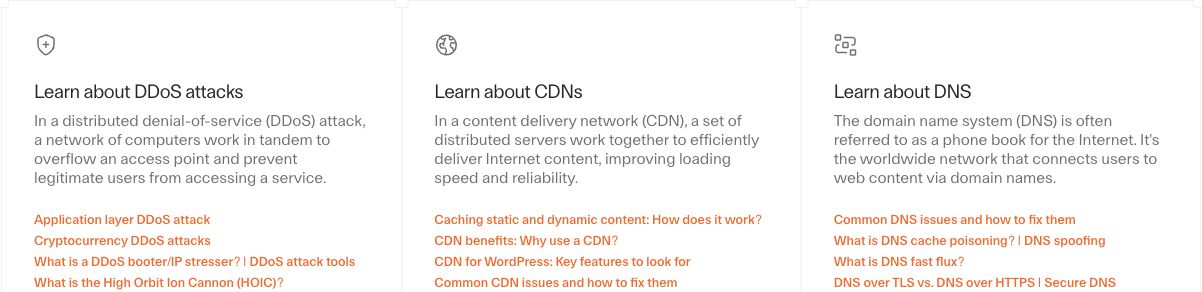
Cloudflare separates technical subjects into recognizable learning routes. Source: Cloudflare.
The adaptation is a category guide that helps a researcher establish vocabulary and understand the problem. For your own business, choose one subject customers regularly misunderstand. Explain it accurately, then connect the relevant decision criteria to the next resource.
The public hub doesn't reveal Cloudflare's private lead or revenue results. Its observable value here is the organization of the explanation.
Stripe: support related business decisions
Stripe's guides include product resources and business subjects, with visible categories for Atlas, industry updates, and platforms. The resource titles make the intended question specific.
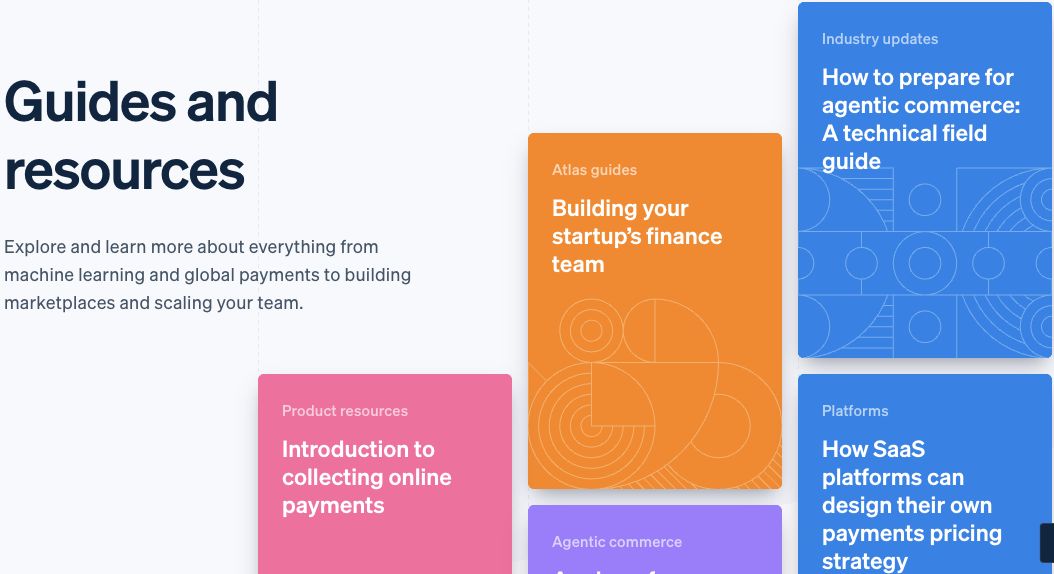
Stripe gives different business questions their own resource and category. Source: Stripe.
Adapt the connection between a business decision and a useful explanation. A professional-services firm could explain what information a customer needs to evaluate an engagement. A software business could explain the requirements behind a deployment decision.
Keep the scope connected to expertise your team can support. Publishing on a broad business subject doesn't authorize unsupported legal, tax, or financial advice.
Slack: make assurance information findable
Slack's Trust Center introduces security and privacy as a distinct resource area. The page provides routes to more detailed trust information rather than relying only on the main product pitch.

Slack gives security and privacy questions a clearly named destination. Source: Slack.
The lesson is to give specialist reviewers a reliable route to the relevant records. A headline about security isn't itself proof of a buyer's required control. Provide accurate documentation, its scope, and a person who can answer the remaining question.
For a smaller provider, that resource may be a carefully maintained FAQ and a factual review contact. Only describe controls or certifications you can document.
Copy this business-case content packet
The packet is a structure for the buyer's decision, not a prefilled claim that your product will deliver a particular return.
| Packet section | What to include |
|---|---|
| Decision | What the business is considering and why now |
| Current problem | Specific work, constraint, or unmet requirement |
| People involved | User, champion, approver, and specialist reviewers |
| Alternatives | Viable approaches, including retaining the current setup |
| Evaluation criteria | Requirements agreed by the people who will decide |
| Recommendation | Fit, important limits, and evidence behind the choice |
| Cost basis | Actual quote, internal work, ongoing costs, and exclusions |
| Value assumptions | Proposed benefits, evidence, and what remains uncertain |
| Implementation | Responsibilities, dependencies, and first milestone |
| Review requirements | Security, purchasing, legal, or other relevant checks |
| Decision owner | Person responsible for resolving open questions |
| Next step | Approved trial, further evidence, a meeting, or no purchase |
For a practical exercise, connect the public examples to the packet. Cloudflare's learning format can support the problem explanation. Stripe's resource approach can support evaluation criteria. Slack's trust destination can support a specialist review. That is an editorial task map, not a claim that the companies share an internal sales process.
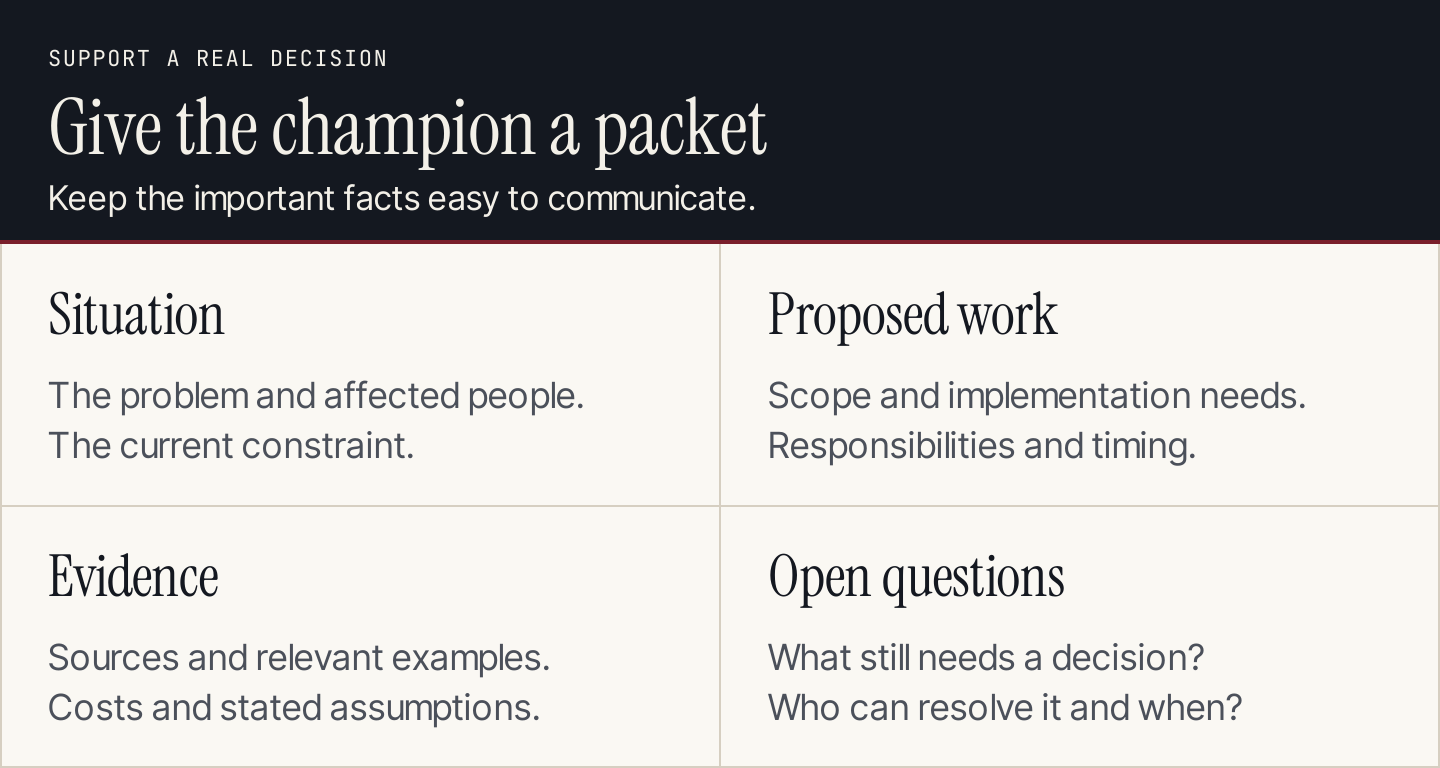
Help the champion carry the reasoning and its sources into the next conversation.
Make the content useful before expanding the program
Start with a recurring buying question and the person responsible for answering it. Create the resource, give sales and marketing a clear route to it, and review what remains unresolved in real conversations.
Rankauto supports researched blog production with customer-search research, writing in your brand voice, fact checks, images, and SEO fields. Articles save as drafts by default. Your team supplies private customer evidence and maintains the wider sales, email, and implementation material.
B2B content marketing FAQs
Should B2B content always be gated?
Choose based on the task. Public explanations help people research and share an answer. A form can support a relevant follow-up, but it also adds a step. Don't hide the essential evaluation information solely to count more downloads.
Can a small business use this approach?
Yes. Combine roles where necessary and start with the questions that repeatedly slow a decision. A clear scope guide and a supported case may be more useful than a large publication schedule.
Does B2B content marketing mean posting on LinkedIn?
LinkedIn can be one distribution route. The program also includes useful explanations, comparisons, cases, and implementation resources wherever the intended audience encounters them.