How to Get Cited by ChatGPT and Perplexity, Not Just Ranked on Google


Ask an AI search tool for the best payroll software for a Malaysian startup. It may cite a pricing page, a government guide, a product review, and a help article in the same answer.
None of those pages “ranked first” in the familiar sense. Each supplied a useful part of the response.
That is the opportunity behind generative engine optimization. A page does not need to own the entire question to become a source. It needs to be found for a relevant search, contain information worth using, and make the connection between the claim and its evidence clear.
No publisher can force ChatGPT or Perplexity to cite a page. A special schema will not do it. Repeating the target question in every heading will not do it. The sensible goal is to remove the reasons a good source would be ignored.
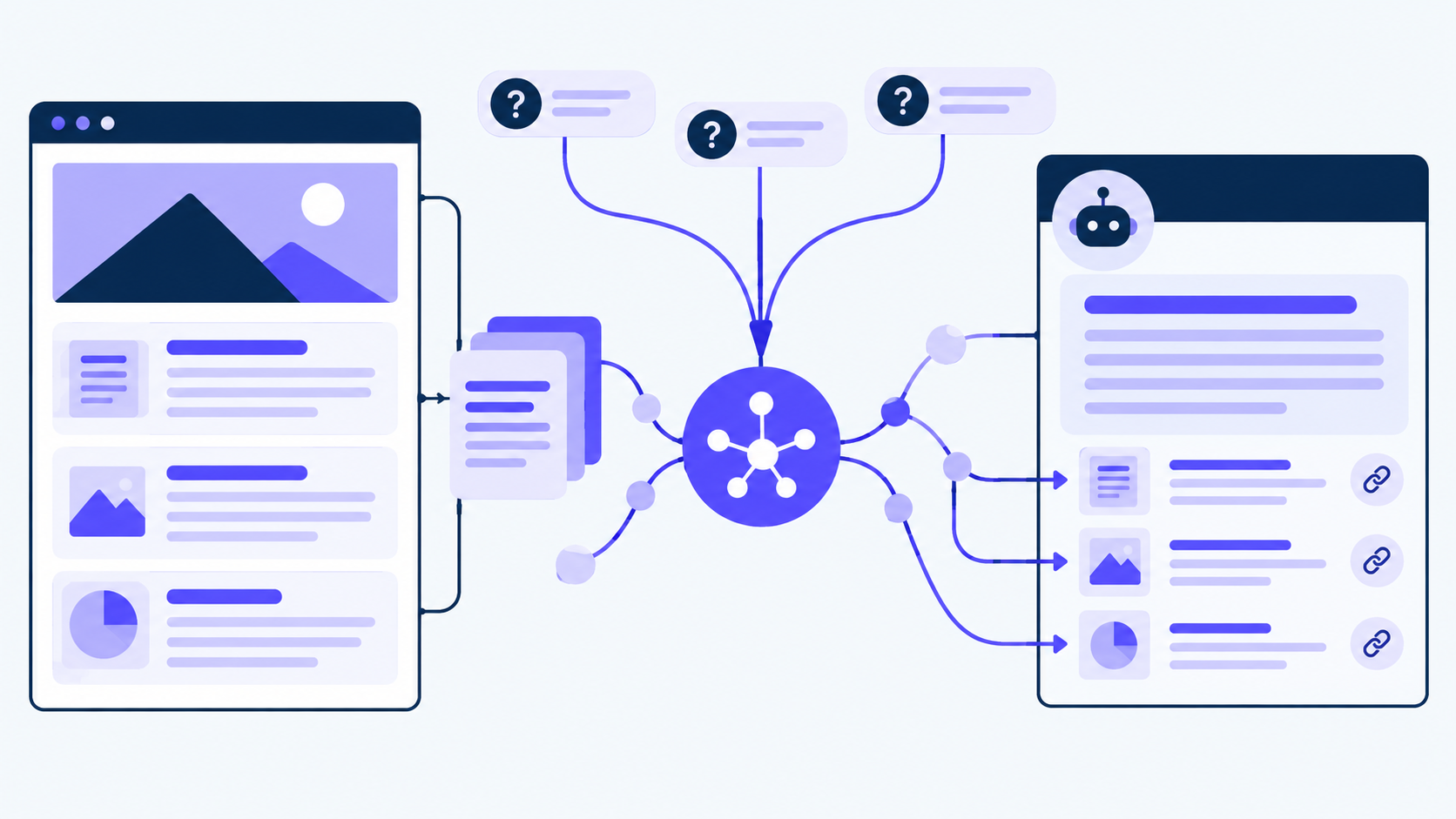
Citation happens after access, retrieval, and source selection. Improving the last step cannot repair a broken first one.
A citation has to survive five decisions
Think of the path from page to answer as five decisions.
First, the system has to access the page. Next, it has to retrieve the page for the original question or one of the related searches it generates. Then it selects a useful passage, attributes that information to the source, and decides how much influence the source should have on the final answer.
The stages explain why popular GEO advice can disappoint. A perfectly phrased paragraph does nothing when a firewall blocks the crawler. A crawlable article contributes little when it says the same thing as every other page. A strong dataset loses value when the methodology is impossible to find.
Work through the chain in order.
Check access outside your normal browser session
OpenAI says any public site can appear in ChatGPT search. Its publisher guidance recommends allowing OAI-SearchBot for sites that want their content considered for summaries, snippets, links, and citations.
The robots.txt file is only one control. A content delivery network, security service, or bot rule can still return a 403 response. The page may load for an administrator while failing for an unauthenticated crawler.
Test the public URL. Confirm the response status, canonical, indexability, rendered content, and server behaviour for relevant crawlers. Make sure important evidence is not trapped behind a login, consent flow, or script that fails when rendered outside the main browser path.
Crawler access is a policy choice. A publisher can allow search discovery and restrict other forms of model use. The key is to understand which crawler performs which job and configure the site deliberately.
Retrieval starts with the question behind the question
AI search does not always send the user's exact wording to one index and choose one page. It can issue several related searches, compare sources, and assemble a response.
Google describes this as query fan-out in its AI search optimization guidance. Perplexity's Pro Search documentation likewise describes a process that performs multiple searches, reads sources, and synthesizes an answer.
Suppose the user asks, “Is Webflow or WordPress better for an SEO agency?” The system may need separate material on CMS field mapping, client access, publishing APIs, structured data, plugin maintenance, and multi-site operations.
A broad “best CMS” article may be relevant but too shallow. A focused page explaining how Webflow Collection fields map into an automated publishing workflow could win one part of the answer.
This is why content planning should begin with a decision rather than a keyword list. Identify the subquestions that change the reader's choice. Publish one coherent page when the ideas belong together. Create a supporting page when a subtopic deserves its own treatment.
Do not generate a separate URL for every prompt variation. Most variations are different phrasings of the same task.
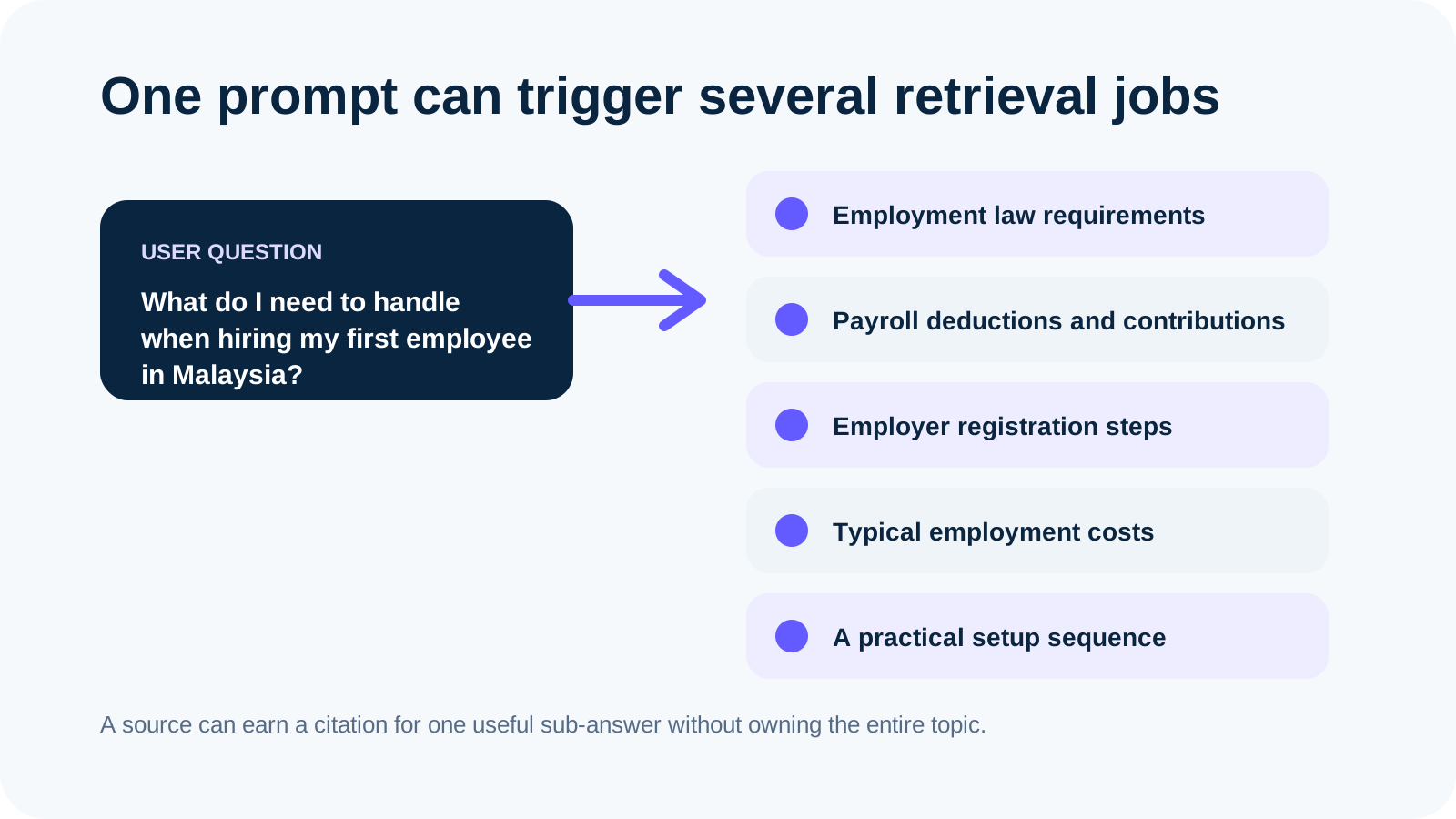
A page can supply one decisive part of an answer. It does not have to be the only source or cover every branch of the question.
Write claims that remain accurate when lifted from the page
An answer engine may use one paragraph without the three paragraphs around it. The passage has to keep its subject, condition, and limitation.
Weak:
It is cheaper and works better for small teams.
Useful:
Rankauto Growth costs $79 a month for one site and includes up to 30 monthly articles, which makes it the entry plan for a small team running a single content program.
The second sentence can be understood on its own. It also exposes what needs checking: current price, site limit, article limit, and intended use.
Precision is not the same as certainty. A claim can include a range, date, market, or exception. In fact, those limits often make the source easier to trust.
Avoid burying the answer under a long introduction. State the useful conclusion, then explain it. This helps impatient readers and makes the passage easier to retrieve without turning the whole article into a stack of disconnected snippets.
Put the source beside the fact
An answer engine should not have to guess which link supports a number.
Link the primary source near the claim. Name the institution, product, paper, or dataset. Include the date when recency matters. If a source covers only one country, do not let the sentence imply a global rule.
A reference list at the bottom is useful for scholarship, but it does not replace claim-level attribution. Neither does a footnote marker that leads to an unrelated home page.
The original Generative Engine Optimization paper found that source-backed additions such as citations, quotations, and statistics could improve visibility in the generative systems the researchers tested. It did not establish a universal recipe for every current answer engine. The paper supports a principle: verifiable evidence matters. It does not justify spraying arbitrary numbers across a page.
Publish information competitors cannot copy cheaply
A summary of public sources can earn visibility when it is exceptionally clear. It is still easy to replace.
Original material gives the page a stronger reason to exist. Useful forms include:
- a benchmark with a disclosed sample and method
- data aggregated from a product, with privacy protected
- a tested implementation with screenshots and failure notes
- a calculator or template that solves part of the task
- a named expert's interpretation of a difficult source
- a current comparison built from verified product behaviour
The method matters as much as the result. “Our customers save 12 hours” is advertising when the sample and calculation are hidden. “Across 214 accounts active for at least 90 days, the median team reduced monthly publishing administration by 11.8 hours” is a claim another party can evaluate. It also creates obligations around privacy, representativeness, and updates.
Do not invent proprietary evidence because it sounds authoritative. A smaller honest dataset is stronger than an impressive number with no provenance.
Use structure to clarify, not decorate
Headings help when they reveal the article's logic. Tables help when every row compares the same fields. Lists help when the reader must scan steps or options.
None of them earns a citation by itself.
The visible page should work without its markup. Structured data can describe supported page types, but Google says its generative search features do not require special AI markup. There is no official GEO schema that forces a page into an answer.
The same caution applies to techniques such as llms.txt. Google says it ignores that file for Search visibility. Other services may develop their own conventions, but a publisher should not present an experiment as a universal requirement.
Independent sources can strengthen a company claim
A business naturally describes itself in favourable terms. Answer engines can compare that description with customer reviews, directories, partner pages, reporting, and other sources.
Useful corroboration includes a customer case study with a named method, a public integration directory, a standards certification, independent testing, or industry coverage that adds its own reporting.
Ten copies of the same press release are not ten independent sources.
Keep the basic company facts consistent across the web. Product name, pricing model, supported integrations, and category should not conflict between the website, profiles, directories, and recent articles. A small inconsistency can become a large one when a generated answer blends sources.
Freshness belongs to the claim
Some facts age quickly. Prices, product limits, laws, interfaces, and market statistics need visible dates and an update owner.
Do not change the page date without checking the information. A “2026” title beside screenshots from 2024 reduces trust.
Keep stable URLs where possible. If a source moves, redirect the old address and update internal links. Citation value becomes harder to preserve when evidence changes location every time the page is revised.
For each important article, record the source behind volatile facts and the event that should trigger a review. A product launch, regulation, API change, or new pricing plan may justify an early update.
Measure influence, not screenshots
Prompting an AI tool once and saving a favourable answer proves very little. Results change by wording, model, country, account, search mode, and date.
Build a stable prompt set around actual customer decisions. Include broad discovery questions, comparisons, implementation questions, and prompts that should surface the company's original knowledge.
Record more than presence:
- Was the brand absent, mentioned, or cited?
- Which page was cited?
- What fact did the page support?
- Was that fact central to the answer or incidental?
- Which competing sources appeared?
- Was the brand represented accurately?
- Did the answer lead to a referral visit, branded search, or conversion?
OpenAI says ChatGPT referral links include utm_source=chatgpt.com, which makes some visits identifiable in analytics. A citation can still influence a decision without earning the immediate click. Treat direct referral traffic as one signal, not the complete value.
Monthly testing is often enough for an editorial program. Daily checks can turn normal volatility into busywork.
Learn from the source that beat you
When a competitor is cited, inspect the exact passage.
Perhaps its answer was narrower. It may have included a current date, linked the primary source, or stated a limitation your page buried. The domain may carry more authority. The cited page may also match a generated subquery you did not anticipate.
Turn the observation into a hypothesis. Add missing evidence only when it improves the page. Do not copy the competitor's shape or inflate the article to cover every possible prompt.
Sometimes the honest conclusion is that another source deserves the citation. A government page should beat a software blog on the official rule. The software company can contribute implementation guidance around that rule.
Questions about AI citations
Can a page be submitted directly for citation?
There is no general submission that guarantees inclusion. Make the page publicly accessible, allow the documented search crawler, and improve the evidence and relevance.
Does ranking first guarantee an AI citation?
No. Ranking can improve discovery, but the system may retrieve a different page for a narrower subquestion or select a passage with clearer evidence.
Are tables better than prose?
Only when the information belongs in a table. A consistent comparison becomes easier to inspect. A complicated qualification can become misleading when compressed into one cell.
Should every section begin with a one-sentence answer?
Direct answers are useful. Forcing the same shape onto every section creates stiff writing and can remove needed context. State the conclusion early, then give it the space it requires.
How long does citation visibility take?
There is no fixed timeline. Crawl access, index freshness, topic authority, competition, source quality, and the answer engine's own systems all matter.
Make the page worth carrying into the answer
The best GEO advice is not mysterious.
Let the system reach the page. Cover a question the business has a reason to answer. Put precise claims beside credible sources. Contribute information that is difficult to replace. Keep it current.
Rankauto can make that workflow repeatable from opportunity research through fact-checking and CMS publishing. It cannot guarantee the citation. The publisher controls the quality of the source, not the answer engine's final choice.