Value Proposition: 8 Real Brand Examples and a Writing Worksheet

Why should someone choose your business?
A list of features rarely answers that question on its own. Buyers need to understand what those features change for them, whether that change matters, and why they should believe you can deliver it.
A value proposition connects those pieces. It gives a customer a reason to consider the offer, and it gives your team a promise to build the rest of the marketing around.
This guide examines eight real brand value proposition examples across software, physical products, and services. Each includes a desktop screenshot, the message pattern to learn from, and a question to apply to your business. Then you can use the worksheet, writing templates, and six AI prompts to develop your own.
The screenshots document public pages captured October 6–7, 2026. The analysis concerns visible messaging; it does not establish the brands' conversion results or reveal their private customer research.
What is a value proposition?
A value proposition explains the useful outcome an offer provides for a particular customer and the reason to choose it. A clear version connects the customer need, the product or service, the benefit, and a credible basis for the promise.
It can appear across a headline, supporting sentence, product demonstration, and proof. The headline alone does not have to contain everything.
For a founder, it helps answer what to emphasize on the website. For a marketing team, it keeps campaign messages connected to the actual offer. For an agency, it gives the client a specific promise to approve before producing dozens of variations.
These related terms serve different purposes:
| Term | Main question | Useful output |
|---|---|---|
| Value proposition | What useful value does this offer provide, and why choose it? | A customer-facing promise with supporting explanation |
| Positioning | Who should consider this offer, and what should they compare it with? | A brief defining audience, category, alternatives, and difference |
| Unique selling proposition | Which distinguishing selling point should we emphasize? | A supported point of difference |
| Mission | Why does the organization exist? | A statement of purpose |
| Tagline | What short phrase should people associate with the brand? | A memorable expression |
A tagline may express part of a value proposition. It still needs context when the reader cannot identify the offer. Similarly, calling something unique requires a relevant comparison; a useful benefit can be worth communicating even when other providers also offer it.
Five things a strong value proposition makes clear
Use these five questions as a working brief:
- Customer: Who needs this, and in what situation?
- Offer: What product, service, or deliverable do they receive?
- Benefit: What becomes easier, more useful, or more desirable?
- Mechanism: What about the offer makes that benefit plausible?
- Evidence: What can the buyer inspect to assess the promise?
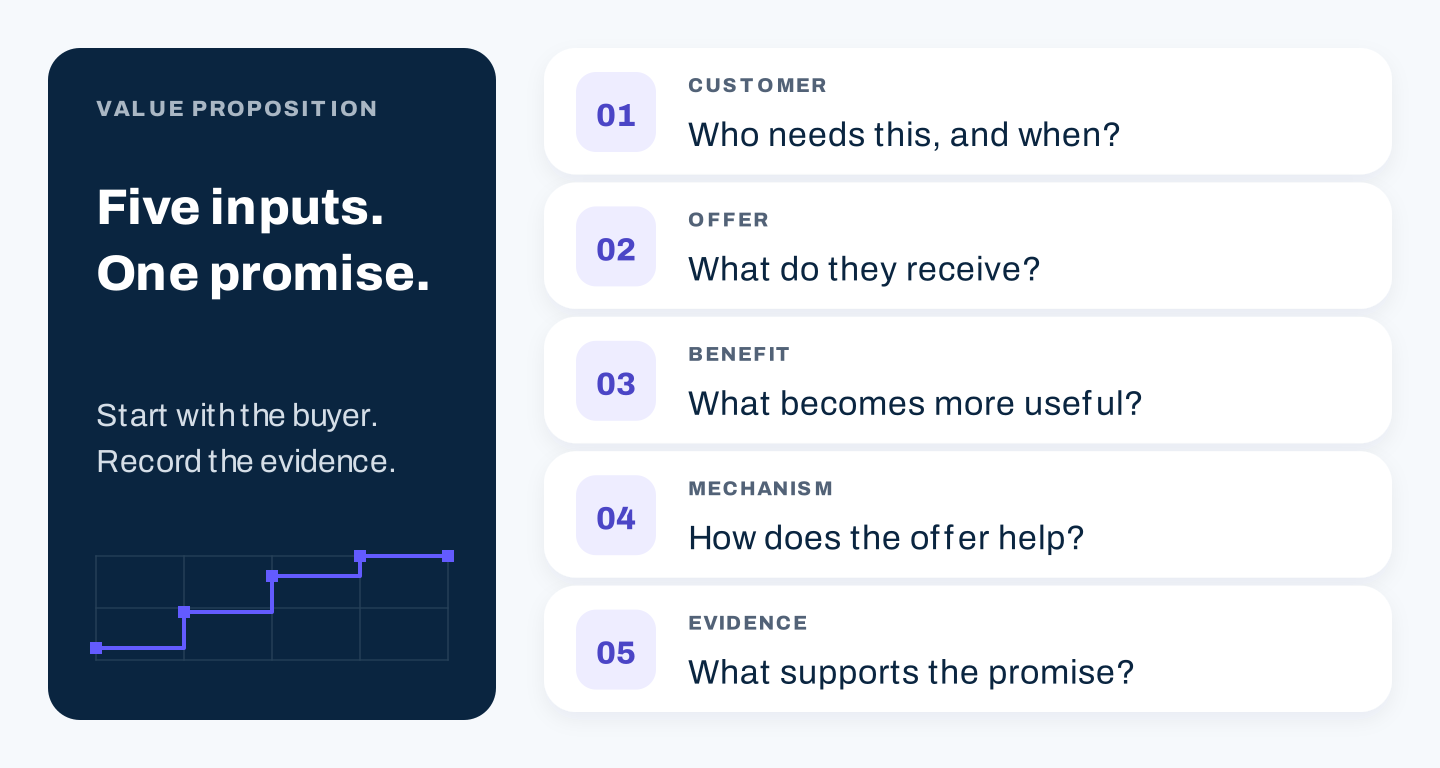
Original diagram: build the promise from five connected inputs. These are planning questions, not measured ranking factors.
Start with a real buying situation rather than a broad demographic label. A marketing manager preparing client reports has a different immediate problem from a founder setting up the first campaign, even if both work at small businesses.
Then keep the practical benefit and the emotional benefit connected. Someone may want a task completed and also want to feel confident about the result. Explain the work that supports that confidence instead of treating the feeling as a guaranteed outcome.
8 real brand value proposition examples
The examples below demonstrate different choices. Use the pattern that fits your offer and the evidence you can provide.
| Brand | Value pattern | Question for your own offer |
|---|---|---|
| Unbound Merino | Product attributes connected to a desired experience | What do the features help customers do? |
| Dieux | A reusable product connected to a repeated routine | How does the offer change the way someone uses it? |
| Buffer | A familiar work category | Can readers immediately identify the job? |
| Dropbox | Less effort, grounded in a recognizable product | What work becomes simpler, and how? |
| Mailchimp | A benefit that addresses an effort objection | What might stop the customer from starting? |
| Stripe | A business outcome connected to product areas | Can readers follow the path from capability to value? |
| Wit & Craft | A specialist audience and a commercial tension | Which customer's problem deserves the lead? |
| First District Designs | A desired experience with service context | What does the result look or feel like in everyday use? |
1. Unbound Merino: connect the product to the experience
Unbound Merino's story page connects its clothing to traveling with less luggage. The page names travelers, explains the intention behind versatile clothing, and uses “Pack less. Experience more.”

Source: Unbound Merino, desktop excerpt captured October 7, 2026 at 1280 × 720.
The useful pattern is the move from an attribute to a situation the buyer can imagine. Versatility is an attribute. Taking fewer clothes on a trip is a practical benefit. Having more attention for the trip is the broader experience the brand evokes.
For your business, complete this chain: product attribute → change in the customer's routine → reason that change matters. Keep each link supported. A product description cannot, by itself, establish how much luggage every traveler will save.
2. Dieux: make the way the product is used part of the value
The Dieux Forever Eye Mask page identifies the product as a reusable silicone eye mask. Its explanation connects reuse to a skincare routine, while separate sections cover use, care, and testing.
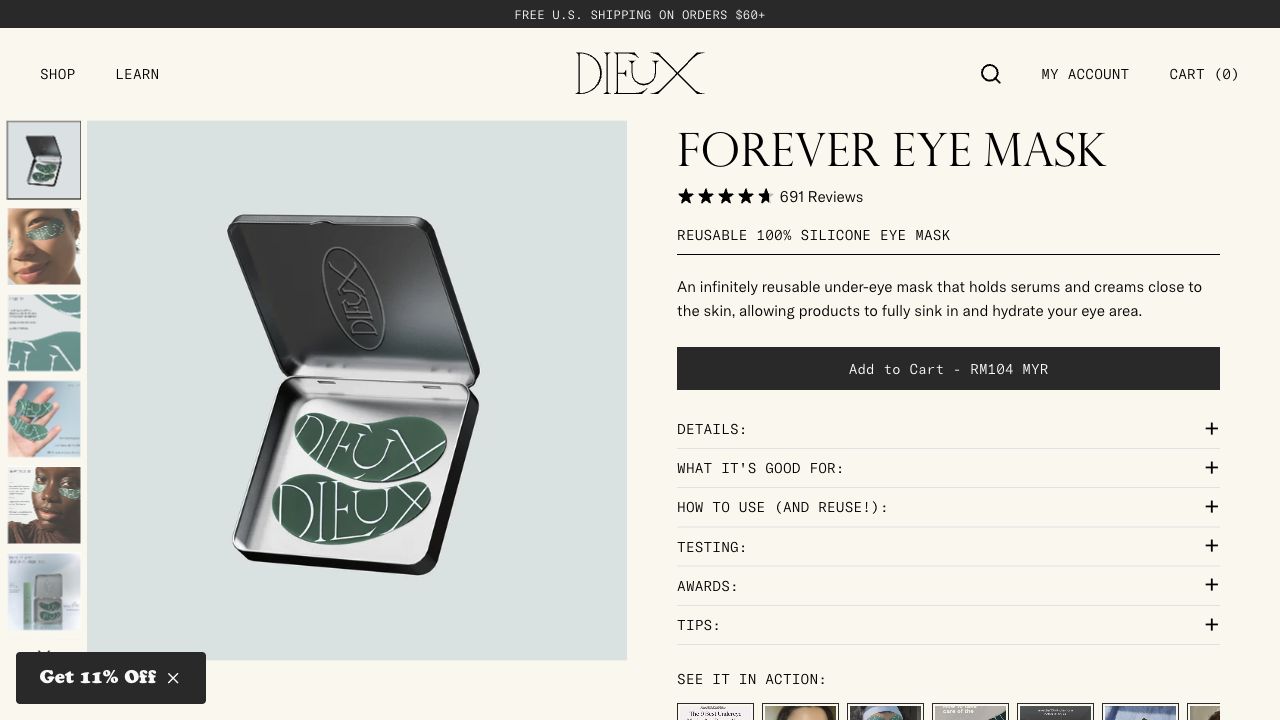
Source: Dieux, captured October 7, 2026 at 1280 × 720. Localized pricing is outside this messaging analysis.
This example shows how value can come from the product's use pattern. The buyer receives a physical item, but the message also explains its role in a repeated activity.
Apply the pattern by describing how your offer fits into the customer's routine and what they need to do to get value from it. Keep the instructions near the promise. We are analyzing the brand's message here, without independently validating its skincare efficacy or lifetime claims.
3. Buffer: make the customer job recognizable
The captured Buffer homepage identifies a social media workspace. Platform icons, supporting explanation, and a free-start action add context around the category.
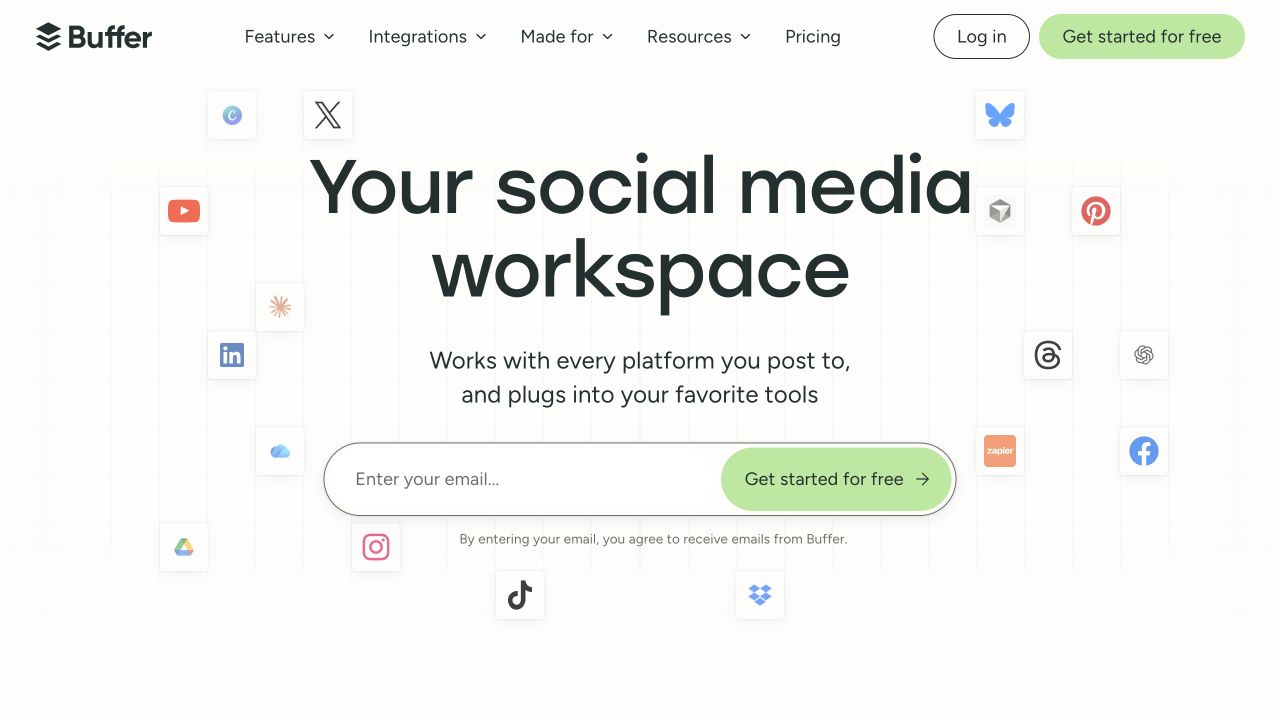
Source: Buffer, captured October 6, 2026 at 1280 × 720. Original capture retained unchanged.
The category does useful work: a reader can place the offer in an existing part of their working day. The surrounding content can then explain its benefits without first making the visitor decode the product.
Ask whether your headline names a task, a product, or only an aspiration. If it says “Build your future,” the supporting sentence needs to identify what the buyer receives and what they can do with it. Familiar language is especially useful when your business or product is new to the reader.
4. Dropbox: connect less effort to a visible mechanism
The captured Dropbox homepage leads with “Get to work, with a lot less work.” Product imagery and supporting copy connect the broad effort benefit to files and collaboration.
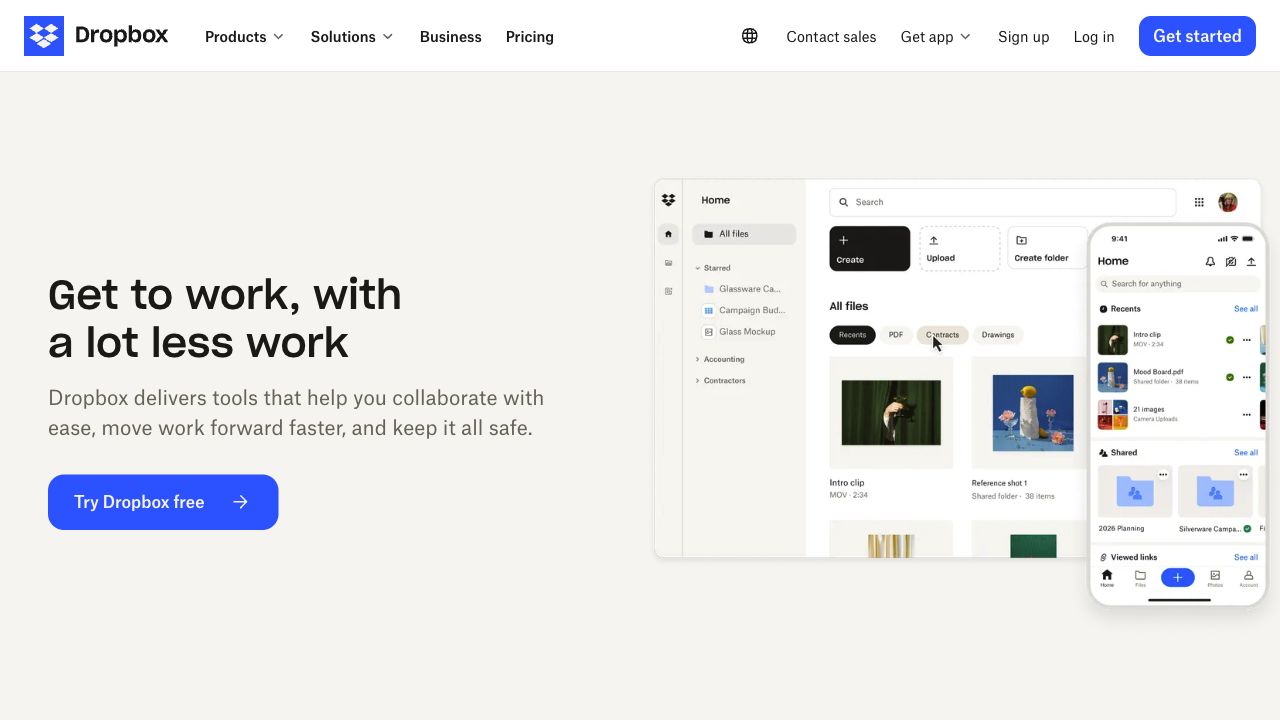
Source: Dropbox, captured October 7, 2026 at 1280 × 720. Product imagery is the brand's public demonstration.
The lesson is to make an efficiency promise inspectable. Name the activity that becomes easier and show the part of the offer that supports it.
For a service, that might mean showing the deliverable or describing the handoff. For software, it might mean showing a relevant workflow. Avoid turning a general effort benefit into an invented time-saving number. “Less work” and “saves ten hours every week” require different levels of evidence.
5. Mailchimp: address the effort involved in getting value
The captured Mailchimp homepage pairs email and SMS marketing with a message about reducing the learning curve. The activity and the effort objection appear together.
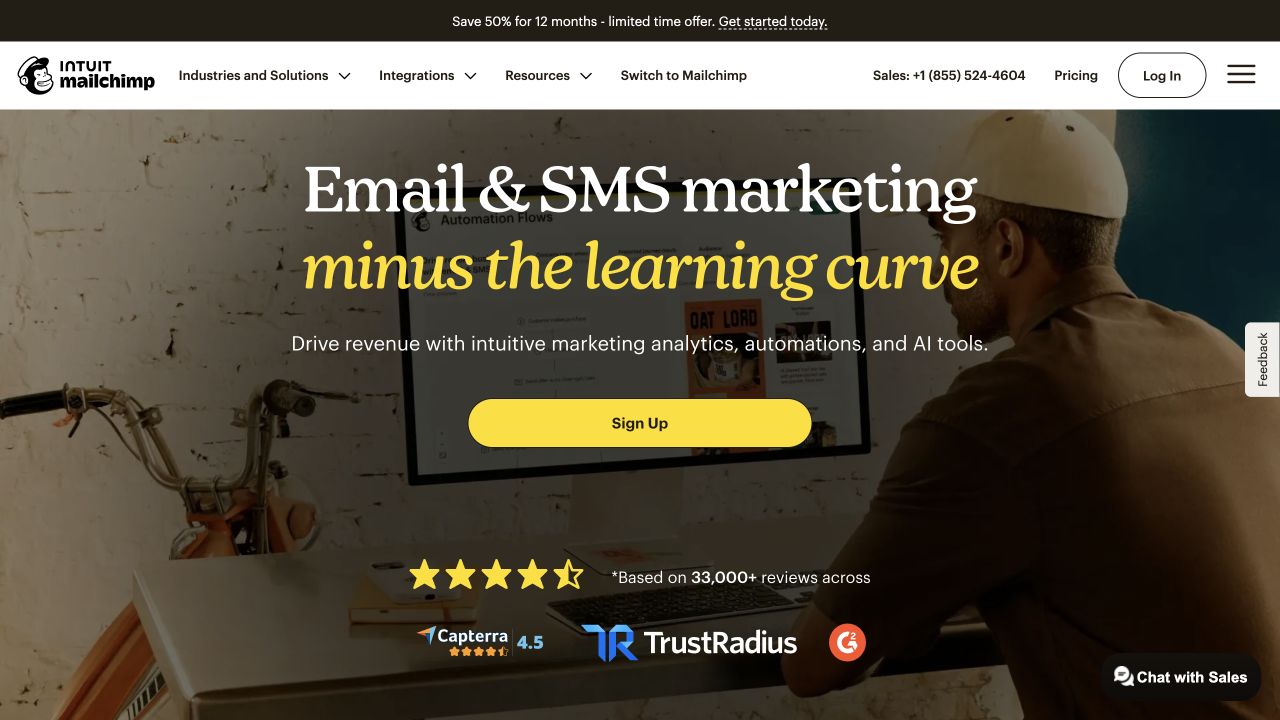
Source: Mailchimp, captured October 6, 2026 at 1280 × 720. Promotions and review figures are outside this analysis.
A customer may want the result but hesitate over the setup, training, or ongoing work. That hesitation belongs in the value brief when customer evidence supports it.
Identify the actual source of difficulty before writing reassurance. Then show the relevant onboarding, instructions, support, or process. Calling an offer easy does not tell the buyer how much effort their situation will require.
6. Stripe: give a broad outcome a practical foundation
The captured Stripe US homepage connects revenue growth to financial infrastructure. Its supporting description names product areas, including payments and revenue models.
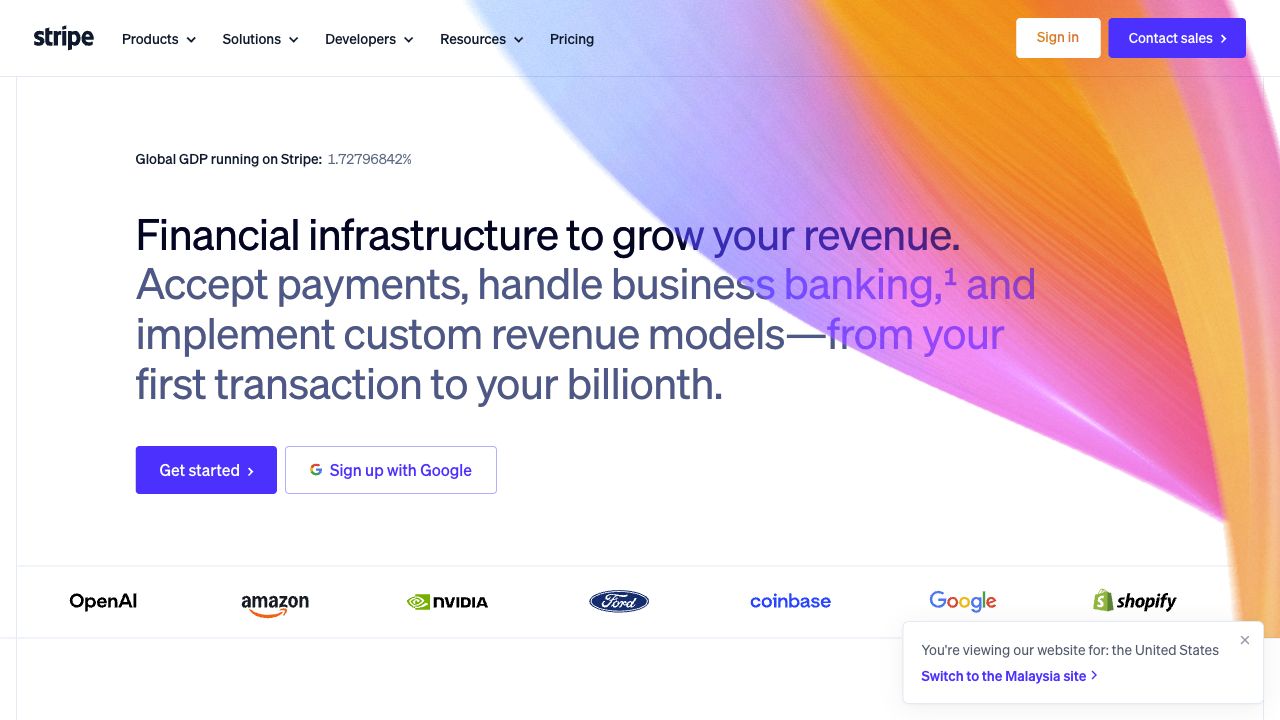
Source: Stripe, US English capture from October 7, 2026 at 1280 × 720. This example concerns message structure.
The useful pattern is a path from a business goal to capabilities a buyer can investigate. The broad goal attracts attention; the concrete explanation makes the offer easier to assess.
When your headline names growth, productivity, or profitability, explain the contribution your offer actually makes. Separate the capability you deliver from an outcome affected by many other decisions. A website headline is not evidence that every customer will achieve the stated aspiration.
7. Wit & Craft: put the specialist buyer's tension first
Wit & Craft's homepage identifies its agency category and manufacturing audience, alongside messaging about competing on price.
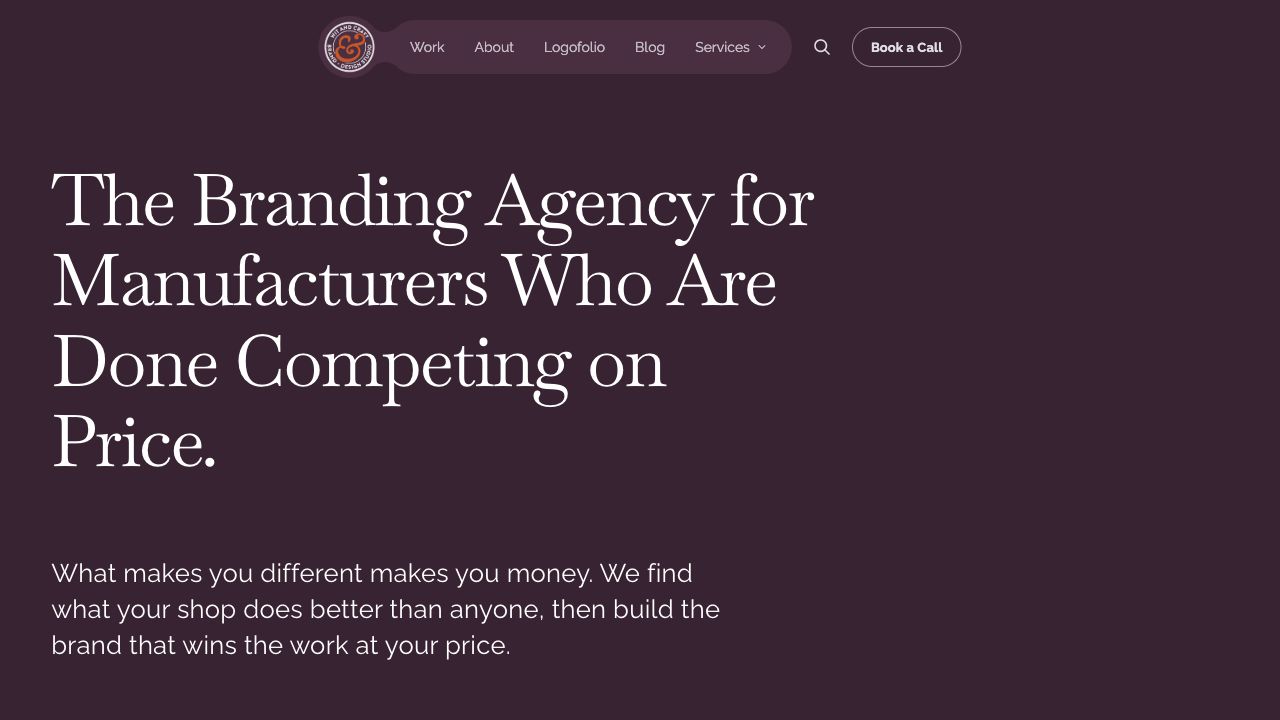
Source: Wit & Craft, captured October 7, 2026 at 1280 × 720. Visible performance promises remain the agency's own claims.
This example connects an audience choice to a business problem. The service category alone would tell a reader what kind of provider it is; the tension adds a reason a particular buyer might care.
For an agency or specialist service, investigate which buying problem is most relevant to your expertise. Then check whether your proposed headline still makes sense without an unsupported result guarantee. Specialization gives the message context; evidence needs to establish the scope and credibility of the work.
8. First District Designs: explain the result in everyday terms
The First District Designs homepage presents a warm, welcoming home designed for everyday life. Supporting text supplies livability and geographic service context.
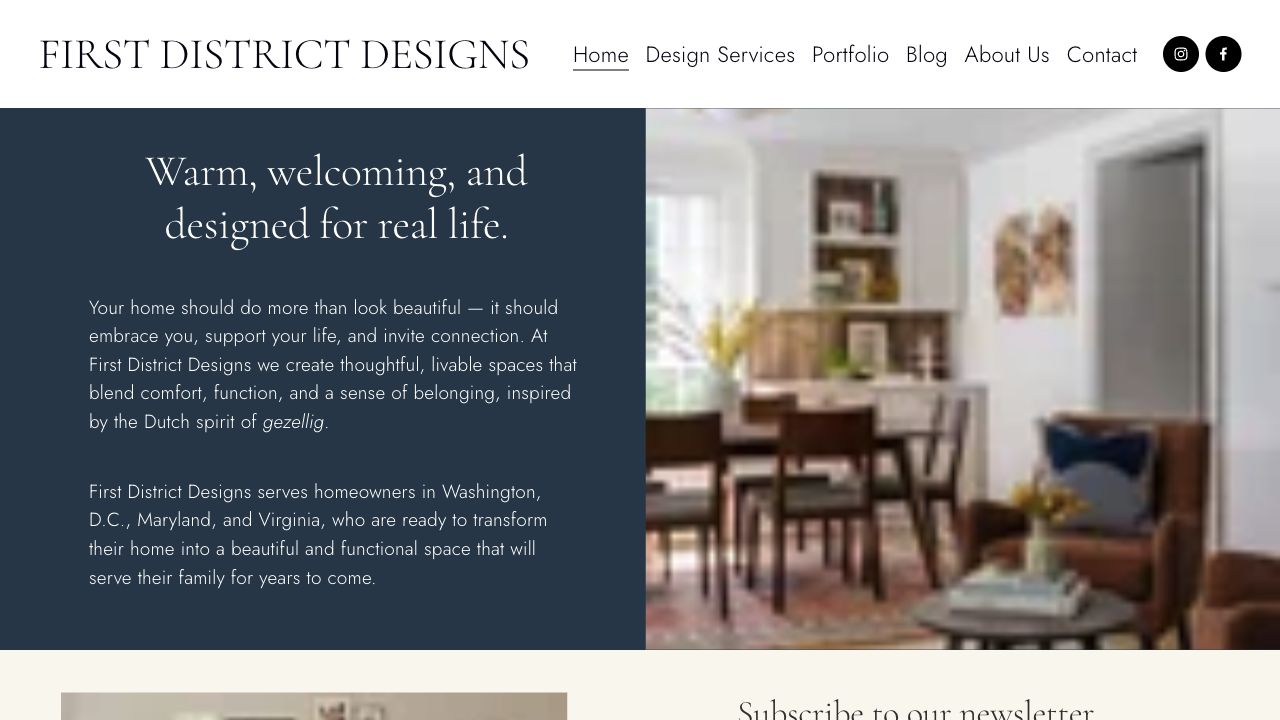
Source: First District Designs, captured October 7, 2026 at 1280 × 720.
The result is expressed through an experience the visitor can picture, alongside the service being offered. This is useful when technical terminology would obscure what the customer wants to live with.
Translate your deliverable into everyday use, then show relevant work. Keep aspirational words connected to specifics. “Confidence” could mean clearer choices during a project, a documented handoff, or something else entirely; identify which meaning your actual service can support.
How to write your value proposition
1. Collect customer language before writing the headline
Review recent sales conversations, support questions, reviews, and interviews. Keep the exact wording, its source, and the surrounding context together. Separate statements about desired outcomes from complaints about the current process.
Useful interview questions include:
- What happened that made you look for a solution?
- How were you handling the job before?
- What made that approach difficult?
- What did you need to understand before choosing?
- Which part of the offer mattered most to your decision?
Record who said each thing. A single memorable comment is a lead to investigate, not evidence that every customer shares the same priority. For agencies, get the client's evidence into the brief rather than letting the creative team invent a persona from the industry label.
2. Map customer needs to the offer
A value proposition canvas can organize customer jobs, pains, and desired gains alongside the products, pain relievers, and gain creators. HubSpot's guide describes these components and their relationship.
The worksheet below adds an evidence column so you can distinguish known fit from an attractive assumption. It is a working aid, not a substitute for customer research.
| Customer side | Offer side | Evidence to record |
|---|---|---|
| Job they need to complete | Relevant product, service, or deliverable | Conversation or observed use |
| Difficulty with the current approach | Capability or process that addresses it | Demonstration or delivery record |
| Practical improvement they want | Benefit the offer can support | Specification, scope, or measured result |
| Feeling or reassurance they seek | Explanation of how the work supports it | Customer wording and relevant process |
| Alternative they might choose | Difference that matters in this situation | Actual comparison, with dated sources |
Leave a row unresolved when the evidence is missing. That is more useful than filling the brief with a promise your team cannot explain.
3. Turn features into benefits without adding new facts
Follow the chain from capability to use, then to value. Ask “What can the buyer do because of this?” and “Why does that matter in their situation?”
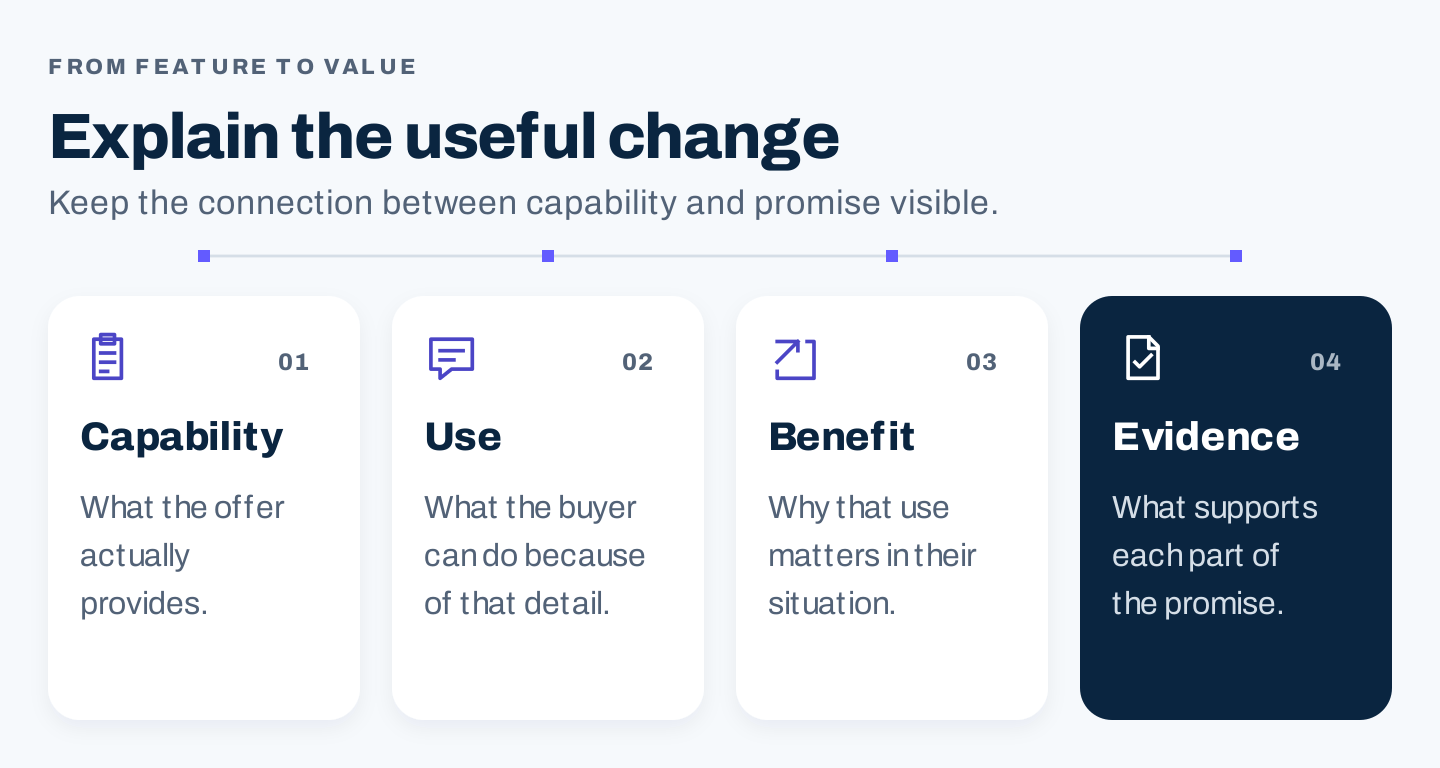
Original diagram: explain the link between the feature and the benefit before making the promise.
Using the real pages above as reference, the distinctions look like this:
| Observed offer detail | Customer-use interpretation | Claim that would need additional evidence |
|---|---|---|
| Dieux describes a reusable mask and provides care instructions | The same item is intended for repeated use | A quantified saving or guaranteed lifespan for every buyer |
| Unbound Merino describes versatile travel clothing | Clothing choice is connected to a packing routine | A fixed reduction in luggage for every trip |
| Dropbox shows file and collaboration context | An effort benefit is connected to handling shared work | A specific number of hours saved per team |
| First District Designs describes livable homes | The design result is connected to everyday use | A guaranteed emotional response or property-value increase |
The middle column is an interpretation of the published offer, not a claim that we interviewed those brands' customers. For your own business, strengthen it with actual customer evidence.
4. Compare the alternatives the customer considers
Include similar providers, an internal process, doing the job manually, and postponing it. Then ask which difference matters enough to change the decision.
Record the comparison dimension: scope, delivery method, support, materials, implementation, or another relevant factor. Compare equivalent offers and note conditions. A narrow service with a faster turnaround may be useful, but it is not automatically better than a broader service.
If you cannot support a claim of uniqueness, communicate the useful benefit accurately while continuing the research. “Only” is a strong claim with a much larger evidence burden than a description of what you provide.
5. Write the promise and its supporting explanation
Try several structures before compressing the message. These are original drafting templates; the brackets are fields for your verified inputs.
| Structure | Drafting template | Use when |
|---|---|---|
| Outcome first | [Useful outcome] through [specific offer or mechanism] | The desired result is easy to recognize |
| Situation first | For [customer in a situation], [offer] helps [supported benefit] | The audience needs to recognize itself |
| Effort first | [Customer task] with [specific way the offer reduces difficulty] | Starting or doing the work is the main hesitation |
| Experience first | [Desired experience], supported by [concrete service or product detail] | The result is easier to understand in everyday terms |
Then build a usable message block:
- Headline: Lead with the most relevant benefit or offer.
- Supporting sentence: Identify who it fits and how it works.
- Evidence: Show a relevant demonstration, specification, example, or case.
- Conditions: Explain boundaries that change the reader's decision.
- Next action: Offer a step that matches the promise and destination.
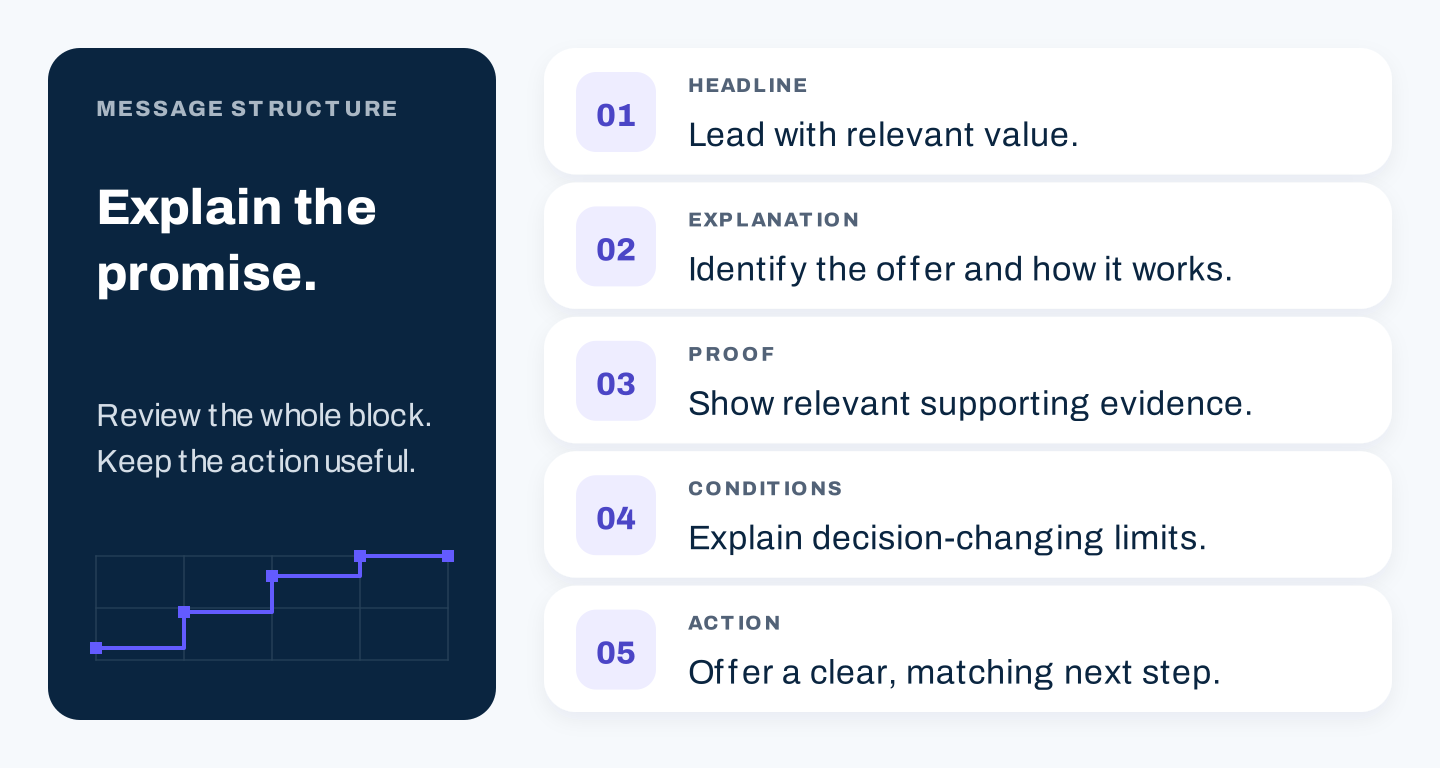
Original diagram: distribute the explanation across the message block instead of forcing every detail into a slogan.
Check the whole block before judging the headline. An attractive line can still fail if the reader cannot tell what is included, why it is credible, or what happens next.
A practical value proposition worksheet
Copy this table into your working document. The blank answer cells are for your own research.
| Field | What to record | Your answer |
|---|---|---|
| Priority customer | One segment and a specific buying situation | |
| Trigger | What made them look for help now | |
| Current approach | What they use or do today | |
| Main difficulty | Exact customer wording, source, and context | |
| Desired practical benefit | The change they want to make | |
| Desired experience | A feeling or reassurance mentioned in research | |
| Offer and mechanism | What you deliver and how it addresses the need | |
| Relevant difference | A useful comparison with the actual alternative | |
| Evidence and boundaries | Proof, date, applicable conditions, and unknowns | |
| Candidate message | Headline plus supporting sentence | |
| Review and test | Question to resolve, audience, measure, and owner |
For a founder, start with one offer. For a marketing team, keep separate briefs when product or segment needs differ. For an agency, have the client confirm the scope and evidence before approving the public message.
Keep one approved version of the facts even when the copy changes by channel. A product page can explain the mechanism in detail; an email can lead with the relevant situation and link to that explanation. An ad's destination should deliver the same promise the ad introduces.
Six AI prompts for research, writing, and review
AI is useful for organizing evidence and exploring wording. Supply the material it should use, require references back to that material, and review the result against the originals. A fluent answer is not additional customer evidence.
1. Extract customer needs from source material
Read the customer material below. Use only this material.
Group the buying triggers, current approaches, difficulties, desired
outcomes, and objections. For each finding, include the source ID and
an exact supporting excerpt. Keep minority views and contradictions.
Do not invent a persona or report prevalence beyond this sample.
Finish with questions the evidence cannot answer.

Material with source IDs: [paste interviews, reviews, or notes]
2. Research alternative messages with AI
Compare these supplied competitor pages for this buying situation.
Separate published wording from your interpretation. Record audience,
offer, benefit, mechanism, proof, conditions, URL, and check date.
If browsing is available, open each URL and verify the relevant passage.
If a page cannot be accessed, mark it unverified; do not reconstruct it.
Identify questions for our research, without claiming a market gap
or uniqueness from a small set of pages.

Buying situation: [insert]
Our approved offer facts: [insert]
Pages and excerpts: [insert]
3. Build the feature-to-benefit chain
For each approved capability below, map:
capability → customer use → practical benefit → supporting evidence.
Include a separate column for assumptions and required conditions.
Do not add time savings, financial outcomes, or emotional guarantees.
If the benefit is inferred, label it a hypothesis for customer review.

Capabilities and evidence IDs: [insert]
Customer research: [insert]
4. Draft different value angles
Using only this completed brief, write four candidate message blocks:
outcome first, situation first, effort first, and experience first.
Each needs a headline, supporting sentence, evidence placement, and
next action. Keep the offer facts and conditions identical across them.
Annotate each factual phrase with its evidence ID in a separate table.
Mark unsupported wording for removal. Do not imitate a named brand.

Completed brief: [insert]
Voice and destination: [insert]
5. Review the claim and the evidence
Audit this candidate value proposition against the supplied evidence.
Classify each promise as supported, broader than the evidence, or
unresolved. Flag unsupported comparisons, universals, numbers, and
implied guarantees. Suggest precise revisions without adding facts.
Check whether a reader can identify the offer and its conditions.

Candidate message: [insert]
Evidence and scope: [insert]
6. Plan a customer check
Design a review to resolve the uncertainty below. Include neutral
questions about understanding, relevance, credibility, and remaining
objections. Distinguish interview feedback from a conversion experiment.
For an experiment, name the primary outcome and information needed
to plan sample size and duration. Do not invent participant responses,
results, or a universal minimum number of visitors.

Uncertainty: [insert]
Candidate messages and intended audience: [insert]
Available traffic or interview access: [insert]
Test understanding, relevance, and credibility separately
First, show the message to people in the intended audience. Ask them to describe what the offer is, who it fits, and what benefit they expect. Keep the questions neutral; avoid explaining the message before hearing their interpretation.
Next, ask whether the benefit matters in the situation you selected. Clear copy can still describe an offer the buyer does not need. Explore the alternative they would choose and the questions they need answered before taking the next step.
Finally, ask what makes the promise credible. If they need to see the deliverable, more adjectives will not resolve the problem. If the offer seems useful but unsuitable for their circumstances, check the targeting and scope.
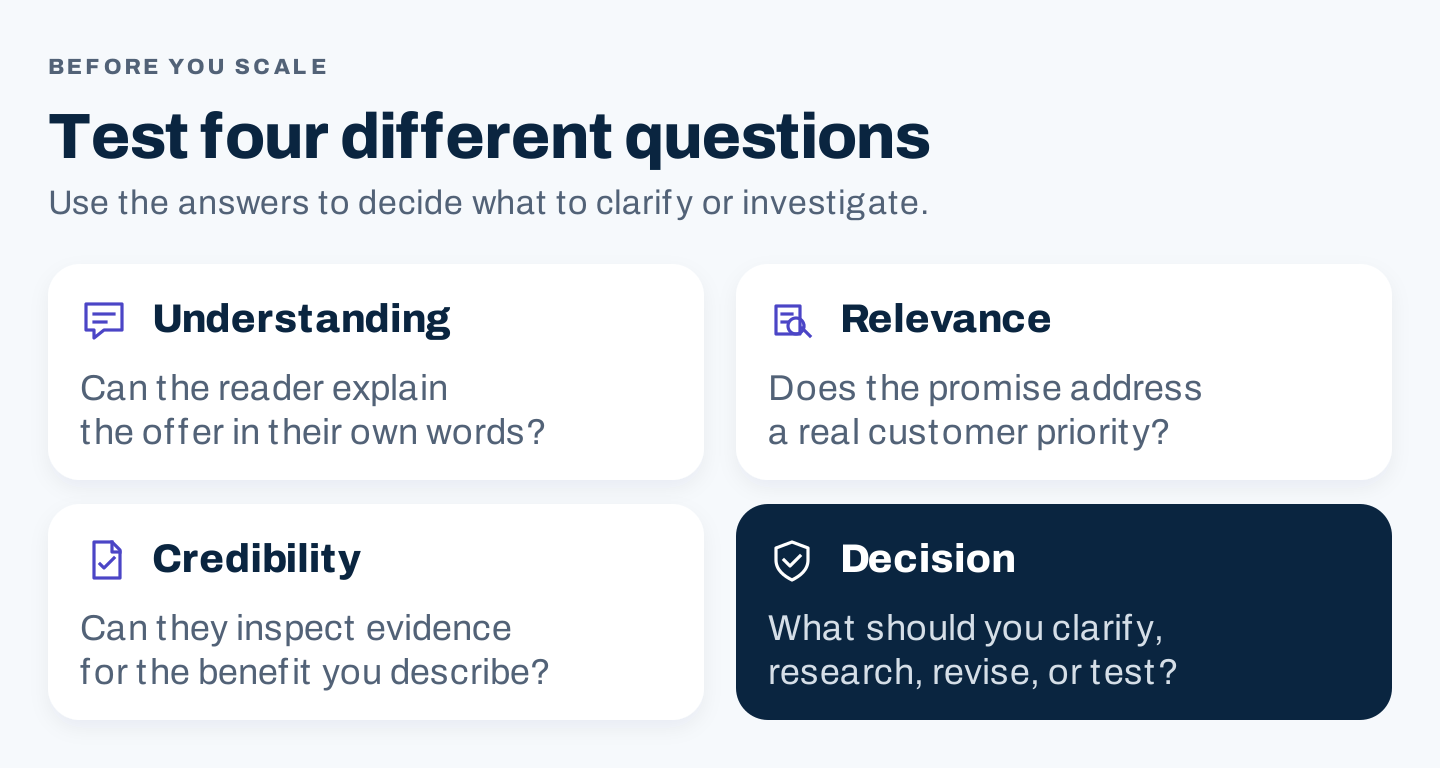
Original diagram: identify which uncertainty needs work before choosing the next revision.
If you have suitable traffic for a controlled experiment, define the hypothesis, primary business outcome, and decision method before running it. Microsoft's experimentation guidance explains why planning metrics and statistical power belongs before the test.
Change one important uncertainty at a time. Keep the audience and offer comparable, and record changes that could affect the result. A few interviews can reveal confusion; they cannot establish a conversion lift. A short run with little traffic may remain inconclusive.
Common value proposition mistakes
Leading with praise the reader cannot assess. Words such as innovative or premium need a concrete explanation. Identify the detail that makes the offer useful.
Listing capabilities without the customer job. Connect each featured capability to the use it supports, then choose the benefit that matters most to the priority customer.
Promising a result beyond your control. Distinguish what you deliver from outcomes also affected by the buyer's implementation, demand, or other business choices.
Combining several audiences into one vague sentence. Start with a shared need only when research supports it. Use separate product or segment messages where the buying situations differ.
Copying another brand's promise. The examples are useful because their wording relates to their offers. Borrow the reasoning pattern and build the message from your own facts.
Letting the promise drift across channels. Compare the ad, email, landing page, and sales explanation. Differences in emphasis are useful; contradictions about the offer create confusion.
Value proposition FAQs
How long should a value proposition be?
Use enough space to identify the offer and explain its value clearly. A short headline and supporting sentence often provide a useful starting point, with proof and conditions nearby. There is no word count that makes a proposition effective by itself.
Can a business have more than one value proposition?
Yes. Different products or customer situations may need different explanations. Keep them consistent with what the business can deliver and the broader position you want buyers to understand.
Does a value proposition need a number?
No. A specific scope, visible deliverable, or clear mechanism may be more credible than a percentage. Use a number when you have relevant evidence and can explain the conditions behind it.
Can AI write the final value proposition?
AI can propose wording from your brief. Your team still needs to verify the promise, confirm delivery, and test whether the intended customer understands and values it.
Where should we start if the business is new?
Start with the offer you can actually deliver and the customer problem you are investigating. Keep assumptions visible, collect feedback from prospective buyers, and revise the message as evidence improves. You can communicate a useful offer without pretending its differentiation or results are already proven.