Marketing Funnel: Map Content to Customer Decisions and Measure Progress

A marketing funnel helps you see what people need before and after they buy. It is useful for deciding which content to create, which next actions to offer, and where customers encounter friction.
The drawing is the easy part. The work is connecting a real customer question to an answer, an appropriate next step, and an observable result.
This guide uses public pages from Buffer, One Hour Heating & Air Conditioning, and Shopify to explain those connections. It also includes a stage map, measurement rules, and a planning worksheet. The examples describe available content and actions, not measured customer journeys or private brand results.
What is a marketing funnel?
A marketing funnel is a planning model that organizes the customer journey into stages such as awareness, evaluation, conversion, and retention. It helps a business support different decisions with suitable messages, channels, content, and experiences.
Several labels describe similar planning jobs:
| Model | Typical stages | Useful application |
|---|---|---|
| TOFU, MOFU, BOFU | Top, middle, and bottom of funnel | A simple way to audit pre-purchase content |
| AIDA | Attention, interest, desire, action | Planning how a message moves from attention to action |
| Extended customer funnel | Awareness, evaluation, conversion, retention, advocacy | Including implementation, repeat use, and referrals |
For a small team, awareness, evaluation, conversion, and retention are enough to start. Add detail when it helps assign work or diagnose a problem. More stage names do not automatically create a better customer experience.
A content funnel is the content portion of that broader system. A sales pipeline tracks commercial records and opportunities. A customer journey describes the actual experiences and paths people take. These are related views, but a blog visit is not a sales opportunity, and a stage label is not proof of a person’s intent.
Marketing funnel stages and the questions each must answer
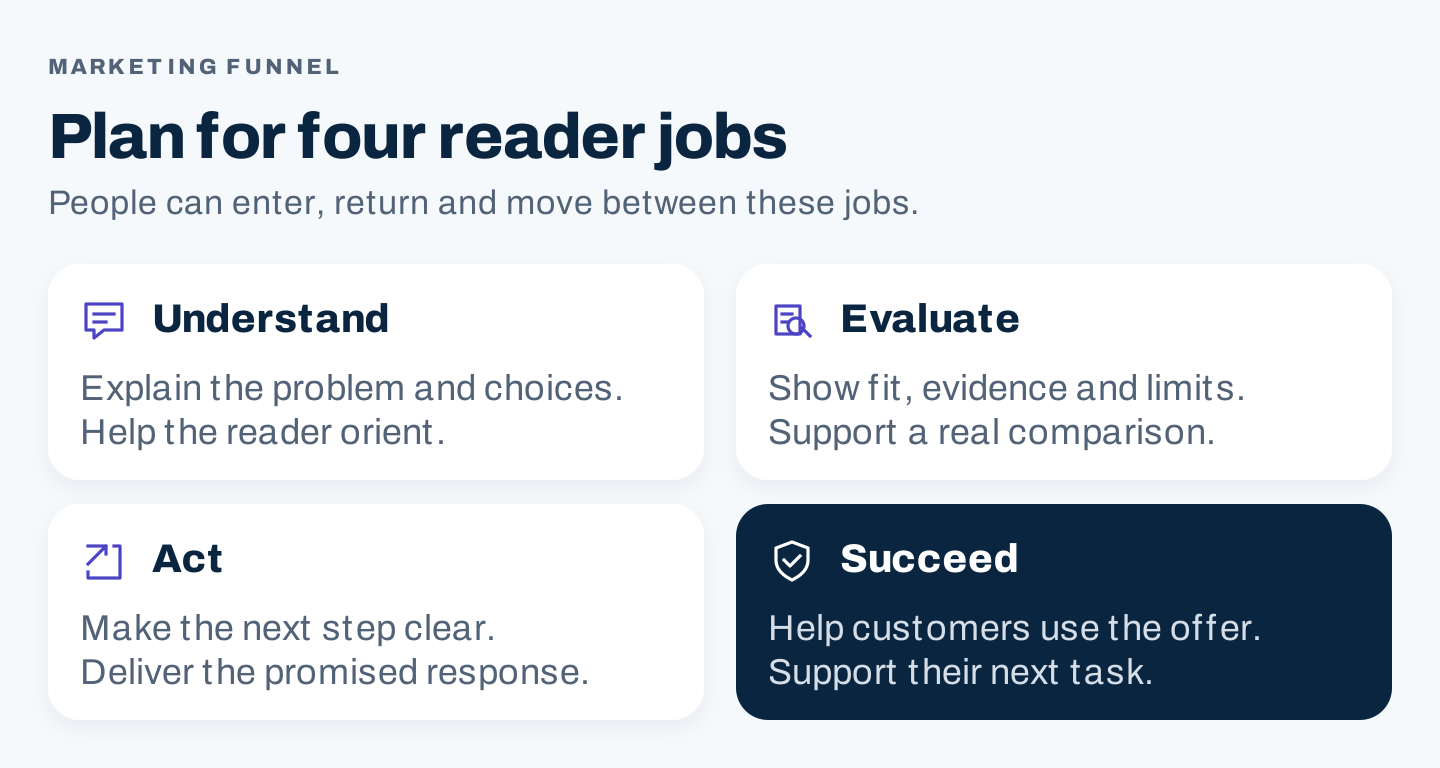
Original stage map. Organize work around the customer’s decision rather than assigning every format to a fixed stage.
Awareness: help people understand a relevant problem
The reader may not know your business or the name of the solution. Help them recognize the issue and make an informed next decision.
Useful content includes explainers, practical articles, demonstrations, and stories that put the problem in context. Search, social posts, events, recommendations, and advertising can all introduce that content.
The next step might be reading a relevant guide, trying a small task, or subscribing to more help. Do not assume every introductory visitor needs a demo immediately.
Evaluation: make the options and tradeoffs understandable
The reader knows what they want to improve but may be comparing methods, providers, costs, or requirements.
Give them comparisons, examples, process explanations, demonstrations, and relevant customer evidence. Show when an option is suitable and when it is not. A comparison that declares your offer the winner in every category is difficult to trust.
The next step might be examining scope, checking a product workflow, using a decision worksheet, or asking a specific question.
Conversion: help people complete the appropriate action
Here the customer needs clarity about the offer, conditions, effort, and next event. Depending on the business, the action could be a purchase, trial, appointment request, or accepted sales conversation.
Pricing explanations, service pages, forms, checkout, and booking interfaces matter. Tell the person what happens after they act. An appointment request should not be described as a confirmed booking unless confirmation actually follows.
Retention: help customers achieve the promised value
Conversion is followed by setup, use, delivery, maintenance, or renewal. Customers need instructions, timely support, and relevant next steps.
Onboarding guides, help centers, aftercare information, and advanced learning can serve this stage. Referrals and reviews should follow an authentic experience. A renewal reminder cannot repair a product or service that never delivered useful value.
Customer journeys can move in several directions
A referred buyer may arrive directly on pricing. An existing customer may read a beginner guide while adopting another feature. A team evaluating software may revisit the same comparison when another decision-maker joins.
That is why the funnel should guide your content coverage without forcing everyone through one sequence.
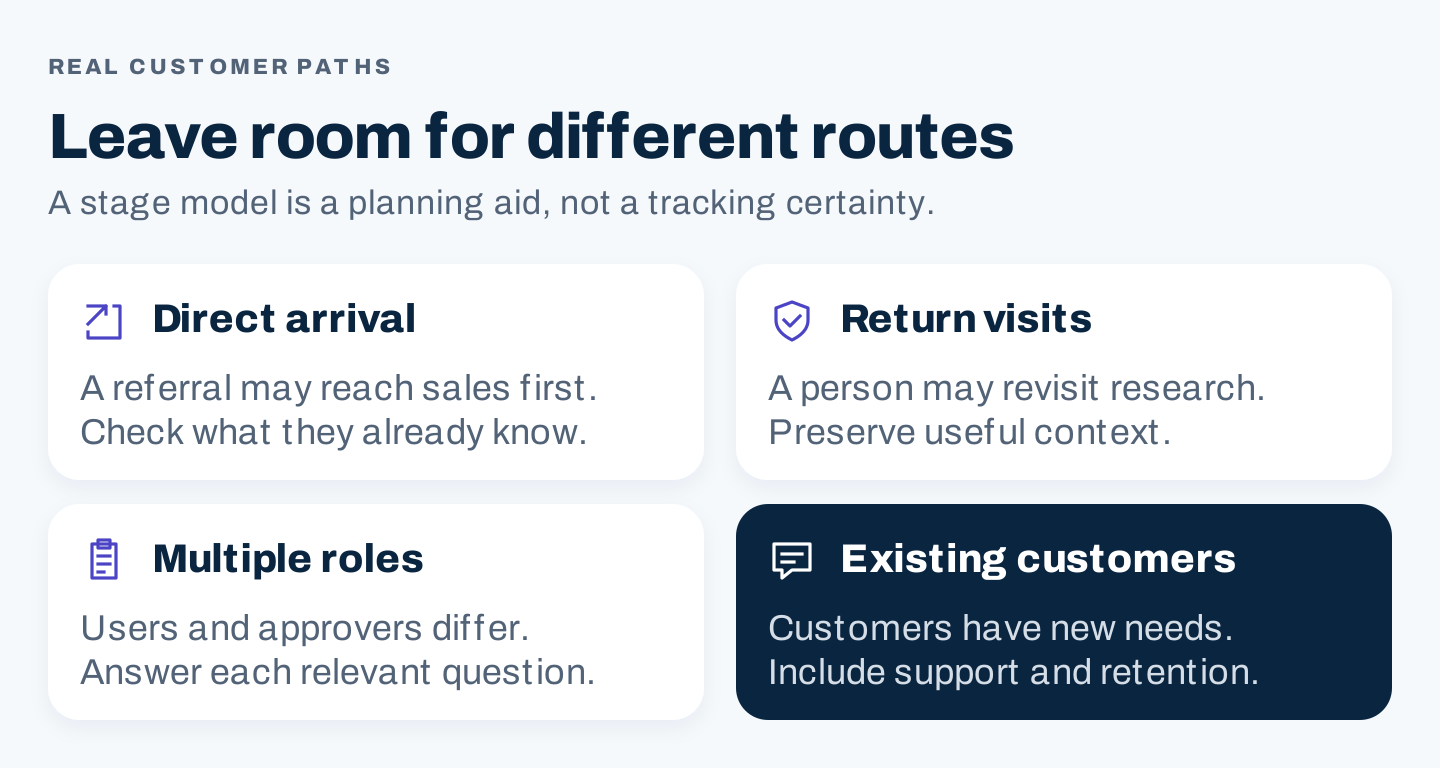
Original journey framework. Keep relevant destinations accessible from multiple entry points.
Classify a page by its primary reader job, then note secondary uses. A tutorial can teach a prospect how a product works and help an existing user complete the same task. A webinar can support discovery, evaluation, or onboarding depending on its subject.
Avoid rules such as “all blogs are TOFU” or “every download is MOFU.” They confuse format with intent.
Three real examples of connected funnel content
1. Buffer: planning help, product explanation, and customer support
Buffer’s social media calendar guide helps readers compare calendar options and includes a visible route to starting with its product. Its content-planner page explains the product’s planning task. The help center provides categories for setup and ongoing use.
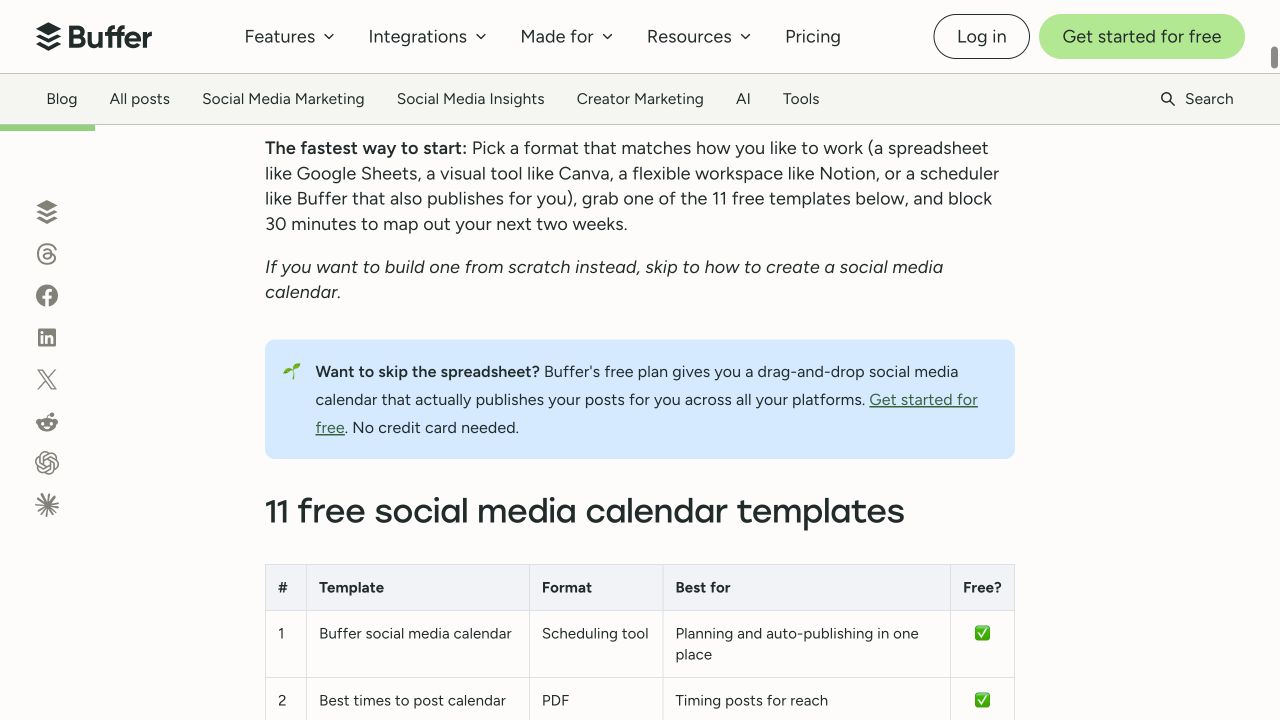
Source: Buffer calendar guide. Desktop capture of the contextual call to action.
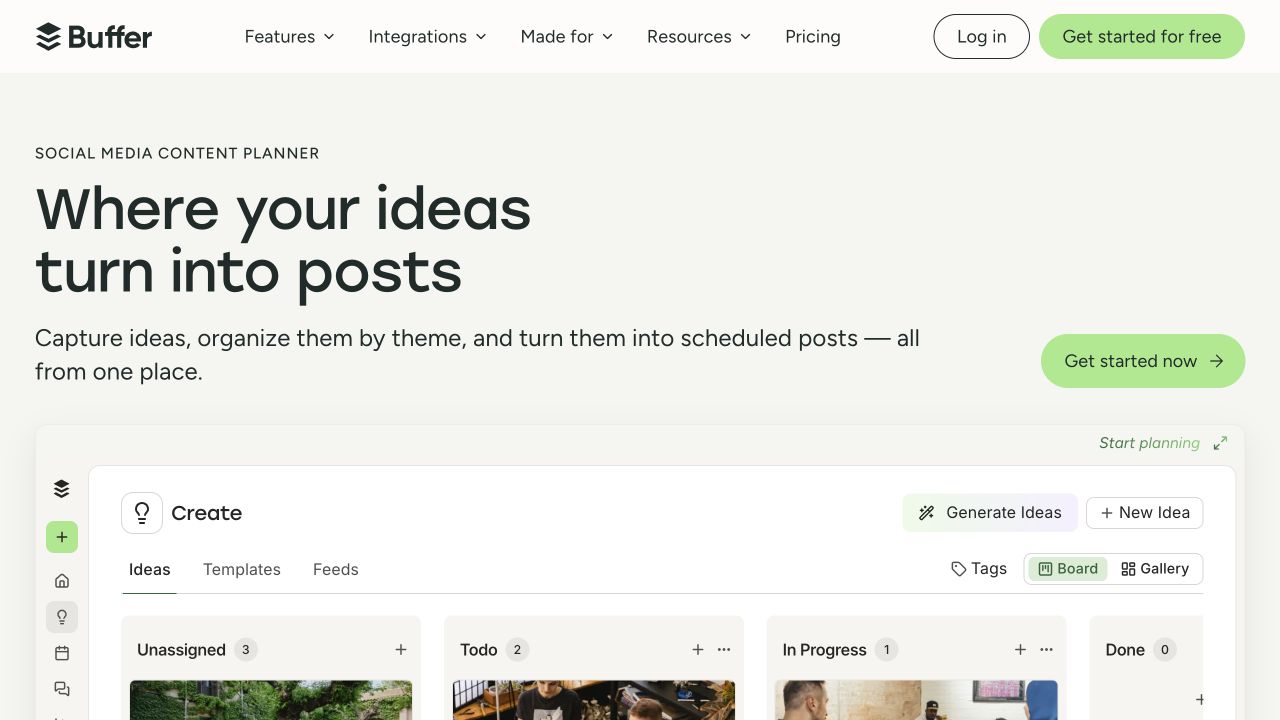
Source: Buffer content planner. The interface illustration belongs to the public product page.
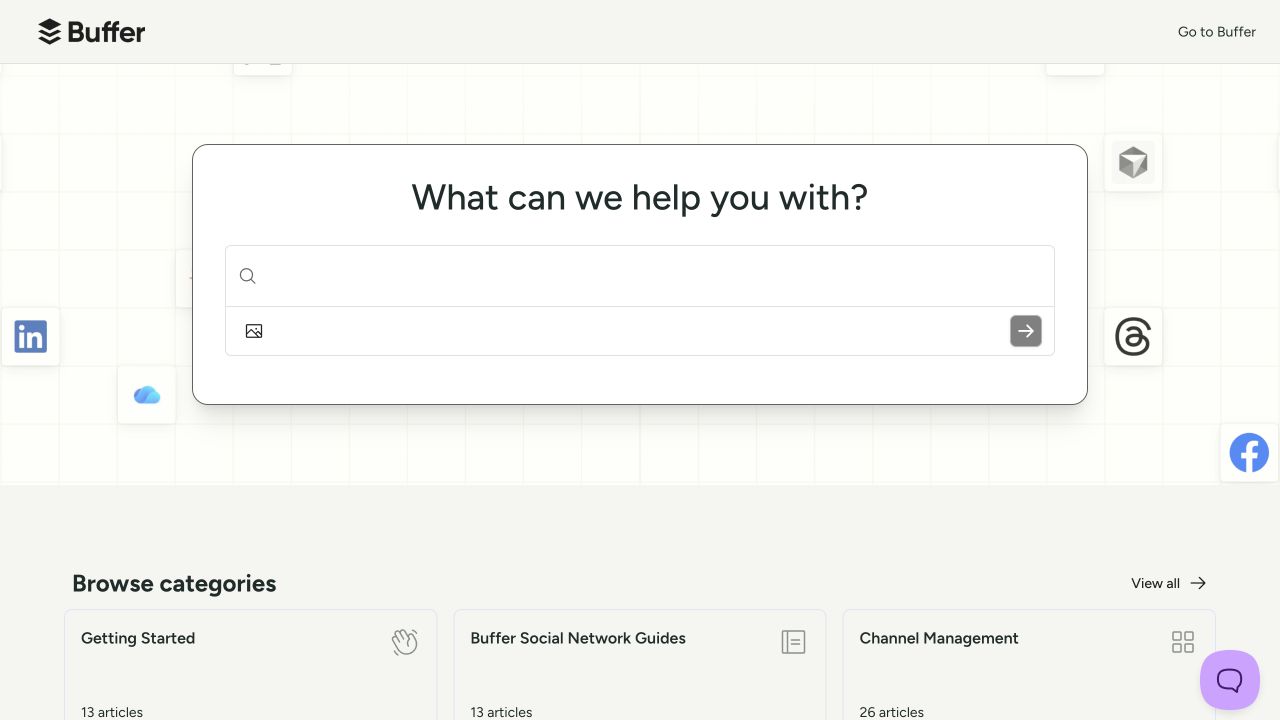
Source: Buffer Help Center. Support content remains available after acquisition.
Apply the lesson: connect learning to a relevant product task, then support that task after signup. In your own funnel, specify what successful first use means. Track the completion of that task rather than treating account creation as the final outcome.
The public pages show available destinations. They do not establish that visitors use them in this order or that the connection caused a particular conversion rate.
2. One Hour: a considered purchase can start with a question
One Hour’s HVAC upgrade guide discusses a replacement decision and links to relevant services. Its air-conditioning page explains service options and offers a local contact route. Availability varies by location.
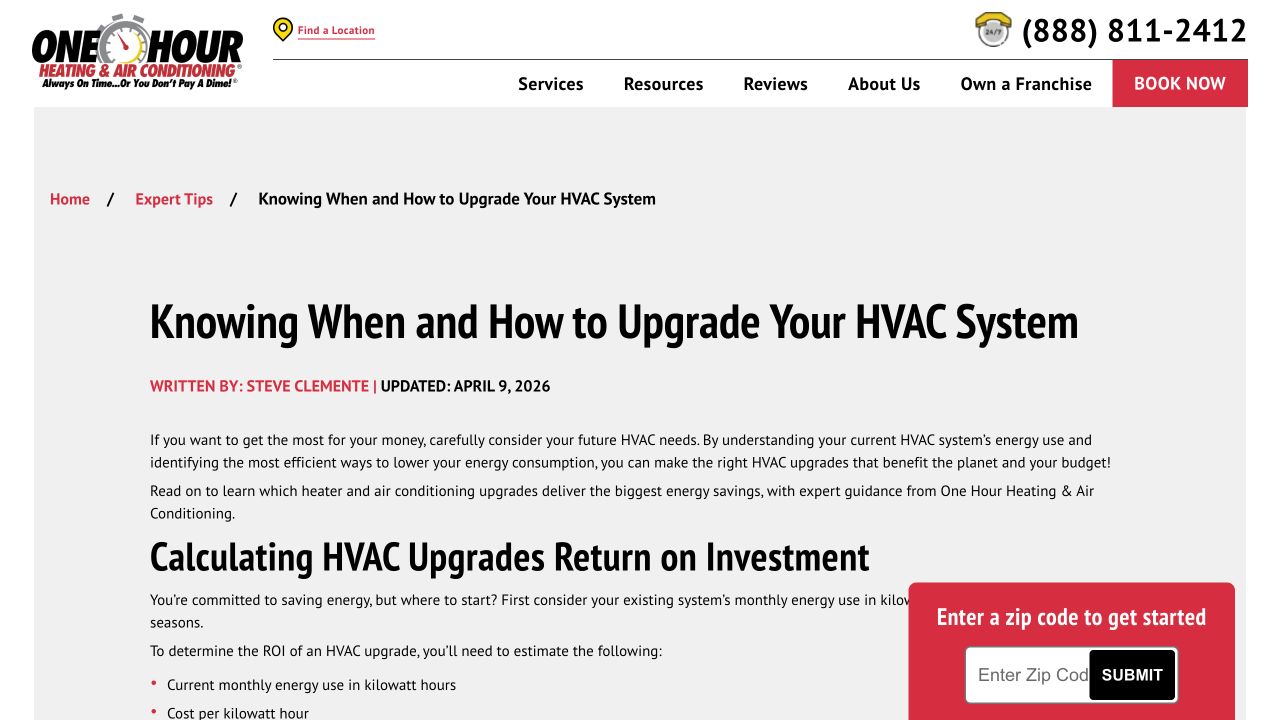
Source: One Hour upgrade guide. The example concerns the content connection; this guide does not adopt its technical, savings, or tax claims.
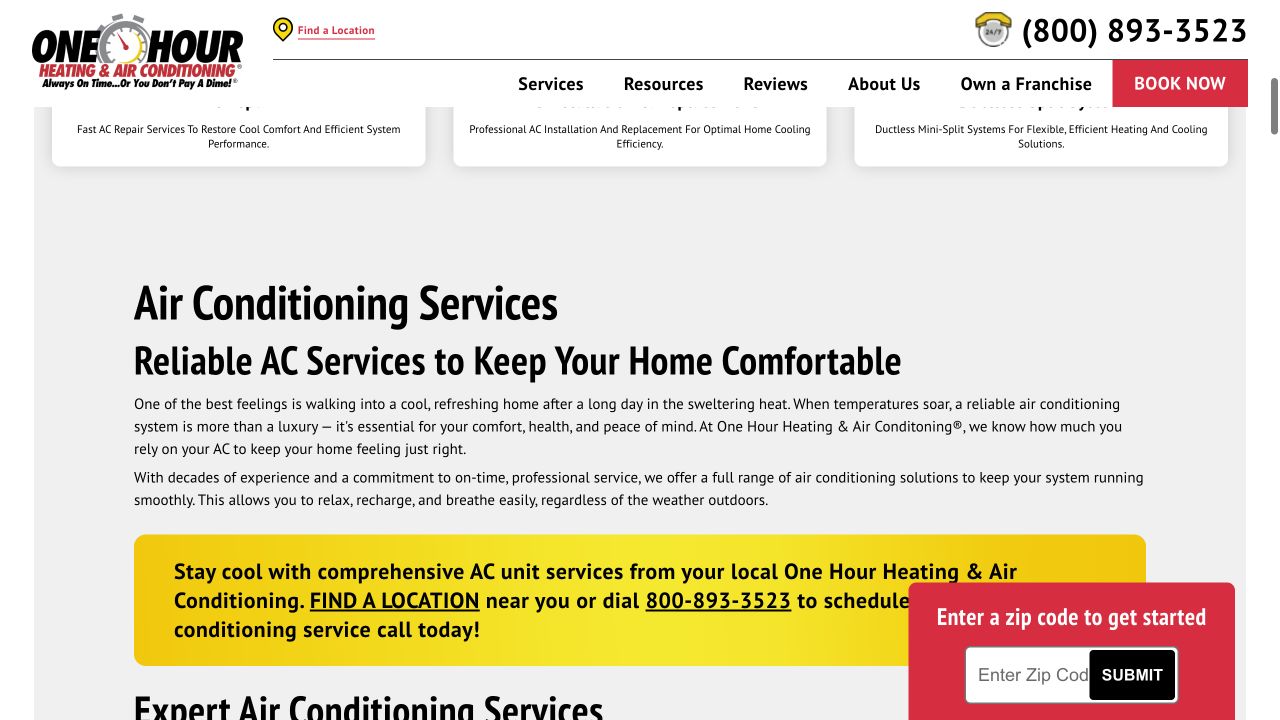
Source: One Hour air-conditioning services. Desktop service-page capture.
Apply the lesson: provide separate routes for a planned purchase and an urgent service need. A homeowner researching replacement may need a comparison or explanation. Someone seeking immediate help needs service-area and contact information promptly. The same business can support both without making every visitor read an educational sequence.
3. Shopify: an educational resource and a trial are different offers
Shopify’s business-plan resource offer describes a planning framework under a free-download label, while the prominent captured action invites a free trial. That creates a resource-access question to check, rather than proving that a visitor receives the framework. The trial entry page represents a different commitment: trying the platform.
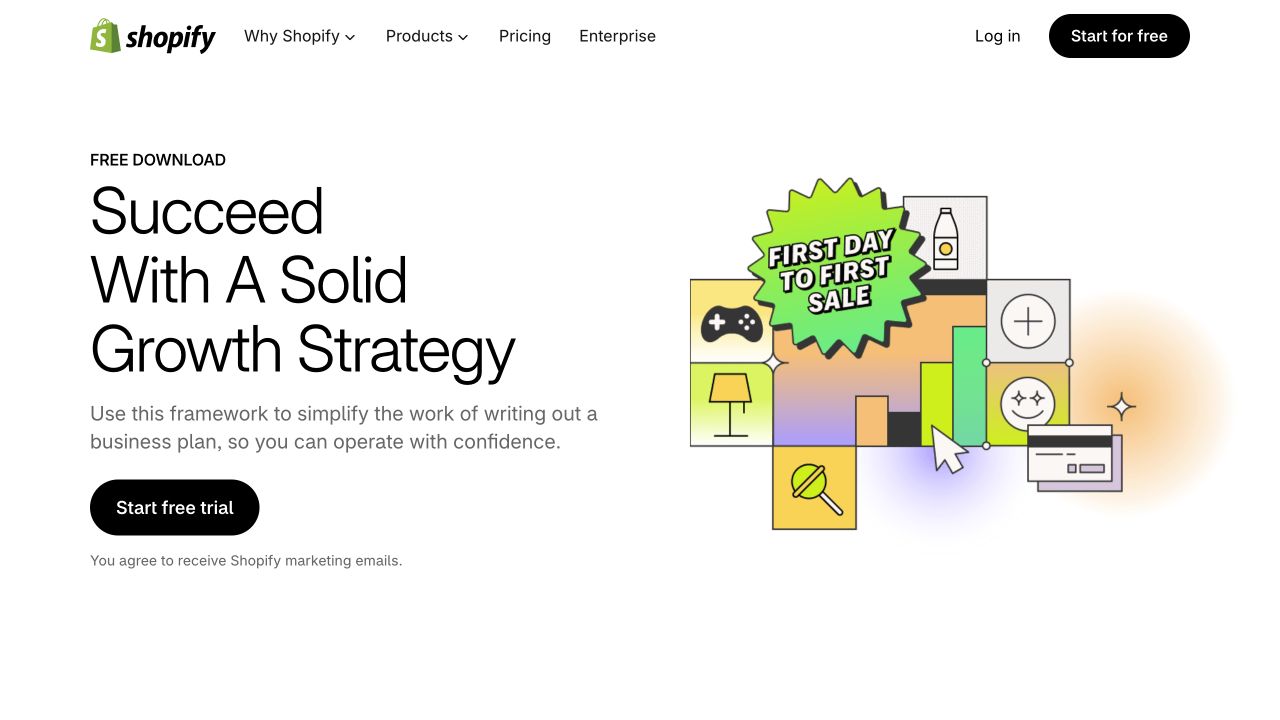
Source: Shopify business-plan offer. The resource headline and product action should be evaluated separately.
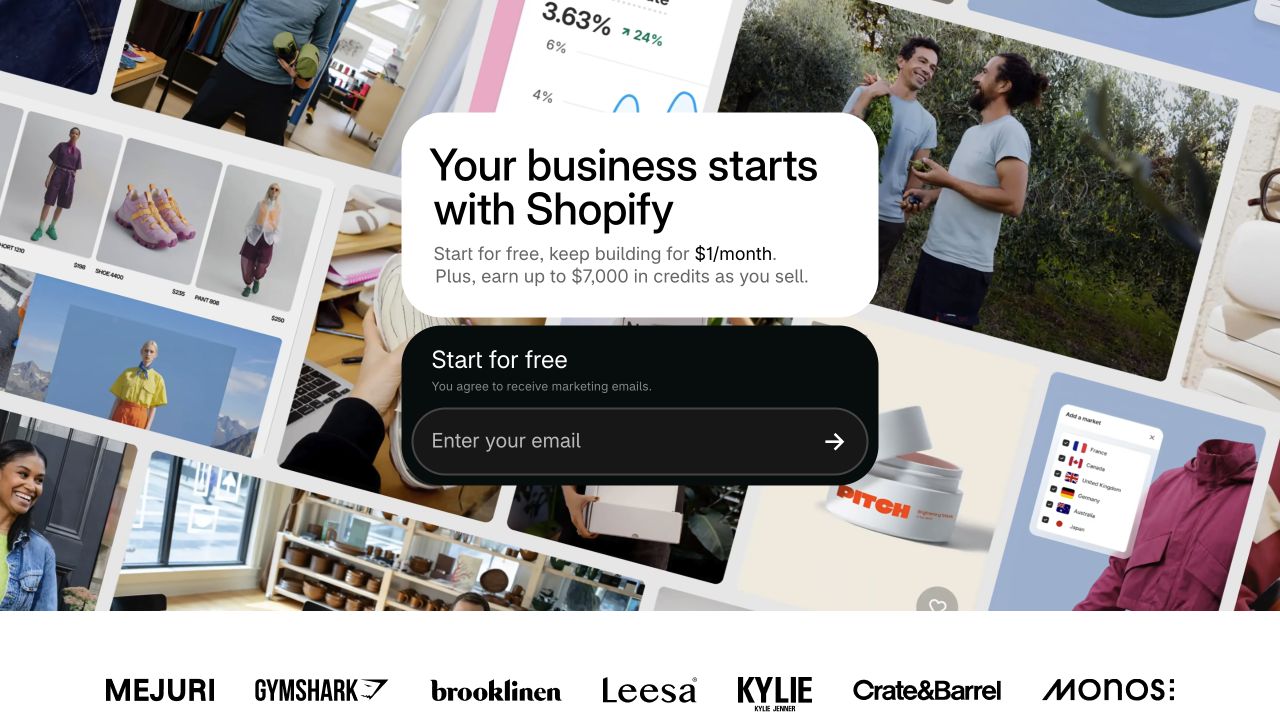
Source: Shopify trial. No signup completed; localized promotional terms are not treated as a universal US offer.
Apply the lesson: name the action precisely. Someone who wants a planning resource may be interested in starting a business but not yet ready to adopt a platform. Make both the resource access and trial expectations understandable, then measure them as separate events.
Build a content map around one buying situation
Start with one offer and one audience situation. An agency managing several clients should create separate maps where the buying needs differ materially.
Step 1: choose the commercial outcome
Name the result: a completed purchase, a qualified service inquiry, an accepted opportunity, or successful product adoption. Include the owner responsible for observing it.
“More traffic” can describe a discovery objective, but it does not identify the eventual commercial outcome.
Step 2: gather the questions people actually ask
Use inquiry notes, sales conversations, customer support, site search, and interviews. Separate questions asked by users, evaluators, and approvers where those roles differ.
For each question, record the evidence and date. Search demand can help you decide how to publish an answer, but a low-volume implementation question may still matter to a valuable buying decision.
Step 3: audit existing destinations
List the pages, resources, forms, and support material you already have. Check whether they answer the question accurately and offer a useful next step.
Choose keep, improve, create, or retire based on usefulness and overlap. Avoid deleting a page solely because it receives little traffic; it may serve an important narrow task.
Step 4: identify the most consequential gap
Look for a missing answer or broken action near the current bottleneck. If sales repeatedly explains implementation requirements, a practical implementation guide may be more useful than another introductory article.
Step 5: connect and test the path
Follow the referring link, read the destination, use the action, and verify what happens next in your own system. Check mobile navigation, form confirmation, resource delivery, and the receiving owner’s record.
Use this planning table:
| Stage / customer job | Question supported by research | Existing or planned asset | Appropriate next action | Evidence required | Owner |
|---|---|---|---|---|---|
| Understand | [Question] | [Guide or explainer] | [Related answer] | [Expertise and sources] | [Name] |
| Evaluate | [Question] | [Comparison or demonstration] | [Scope or product detail] | [Tradeoffs and limitations] | [Name] |
| Act | [Question] | [Offer and action page] | [Named commercial action] | [Conditions and confirmation] | [Name] |
| Succeed | [Question] | [Setup or aftercare resource] | [Useful first result] | [Complete instructions] | [Name] |
Measure stage progress without mixing denominators
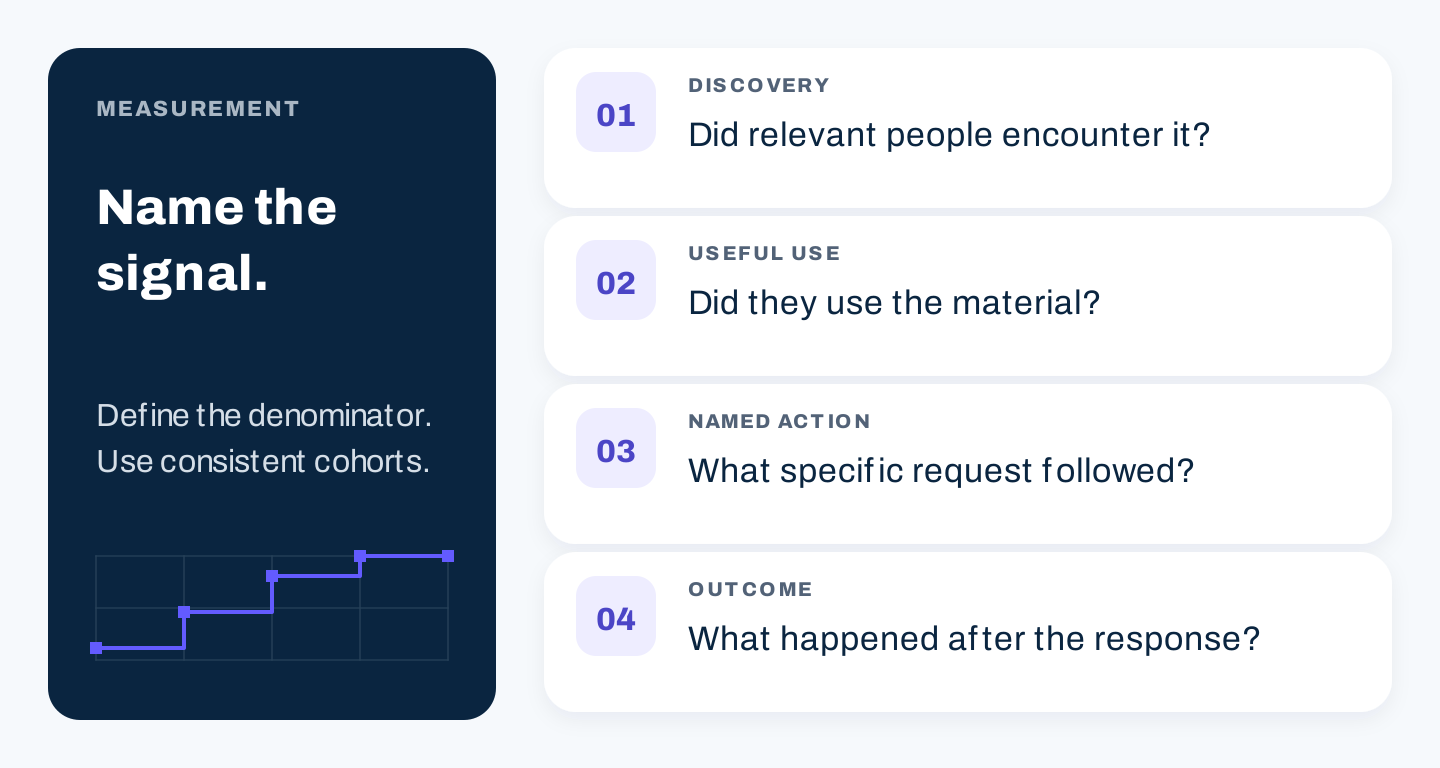
Original measurement model. Use the same defined population and observation window when calculating a transition rate.
Different measures answer different questions:
| Stage | Useful signal | Interpretation limit |
|---|---|---|
| Awareness | Relevant reach, visits, or discovery queries | Exposure does not establish buying readiness |
| Evaluation | Use of a comparison, product explanation, or decision resource | Engagement is a clue, not proof of intent |
| Conversion | Completed named action and qualification outcome | A request may not become a purchase |
| Retention | Setup completion, successful use, repeat purchase, renewal | Define success for the actual offer |
| Advocacy | Attributable referrals or authentic reviews | Do not count every mention as a new customer |
Suppose, in illustrative data, a defined cohort contains 200 eligible inquiries, 50 qualified inquiries, and 10 resulting customers. Qualification is 50 ÷ 200 = 25%. Conversion from qualified inquiry to customer is 10 ÷ 50 = 20%. Conversion from inquiry to customer is 10 ÷ 200 = 5%.
Those rates use different denominators and answer different questions. They cannot be compared with page-session rates as if every session represented one of the same inquiries.
A dashboard showing this month’s visits and this month’s closed deals is not automatically a cohort funnel. Those deals may originate from earlier periods. Label calendar-period activity and cohort outcomes separately.
Campaign parameters and analytics can help describe known referral paths. They do not capture every offline conversation, cross-device visit, private recommendation, or AI-assisted research session. Avoid assigning the full value of one customer to every asset they touched.
Diagnose the gap before producing more content
| Observation | First investigation | Possible response after checking |
|---|---|---|
| Traffic rises; relevant inquiries do not | Audience fit, page promise, available next actions | Clarify scope or build a more relevant bridge |
| Inquiries rise; qualification falls | Request types and acquisition messages | Separate learning offers from commercial requests |
| Qualified requests wait without a response | Routing and team coverage | Repair the handoff |
| Trials begin; useful first use is weak | Setup friction and task clarity | Improve onboarding and contextual help |
| Sales repeatedly answers the same question | Missing or unclear evaluation material | Publish an accurate answer and make it easy to find |
| Customers leave after purchase | Delivery and product-use evidence | Investigate the experience before adding renewal campaigns |
Use observed problems to choose work. A fixed allocation such as a particular percentage of introductory content may be convenient for a calendar, but it does not establish what your current funnel needs.
A funnel brief you can reuse
Offer and audience situation:
Desired business outcome and measurement owner:
Customer questions, evidence sources, and dates:
Existing assets and their primary reader jobs:
Missing answers or broken actions:
Priority change and why it matters:
Referring channels and message:
Destination and appropriate next action:
Form, delivery, or product-use check:
Sales / service / support owner:
Metrics, populations, and observation windows:
Unresolved records and attribution limitations:
Review date and decision to make:
Frequently asked questions
Is a marketing funnel still useful when people research with AI?
Yes. People still need relevant answers, evidence, and a usable action path. Publish clear, accurate decision information that makes sense when reached directly. An AI citation is a discovery signal; it does not confirm that a visitor purchased or that a particular format guarantees inclusion.
Does every stage need a separate blog post?
No. A service page, public tool, comparison, demonstration, or support resource may better answer the question. One strong asset can serve several situations if navigation and next actions are clear.
What should a small business build first?
Check the existing offer and contact path, then address the most important unanswered customer question. Use the target audience guide to define the situation and the lead quality guide to make commercial qualification consistent.