Home Services Marketing: A Practical Plan for Local Inquiries and Bookings

Home services marketing has to connect online attention with work your team can deliver. A call from outside your service area, an appointment you cannot cover, or a request for an unsupported job can consume time without becoming useful business.
Start with the services, locations, and customer situations you can serve. Then make it easy for the right person to understand the offer, contact the team, and progress toward a completed job.
This guide brings together local discovery, service pages, educational content, reviews, paid promotion, follow-up, and measurement. Public examples from One Hour Heating & Air Conditioning and Merry Maids show different customer decisions; they do not establish either company’s conversion results.
What is home services marketing?
Home services marketing promotes services delivered in or around customers’ homes, such as HVAC, plumbing, electrical work, cleaning, landscaping, and pest control. It connects serviceable demand with a trustworthy local provider and a usable contact or booking path.
The commercial outcome is usually farther downstream than a click or call. An inquiry may need qualification, an estimate, a scheduled visit, and successful completion before it creates revenue.
Marketing and operations therefore need to share the plan. Before creating campaigns, record:
- The specific services you provide and exclusions.
- The locations you can serve.
- Current capacity and seasonal constraints.
- When calls and messages receive a response.
- How an inquiry becomes an estimate or appointment.
- Who records completion, cancellation, and payment outcomes.
For an agency, confirm these facts with the client. A polished campaign built around incorrect availability creates an operational problem.
Separate urgent, planned, and recurring needs
An urgent service request and a planned purchase need different information. So does a recurring customer deciding whether to book again.
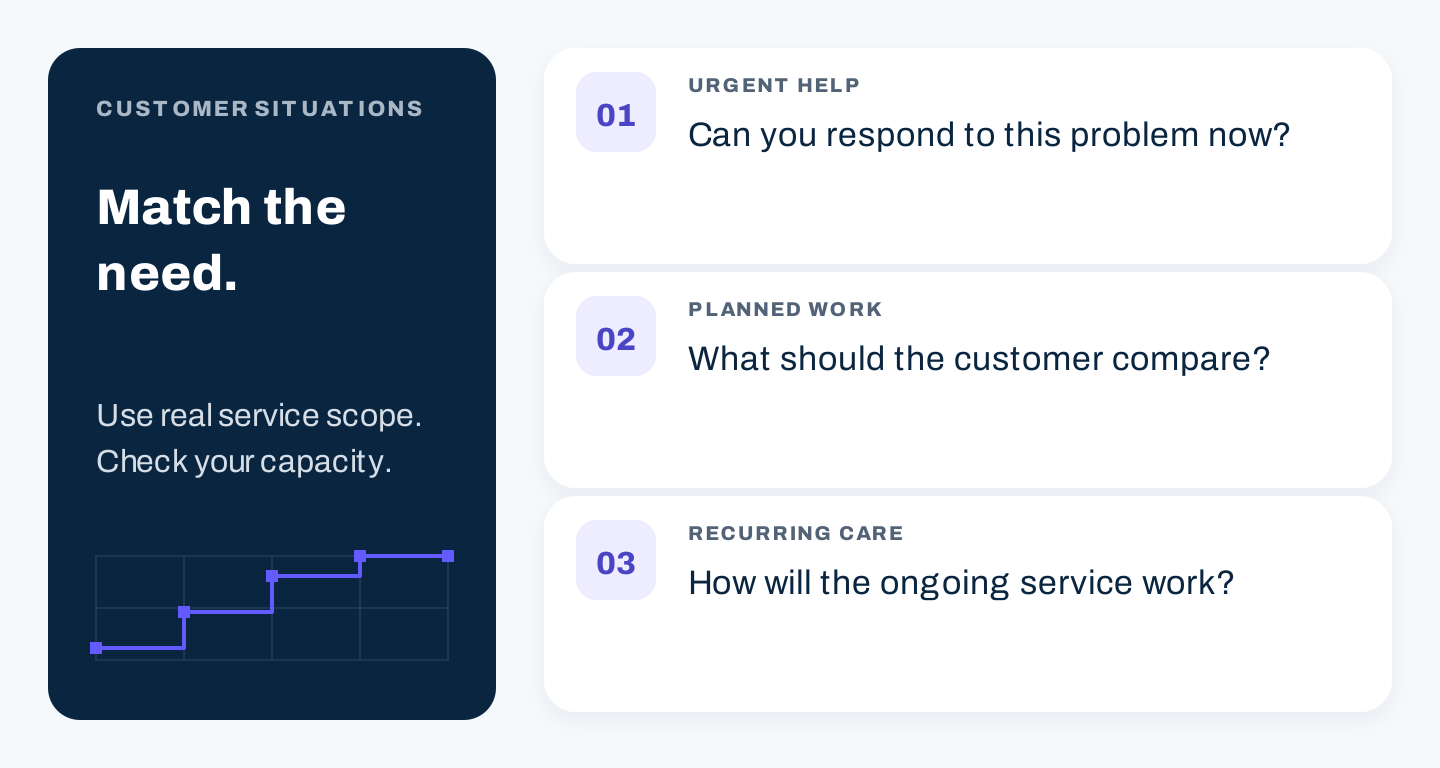
Original demand framework. Customer urgency changes the useful content, action path, and operational requirements.
| Customer situation | Information needed | Useful destination | Appropriate measure |
|---|---|---|---|
| Urgent repair or immediate help | Service, coverage, real availability, contact route | Focused service page | Serviceable requests, response, completed jobs |
| Planned replacement or improvement | Options, process, pricing factors, evidence | Decision guide and service detail | Suitable estimate requests and accepted work |
| Recurring care | Scope, frequency options, scheduling, experience | Maintenance or recurring-service page | Repeat bookings and completed visits |
Do not promise emergency availability unless your team can provide it. Likewise, explain whether an online action requests a time or confirms one.
These distinctions should shape your topics, ads, destination pages, and follow-up. A homeowner trying to resolve an immediate problem should not have to complete a long educational sequence to reach contact information.
Five real page examples and what they teach
1. One Hour’s homepage: establish service and local routing
One Hour’s homepage names heating and air-conditioning services, displays a phone route, and asks visitors for a ZIP code to get started. The public page shows a national brand directing visitors toward local service.
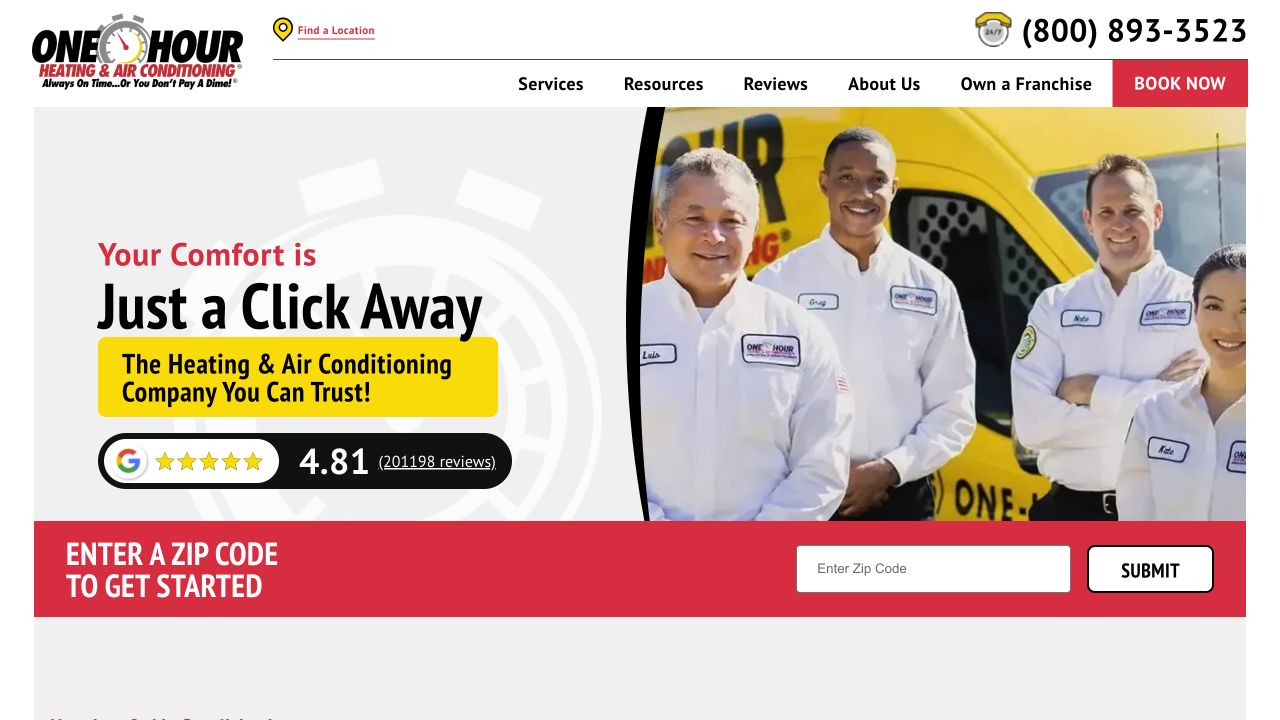
Source: One Hour Heating & Air Conditioning. Desktop capture; displayed ratings are publisher presentation and are not independently audited here.
Apply the lesson: make location fit part of the contact path. A local business may use a clear service-area list, a location selector, or a relevant qualification question. The right choice depends on how work is actually assigned. Make it understandable before collecting an inquiry you cannot serve.
2. One Hour’s service page: connect the general category to specific work
The air-conditioning service page provides specific service options and local contact routes. It also notes that services vary by location.
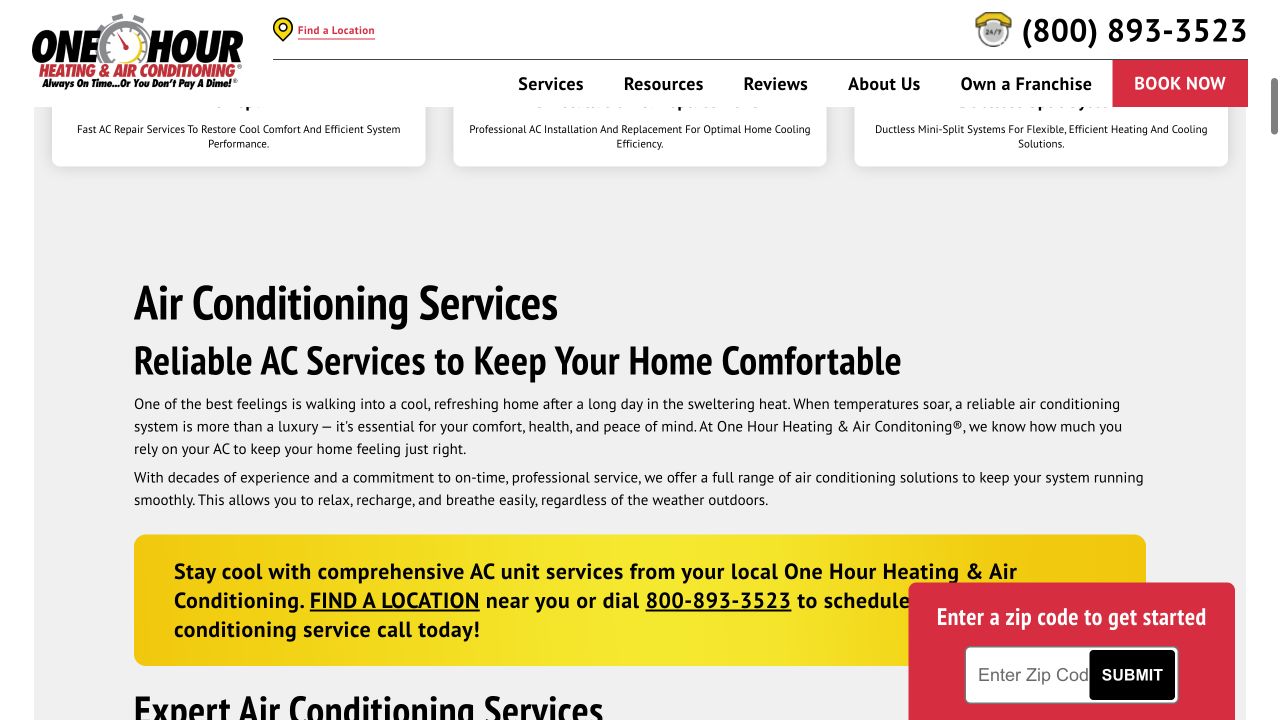
Source: One Hour air-conditioning services. Desktop service-page section.
Apply the lesson: distinguish installation, maintenance, and repair if your business handles them differently. Give each important service enough detail for a visitor to determine relevance. Keep local availability and limitations close to the action.
3. One Hour’s upgrade guide: support a considered decision
One Hour’s HVAC upgrade article connects an educational question with relevant service links. It illustrates a content route for a planned purchase rather than only an immediate repair request.
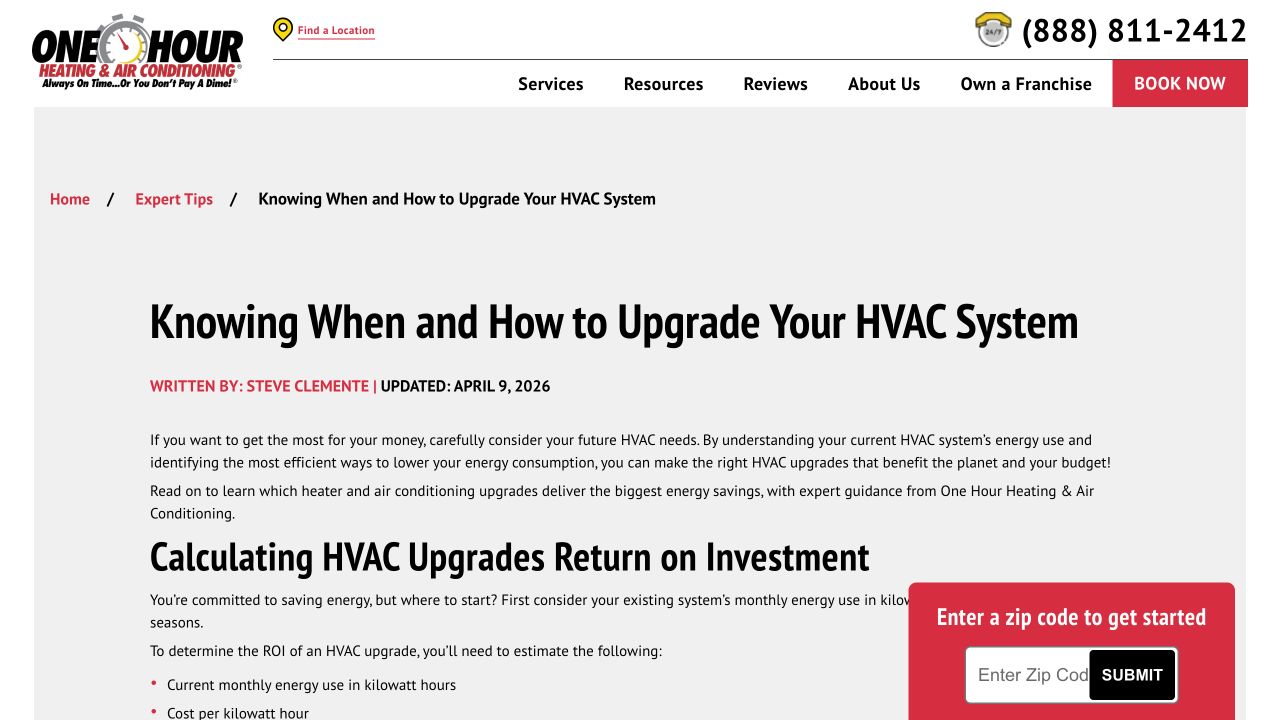
Source: One Hour upgrade guide. This analysis concerns the page’s role; technical, savings, and tax claims are not adopted.
Apply the lesson: answer questions that help someone prepare for a professional discussion. Explain what affects a quote, what information to gather, and what a visit involves. Have a qualified subject expert review technical material and refresh changing details.
4. Merry Maids’ homepage: planned service can emphasize time and convenience
Merry Maids’ homepage presents home cleaning and a quote route. Its public service descriptions distinguish recurring, detailed, and specialty cleaning, reflecting different household tasks.
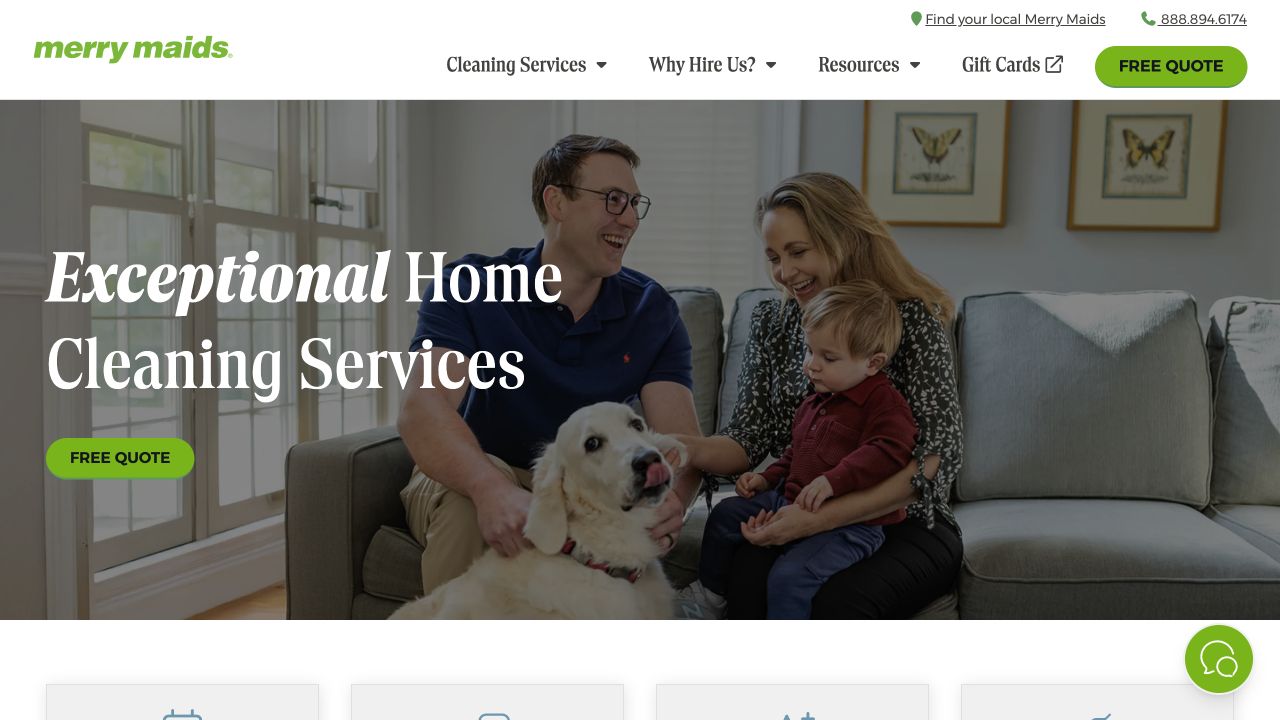
Source: Merry Maids. The page presents a planned cleaning-service offer.
Apply the lesson: structure the offer around recognizable needs, such as ongoing care or preparation for a specific event. Do not make every service sound like an emergency. Explain what is included and what needs a separate discussion.
5. Merry Maids’ quote entry: location comes before downstream details
The captured quote entry starts by asking where service is needed. That is the observed first step. Later fields, quote delivery, and appointment confirmation were not tested.
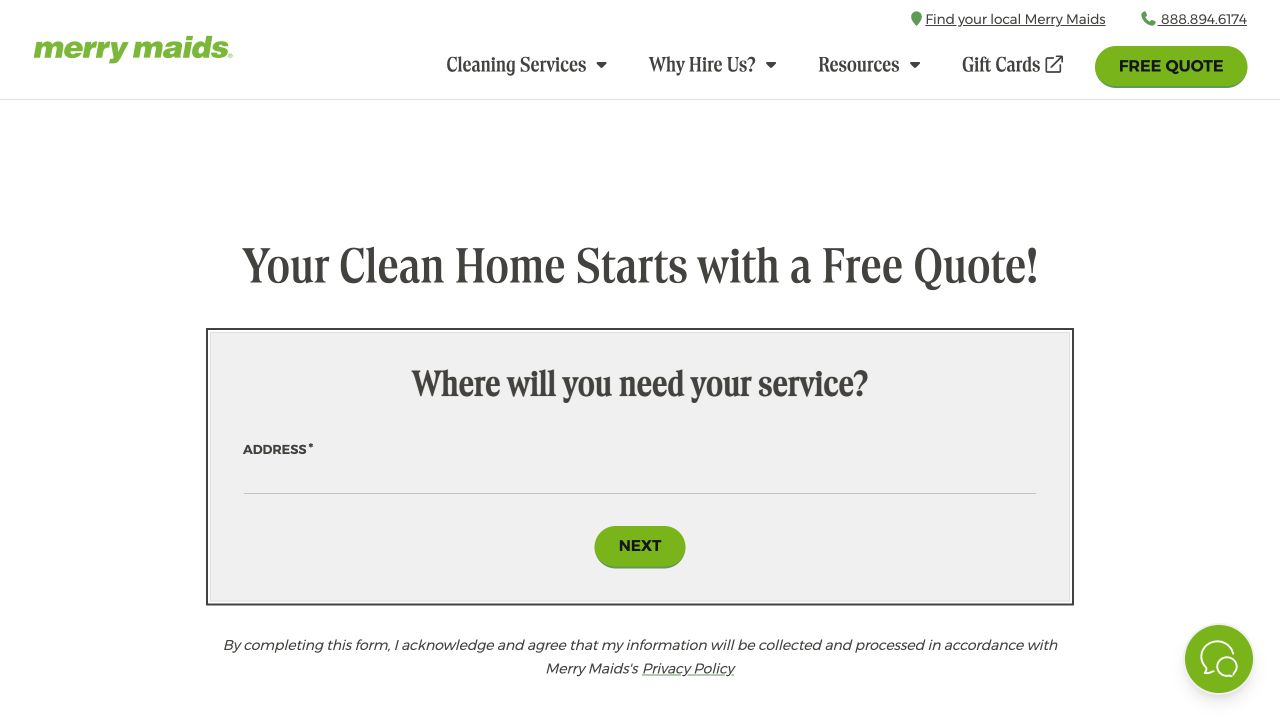
Source: Merry Maids quote entry. No address entered or request submitted.
Apply the lesson: sequence questions around what the team needs to determine next. Location may establish serviceability; scope may establish the right service. Explain why information is requested and what the person should expect afterward.
Build the local discovery foundation
Keep your business information accurate
Maintain the business name, contact details, service areas, categories, and real hours on your website and relevant profiles. Check that seasonal schedules and contact routes match current operations.
Google distinguishes service-area businesses from hybrid businesses. Its service-area guidance says businesses that do not serve customers at their business address should remove that address from the profile and show their service area. Follow the guidance that applies to your actual operation.
Do not imply that setting a wider service area guarantees visibility throughout it. Profile configuration describes your business; it does not create a ranking entitlement.
Create useful service and location pages
Build pages around services and areas you actually cover. Include locally relevant availability, scope, contact instructions, and evidence when it materially helps the customer.
Avoid swapping city names through dozens of otherwise identical pages. A separate page needs a useful purpose, such as a genuinely different service operation, coverage detail, or local customer information.
Link related guides to the appropriate service, and make phone and inquiry actions easy to find. Verify the call link on a phone and check that the receiving number works.
Plan useful content beyond service pages
Use call notes and customer questions to identify topics. Prioritize questions that improve an inquiry or help customers understand the work.
| Topic type | Useful reader output | Commercial connection |
|---|---|---|
| Service scope | Understand what is included and excluded | Choose the appropriate service |
| Pricing factors | Understand what affects an estimate | Prepare relevant details for a quote |
| Appointment preparation | Know what to expect and provide | Make the visit workable |
| Option comparison | Understand important tradeoffs | Ask an informed professional question |
| Maintenance planning | Organize relevant professional care | Request an appropriate visit |
| Completed-work explanation | Understand the situation, process, and outcome | Evaluate experience with a similar job |
| Local practical information | Check real coverage or conditions | Contact the correct operation |
Use original job photographs with permission and enough context to explain what they show. Identify the work completed and any meaningful limitations. A generic stock image cannot verify a specific job.
For videos, demonstrate the process, team, or preparation rather than relying on unsupported performance claims. Essential instructions should remain available in text or captions.
If customers arrive through AI-assisted research, provide accurate service, coverage, and decision information on accessible pages. You can monitor observed referrals or mentions, but no content format guarantees an AI recommendation. Avoid promising citation improvements from schema alone.
Make contact handling part of the marketing plan
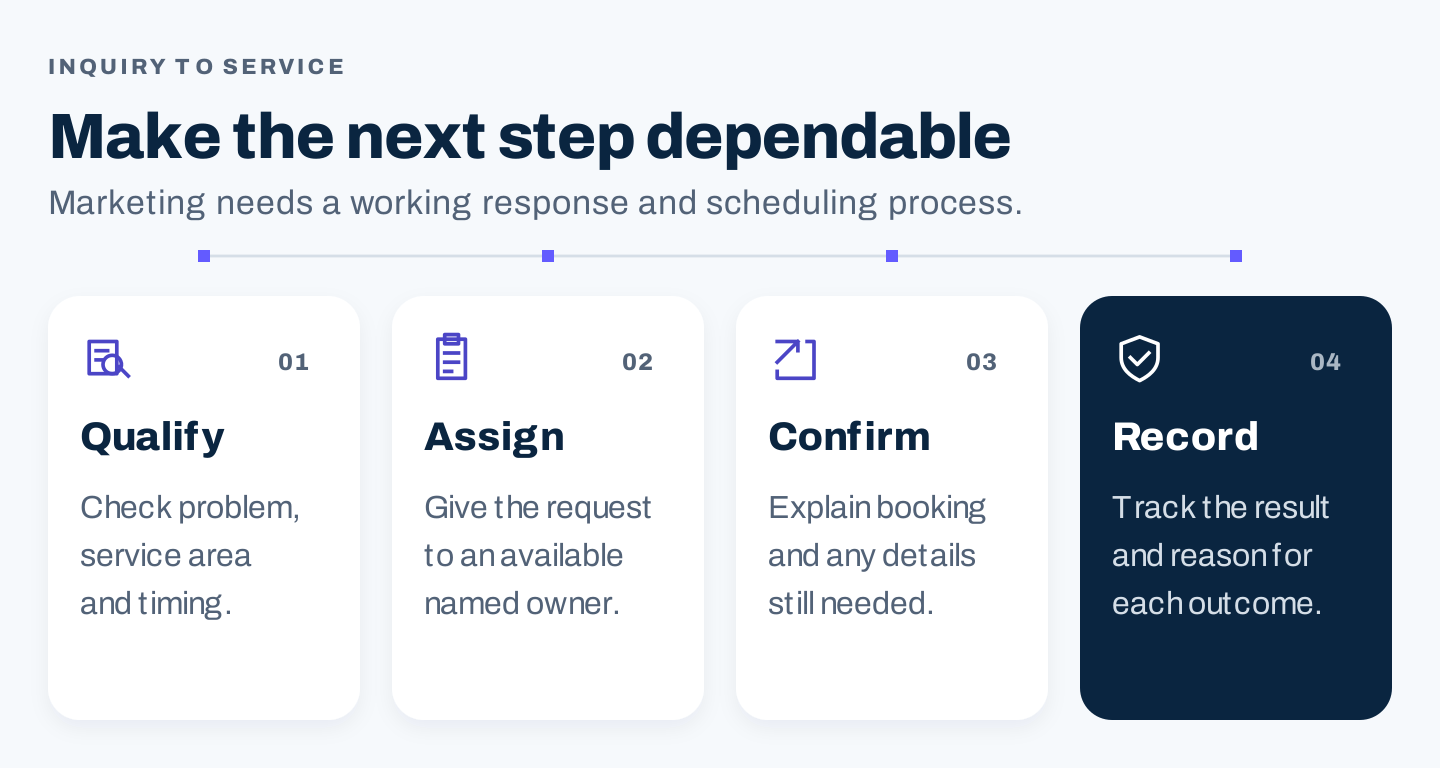
Original operational path. A contact request and a confirmed appointment are separate events.
For each contact route, define the owner, coverage, backup, and next action. Marketing should know whether a call is answered, a form creates a usable record, and a suitable inquiry receives a response.
Use a short intake record:
Inquiry ID, time received, and source:
Service requested:
Location and serviceability:
Customer's stated situation and timing:
Best contact method:
Owner and backup:
Estimate / appointment requested or confirmed:
Next action and agreed timing:
Outcome: completed, cancelled, unsuitable, unresolved, other
Outcome reason and relevant value:
Keep customer-support requests and new business inquiries distinct. A repeat call about an existing job should not inflate new-lead totals.
Set expectations accurately during busy periods. If your team cannot cover the advertised response, change the promotion or the operational coverage before increasing demand.
Use reviews to provide credible evidence
Ask customers for honest feedback after a real service experience and make the review route easy to find. Google’s review guidance explains using links or QR codes and responding constructively.
Its content policy prohibits incentives for reviews and selectively soliciting positive reviews. Use a consistent request process that allows customers to describe their actual experience.
For your own website, explain the source and context of testimonials. A review about a different service or location may be less useful to the current visitor.
Public replies should address relevant concerns without disclosing private job or customer details. Treat repeated complaints as evidence to investigate the service experience. Reputation content cannot substitute for correcting the underlying problem.
Add paid promotion where the operation can support it
Match each campaign to a real service, supported geography, and suitable destination. Start with a bounded test budget and a defined outcome rather than expanding spend because calls increased.
Before launch, check:
- Whether the message accurately describes service and availability.
- Whether the destination answers the immediate customer question.
- Whether contact handling can cover the intended demand.
- Whether serviceable requests can be distinguished from irrelevant contacts.
- Whether completed jobs can be connected to the campaign within known tracking limits.
Search ads, local advertising products, partner placements, and community sponsorships have different availability and requirements. Check current platform eligibility and setup guidance before committing. You do not need every channel to run a useful local campaign.
Review unsuitable inquiries by reason before changing targeting. The cause may be broad geography, ambiguous scope, inaccurate availability, or an unclear page promise.
Use social content and follow-up for recognizable local needs
Share work explanations, team introductions, service preparation, and answers to recurring questions. Include an appropriate contact route. Choose channels based on observed customer use and team capacity rather than a fixed posting quota.
For existing customers, distinguish appointment updates from optional promotional content. Use the contact choices the customer has made and keep service information accurate. This is a campaign planning principle, not a complete legal compliance checklist.
A useful after-service message can provide the promised documentation, explain whom to contact with questions, and invite honest feedback. A relevant recurring-service reminder can make sense when the service and customer situation justify it. Do not send the same maintenance assumption to every household.
Measure completed-job economics
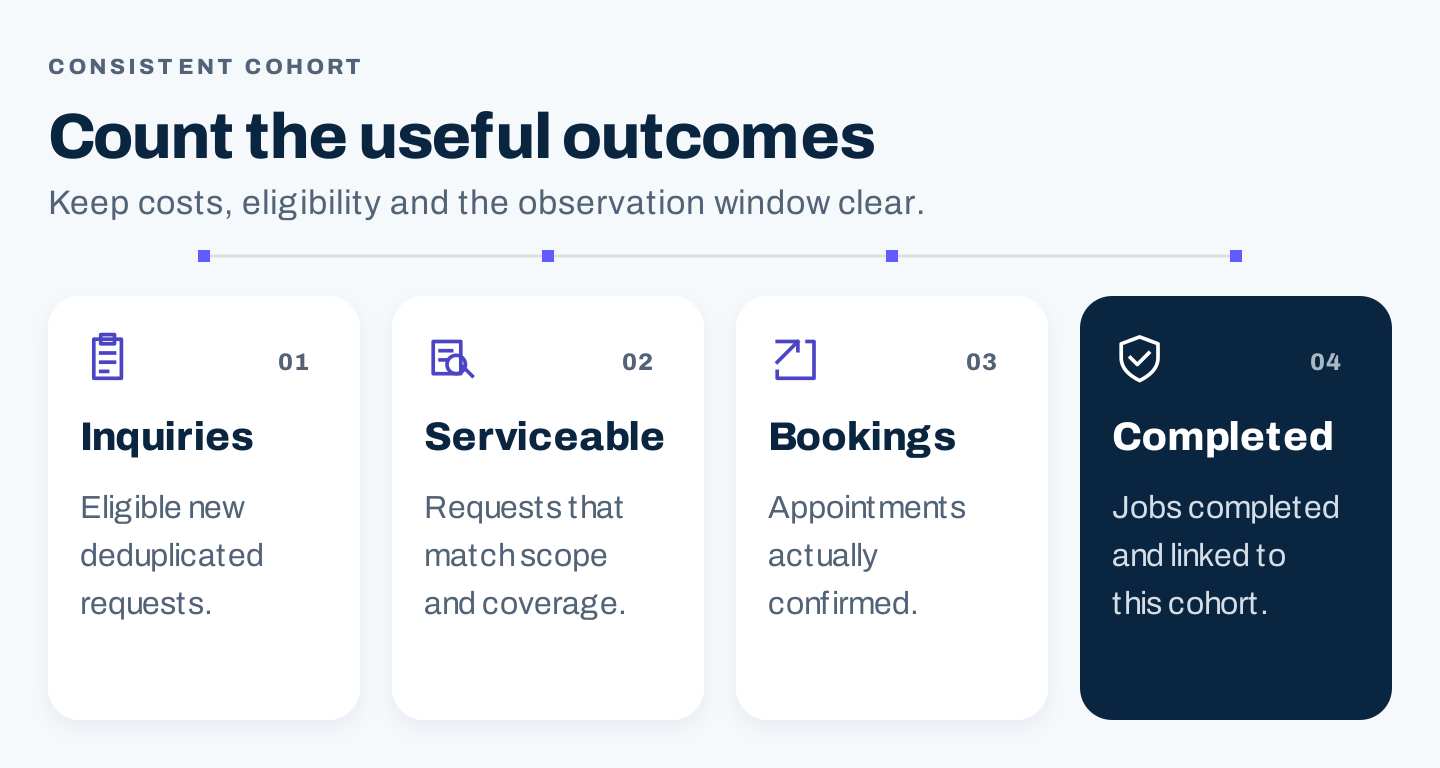
Original measurement framework. Follow the same inquiry cohort and record cancellations and unresolved work separately.
Use a consistent starting group and observation window:
| Measure | Definition |
|---|---|
| Eligible inquiry | Deduplicated new request, excluding known spam and existing-job support |
| Serviceable inquiry | Meets your actual service and geography conditions |
| Confirmed booking | Accepted appointment under your booking process |
| Completed job | Work completed and recorded under your operating definition |
| Cost per completed job | Included campaign cost divided by attributed completed jobs |
| Job contribution | Revenue less the direct costs included in your chosen contribution definition |
Here is illustrative arithmetic, not a benchmark or brand result:
| Campaign | Cost | Eligible inquiries | Serviceable inquiries | Completed jobs | Cost per inquiry | Cost per completed job |
|---|---|---|---|---|---|---|
| A | $2,000 | 100 | 40 | 10 | $20 | $200 |
| B | $2,000 | 50 | 40 | 20 | $40 | $100 |
Campaign B has more expensive inquiries but a lower cost per completed job. Profitability still depends on job value, delivery costs, repeat business, and the completeness of attribution.
Do not calculate this month’s conversion rate by dividing completed jobs from older requests by this month’s new inquiries. Track cohorts or label the report as calendar-period activity. Separate first-time work from repeat visits so acquisition and retention are not confused.
A practical home services campaign worksheet
Service and customer situation:
Actual service areas and exclusions:
Capacity, operating hours, and response coverage:
Customer question and supporting call / inquiry evidence:
Service page and useful supporting content:
Real job evidence and permissions:
Discovery channel, message, budget, and owner:
Contact route and confirmation behavior:
Intake fields and qualification rules:
Booking, completion, and cancellation owners:
Customer follow-up and feedback process:
Metrics, cost basis, cohort, and review window:
First bottleneck to investigate:
Next change and review date:
Begin with the service page and contact path, then address the most consequential question or mismatch in recent inquiries. Use the lead quality framework to make qualification consistent and the marketing funnel guide to connect planned purchases with useful decision content.